How United States Small Businesses Can Record and Use Journal Entries for Accurate Timesheet Approvals
Accurate timesheet approvals and linked journal entries are vital for US small businesses to ensure payroll accuracy, compliance with labor laws, and.
The HelloTime team
5 min read
On this page
Accurate timesheet approvals and linked journal entries are vital for US small businesses to ensure payroll accuracy, compliance with labor laws, and transparent financial records. Using AI journal entry tools can automate and streamline this process, reducing errors and saving time.
Key takeaways
- Journal entries formally document payroll and labor costs based on approved timesheets.
- Aligning timesheets with journal entries prevents payroll discrepancies and supports audits.
- AI journal entry automation enhances accuracy and speeds up accounting workflows.
- Compliance with the FLSA and state laws is critical during timesheet approvals.
- Integrating workforce management software helps unify time tracking, approvals, and accounting.
- Clear policies and staff training improve approval consistency and audit readiness.
What is a journal entry in timesheet approvals?
A journal entry is an accounting record that logs financial transactions. In the context of timesheets, it captures the payroll expense incurred for the hours employees work, translating approved timesheet data into accounting debits and credits.
For example, a Detroit construction firm records a journal entry debiting labor expenses and crediting payroll liabilities based on the approved timesheets, ensuring payroll costs align directly with recorded work hours for financial accuracy and compliance.
Journal entries link time tracking to your business finances, supporting proper payroll, project costing, and transparent accounting.
Why should US small businesses use journal entries for timesheets?
Small businesses in the US can face errors when reconciling timesheets manually with payroll and accounting systems. Using journal entries connected to timesheets:
- Boosts accuracy by mapping hours worked to payroll expenses precisely.
- Creates an audit trail needed for IRS or Department of Labor reviews.
- Enables detailed project profitability by associating labor costs with client work.
- Supports compliance with the Fair Labor Standards Act (FLSA) and relevant state laws.
- Helps generate transparent and timely financial reports.
How do I create journal entries from timesheets efficiently?
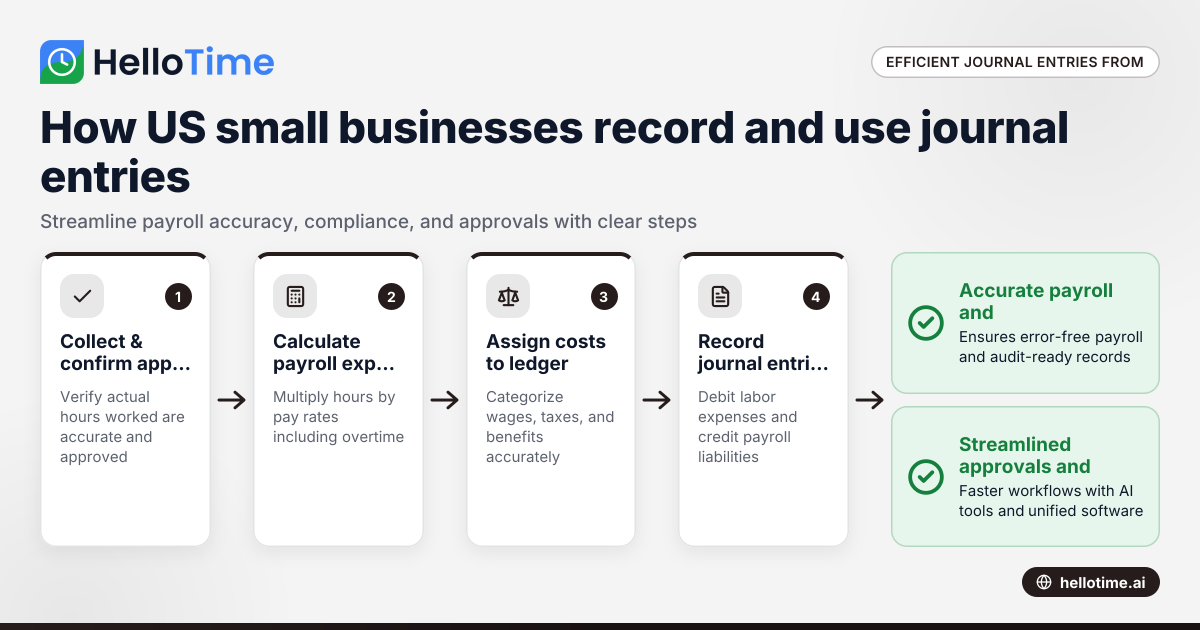
Automating journal entry creation saves time and reduces errors. To create entries manually:
- Collect approved timesheets and confirm accuracy.
- Calculate payroll expense by multiplying hours by pay rates, including overtime.
- Assign costs to general ledger accounts (wages, taxes, benefits).
- Record debits and credits reflecting labor expenses and payroll liabilities.
- Review for discrepancies with payroll runs and timesheet data.
- Post finalized entries into your accounting software like QuickBooks.
Workforce management software can automate many of these steps.
How does AI journal entry help with timesheet approvals?
AI journal entry uses artificial intelligence to automate generating and validating accounting records from timesheet data. This approach minimizes manual errors and speeds up the payroll accounting process.
By utilizing AI journal entry tools, US businesses can auto-check hours worked, pay rates, and regulatory compliance before creating accurate journal entries ready for approval. This saves time, highlights anomalies like overtime violations, and streamlines reconciliation between time tracking and financial systems.
Embedding AI journal entry in workforce management software bridges the gap between hours worked and financial reporting, helping you maintain accurate payroll and audit readiness effortlessly.
How can I ensure my timesheet approvals are compliant and accurate?
To keep approvals compliant and error-free:
- Have supervisors verify actual hours worked against schedules.
- Track and pay overtime consistent with FLSA rules.
- Document paid and unpaid leave separately.
- Implement policies with multi-level approvals or random audits.
- Train managers on payroll laws and timesheet policy risks.
- Use software that automates approval workflows and stores electronic records for audits.
Combining strong internal controls with workforce management technology improves accuracy and legal compliance.
What software features help unify journal entries and timesheet approvals?
Look for platforms offering:
- One-click timesheet approvals from supervisors.
- Automatic generation of journal entries linked to approved timesheets.
- GPS or biometric clock-in to verify attendance.
- Alerts for missing approvals or overtime issues.
- Time tracking linked to projects for profitability analysis.
- Easy export or integration with payroll and accounting software.
HelloTime provides these features in one platform to streamline your US business’s workforce management. Explore features to learn more.
What are the best practices for managing journal entries and timesheets together?
Maintaining alignment between timesheets and journal entries requires focus:
- Centralize time tracking, approvals, and journal entries in the same system.
- Set clear policies for submission deadlines and approval steps.
- Perform regular audits to catch discrepancies early.
- Use AI journal entry tools to automate entries and approvals.
- Train payroll and HR teams to handle corrections properly.
- Stay informed on federal and state labor regulations affecting payroll.
Following these best practices minimizes payroll errors and improves your company’s financial control.
Frequently asked questions
What is a journal entry in accounting?
A journal entry records a financial transaction by listing debits and credits to accounts. In payroll, it logs wage expenses and related liabilities such as taxes and benefits.
How are journal entries linked to timesheets?
Journal entries convert approved employee hours into labor costs in the accounting system, matching payroll payments with actual work.
Can I automate journal entries from timesheets?
Yes. Workforce management solutions often integrate time tracking with accounting to auto-generate journal entries, reducing manual workload and mistakes.
What regulations affect timesheet approvals in the US?
The Fair Labor Standards Act (FLSA) governs overtime pay, recordkeeping, and wage accuracy. States may add their own rules. Accurate approvals support compliance with these laws.
How do I handle timesheet corrections in journal entries?
Update the timesheet and adjust the related journal entry together. This maintains consistency between payroll and financial records and preserves audit trails.
What is AI journal entry and why does it matter?
AI journal entry automates creating and verifying accounting entries from payroll data using artificial intelligence. It boosts accuracy, saves time, and helps keep payroll compliant.
Accurate journal entries linked to timesheet approvals protect your business from payroll errors and compliance risks. Discover how HelloTime’s unified platform can simplify time tracking, approvals, and finance workflows to save you time and hassle. Check out our pricing and features for the best fit for your business.
Read next
This article covers one part of a bigger topic. For the complete picture, read our guide to journal entry.
Keep reading
Related articles
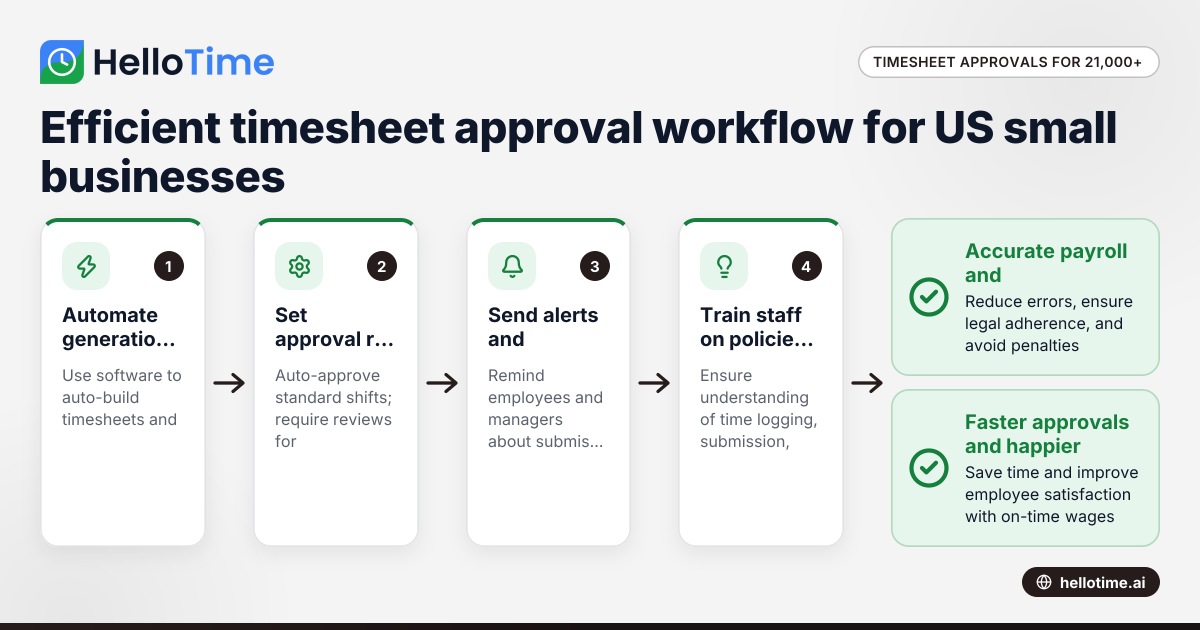
How United States Small Businesses Can Handle Timesheet Approval Workflows with Over 21,000 Minutes Logged
Managing timesheet approvals efficiently becomes critical for US small businesses logging large volumes of employee hours, such as over 21,000 minutes
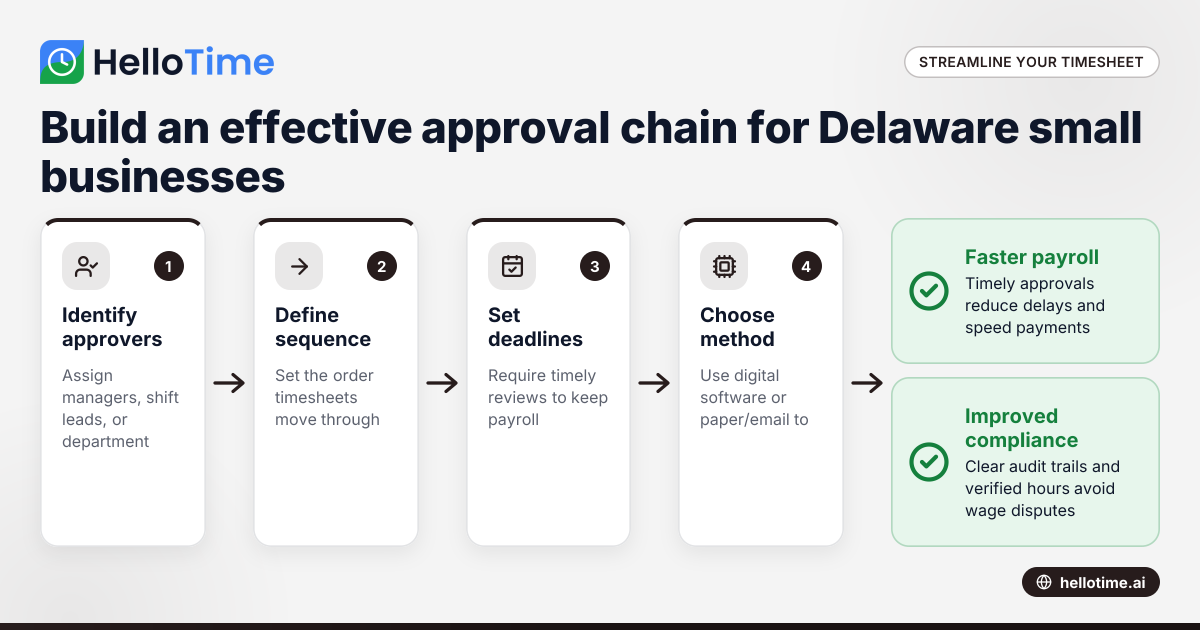
How Delaware Small Businesses Can Streamline Timesheet Approval with Effective Approval Chains in the United States
How Delaware Small Businesses Can Streamline Timesheet Approval with Effective Approval Chains in the United States Delaware small businesses can.
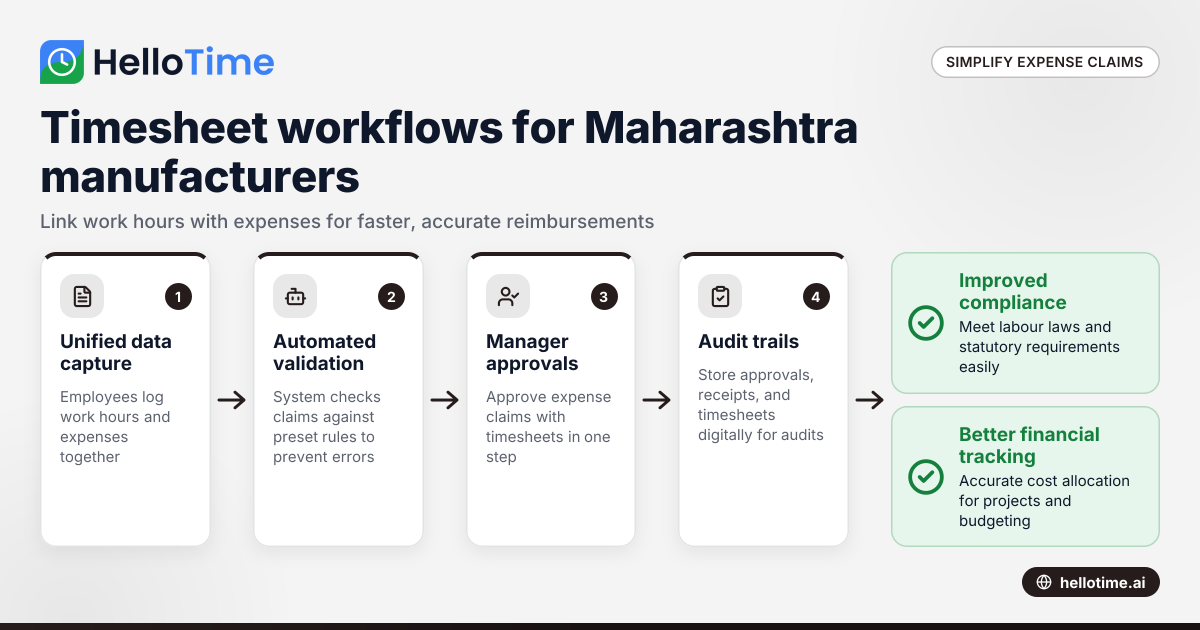
How Manufacturers in Maharashtra Can Simplify Expense Claims with Timesheet Approval Workflows
Expense claims can be complicated for manufacturers in Maharashtra, but streamlining them through timesheet approval workflows can ease the process.