How User Mode Enhances Shift Scheduling Efficiency for Retail Stores in Mumbai, India
User mode shift scheduling in Mumbai retail stores means giving employees controlled access to view, request, or swap shifts themselves, while.
The HelloTime team
5 min read
On this page
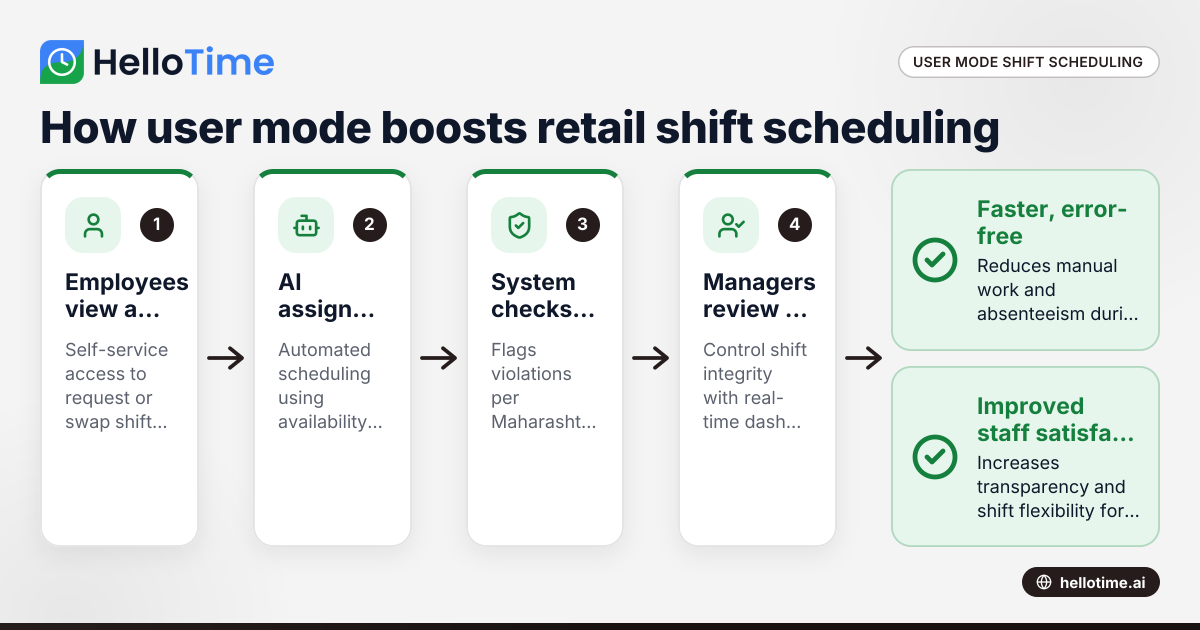
User mode shift scheduling in Mumbai retail stores means giving employees controlled access to view, request, or swap shifts themselves, while managers retain overall approval rights. This approach speeds up scheduling, reduces errors, and increases staff satisfaction by blending AI user mode automation with human oversight.
Key takeaways
- User mode shift scheduling lets employees manage shifts within role-based access, easing manager workload.
- Mumbai retail stores benefit from faster, error-free rostering that respects local labour laws.
- AI user mode features automate shift assignments using availability, skills, and compliance rules.
- Self-service tools boost employee engagement and reduce absenteeism in busy retail teams.
- Management controls approvals, ensuring shift changes fit operational needs.
- Workforce software like HelloTime streamlines scheduling with integrated attendance and payroll functions.
What is user mode shift scheduling in India’s retail context?
User mode shift scheduling in India means digitally managing shifts with defined user roles. Managers create and approve schedules while employees get controlled self-service access to view shifts, request time off, or propose swaps. This replaces traditional manual or WhatsApp-based scheduling with a transparent, efficient system.
Mumbai’s retail stores, with their diverse workforce and multiple shifts, move from error-prone spreadsheets to role-based software. Employees gain transparency on their work hours and can manage changes themselves, reducing last-minute confusion.
Why is user mode shift scheduling important in Mumbai’s retail stores?
User mode helps Mumbai retail stores reduce scheduling errors, overtime risks, and absenteeism in a workforce regulated by laws such as the Maharashtra Shops and Establishment Act. It speeds up rostering and compliance checks while improving employee morale through transparent, accessible shift management.
How does AI user mode optimise shift scheduling in India?
AI user mode uses intelligent algorithms to automate shift assignments by analysing employee availability, skills, and labour regulations. It predicts demand based on historical footfall trends in cities like Mumbai and Pune, suggesting optimal staffing levels.
This reduces manual rostering efforts and errors, enables quick adjustments for leave or absenteeism, and ensures legal compliance on maximum working hours and rest periods.
How can retail employees use user mode for shift swaps?
Employees in Mumbai retail stores can request shift swaps through user mode tools on mobile apps or tablets. The system automatically checks swap requests against labour laws, then notifies managers for approval, replacing informal methods like WhatsApp messages and paper notes.
This empowers staff to balance personal needs with store requirements, while managers retain control over shift integrity.
How does user mode help comply with Indian labour laws?
User mode scheduling software embeds labour law rules, such as limits on consecutive working days, maximum weekly hours, and mandatory breaks as per Maharashtra Shops and Establishment Act and Payment of Wages Act. It flags requests that violate regulations before approval, helping stores avoid penalties and easing payroll.
What costs and savings can retail stores expect from user mode shift scheduling?
By automating rostering and reducing errors, user mode shift scheduling cuts managerial scheduling time by up to 40%, translating into labour cost savings. Improved shift coverage and reduced absenteeism protect sales during peak hours. For Mumbai stores with 20+ employees, these efficiency gains often offset software costs quickly.
How do managers maintain control in user mode scheduling?
Managers keep final approval authority on shift assignments, balancing employee preferences and store demands. Dashboards provide real-time insights on attendance, shift coverage, and costs. Managers can configure access limits, tailoring autonomy levels for different store sizes or shifts.
Is user mode shift scheduling secure and privacy-compliant in India?
Workforce management systems using user mode comply with India’s DPDP Act 2023 on personal data protection. Role-based access restricts sensitive scheduling and attendance data to authorised personnel only. Encryption ensures data confidentiality at rest and in transit, maintaining employee trust.
What steps should a Mumbai retail store take to implement user mode shift scheduling?
Implementing user mode shift scheduling involves clear steps:
- Identify current scheduling challenges and resource constraints.
- Choose software featuring AI user mode suited for Indian retail environments.
- Define user roles such as managers, supervisors, and staff with appropriate permissions.
- Train all users on self-service tools, approval workflows, and compliance features.
- Configure scheduling rules reflecting Maharashtra labour laws and store policies.
- Launch a pilot with a select team, collect feedback and refine processes.
- Roll out software across other Mumbai outlets or nearby cities like Pune and Bengaluru.
- Continuously track scheduling KPIs and ensure ongoing compliance.
Conclusion
User mode shift scheduling powered by AI user mode technology transforms retail workforce management in Mumbai. It enables faster, more accurate rostering, reduces absenteeism, maintains legal compliance, and empowers employees—all while keeping managers in control. Retailers embracing this approach enhance operational efficiency and staff satisfaction in India’s competitive market.
Explore HelloTime’s features or compare plans on pricing to see how automated user mode shift scheduling can work for your store.
Frequently asked questions
What is user mode shift scheduling India?
It is a role-based digital scheduling system where managers create shifts while employees self-service to view, swap, or request changes within defined limits, ensuring efficient and compliant retail workforce management in India.
How does AI user mode improve retail shift planning?
AI user mode uses smart algorithms to assign shifts based on availability, skills, and labour rules. It predicts staffing needs from store data, speeding scheduling and reducing manual errors.
Can employees request shift swaps themselves?
Yes, employees can request swaps through apps that automatically check labour compliance before notifying managers for approval, ensuring smooth shift changes.
Does user mode scheduling help comply with Maharashtra labour laws?
Yes, it enforces limits on work hours, rest periods, and shift patterns per Maharashtra Shops and Establishment Act, alerting when requests violate laws or policies.
What training is needed to use user mode shift scheduling?
Brief sessions teach managers and employees to access schedules, submit requests, approve shifts, and use self-service interfaces efficiently.
How secure is user mode shift scheduling software in India?
The software complies with India’s DPDP Act 2023, using encryption and role-based access controls to protect employee data and maintain confidentiality.
Read next
This article covers one part of a bigger topic. For the complete picture, read our guide to user mo.
Keep reading
Related articles
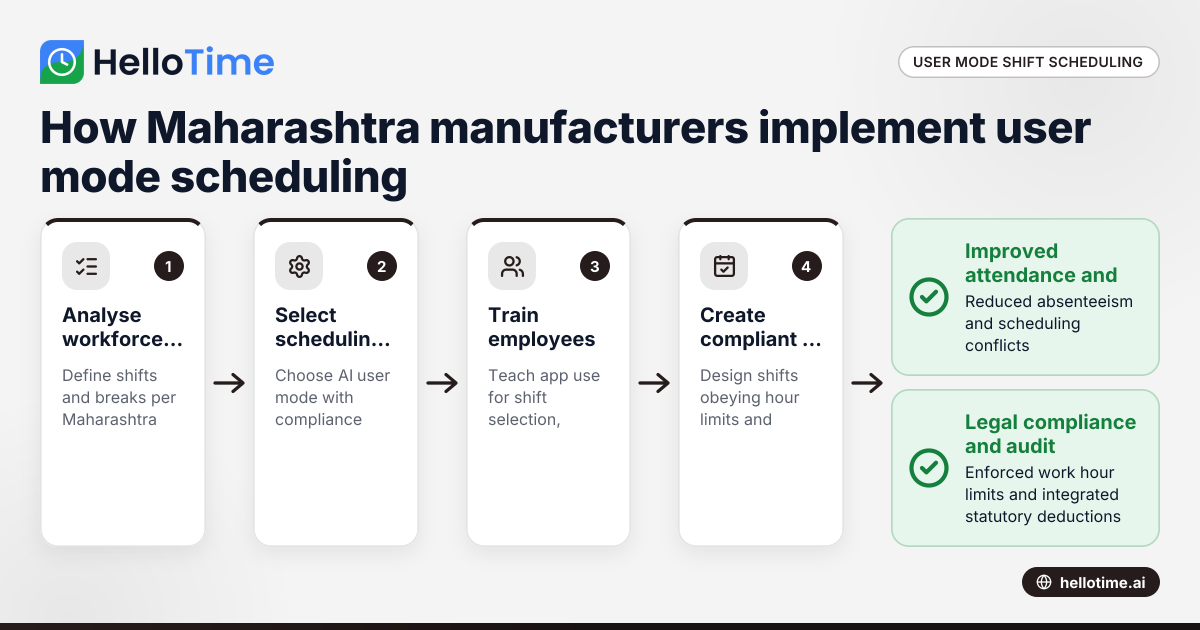
How User Mode Simplifies Shift Scheduling for Manufacturers in Maharashtra, India
User mode shift scheduling lets manufacturers in Maharashtra give workers control to pick or swap shifts via an app. This improves attendance.
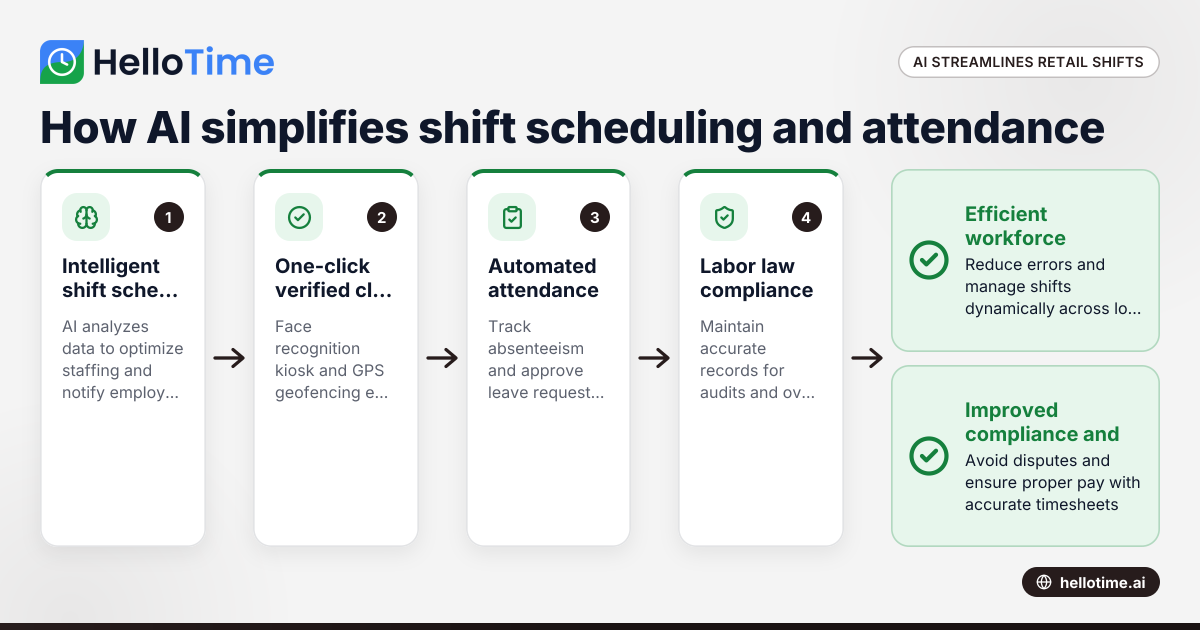
How HelloTime’s AI-Powered Time Tracking Simplifies Shift Scheduling and Attendance in United States Retail
HelloTime’s AI-powered time tracking streamlines shift scheduling and attendance management for U.S. retail businesses by automating key tasks and.
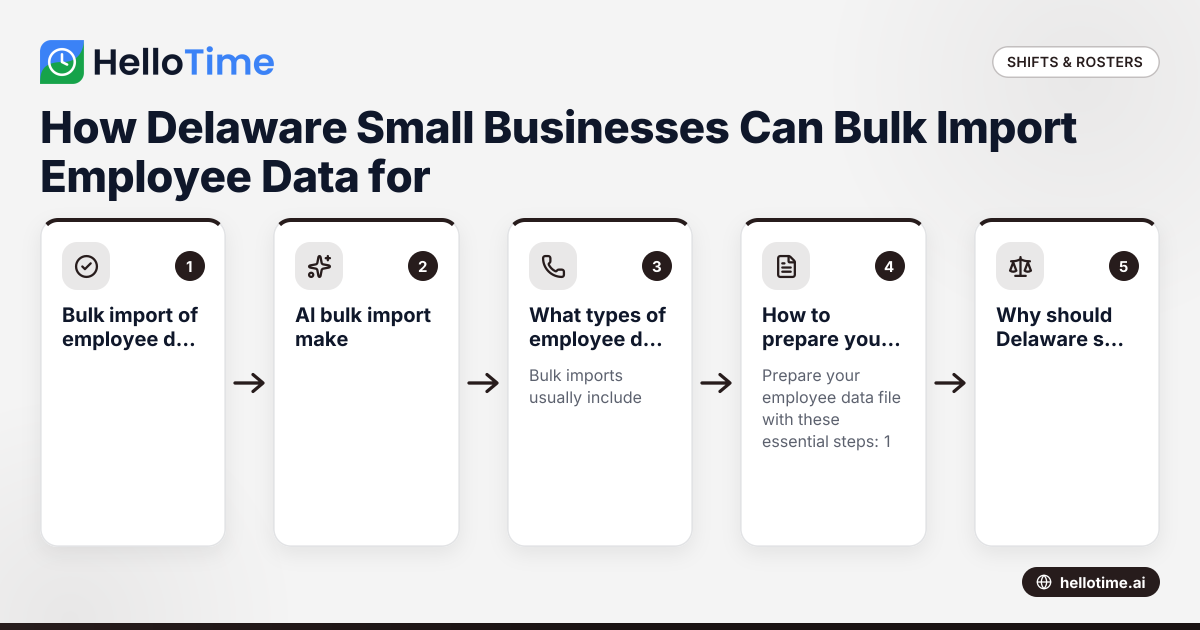
How Delaware Small Businesses Can Bulk Import Employee Data for Faster Shift Scheduling and Timesheet Setups
Managing employee data efficiently is essential for Delaware small businesses, especially when handling shift scheduling and timesheets. AI bulk.