Open Source Time Tracking Tools for Indian Agencies: Benefits and Considerations
Open source time tracking tools are software with publicly accessible code, letting Indian agencies use and customise them without licence fees. They.
The HelloTime team
6 min read
On this page
Open source time tracking tools are software with publicly accessible code, letting Indian agencies use and customise them without licence fees. They help track billable hours and manage projects efficiently while saving costs. Many include AI open tool features that automate workflows and improve accuracy.
Key takeaways
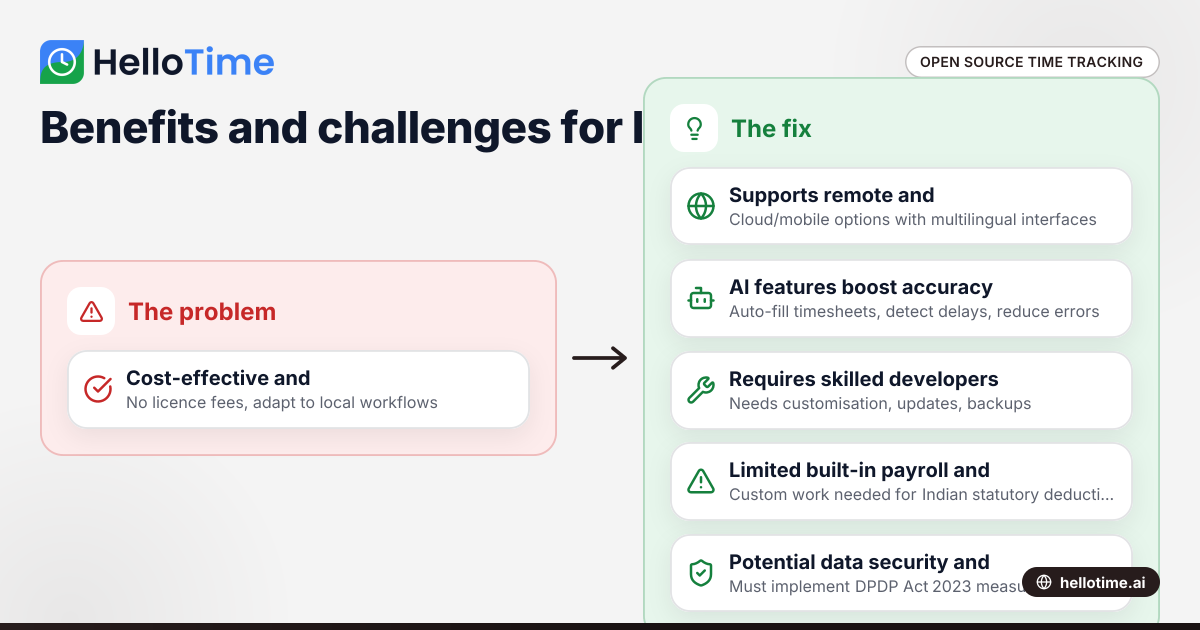
- Open source time tracking tools provide cost-effective, customisable solutions tailored to Indian agency workflows.
- They offer transparent tracking, billing and reporting suited to project and client needs.
- Evaluate factors like maintenance, data security, integration complexity and compliance with Indian laws.
- Mobile-ready and cloud options support remote and field teams in Mumbai, Bengaluru and Pune.
- AI open tool capabilities boost automation, reduce errors and streamline approvals.
- Choose tools based on agency scale, technical resources and reporting requirements.
What are open source time tracking tools?
Open source time tracking tools are software whose source code is publicly available for use and modification. Indian businesses can install these on their servers or cloud, avoiding licence costs and adapting workflows to specific needs. Examples include Kimai and OpenProject’s time tracking features.
These tools record hours spent on projects or tasks, generating timesheets for review. Agencies billing clients hourly or analysing project profitability benefit from this clarity and control.
Why consider open source tools for Indian agencies?
Open source tools suit India’s SMEs and agencies managing diverse projects across cities like Mumbai and Bengaluru. They help:
- Cut subscription costs tied to proprietary software.
- Customise features for local business norms and client demands.
- Maintain data ownership, vital under the DPDP Act 2023.
- Choose self-hosted or cloud deployment as per IT resources and connectivity.
- Support multi-location teams with multilingual interfaces and mobile apps.
For agencies using IndiaMART or JustDial leads, the flexibility to track pitches and client interactions linked via WhatsApp enhances workflow visibility.
How does AI open tool integration benefit time tracking?
AI open tool functions analyse work patterns, detect delays and suggest efficiency improvements automatically. These features reduce manual errors and accelerate approvals in time tracking.
By recognising irregular clock-ins or frequent overtime, AI helps managers in Pune or Bengaluru optimise workforce allocation. It can also auto-fill timesheets using calendar and email data, saving administrative effort.
While integration requires technical skill, AI enhances accuracy and productivity for agencies managing multiple billable projects.
How do you choose the right open source time tracking tool?
Choosing the best open tool involves assessing your agency’s size, IT capacity and required features. Consider:
- Core features: Mobile clock-in, GPS geofencing, project tracking and leave management.
- Hosting model: Self-hosting offers control but needs IT support; cloud hosting eases use but check Indian data residency.
- Integration: Ability to link invoicing, Indian payroll (PF, ESI, TDS) and accounting tools like Tally.
- Security: Data encryption and compliance with DPDP Act 2023.
- Community: Active developer base for support and updates.
- Growth: Scalability for shift scheduling or biometric attendance if needed.
Checking these factors helps avoid complex setups and misses on Indian compliance.
What cost factors should Indian agencies consider with open tool?
Although open source tools avoid licensing fees, budget for:
- Customisation: Developer costs for adapting features or integrating invoices.
- Hosting: Cloud services charges or hardware if self-hosted.
- Support: Paid help may be needed for critical fixes.
- Maintenance: Regular updates and security patches.
- Training: Staff onboarding to new systems.
Plan costs realistically to ensure smooth operations and adherence to Indian payroll rules.
How secure are open source time tracking tools in India under DPDP Act 2023?
Open source code access allows customised security measures aligning with India’s DPDP Act 2023 mandates for personal data protection. Agencies can implement encryption, obtain consent and ensure safe storage.
Self-hosted or reputed Indian cloud providers help maintain data locality and compliance. Ongoing security audits prevent risks, vital when handling payroll and attendance data.
Strong user access controls, encrypted transfers and compliance reports are essential for Indian agencies.
What are common challenges when using open source time tracking tools?
Challenges Indian agencies face include:
- Technical demands: Skilled developers needed for customisation and maintenance.
- Adoption: Teams must shift from manual logs or spreadsheets, requiring training.
- Integration limits: May lack plug-and-play GST invoicing or payroll connectors.
- Maintenance load: Self-hosted tools require backups, patches and uptime vigilance.
- Support: Relies on community forums or paid service plans.
Weighing cost savings against these hurdles is crucial.
How do open source tools compare to HelloTime for Indian agencies?
HelloTime combines easy one-click time tracking with built-in compliance for Indian payroll deductions (TDS, PF, ESI, PT, LWF), GPS and geofenced clock-ins, and tablet kiosks with face recognition. Its integrated invoicing links billable hours to GST-compliant billing.
Unlike open tools needing setup and regular upkeep, HelloTime offers turnkey, law-compliant features suited for Indian field teams in cities like Mumbai and Pune.
Agencies seeking fast deployment and integrated payroll should check HelloTime’s features and plans at pricing.
Frequently asked questions
What is the main difference between open source and commercial time tracking tools?
Open source tools let you modify source code and avoid licence fees but need technical work to customise and maintain. Commercial tools like HelloTime provide ready-to-use features and ongoing Indian-compliant support with minimal setup.
Can open source tools handle Indian statutory payroll deductions?
Most open source tools lack built-in support for TDS, PF, ESI, Professional Tax and Labour Welfare Fund deductions. Custom development is generally required, while commercial options simplify compliance.
How do AI open tool features improve time tracking accuracy?
AI open tool functions can detect missed breaks, anomalous hours, and auto-populate timesheets using calendar or email data, reducing manual errors and improving productivity insights.
Is self-hosting better than cloud for Indian agencies?
Self-hosting gives control over data and customisation but requires IT upkeep. Cloud hosting simplifies maintenance but must ensure data is stored locally and complies with Indian privacy laws.
Are open source time tracking tools suitable for shift-based teams?
Many support shift schedules, but advanced features like biometric attendance or geofenced clock-in typical in manufacturing and hospitality may need extra plugins or custom modules.
Can open source tools integrate with GST-compliant invoicing in India?
Integrations with GST billing platforms or Tally often require custom work. HelloTime’s invoicing directly from billable hours eases GST compliance and client billing processes.
Explore HelloTime’s features to see how its Indian-focused time tracking can help your agency. Compare plans at pricing and find the best fit for your business.
Read next
This article covers one part of a bigger topic. For the complete picture, read our guide to open tool.
Keep reading
Related articles
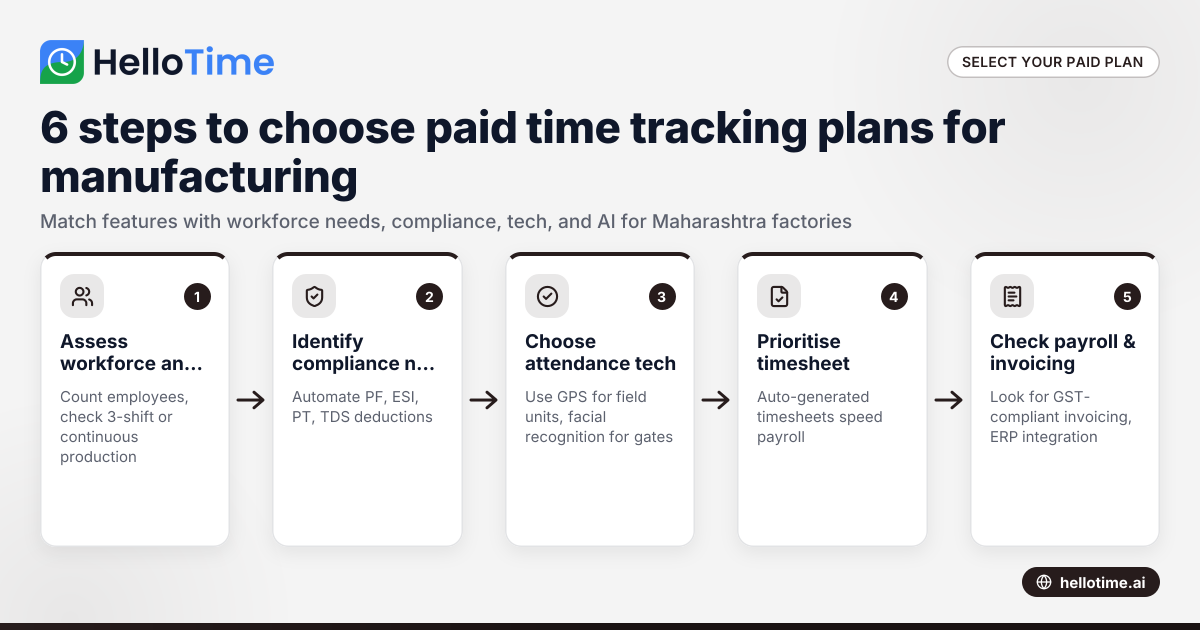
Choosing the Best Paid Plans for Manufacturing Time Tracking Software in Maharashtra, India
Choosing the right paid plan for manufacturing time tracking software in Maharashtra helps your factory optimise labour costs, streamline shift.
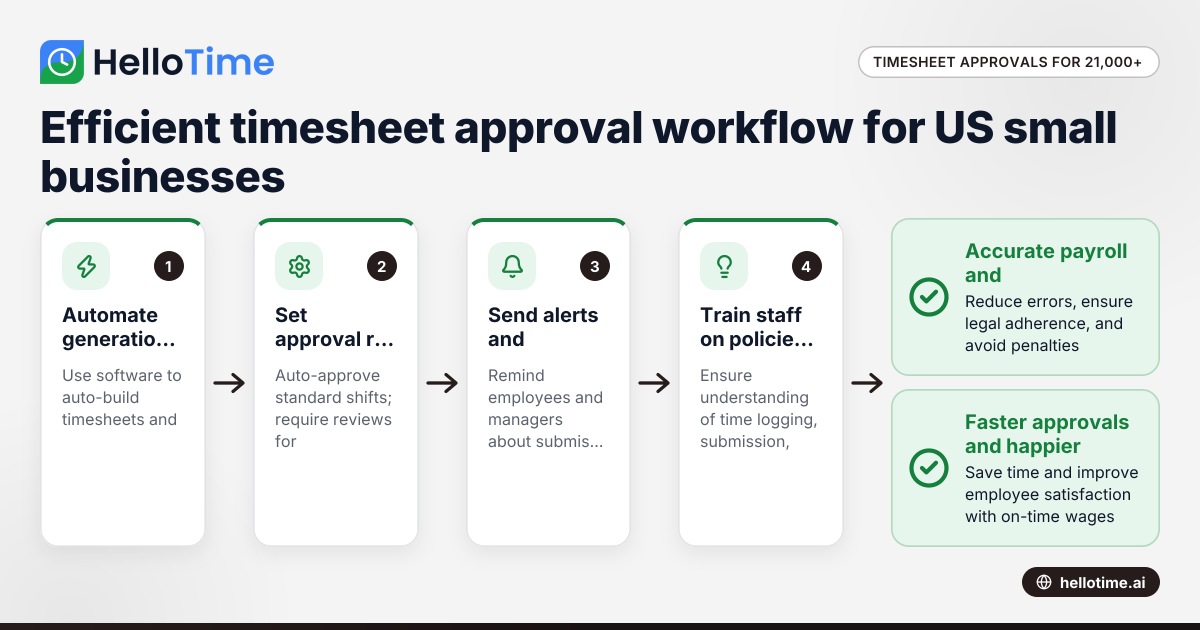
How United States Small Businesses Can Handle Timesheet Approval Workflows with Over 21,000 Minutes Logged
Managing timesheet approvals efficiently becomes critical for US small businesses logging large volumes of employee hours, such as over 21,000 minutes
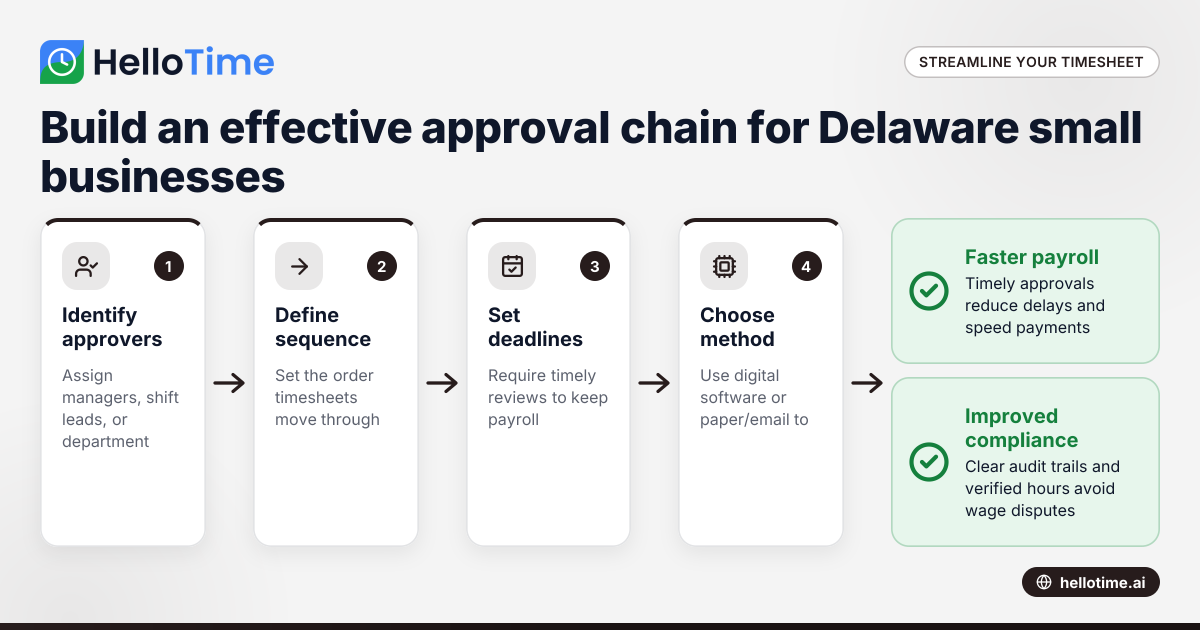
How Delaware Small Businesses Can Streamline Timesheet Approval with Effective Approval Chains in the United States
How Delaware Small Businesses Can Streamline Timesheet Approval with Effective Approval Chains in the United States Delaware small businesses can.