Effective Time Tracking Strategies for United States Agencies to Enhance Client Billing and Project Management
Effective time tracking is essential for agencies in the United States to improve client billing accuracy and optimize project management. With.
The HelloTime team
10 min read
On this page
Effective time tracking is essential for agencies in the United States to improve client billing accuracy and optimize project management. With precise time logs, agencies can ensure fair billing, avoid disputes, and gain insights that help allocate resources more efficiently. Implementing the right tools and policies can transform time tracking from a chore into a strategic advantage.
Key takeaways
- Accurate time tracking ensures transparent client billing and prevents revenue loss.
- Agencies benefit from integrated tools that reduce manual entry and errors.
- AI time tracking automates effort capture, improving accuracy and saving time.
- Effective time tracking supports better project budgeting and deadline adherence.
- Employee engagement and clear policies improve time tracking compliance.
- Choosing the right time tracking software tailored for agencies streamlines workflows.
Why is time tracking crucial for agencies in the US?
Agencies in the US typically bill clients based on hours spent or project phases completed. Without precise time tracking, there is a risk of underbilling, which directly impacts revenue, or overbilling, which can damage client relationships. Accurate time logs help validate invoices, making audits and client reviews smoother and more professional.
For example, an advertising agency in Chicago that works with multiple clients simultaneously needs to track exactly how much time is spent on each client’s campaign to invoice them correctly. If the agency does not use reliable time tracking, it might miss billable hours or struggle to justify charges during client audits.
Additionally, time tracking provides useful data for project management. Agencies can analyze historical time logs to estimate future projects more accurately, allocate staff where needed, and adjust deadlines realistically. This is especially important for agencies with remote teams across different time zones, such as in Houston and Detroit, where coordinating schedules and billing becomes more complex.
How can time tracking improve client billing and project profitability?
Accurate time tracking ensures that agencies only bill clients for actual work completed. Consider a digital marketing agency in Detroit with a design team working on multiple projects. If team members underreport their hours, the agency misses revenue on billable time. If hours are overreported, it may cause client dissatisfaction or non-renewal of contracts.
Detailed, task-level tracking lets agencies separate billable activities from internal tasks (like training or meetings). For example, a consulting agency can clearly distinguish between client work and internal admin time to avoid billing disputes.
By comparing tracked time to project budgets, agencies reveal which projects are profitable and which might be draining resources. If a website development project consistently takes more hours than budgeted, project managers can investigate causes—such as scope creep or inefficient processes—and take corrective actions sooner.
Benefits include:
- Transparent billing that builds client trust.
- Improved budgeting for upcoming projects based on historical data.
- Informed resource allocation to avoid employee overload or underuse.
What are the common challenges agencies face with time tracking?
Many agencies still rely on spreadsheets, paper timesheets, or manual entries, which are prone to errors and forgetfulness. Some typical challenges are:
- Forgetting or delaying entries: Employees often forget to log time immediately after finishing tasks, leading to inaccurate or estimated records.
- Multiple concurrent projects: Juggling various clients and tasks makes it difficult to track time at a granular level without losing accuracy.
- Manual double entry: Time logs often need copying into invoicing or project management tools, increasing chances of data entry errors.
- Lack of employee buy-in: Some workers perceive time tracking as micromanagement or additional workload, causing resistance.
- Complex approval processes: Manual timesheet approvals can slow down billing cycles.
- Inadequate reporting: Basic spreadsheets do not provide insights into resource utilization or profitability.
For example, an agency in Houston may have a creative team working at client sites and remotely. Without mobile-friendly time tracking, logs from field staff come in late or are inconsistent, delaying billing and management reports.
How does AI time tracking help agencies streamline operations?
AI time tracking uses machine learning algorithms and activity detection to automatically capture work hours by monitoring computer usage, apps, websites visited, and even calendar events. This radical automation greatly reduces manual effort and errors.
Benefits include:
- Accurate effort capture: AI detects the start and end of productive tasks without employees having to remember or estimate time.
- Categorization: Automatically tags time by project or client based on documents, emails, or apps used.
- Granularity: Distinguishes between billable and non-billable time to ensure only client work is invoiced.
- Faster billing: Timesheets are populated continuously, enabling quicker invoice generation and payment cycles.
- Better insights: Provides detailed analytics on how time is used across teams and projects, highlighting bottlenecks or inefficiencies.
For example, a PR agency in Detroit using AI time tracking can automatically log hours spent drafting press releases and attending client calls, even if employees forget to clock in manually.
How to implement effective time tracking for agencies?
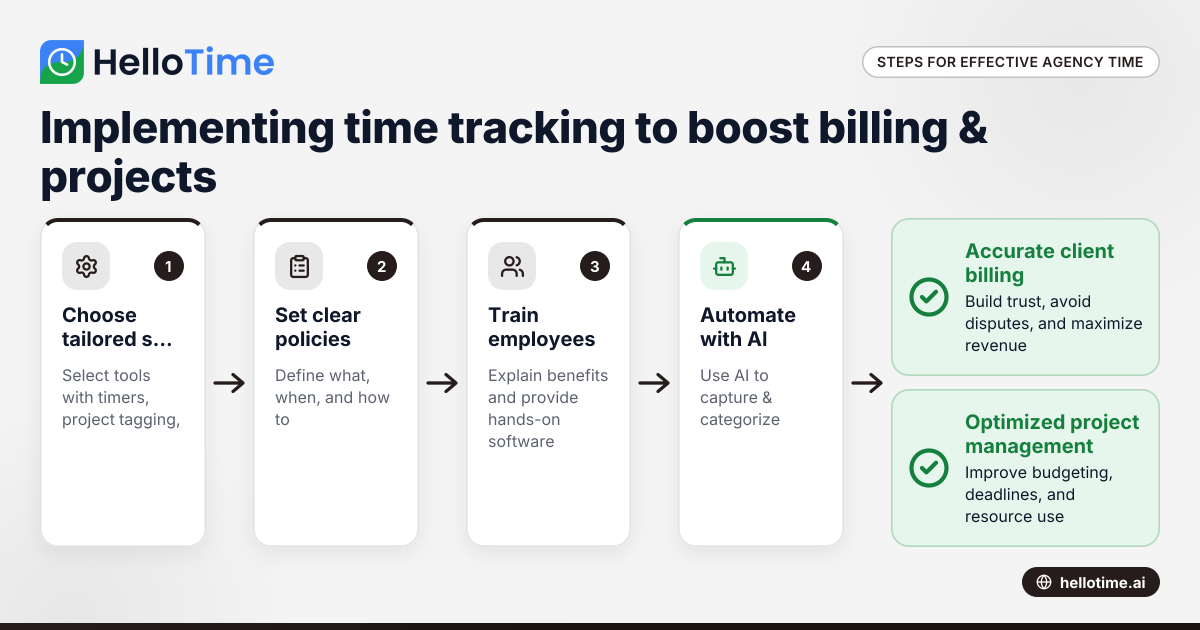
Implementing time tracking involves a combination of the right tools, policies, and culture. Here is a step-by-step approach:
Select suitable software Choose time tracking tools tailored to agency workflows. Look for features like task-level tracking, mobile and desktop apps, client and project tagging, and smooth integration with invoicing and project management software. For example, HelloTime offers one-click timers, automated timesheets, and reporting dashboards in a single platform.
Define clear policies Set expectations around what activities to track (client work, meetings, breaks), how often to log time (real-time or end-of-day), and standards for accuracy. Transparency avoids confusion and over- or under-reporting.
Train employees Educate teams on why time tracking matters for fair billing and project success. Provide hands-on training on software tools and best practices.
Use automation Incorporate AI time tracking or browser extensions that detect task activity automatically, reducing manual input and data gaps.
Review data regularly Managers should analyze time logs weekly or monthly to identify discrepancies, optimize staffing, and flag scope creep.
Link to billing Connect time data to invoicing software such as QuickBooks to generate invoices directly from accurate billable hours.
Encourage accountability Share reports transparently and empower project managers to review and approve timesheets. Recognize teams excelling in timely, accurate tracking.
Following these steps helps agencies adopt time tracking as a seamless part of everyday work.
What features should agencies look for in time tracking software?
The right time tracking software makes the process simpler and more effective. Key features include:
One-click timers and mobile apps Easy starting/stopping of timers on desktop or smartphone encourages consistent use.
Task and project hierarchy Organizes time entries by client, project, phase, and task to generate detailed reports.
Automatic timesheets and approval workflows Auto-generated timesheets reduce administrative overhead with simple manager approvals.
Reporting dashboards Visualize profitability, employee utilization, deadlines, and budget adherence in real time.
Integrations Sync with QuickBooks, Stripe, or CRM tools to streamline invoicing, payments, and client management.
Geofenced clock-ins Useful for agencies with on-site teams, allowing clock-ins only within client locations or offices.
AI time tracking Automatically captures work without manual entries and categorizes time intelligently.
Security and compliance Strong data protection to safeguard client confidentiality and comply with US privacy standards.
For example, an agency in Houston serving retail clients may need geolocation tracking to ensure on-site shifts are logged properly with face recognition-enabled kiosk attendance.
What is the impact of good time tracking on project management?
Accurate time tracking empowers project managers in multiple ways:
- Better resource allocation: Understand who is overloaded or underutilized and reassign tasks accordingly.
- Realistic deadlines: Set achievable deadlines based on actual time spent on similar past projects.
- Project transparency: Keep clients informed with real-time updates on progress and budgets.
- Early problem detection: Spot tasks exceeding estimated hours early to manage scope creep or increase budgets.
- Process optimization: Identify repetitive, time-consuming tasks that can be automated or streamlined.
- Increased accountability: Team members track their own progress, improving motivation and focus.
For example, a consultancy in Chicago might use time tracking data to renegotiate deadlines with clients when initial estimates prove too optimistic, avoiding delivery failures.
How can agencies encourage employees to track time accurately?
Employee cooperation is critical. Here are proven tactics:
- Communicate the purpose: Emphasize that accurate time tracking supports fair client billing, avoids disputes, and helps the agency succeed, which benefits everyone.
- Keep it simple: Use intuitive software with mobile apps and quick timers to reduce friction.
- Provide feedback: Regularly share individual and team tracking reports and highlight successes.
- Address concerns: Listen to employee feedback about challenges or perceived privacy issues with tracking.
- Incentivize accuracy: Recognize and reward consistent, timely time tracking.
- Automate where possible: Use AI to capture work hours silently, minimizing manual effort.
For example, a design agency in Detroit might hold monthly meetings reviewing billing accuracy and celebrate teams with top compliance rates.
How do time tracking and invoicing integrate for agencies?
Integration between time tracking software and invoicing tools like QuickBooks or Stripe is essential to streamline revenue cycles. It has several benefits:
- Eliminates double entry: Time entries feed directly into invoice generation, preventing transcription errors.
- Speed up billing: Real-time timesheets mean invoices can be created and sent faster.
- Detailed invoices: Include task-level breakdowns or timesheets as attachments, building client trust.
- Customizable formats: Adapt invoices to client requirements.
- Automated reminders: Schedule follow-ups for overdue payments to improve cash flow.
For example, an agency in Houston servicing multiple clients can create hundreds of invoices monthly without administrative bottlenecks, accelerating revenue collection.
How can agencies begin adopting AI time tracking today?
To adopt AI time tracking smoothly:
- Pilot with a small team: Test AI features on a subset of employees and encourage feedback on ease of use and accuracy.
- Compare data quality: Assess improvements over manual logging using reports and billing results.
- Train users: Offer guidance on how AI complements manual entries and on privacy safeguards.
- Refine processes: Adjust policies and tracking criteria based on pilot insights.
- Roll out broadly: Gradually implement AI tracking for the entire agency with ongoing support.
Many workforce management platforms, including HelloTime, now offer AI time tracking as part of their features, making it easier than ever to transition.
Conclusion
For agencies operating in the United States, mastering time tracking is vital to enhancing client billing accuracy and driving better project outcomes. By combining clear policies, employee training, the right software tools, and AI time tracking, agencies cut billing errors and improve resource management. This strategic approach boosts profitability and client trust, key for competing in dynamic markets like Chicago, Houston, or Detroit.
Explore the modern solutions to time tracking and workforce management tailored for agencies by checking out the features and comparing plans to find the one that fits your business at pricing.
Frequently asked questions
What is the best type of time tracking for agencies?
The best approach combines easy-to-use timers with project and task-level tracking. Automated options like AI time tracking reduce manual errors and administrative overhead, making the process more efficient.
Can time tracking software integrate with accounting tools?
Yes, many time tracking tools integrate seamlessly with accounting platforms such as QuickBooks and Stripe. This integration streamlines workflows by syncing billable hours directly with invoicing and payment processing.
How do agencies ensure employees comply with time tracking?
Clear policies, straightforward software, regular performance reviews, and training foster greater compliance. Supplementing with AI time tracking further minimizes missed or inaccurate entries.
Is AI time tracking secure for client data?
Reputable platforms prioritize security with encryption and strict data access controls. Always check a provider’s privacy policy and compliance with US data protection standards before adoption.
How often should agencies review time tracking data?
For most agencies, monthly reviews strike a good balance. However, projects with tight deadlines or heavy client scrutiny benefit from weekly monitoring to proactively manage budgets and workloads.
What features help agencies track billable hours accurately?
Automated timers, clear task and project categorization, detailed reporting dashboards, and approval workflows help agencies capture and bill hours precisely, reducing disputes and improving cash flow.
Read next
This article covers one part of a bigger topic. For the complete picture, read our guide to time tracking.
Keep reading
Related articles
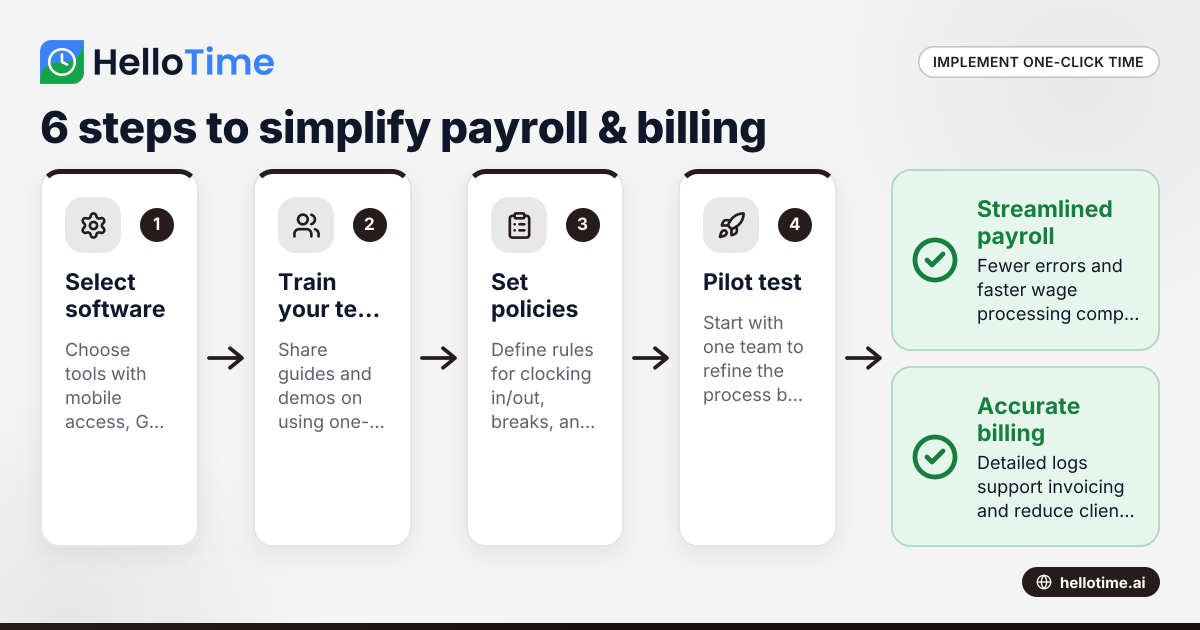
How United States Small Businesses Can Implement One-Click Time Tracking to Simplify Payroll and Billing
Time tracking is the process of logging the hours employees spend on tasks or projects. For small businesses in the United States, adopting one-click.
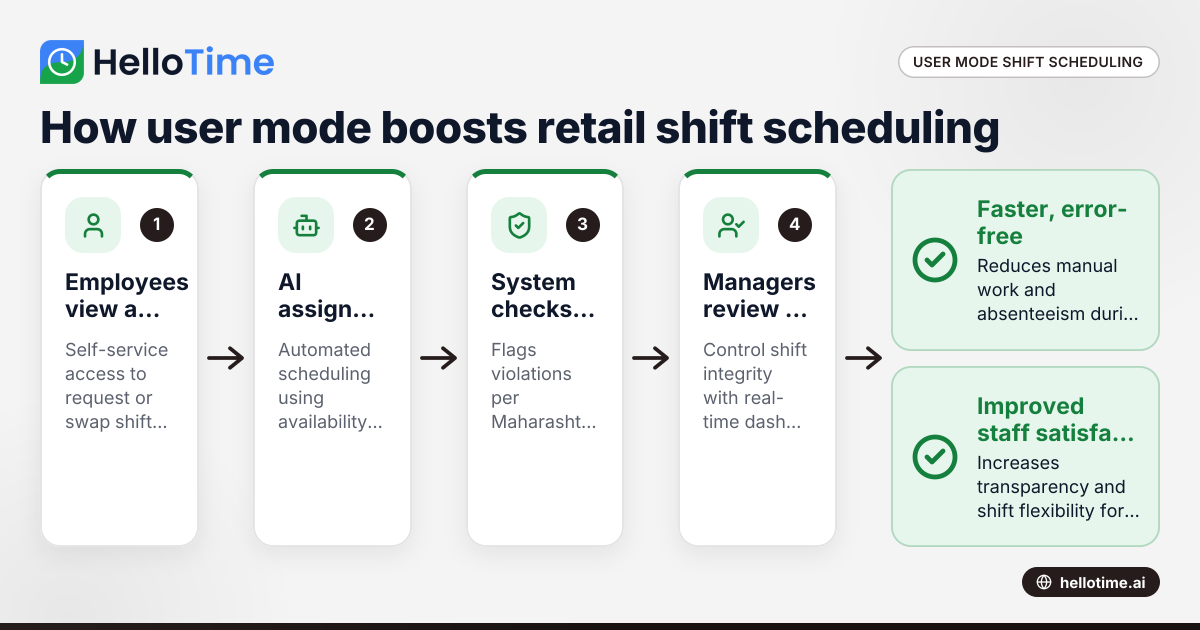
How User Mode Enhances Shift Scheduling Efficiency for Retail Stores in Mumbai, India
User mode shift scheduling in Mumbai retail stores means giving employees controlled access to view, request, or swap shifts themselves, while.
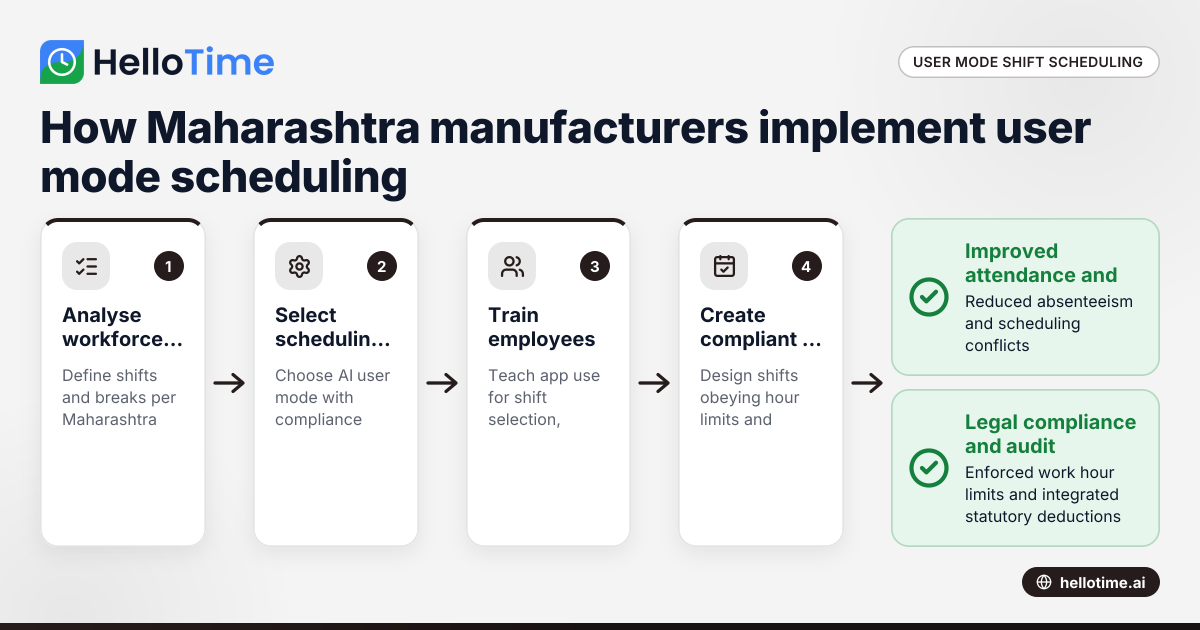
How User Mode Simplifies Shift Scheduling for Manufacturers in Maharashtra, India
User mode shift scheduling lets manufacturers in Maharashtra give workers control to pick or swap shifts via an app. This improves attendance.