GDPR Equivalent Compliance in United States Timesheet Approval Workflows: What Small Businesses Need to Know
GDPR is a European data privacy law not enforced in the U.S., but American businesses must still protect employee data and maintain transparent.
The HelloTime team
6 min read
On this page
GDPR is a European data privacy law not enforced in the U.S., but American businesses must still protect employee data and maintain transparent timesheet approval processes. U.S. regulations like CCPA address data privacy and influence timesheet management practices to ensure compliance and trust.
Key takeaways
- GDPR does not apply in the U.S., but data privacy remains crucial in timesheet approvals.
- U.S. laws like CCPA and HIPAA shape employee data protection in workforce management.
- Small businesses should implement secure, transparent timesheet approval workflows.
- Employee consent and access controls help meet U.S. privacy expectations.
- Features like encrypted storage and audit trails support compliance.
- AI GDPR principles matter when integrating AI in timesheet approval processes.
What is the GDPR equivalent compliance framework for timesheet approvals in the U.S.?
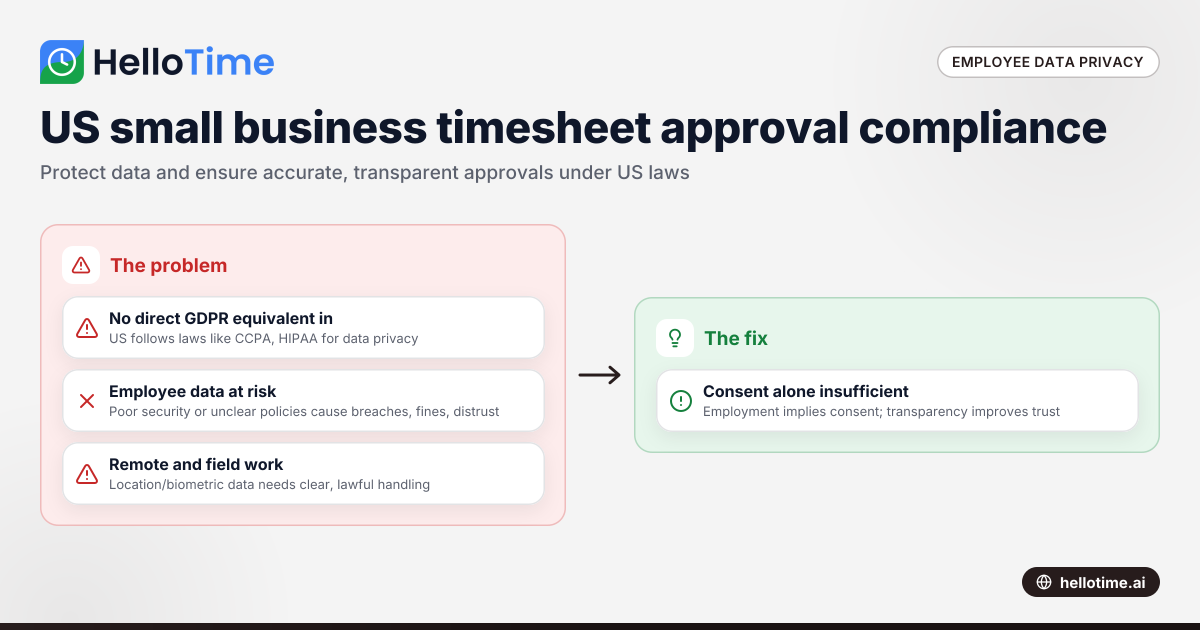
The U.S. has no direct equivalent to GDPR. Instead, data privacy is governed by a range of federal and state laws. California’s CCPA is the most notable, granting employees rights over their data. HIPAA applies if health information is involved. Employers must use employee time data lawfully, secure it properly, and inform employees about data use.
These regulations collectively require businesses to focus on transparent handling of employee information and robust security measures during timesheet approvals. Compliance involves limiting data access, documenting policies, and respecting employee privacy rights based on state and sector-specific laws.
How does AI GDPR impact timesheet approval workflows?
AI GDPR refers to applying GDPR-like data protection principles when AI processes personal data. U.S. companies using AI for timesheet approvals should ensure data minimization, transparency, and secure processing. Even if GDPR itself does not apply, following these principles reduces legal risks and enhances employee trust in automated workflows.
Incorporating AI GDPR principles means clearly explaining to employees how AI systems handle their data, obtaining appropriate consent where needed, and maintaining audit trails. This approach supports responsible AI use and compliance with U.S. privacy expectations in workforce management.
Why is timesheet approval workflow compliance important for small businesses?
Compliant timesheet approvals ensure accurate payroll, billing, and adherence to labor laws. Mishandling employee data risks privacy breaches, fines, and damaged reputation. Small businesses, often with limited HR resources, benefit from streamlined, secure approval processes that protect employee rights and reduce administrative overhead.
A compliant workflow improves accuracy and trust. It helps prevent discrepancies in pay and legal issues related to recordkeeping errors or unauthorized data access, providing peace of mind for both management and staff.
What U.S. laws govern employee data privacy in timesheets?
Key laws include:
- CCPA: Protects personal info of California employees, including rights to access and delete data.
- HIPAA: Applies if timesheets contain health-related data, ensuring confidentiality.
- State labor laws: Require secure payroll recordkeeping and employee notification.
Together, these laws mandate careful data handling, limited access, and respect for employee privacy when processing timesheet data.
How can small businesses ensure secure timesheet data handling?
- Choose time tracking software with encrypted storage.
- Restrict access to managers who approve timesheets.
- Maintain audit logs of changes and approvals.
- Clearly communicate data collection and use to employees.
- Regularly update security protocols and compliance policies.
Adopting workforce management tools with built-in security features helps small businesses manage these steps easily.
What features should you look for in a compliant timesheet approval tool?
Look for software that provides:
- Automated, accurate timesheet generation.
- Defined approval workflows with digital sign-offs.
- Encrypted data storage and user authentication.
- Geofenced clock-in options to verify employee location.
- Audit trails logging all actions for transparency.
- AI-powered capabilities aligned with AI GDPR principles.
These improve compliance with U.S. privacy laws and operational efficiency.
Can small businesses rely on consent for processing timesheet data?
Consent is important but not always sufficient alone. Employment relationships imply consent for necessary data like hours worked. Best practice is to inform employees clearly about data usage and get explicit consent for secondary uses, such as AI analytics. Provide employees access and correction rights to build trust and compliance.
Transparency regarding timesheet data collection, storage, and processing strengthens employee confidence and reduces legal risks associated with data misuse.
How does remote or field work affect timesheet approval compliance?
Remote and field workers require accurate attendance verification and careful data privacy handling. Tools like geofenced clock-ins and face recognition kiosks enhance accuracy but need transparent, lawful data collection. Employers must use location and biometric data only during work hours and secure it rigorously.
Clear policies explaining data collection and limiting access protect both employee privacy and business compliance, especially across multiple states or worksites.
What practical steps can U.S. small businesses take to improve compliance in timesheet approvals?
Start by reviewing current processes for privacy risks. Then:
- Train HR and payroll teams on relevant data privacy laws.
- Use workforce management software built for compliance.
- Develop clear privacy policies on timesheet data handling.
- Conduct periodic audits of approval workflows.
- Stay informed about updates in laws and AI data practices.
These actions help businesses in cities like Chicago or Houston foster compliance and reduce risks effectively.
Exploring HelloTime’s compliance-friendly workforce solutions
Small businesses wanting secure, compliant timesheet approvals can explore HelloTime in the US. Our tools offer encrypted storage, audit logging, geofenced clock-ins, and AI features aligned with AI GDPR principles. Discover more about workforce management on our features page and find the right plan at pricing to match your business needs.
Frequently asked questions
Does GDPR apply to U.S. businesses managing employee timesheets?
No, GDPR is a European law. U.S. businesses only need to comply if they process data of EU residents or use AI tools subject to GDPR. Otherwise, U.S. privacy laws govern their timesheet practices.
What U.S. law is closest to GDPR for employee privacy?
The California Consumer Privacy Act (CCPA) is the closest, giving employees rights over their personal data and requiring businesses to be transparent about data use.
Can AI tools comply with GDPR principles in workforce management?
Yes, AI tools can adhere to GDPR-like principles such as data minimization, clarity, and security, even if the law doesn’t directly apply, which reduces compliance risks.
How should businesses handle biometric data in timesheet approvals?
Biometric data requires explicit employee consent, high security, and restricted access in compliance with applicable laws, ensuring privacy and minimizing risk.
Are time tracking approvals required by law in the U.S.?
Federal law requires accurate work hour records, and approval workflows help verify accuracy, minimize errors, and support payroll compliance.
What happens if my timesheet system is not compliant with data privacy laws?
Noncompliance risks fines, legal action, and employee distrust. Prioritize secure, transparent systems to avoid these problems.
HelloTime offers a compliance-conscious workforce management solution for U.S. businesses. Visit HelloTime in the US to learn more.
Read next
This article covers one part of a bigger topic. For the complete picture, read our guide to gdpr dpdp dpa.
Keep reading
Related articles
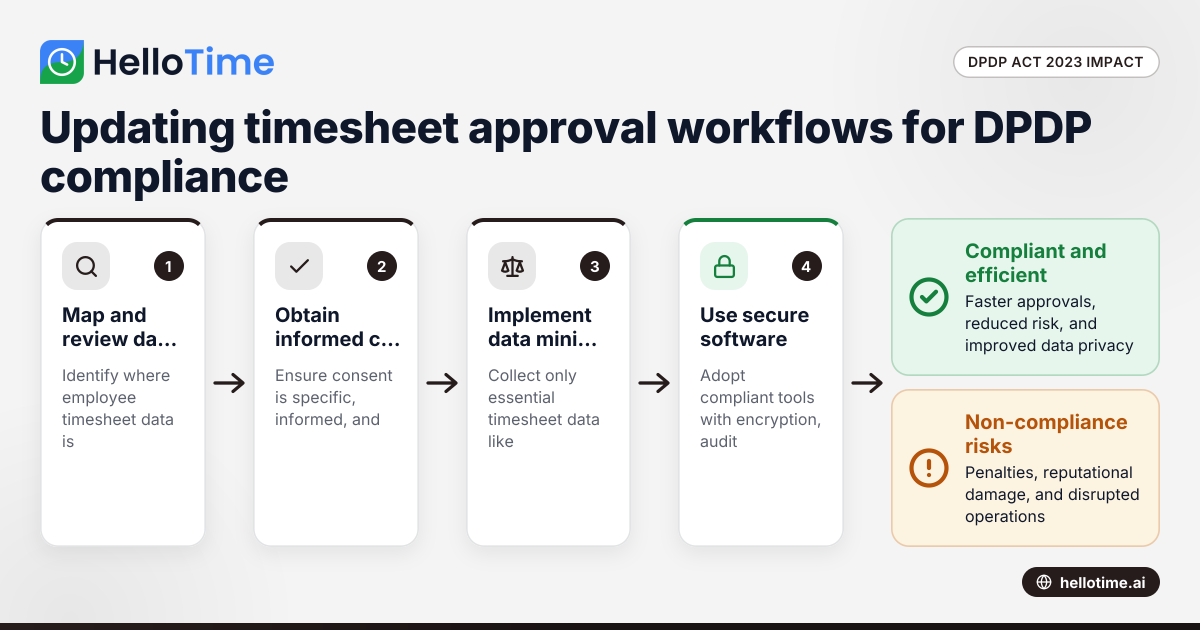
How the DPDP Act 2023 Affects Timesheet Approval Workflow for Manufacturers in Maharashtra, India
How the DPDP Act 2023 Affects Timesheet Approval Workflow for Manufacturers in Maharashtra, India The Digital Personal Data Protection (DPDP) Act 2023
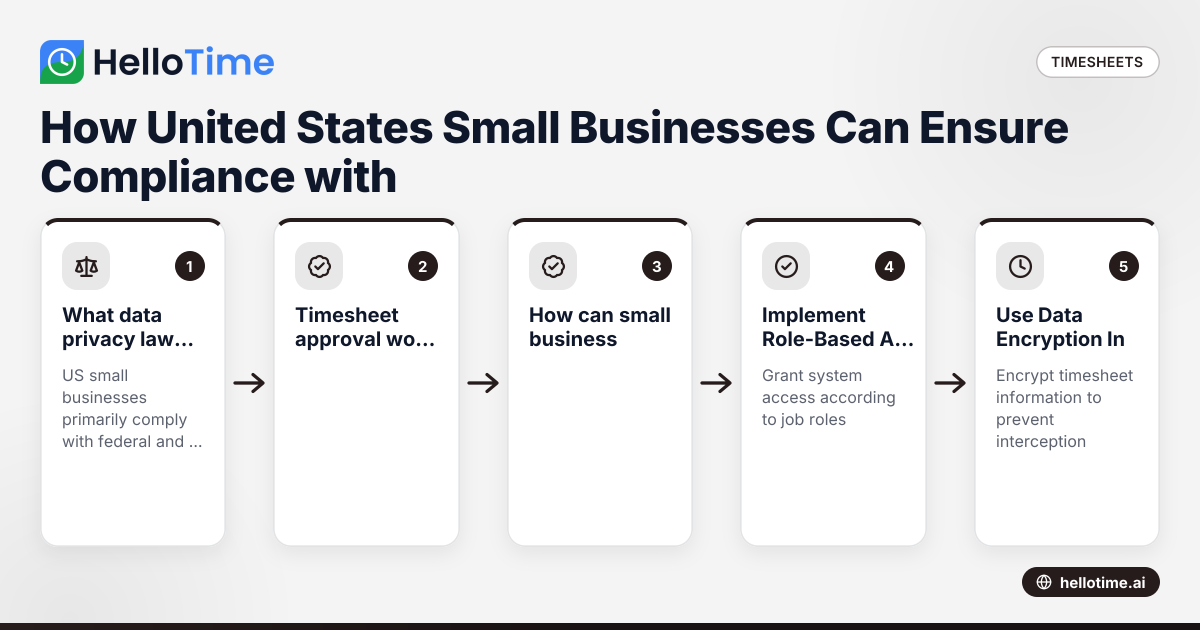
How United States Small Businesses Can Ensure Compliance with Data Privacy in Timesheet Approval Workflows
Timesheet approval workflows handle sensitive employee data. United States small businesses must ensure compliance with data privacy laws to protect.
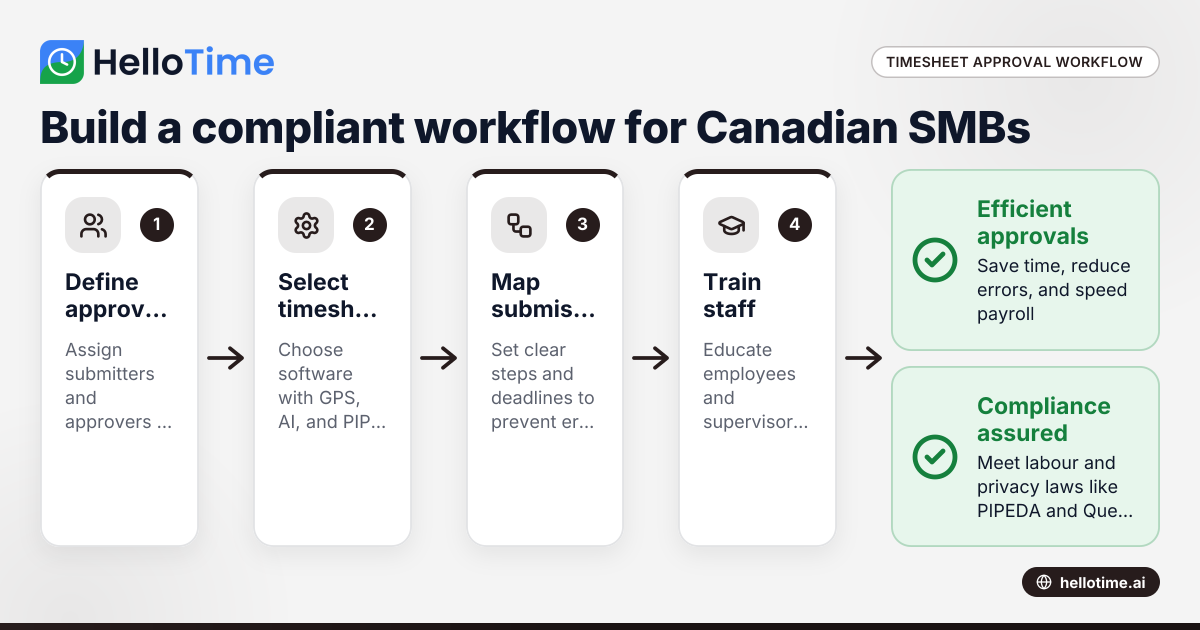
Streamlining Timesheet Approval Workflows for Canadian Small Businesses
Streamlining your timesheet approval workflow is essential for Canadian small businesses to save time, reduce errors, and maintain compliance with.