How United States Small Businesses Can Ensure Compliance with Data Privacy in Timesheet Approval Workflows
Timesheet approval workflows handle sensitive employee data. United States small businesses must ensure compliance with data privacy laws to protect.
The HelloTime team
9 min read
On this page
Timesheet approval workflows handle sensitive employee data. United States small businesses must ensure compliance with data privacy laws to protect personal information and avoid costly breaches. Though GDPR is a European regulation, its principles influence best practices applicable for US businesses managing timesheets, especially when using AI-driven tools.
Key takeaways
- US businesses managing timesheets must protect employee personal data during approval workflows.
- While GDPR does not legally apply, its data privacy principles can guide US compliance efforts, including in AI applications.
- Implement role-based access, encryption, and secure storage to safeguard timesheet data.
- Automating timesheet approvals with AI tools helps maintain audit trails and privacy controls under the framework of ai gdpr.
- Regular staff training on data privacy reduces risks of inadvertent data leaks or misuse.
- Using time tracking software with embedded privacy features enhances compliance and efficiency.
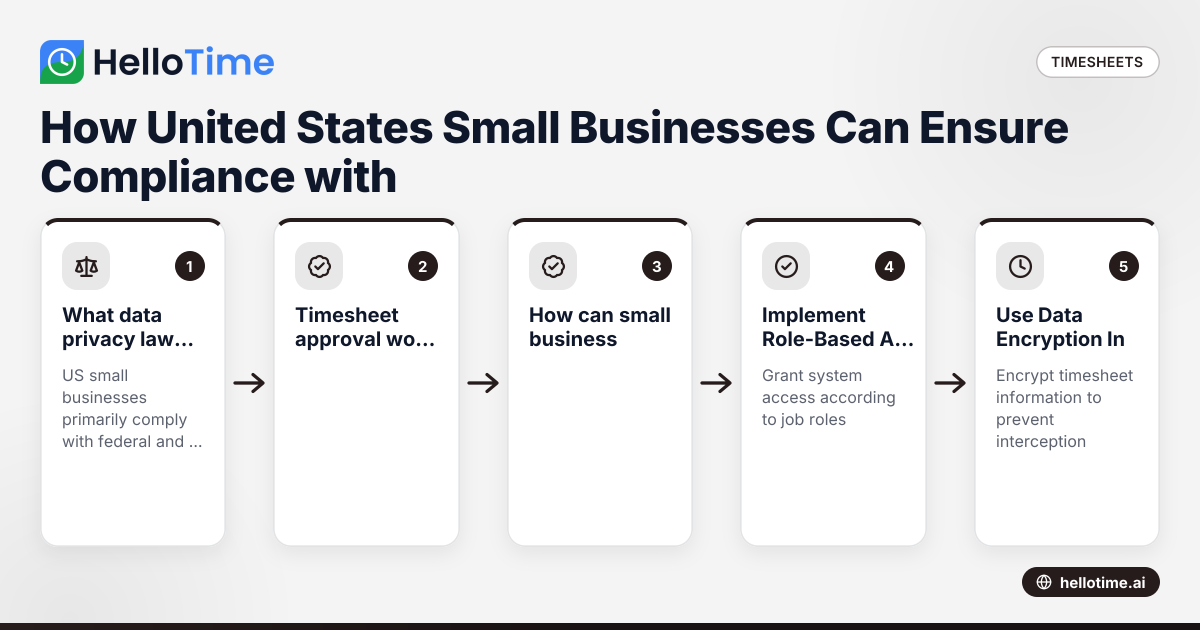
What data privacy laws apply to US small businesses handling timesheets?
US small businesses primarily comply with federal and state laws, not GDPR, which governs European data. Several regulations affect how employee data should be managed when handling timesheets:
Fair Labor Standards Act (FLSA): Requires accurate wage and hour recordkeeping. While it mainly addresses the correctness of records rather than privacy specifics, compliance requires safeguarding data against tampering.
California Consumer Privacy Act (CCPA): If your small business operates in California or deals with California residents’ personal data, the CCPA requires robust data privacy, giving employees rights to request data access and deletion and mandates disclosure of data collection practices.
State Data Breach Notification Laws: All 50 states have breach notification laws that require companies to alert affected individuals if personal data, including timesheet data, is compromised in a security incident.
Health Insurance Portability and Accountability Act (HIPAA): Generally not applicable to typical timesheet data unless healthcare-specific information is collected, which is uncommon.
Although GDPR does not legally apply to US businesses unless they handle data of EU residents, its principles have set the industry gold standard for data privacy worldwide. This makes it beneficial for US employers to follow GDPR-inspired best practices such as data minimization and purpose limitation to enhance employee data protection.
What is a timesheet approval workflow and why is data privacy critical?
A timesheet approval workflow is the sequence where employee time entries are submitted, reviewed, and authorized for payroll or billing use. It typically involves:
- Employee Submission: Employees log their hours worked daily or weekly, including project or task details.
- Manager Review: Supervisors inspect timesheet entries for accuracy and completeness.
- Approval or Rejection: Timesheets are marked approved or sent back for corrections.
- Payroll Processing: Approved timesheets feed into payroll or invoicing systems.
These workflows collect and process sensitive personal information such as full names, social security numbers, hourly pay rates, and sometimes biometric data like fingerprints or facial recognition timestamps. Location data might also be captured if GPS or geofencing is used for clock-ins.
Why is data privacy critical?
- Employee timesheet data represents personally identifiable information (PII). Mishandling such data risks identity theft and fraud.
- Labor laws require accurate, tamper-resistant records; breaches compromise compliance.
- Privacy breaches can lead to costly lawsuits, regulatory penalties, and severe reputational damage.
- Maintaining employee trust supports a positive workplace culture.
Consider this example: A Chicago-based staffing agency stores paper timesheets with employee social security numbers in an unlocked filing cabinet. If a guest or unauthorized employee accesses those files, personal data could be stolen, leading to identity fraud and legal exposure.
How can small business owners secure employee data in timesheet approval workflows?
Securing timesheet data involves comprehensive protection during collection, storage, transmission, and processing. US small business owners can follow these detailed steps:
1. Implement Role-Based Access Controls
Grant system access according to job roles. For example:
- Only payroll clerks and managers can view full timesheet data.
- Employees can view and edit only their own entries.
- IT staff may have technical access but no rights to modify timesheets.
This minimizes exposure if accounts are compromised.
Common pitfall: Using generic shared logins increases risk. Each user should have unique credentials.
2. Use Data Encryption In Transit and At Rest
Encrypt timesheet information to prevent interception:
- Use HTTPS/TLS protocols for web-based submissions.
- Encrypt stored timesheet databases or files with industry-standard algorithms (AES-256).
- Employ endpoint encryption on tablets or kiosks that collect clock-in data.
Worked example: A Houston-based field service contractor uses an iPad kiosk for clock-ins with biometric face recognition. The data captured is encrypted on the device before syncing with cloud storage.
3. Enforce Strong Authentication Measures
Require multifactor authentication (MFA) for all systems handling timesheets:
- Password plus one-time codes via text or authentication apps.
- Biometric authentication on devices.
- Regular password updates with complexity requirements.
MFA blocks unauthorized access from stolen passwords.
4. Maintain Detailed Audit Trails
Track who accessed, edited, or approved each timesheet and when. Audit logs help:
- Detect unauthorized activity promptly.
- Demonstrate compliance during regulatory reviews.
- Resolve disputes regarding approvals or changes.
5. Apply Data Minimization Principles
Collect only the information necessary:
- Avoid storing sensitive data like full social security numbers unless absolutely required.
- Limit GPS tracking to on-shift hours only.
- Avoid retaining timesheet data longer than needed for payroll and legal obligations (typically three to seven years).
6. Ensure Regular Secure Backups
Back up timesheet data frequently to protect against ransomware or hardware failures. Backups should be encrypted and stored offsite or in secure cloud environments.
7. Review Third-Party Vendors Thoroughly
If outsourcing time tracking or approval software:
- Assess the vendor’s security certifications and controls.
- Verify compliance with relevant US regulations.
- Include privacy clauses and breach notification requirements in contracts.
8. Train Employees on Data Privacy
Educate staff and managers on securing timesheet data:
- Best practices for password creation and handling.
- Recognizing phishing attempts.
- Handling physical documents securely.
Ongoing awareness reduces accidental data leaks.
Step-by-step example: A Detroit restaurant employs shift workers who log hours using a tablet kiosk at the entrance. Management trains all supervisors annually on how to handle timesheet data and recognizes suspicious access attempts flagged by the system.
9. Transition to Automated Solutions With Security Features
Manual paper or spreadsheet-based systems increase error and breach risk. Automated systems with built-in privacy controls:
- Provide encrypted cloud storage.
- Enable granular permission settings.
- Offer built-in audit trails.
- Integrate AI-powered anomaly detection.
These features help small businesses stay compliant with less manual effort.
How does AI improve GDPR and data privacy compliance in timesheet workflows?
AI tools embedded in timesheet management not only automate approvals but also help enforce privacy policies inspired by GDPR principles, often called ai gdpr compliance efforts. They monitor data access and mask sensitive information based on user roles, reducing exposure risks and streamlining audit processes.
AI detects unusual time entry patterns or suspicious access, helping prevent fraud. It automates encryption and secure data handling, thus reinforcing privacy and security without heavy manual intervention.
Example: A Chicago design agency uses AI to review timesheets before approval. The system flags irregular hours and restricts sensitive data visibility depending on user permissions. This both supports accurate billing and guards employee privacy consistent with GDPR-inspired standards.
What proactive steps should HR managers take to align with data protection requirements?
HR teams play a key role in safeguarding timesheet data:
1. Conduct Regular Privacy Audits
Review how timesheet data flows through your organization, identifying weaknesses or outdated processes.
2. Update Employee Consent and Privacy Notices
Clearly inform employees how their timesheet data is collected, stored, and used. Obtain consent if biometric or location data is involved.
3. Collaborate With IT for Technical Controls
Ensure encryption, strong authentication, and backups are implemented and monitored.
4. Train Approvers and Supervisors
Ensure those handling timesheets understand privacy risks, how to recognize phishing, and proper data disposal.
5. Review Vendor Agreements Annually
Verify third-party providers maintain secure systems and provide prompt breach notifications.
6. Develop a Data Breach Response Plan
Create procedures to quickly contain breaches, notify affected employees per state laws, and remediate vulnerabilities.
How does HelloTime support secure timesheet approval workflows for US businesses?
HelloTime offers modern time tracking and approval solutions tailored for small and mid-sized businesses. Key security features include:
- Role-based access controls that restrict timesheet data visibility by user roles.
- Encrypted data storage safeguarding timesheets at rest and during transit.
- Audit logs that track every change and approval, creating a tamper-evident history.
- One-click approvals streamline workflow while reducing manual handling risks.
- GPS and geofenced clock-ins ensure accuracy and prevent fraudulent entries.
- Tablet kiosk attendance with face recognition captures biometric data securely.
By using HelloTime, businesses in cities like Chicago, Houston, or Detroit reduce manual errors and bolster compliance with data privacy requirements in their workforce management. You can explore HelloTime features and compare plans at pricing to find the best fit for your company.
Frequently asked questions
Is GDPR compliance required for US businesses managing employee timesheets?
No. GDPR is a European Union regulation and does not apply unless your business directly handles data of EU residents. Still, following some GDPR principles can enhance privacy practices and prepare you for global engagements.
What kind of employee data is collected in timesheet workflows?
Common data includes employee names, hours worked, project codes, and pay rates. Advanced setups may collect location data via GPS or biometric data like facial recognition timestamps for clock-ins.
How often should timesheet data privacy policies be updated?
Policies should be reviewed at least yearly or whenever there are significant changes in laws, technology, or business operations affecting data handling.
Can AI tools replace manual timesheet approvals fully?
AI tools automate many approval tasks and detect anomalies but human oversight is essential to ensure fairness and contextual judgment.
What are the risks of not securing timesheet data?
Risks include data breaches, identity theft, violation of labor laws, regulatory fines, and damage to employer reputation leading to loss of business.
How do state laws affect timesheet data privacy?
State laws vary but often mandate secure handling of employee data, timely breach notifications, and grant employees rights regarding their personal information. Employers must comply with laws applicable to their business location and workforce.
Managing timesheet approval workflows with sound data privacy measures is essential for US small businesses to safeguard employee information and comply with regulatory requirements. For practical solutions, explore HelloTime features and compare plans at pricing to enhance your workforce management processes.
Read next
This article covers one part of a bigger topic. For the complete picture, read our guide to gdpr dpdp dpa.
Keep reading
Related articles
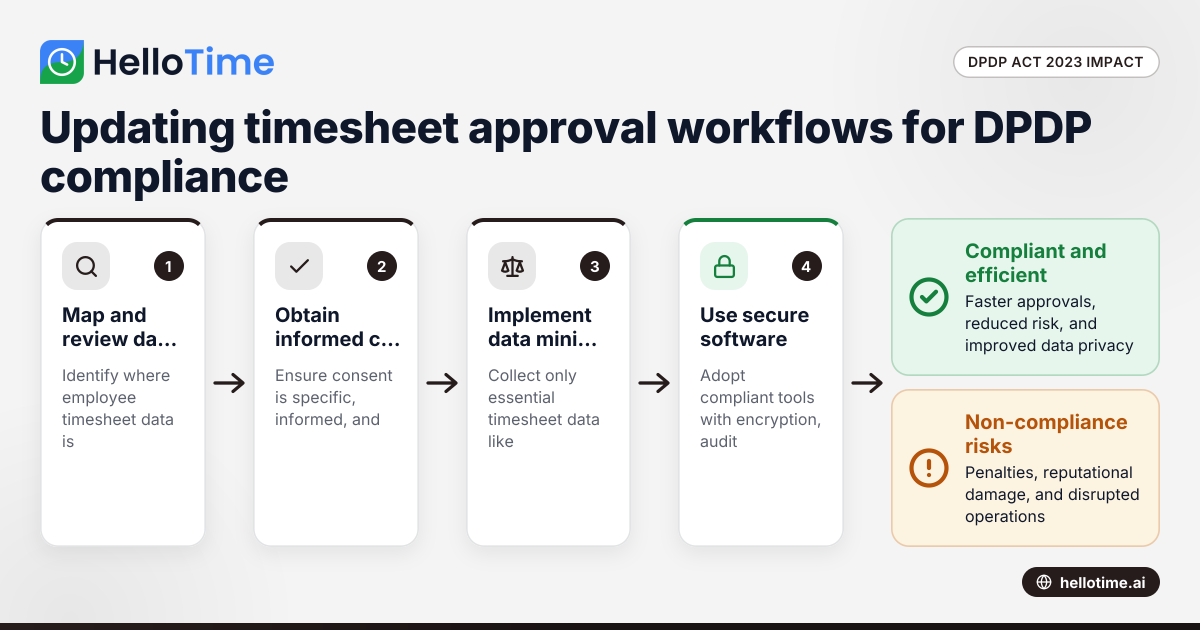
How the DPDP Act 2023 Affects Timesheet Approval Workflow for Manufacturers in Maharashtra, India
How the DPDP Act 2023 Affects Timesheet Approval Workflow for Manufacturers in Maharashtra, India The Digital Personal Data Protection (DPDP) Act 2023
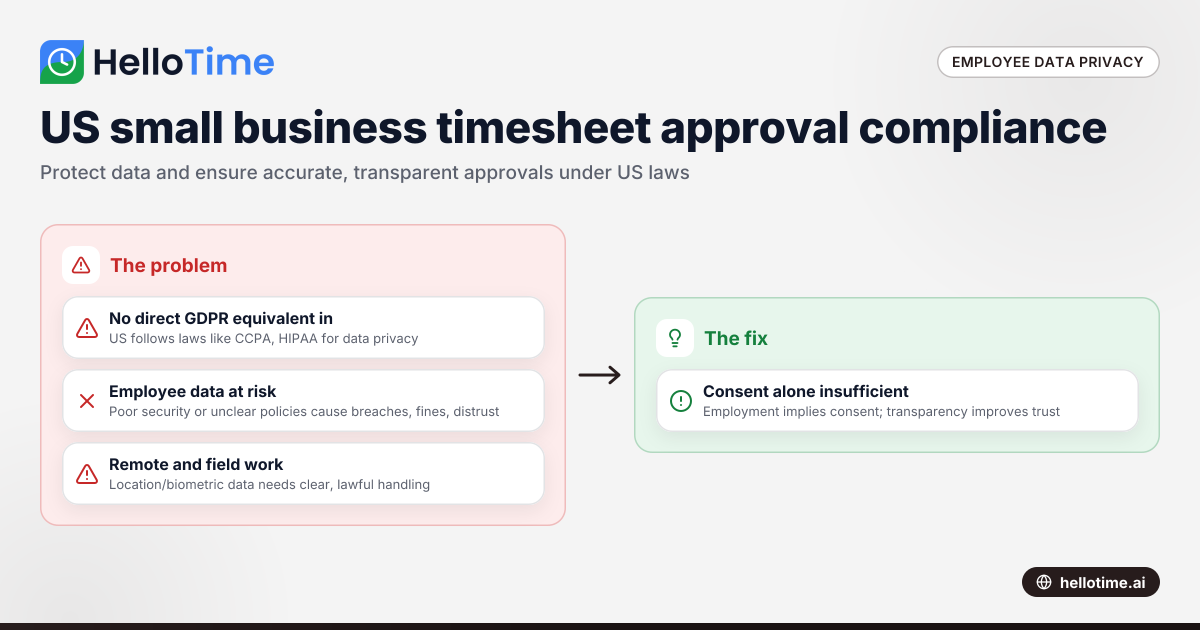
GDPR Equivalent Compliance in United States Timesheet Approval Workflows: What Small Businesses Need to Know
GDPR is a European data privacy law not enforced in the U.S., but American businesses must still protect employee data and maintain transparent.
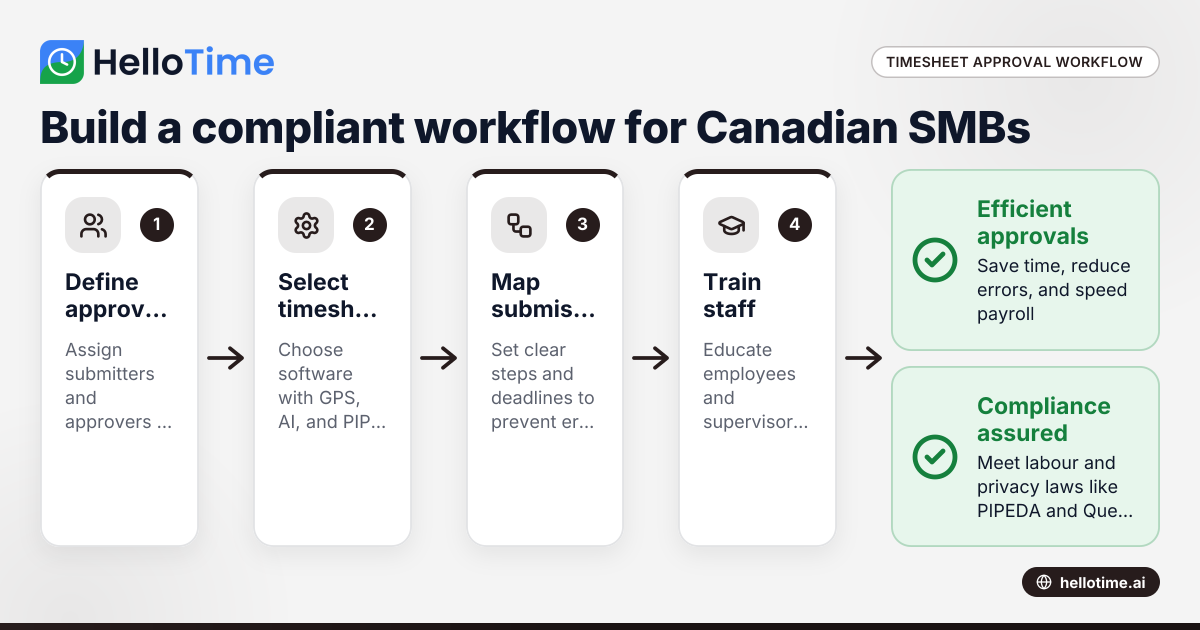
Streamlining Timesheet Approval Workflows for Canadian Small Businesses
Streamlining your timesheet approval workflow is essential for Canadian small businesses to save time, reduce errors, and maintain compliance with.