HelloTime vs TSheets: Choosing the Best Time Tracking Software for United States Agencies
HelloTime and TSheets are popular time tracking solutions for agencies and professional services in the United States. Comparing HelloTime vs TSheets.
The HelloTime team
9 min read
On this page
HelloTime and TSheets are popular time tracking solutions for agencies and professional services in the United States. Comparing HelloTime vs TSheets helps businesses pick software that fits their workforce management needs, covering timesheets, scheduling, attendance, and billing.
Key takeaways
- HelloTime offers quick, one-click time tracking, auto-generated timesheets and approvals suitable for agencies billing by the hour.
- TSheets (now QuickBooks Time) is a robust tracking tool favored by many US businesses, especially for mobile and field teams.
- HelloTime’s workforce management includes scheduling, leave, GPS clock-in, and face recognition kiosks.
- TSheets integrates deeply with QuickBooks accounting for simplified payroll and invoicing.
- Choosing between HelloTime vs TSheets depends on your agency’s size, workflow, billing model, and need for features like project profitability reporting.
- AI-powered functionality is becoming a differentiator, with evolving solutions such as AI HelloTime vs more basic time clocks.
What is the main difference between HelloTime and TSheets?
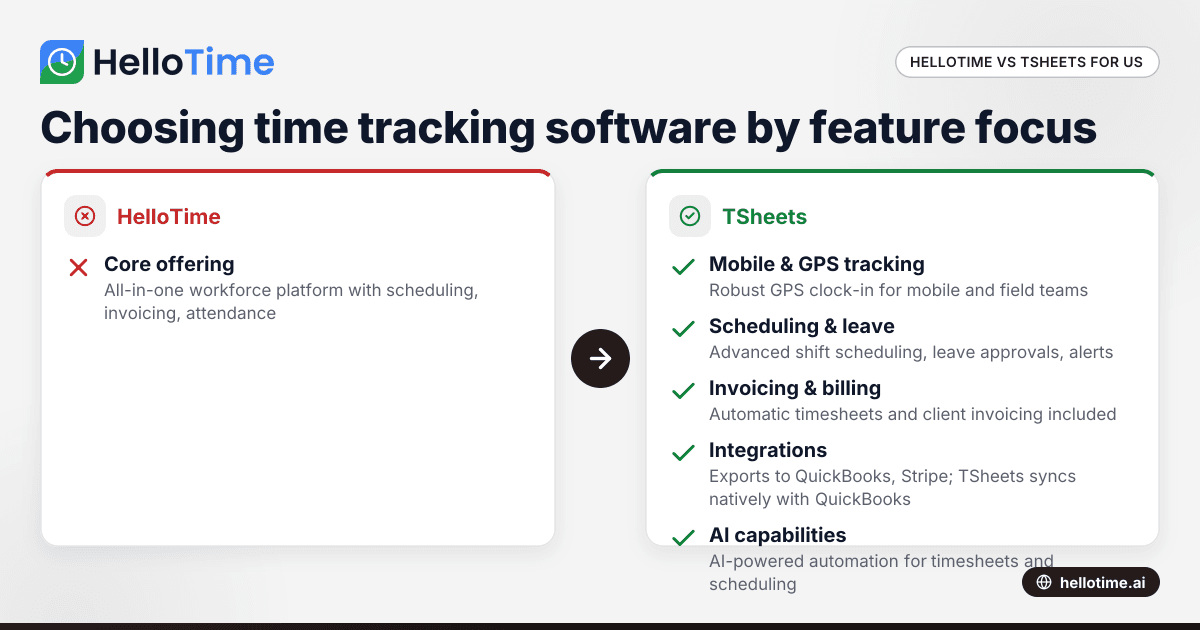
HelloTime is an all-in-one workforce management platform with advanced scheduling, attendance, leave management, and invoicing features designed for agencies and shift-based teams. TSheets focuses on time tracking with strong mobile and GPS capabilities, tightly integrated with QuickBooks for accounting.
HelloTime provides a complete tool to manage teams daily, from clock-in to invoicing. Its automatic timesheets and approval workflows save administrative time. For example, a Chicago-based marketing agency using HelloTime can assign tasks to team members, track time spent on each project, and instantly generate client invoices. This streamlines billing and improves project profitability analysis without juggling multiple apps.
On the other hand, TSheets is streamlined for capturing hours precisely, especially for remote and field employees. Suppose a Houston HVAC company wants to track technician arrival times onsite. TSheets' GPS tracking captures location data at clock-in, ensuring accurate, auditable hours. The time data syncs with QuickBooks Payroll, easing wage calculations and tax filings.
Agencies valuing project profitability reports and billing automation may prefer HelloTime’s broader feature set. Conversely, businesses already deeply embedded in QuickBooks might favor TSheets for seamless accounting integration.
Which software fits agencies billing hourly work better — HelloTime vs TSheets?
Both HelloTime and TSheets support hourly billing agencies well but through different approaches.
HelloTime automatically builds detailed timesheets that reflect projects and tasks, making it easier to track and bill per client or assignment. For example, a Detroit design firm can monitor time per client, compare estimated vs actual hours, and spot projects bleeding budget. HelloTime’s invoicing module converts tracked hours directly into client invoices, reducing manual entry and errors.
A typical workflow for HelloTime in hourly billing might be:
- Employee clocks in using the mobile or web app.
- Time entries are automatically recorded, tagged by project or task.
- Managers review and approve timesheets through automated workflows.
- Approved hours generate invoice drafts for accounting review.
- Invoices are issued to clients, linked to tracked hours for transparency.
TSheets captures employee time efficiently using mobile devices and GPS clock-ins. Its benefits lie in precise, location-verified data collection, essential for businesses like field services and construction. For instance, a roofing contractor in Houston assigns jobs to mobile crews. TSheets' geofence ensures technicians clock in only when onsite, preventing time fraud.
However, TSheets lacks a built-in invoicing module or advanced team scheduling. Agencies that rely heavily on QuickBooks for billing will find smooth payroll integration but need separate invoicing tools.
Pitfalls to avoid:
- Agencies without QuickBooks accounting may find TSheets less seamless for invoicing.
- HelloTime users should carefully set up billing codes per project to ensure accurate invoicing.
- Ensure employees are trained to select projects/tasks when clocking to maintain data quality for reporting.
How do HelloTime’s scheduling and leave management compare to TSheets?
HelloTime supports shift scheduling, roster management, and leave approvals within a single platform, aiding managers in workforce planning. For example, a retail store in Detroit using HelloTime can create weekly shift rosters, assign employees according to availability, and manage time-off requests centrally.
Managers receive alerts about overlapping shifts, under-staffed periods, or leave balance deficits. This helps avoid no-shows or overtime issues. The approval workflow allows HR to streamline leave processing without chasing paper forms or email threads. Leave policies can be embedded, so PTO accruals and carry-overs update automatically.
By contrast, TSheets offers time-off tracking but is less powerful in scheduling and leave workflow automation. Users can log PTO requests, but there are fewer tools for rostering or shift swapping. This makes TSheets a solid choice if your focus is on time capture rather than team scheduling.
Practical scheduling steps in HelloTime:
- Define shift patterns (e.g., morning, evening, weekend).
- Assign employees to shifts based on availability and qualifications.
- Publish schedules and notify staff automatically.
- Allow employees to request leaves or shift swaps via the app.
- Approve or decline requests based on business needs.
- Monitor leave balances and forecast staffing levels.
Common scheduling challenges HelloTime solves:
- Avoiding double-booked shifts or missed coverage.
- Tracking accrual and expiry of paid time off.
- Managing last-minute shift changes and employee availability.
Does HelloTime offer better attendance and clock-in features than TSheets?
HelloTime provides diverse clock-in methods:
- One-click web clock.
- Mobile GPS and geofence verification.
- Tablet kiosk attendance with face recognition.
Face recognition tablets deployed at retail stores in Chicago prevent buddy punching and ensure only authorized employees clock in. This level of attendance accuracy reduces payroll errors and boosts compliance.
TSheets also excels with GPS clock-in, great for mobile or field teams clocking in at various job sites. However, it lacks kiosk hardware or biometric attendance options. For example, a restaurant or hospitality business requiring onsite biometric attendance will find HelloTime’s options more comprehensive.
Avoiding attendance pitfalls:
- Ensure GPS or geofence boundaries are calibrated correctly to avoid false denials.
- Educate employees on using different clock-in methods to prevent confusion.
- Monitor clock-in/out exceptions regularly to catch potential time theft.
What integrations and reporting capabilities differentiate HelloTime vs TSheets?
TSheets integrates seamlessly with QuickBooks, benefiting companies using QuickBooks Payroll and accounting. Time data flows directly from TSheets to QuickBooks, simplifying payroll and client billing setups. Additionally, TSheets connects to platforms like ADP and Gusto.
HelloTime exports reports and billing data compatible with popular accounting software like QuickBooks and Stripe. The invoicing features generate client bills from tracked hours without manual data entry.
HelloTime’s reporting includes:
- Detailed project profitability reports showing labor costs vs revenue.
- Timesheet approval audit trails.
- Attendance summaries with absence trends.
- Leave accrual and usage insights.
These help agencies make informed decisions about scheduling, billing rates, and staffing needs.
TSheets reporting focuses on timesheet data accuracy:
- Employee hours by day/week.
- Job costing and labor distribution.
- GPS and geofence attendance logs.
TSheets does not offer advanced financial analytics like project profitability.
How does AI HelloTime vs traditional time tracking solutions like TSheets impact agency operations?
AI HelloTime delivers efficiency gains by automating manual tasks. Examples include:
- Auto-building timesheets from clock-in/out data.
- Detecting anomalies such as forgotten clock-outs or unusual clock-ins.
- Suggesting optimized shift schedules based on historical attendance.
- Flagging potential overtime violations before payroll runs.
By reducing administrative burden, agencies save time and reduce errors in billing and payroll processes.
TSheets provides reliable manual tracking but currently lacks AI-driven features. This means agencies relying on TSheets still spend time reviewing, correcting, and approving timesheets manually.
For agencies planning growth or tighter operational controls, AI-powered solutions like HelloTime offer a competitive edge.
How secure is the data in HelloTime compared to TSheets?
Both platforms prioritize data security. HelloTime uses secure cloud hosting with encrypted data storage. This setup meets typical enterprise expectations for US businesses managing sensitive payroll and attendance data.
TSheets, as part of Intuit, follows strict security protocols aligned with QuickBooks compliance standards. Both platforms enforce access controls, regular audits, and data privacy safeguards.
Before choosing a provider, confirm that their security meets your company’s requirements, especially if you handle sensitive HR information or must comply with regulations like SOC 2 for client audits.
Can I try HelloTime before committing, like with TSheets?
Yes. HelloTime offers trial periods so your agency can test scheduling, time tracking, and reporting features firsthand. TSheets similarly allows free trials to explore GPS-enabled time clocks.
Taking advantage of trial periods lets you evaluate usability, integration ease, and fit with your workflows before making a financial commitment.
Choosing HelloTime vs TSheets: Which is better for my US agency?
If your agency needs a time tracker mainly for QuickBooks payroll, TSheets remains a top choice. It is ideal for mobile, field, or construction teams focused on accurate clock-ins.
If you want an integrated workforce management tool with automated timesheets, project invoicing, scheduling, and AI enhancements, HelloTime is advantageous.
To decide, consider:
- Your agency’s size and complexity of billing.
- Whether you require shift scheduling and leave management.
- Need for detailed project profitability insights.
- Desire for AI automation to streamline operations.
- Existing accounting software ecosystem.
Both platforms serve US agencies well but focus differently, so select based on which core features align best with your business priorities.
HelloTime offers a comprehensive, easy-to-use system to manage your agency's time tracking, attendance, scheduling, and invoicing needs. Explore the standout features or review plans at pricing to find the best fit for your business.
Frequently asked questions
What types of businesses use HelloTime and TSheets in the US?
Both HelloTime and TSheets are popular among agencies, consulting firms, retail, hospitality, field service, and construction companies that bill hourly or work shifts. HelloTime’s broader workforce management appeals to midsize teams managing complex schedules, while TSheets suits teams needing simple, reliable time clocks.
Can HelloTime integrate with QuickBooks like TSheets?
HelloTime supports data exports and integrations compatible with QuickBooks and Stripe, facilitating payroll and invoicing. While TSheets has a native QuickBooks connection, HelloTime’s export features still enable smooth financial workflows.
Are AI features in HelloTime useful for small agencies?
Yes. AI helps automate timesheets, identify attendance issues, and recommend scheduling improvements, saving small agencies time and reducing errors. These capabilities improve operational efficiency without adding administrative overhead.
Is mobile GPS clocking supported in HelloTime and TSheets?
Both platforms support GPS clock-ins on mobile devices, ensuring that remote or field employees are tracked accurately. HelloTime adds optional geofencing and tablet kiosks with face recognition if you require more secure attendance management.
Does TSheets provide invoicing capabilities?
No, TSheets focuses on time tracking and syncing time data with payroll or accounting systems but does not include native invoicing. HelloTime offers invoicing from billable hours, streamlining client billing for agencies.
How often do HelloTime and TSheets update their software features?
Both companies regularly update their platforms to enhance usability, security, and compliance with US labor laws. HelloTime is innovating with AI-driven tools, while TSheets continues to refine mobile and QuickBooks integration.
Read next
This article covers one part of a bigger topic. For the complete picture, read our guide to hellotime vs.
Keep reading
Related articles
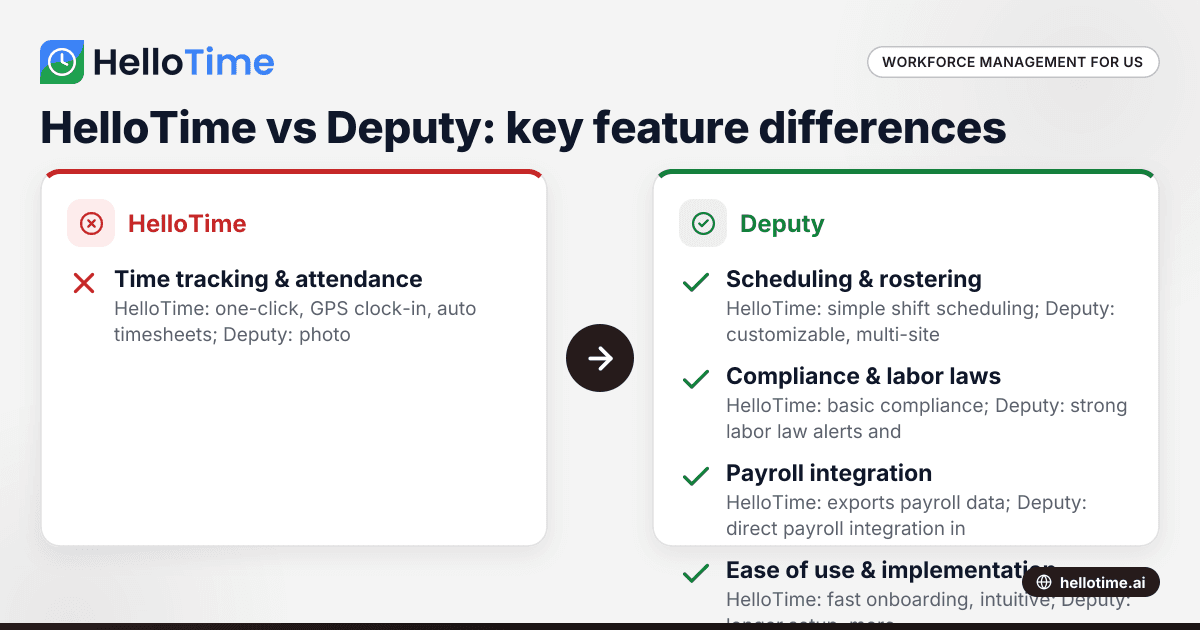
HelloTime vs Deputy: Which Workforce Management Software is Best for United States Small Businesses?
HelloTime and Deputy are popular workforce management tools offering employee scheduling, time tracking, and attendance solutions for US small.
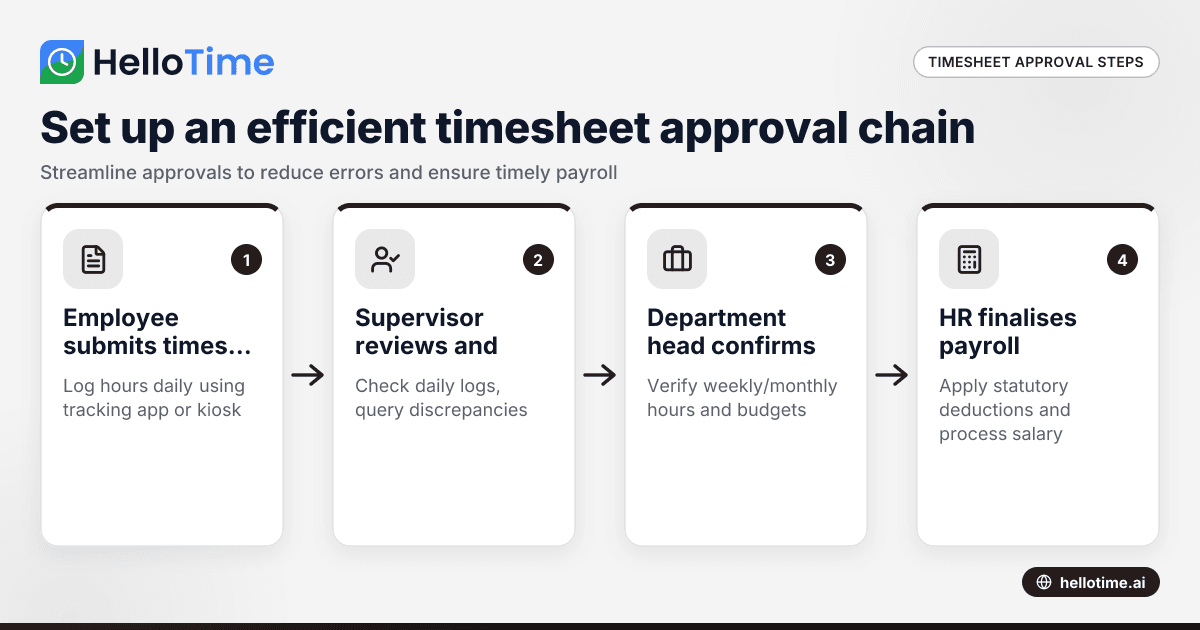
How to Set Up an Efficient Timesheet Approval Chain for Indian SMEs
How to Set Up an Efficient Timesheet Approval Chain for Indian SMEs This guide is for owners, HR, and operations managers at Indian small and.
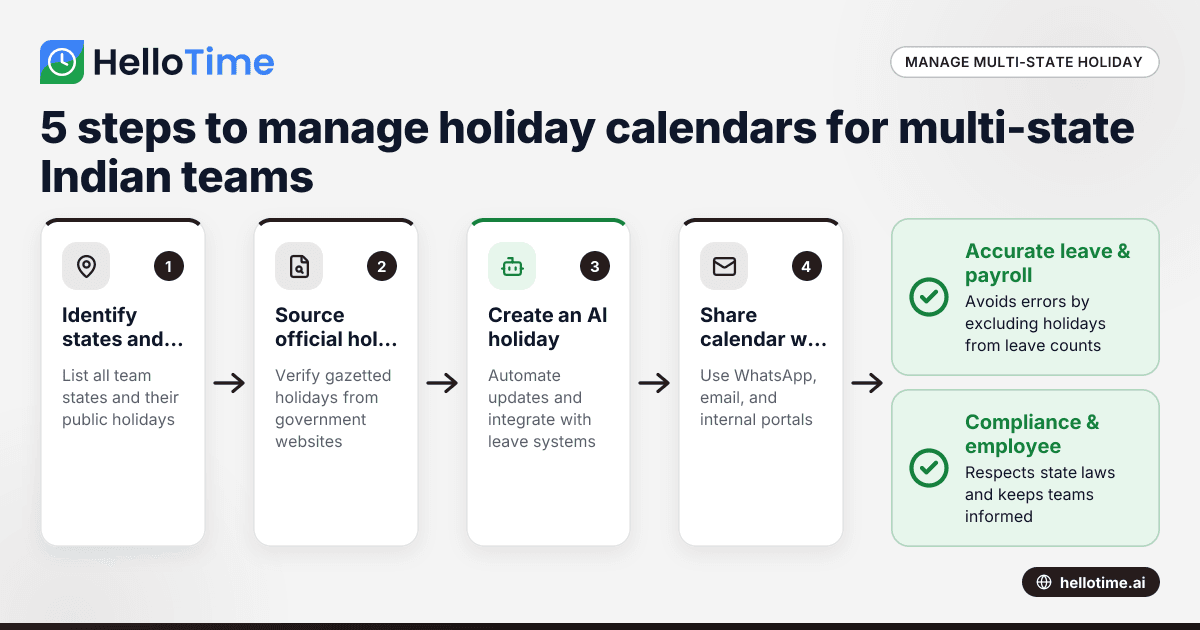
How to Manage Holiday Calendars for Multi-State Teams in India
Managing holiday calendars for multi-state teams in India can be complex due to different state-specific holidays and observances. By the end of this.