How Delaware Small Businesses Can Leverage Time Tracking for Accurate Client Billing in the United States
Time tracking is essential for Delaware small businesses that bill clients by the hour. It ensures accurate invoicing, prevents payment disputes, and.
The HelloTime team
6 min read
On this page
Time tracking is essential for Delaware small businesses that bill clients by the hour. It ensures accurate invoicing, prevents payment disputes, and helps maintain profitability. Automated tools, including AI time tracking, make capturing billable hours easier and reduce administrative work.
Key takeaways
- Accurate time tracking supports precise client billing and fair invoicing.
- Delaware businesses benefit from digital systems that automate timesheets and reduce manual errors.
- AI time tracking streamlines data entry and flags inconsistencies early.
- Clear billing improves client trust and cash flow management.
- Time tracking must comply with US labor laws to avoid penalties.
- Features like GPS clock-in and shift scheduling help manage mobile and shift-based teams.
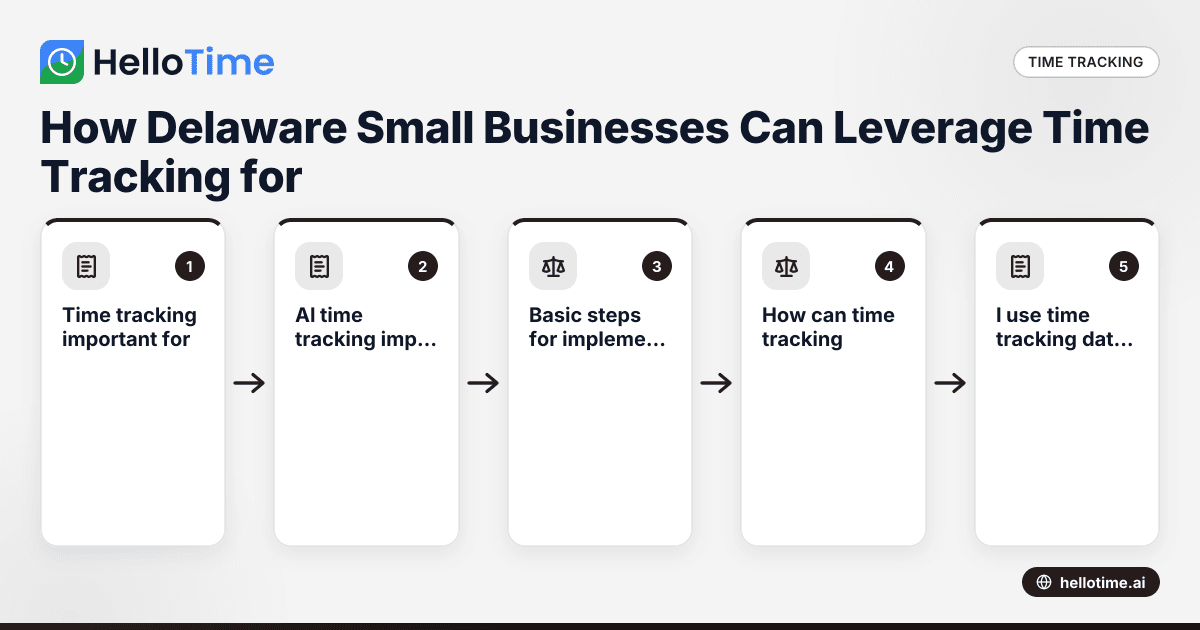
Why is time tracking important for Delaware small businesses’ client billing?
Accurate time tracking ensures your clients are billed fairly and on time, which protects your revenue. Without precise records, you risk underbilling or disputes that delay payments. Detailed logs of hours worked also help assign labor costs appropriately, keeping projects profitable.
Tracking start and end times, breaks, and overtime documents the actual work done. This transparency builds trust with clients in Delaware cities like Wilmington and Newark. It also meets US labor standards, such as those from the Fair Labor Standards Act (FLSA), which require employers to keep reliable time records.
How does AI time tracking improve billing accuracy?
AI time tracking intelligently records work hours by detecting activity patterns and automatically creating accurate timesheets. It reduces common mistakes found in manual entry and traditional punch cards, saving time and preventing errors.
Delaware small businesses using AI time tracking software get quick, reliable insights into billable hours. The system flags unusual entries like unusually long shifts, so managers can review them before invoicing. This helps speed up billing cycles and boosts cash flow.
What are the basic steps for implementing time tracking in my Delaware small business?
Start by evaluating your billing methods and deciding which roles or projects need tracking. Then select software that fits your needs—with features like simple clock-in/out and automatic timesheets. Train your employees on proper use and accuracy.
Set clear policies for breaks, overtime, and remote clock-ins that comply with Delaware labor laws. Integrate the time tracking system with invoicing tools like QuickBooks or Stripe to streamline billing. Regularly review the data for accuracy and adjust your process as needed.
How can time tracking software help me manage field teams and shift workers in Delaware?
For Delaware businesses with shift-based or mobile teams—such as those in retail or field services in Middletown—features like GPS clock-in and geofencing verify employee locations and attendance. Tablet kiosks with face recognition deter buddy punching on site.
Shift scheduling tools help create and adjust rosters efficiently, reducing absenteeism and payroll errors. Tracking breaks and clock-outs also ensures compliance with local labor regulations, simplifying payroll preparation.
How do I use time tracking data to improve client billing and profitability?
Analyze timesheets against budgets to identify tasks or projects that run over estimate. Accurate time records reveal true labor costs, allowing better pricing and project management.
Use profitability reports from your time tracking software to focus on high-margin clients. Transparent billing based on precise work hours reduces disputes, accelerates payments, and improves business cash flow.
How do US labor laws affect time tracking for Delaware small businesses?
Delaware follows federal FLSA rules requiring employers to keep accurate records of employees’ hours, including start/end times, breaks, and overtime. The state also mandates meal and rest breaks for certain workers.
Inaccurate time tracking risks wage claims and Department of Labor penalties. Time tracking software helps maintain compliance through automatic, detailed records and audit trails. It is wise to consult legal guidance to stay current on any labor law updates.
How should I introduce time tracking to my Delaware small business team?
Communicate the benefits clearly as accuracy and fairness in billing and payroll. Provide hands-on training to make the system easy to use.
Encourage accountability by emphasizing how precise time logs protect both employees and the business. Address privacy concerns transparently—especially if GPS or biometric data is collected. Have managers lead by example and set expectations for timely reporting.
Where should I integrate time tracking data for smooth operations?
Integrate time tracking with financial software such as QuickBooks to automate invoicing and manage expenses. Payment tools like Stripe support prompt client payments based on tracked hours.
If you use ERP or CRM systems, choose time tracking solutions with API access or plugins. This centralizes data across HR, payroll, accounting, and project management, cutting down manual entry and errors.
Time tracking is crucial for Delaware small businesses to bill clients accurately and manage workforce productivity. Using AI time tracking, GPS attendance verification, and automated invoicing improves transparency and your bottom line.
Explore HelloTime features or compare plans at pricing to find the right fit for your business.
Frequently asked questions
What features should I look for in time tracking software for my Delaware business?
Look for easy clock-in/out, automatic timesheets, client and project tagging, GPS or geofencing for field staff, shift scheduling, and integration with accounting platforms like QuickBooks.
Can time tracking software handle overtime and breaks according to Delaware labor laws?
Yes, good software lets you set rules for breaks and overtime aligned with federal and Delaware regulations and flags out-of-policy hours for review.
How does AI time tracking work, and is it reliable?
AI time tracking uses algorithms to detect active work periods and breaks from user activity, automating timesheet creation reliably and cutting manual errors.
Is employee privacy affected by GPS-based time tracking?
GPS tracking verifies location but must be used responsibly. Inform employees upfront about data collection and protection to maintain trust and legal compliance.
Can I link time tracking to invoicing and payment processing?
Yes, many systems integrate with invoicing tools like QuickBooks and payment processors like Stripe, automating billing based on logged hours.
How often should I audit my time tracking records?
Monthly or quarterly audits help ensure data accuracy, detect anomalies early, and support labor law compliance to avoid billing disputes.
By implementing effective time tracking, your Delaware small business can thrive with accurate client billing, streamlined payroll, and better operational insights. Visit HelloTime features or review pricing to get started.
Read next
This article covers one part of a bigger topic. For the complete picture, read our guide to time tracking.
Keep reading
Related articles
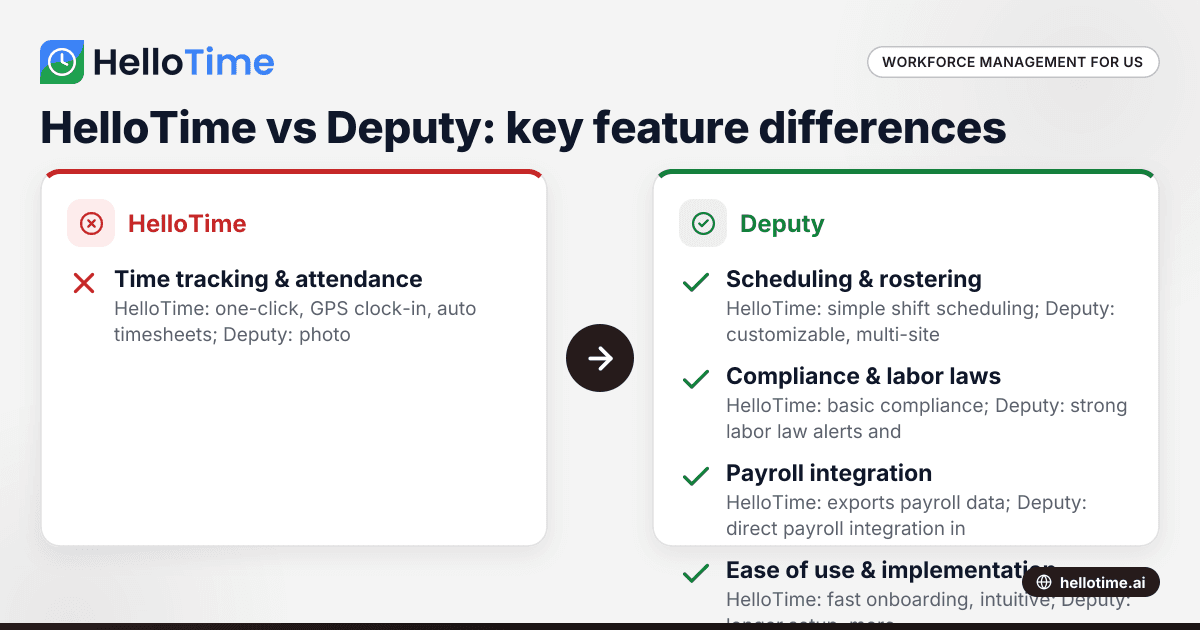
HelloTime vs Deputy: Which Workforce Management Software is Best for United States Small Businesses?
HelloTime and Deputy are popular workforce management tools offering employee scheduling, time tracking, and attendance solutions for US small.
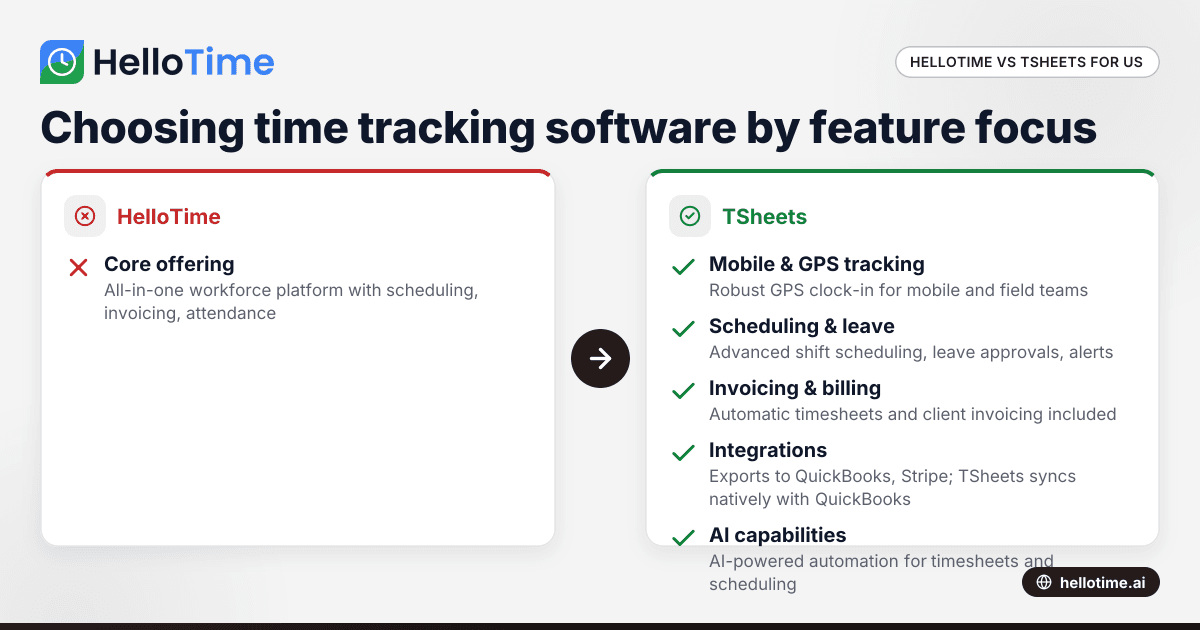
HelloTime vs TSheets: Choosing the Best Time Tracking Software for United States Agencies
HelloTime and TSheets are popular time tracking solutions for agencies and professional services in the United States. Comparing HelloTime vs TSheets.
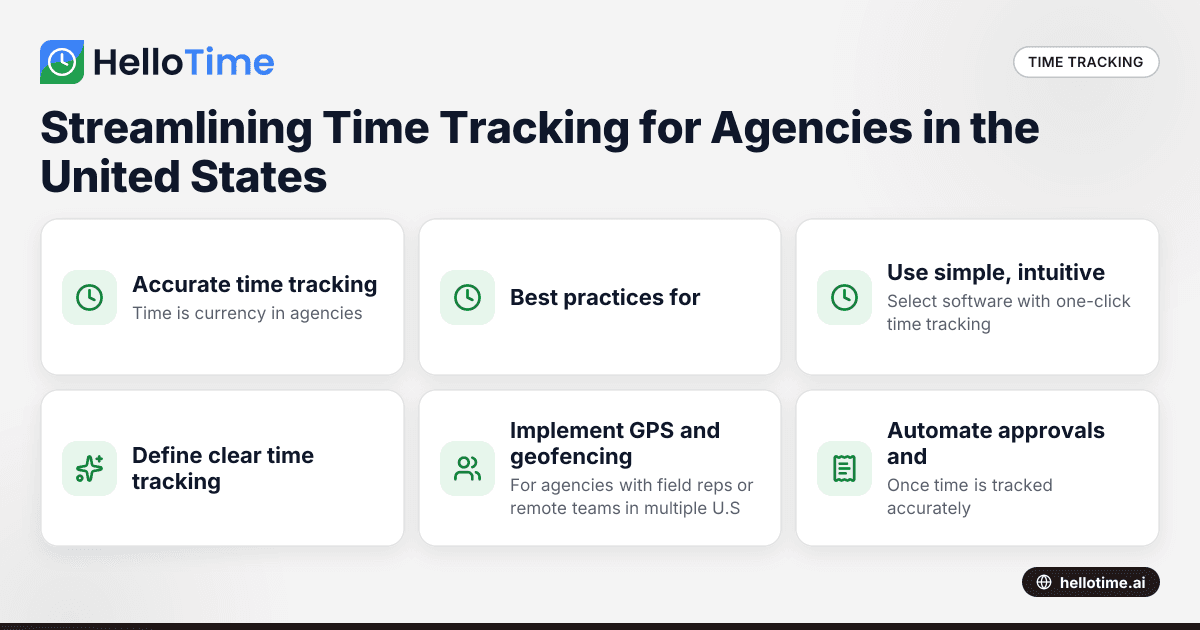
Streamlining Time Tracking for Agencies in the United States: Best Practices to Boost Client Billing Accuracy
Streamlining time tracking for agencies in the United States is essential for ensuring accurate client billing and maximizing profitability. By.