How Delaware Small Businesses Can Protect Employee Personal Data in Timesheet Approval Workflows
Protecting employee personal data during timesheet approval workflows is essential for Delaware small businesses to meet privacy laws and maintain.
The HelloTime team
6 min read
On this page
Protecting employee personal data during timesheet approval workflows is essential for Delaware small businesses to meet privacy laws and maintain trust. It means securely managing sensitive information like Social Security numbers, addresses, and work hours using encryption, access restrictions, and staff training.
Key takeaways
- Delaware small businesses must protect personal data in timesheet workflows to prevent breaches and legal trouble.
- Use encryption, strict access controls, and secure software for handling timesheet data.
- Train employees on privacy practices and comply with Delaware’s Personal Information Protection Act.
- Automate approvals with software that keeps audit trails and reduces manual handling of sensitive data.
- Regularly update data protection policies to adapt to cybersecurity threats.
- Using compliant software like HelloTime simplifies secure timesheet management.
What personal data do Delaware small businesses handle in timesheet approval workflows?
Timesheets include personal data such as employee names, addresses, Social Security numbers (SSNs), phone numbers, and their worked hours. Payroll details like bank account numbers for direct deposits also qualify as sensitive data. Delaware’s Personal Information Protection Act (DIPA) requires safeguarding this data from unauthorized access and misuse.
Managers or HR staff handle these details when approving timesheets before payroll. Multiple exposures to sensitive info can occur if processes aren’t secure. Limiting access only to necessary personnel and using encrypted, secure systems helps reduce this risk.
How do timesheet approval workflows risk employee personal data breaches?
Timesheet workflows risk exposing personal data if handled insecurely. For instance, paper timesheets left visible, spreadsheets emailed without encryption, or sharing links without strong passwords can leak information. Manual processing can cause errors, like sending data to wrong recipients or losing records.
Small Delaware businesses relying on outdated, informal methods face more gaps in security. Cybercriminals target this data because payroll info and SSNs enable identity theft and fraud. Weak controls thus increase breach risk significantly.
How can Delaware small businesses comply with personal data protection laws in their timesheet workflows?
Delaware’s Personal Information Protection Act requires reasonable security steps similar to federal FTC guidelines. To comply, small businesses should:
- Restrict access to personal data only to people who need it.
- Encrypt data in storage and transmission.
- Use passwords and authentication controls.
- Train staff on privacy and data handling policies.
- Keep audit logs to monitor data access and changes.
Although not mandate specific tech, using secure time tracking software helps you meet these legal expectations.
How does AI personal data impact timesheet management security?
AI personal data means any employee information processed by AI tools used in timesheet workflows, such as automated approval systems or facial recognition for attendance. AI can speed approvals and reduce errors but introduces risks because biometric or behavioral data require strong privacy safeguards.
Delaware businesses employing AI must ensure compliance with privacy laws. Vendors should protect sensitive data, restrict access, and be transparent with employees on how AI collects and uses their information.
What are best practices for protecting personal data in timesheet approval workflows?
Effective protection involves practical steps:
- Secure software: Use systems, like HelloTime, that encrypt data and limit access.
- Role-based permissions: Only authorize managers or HR to approve timesheets.
- Audit trails: Keep detailed records of access and changes to timesheets.
- Employee training: Educate teams on phishing, password safety, and confidentiality.
- Data minimization: Collect only necessary data and securely delete files when no longer needed.
- Incident response: Have a clear plan to address and report data breaches quickly.
Why should Delaware small businesses consider automated timesheet workflows for security?
Automation removes much manual handling of personal data, lowering error risks leading to breaches. It enforces encrypted storage and transmission and controls data visibility strictly by role.
Automation also provides audit records required during compliance reviews. For Delaware small businesses with limited staff and growing workloads, digital workflows improve accuracy and data protection efficiently.
How do I choose the right time tracking and approval software for my Delaware small business?
Focus on software that offers:
- Strong data security like encryption and two-factor authentication.
- User-friendly design to reduce errors.
- Compliance tools such as audit logs and reporting for Delaware laws.
- Ability to scale and integrate with payroll and accounting tools like QuickBooks.
- Dependable customer support when setting up secure workflows.
HelloTime delivers cloud-based timesheet management with privacy controls ideal for small businesses.
How can Delaware small businesses implement secure timesheet workflows in 5 steps?
Implementing secure workflows begins with clear action:
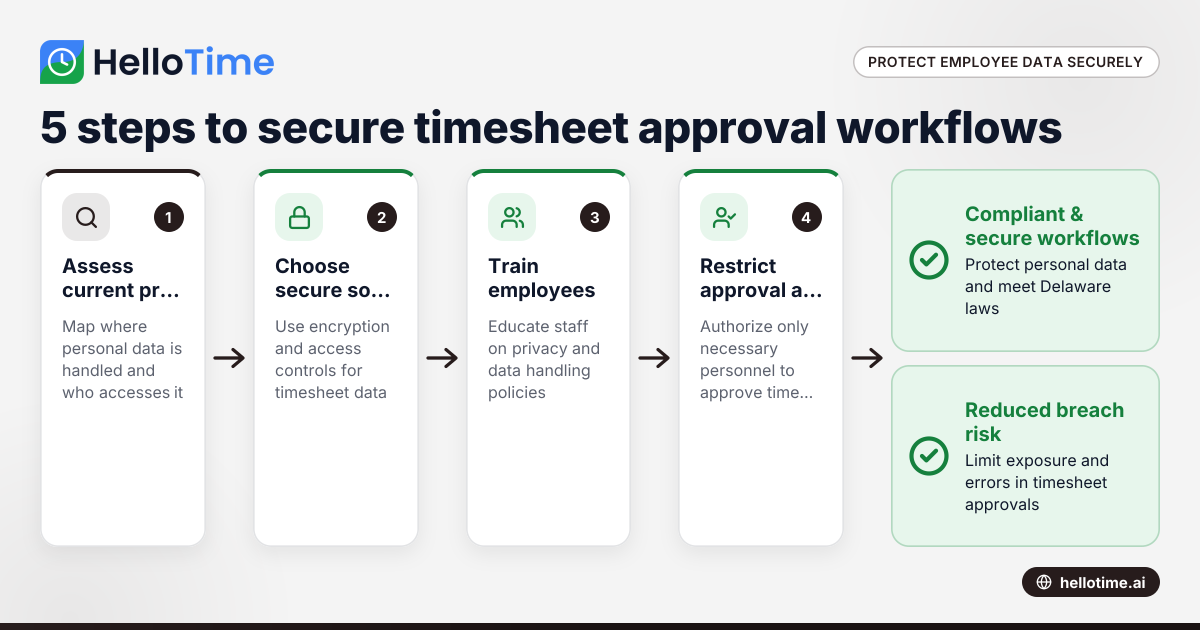
- Assess current practices: Map where personal data is handled and who accesses it.
- Choose secure software: Select tools like HelloTime with encryption and access controls.
- Train employees: Teach managers and staff about secure data handling and privacy rules.
- Restrict approval access: Configure software so only authorized users can approve or edit timesheets.
- Monitor and update: Regularly review logs and update security policies to meet new threats.
What should Delaware small-business owners communicate to employees about their personal data?
Be transparent. Tell employees what personal data you collect via timesheets, how it’s used and protected, and their rights to view or correct it. If AI or biometric systems are involved, explain their function and safeguards.
Provide a clear privacy policy and a contact for data concerns. This openness helps build trust and ensures compliance with Delaware regulations.
Conclusion
Delaware small businesses must prioritize protecting employee personal data in timesheet approval workflows for compliance and trust. Applying secure software, limiting access, and training staff are practical steps toward better data protection. Learn how tools with integrated security features can enhance your workflows by visiting features or see plan options at pricing.
Frequently asked questions
What counts as personal data in timesheet approvals?
Personal data includes identifying info like names, SSNs, addresses, phone numbers, and payroll-related data such as bank account numbers.
How does Delaware law protect employee personal data?
Delaware’s Personal Information Protection Act mandates reasonable security measures to prevent unauthorized access to personal data.
Can I use AI tools in my timesheet workflows safely?
Yes, if AI solutions comply with privacy laws, safeguard biometric data, and employees are informed about data collection and use.
How often should I review my data protection policies?
At least once a year or whenever you implement new software or processes to keep up with cybersecurity and legal changes.
What happens if there’s a data breach involving timesheet data?
Delaware law requires notifying affected employees and taking steps to limit harm and prevent further breaches.
Is manual timesheet approval less secure than automated?
Manual approvals can increase risks due to errors and data mishandling; automated systems with encryption and controlled access improve security.
Read next
This article covers one part of a bigger topic. For the complete picture, read our guide to personal data.
Keep reading
Related articles
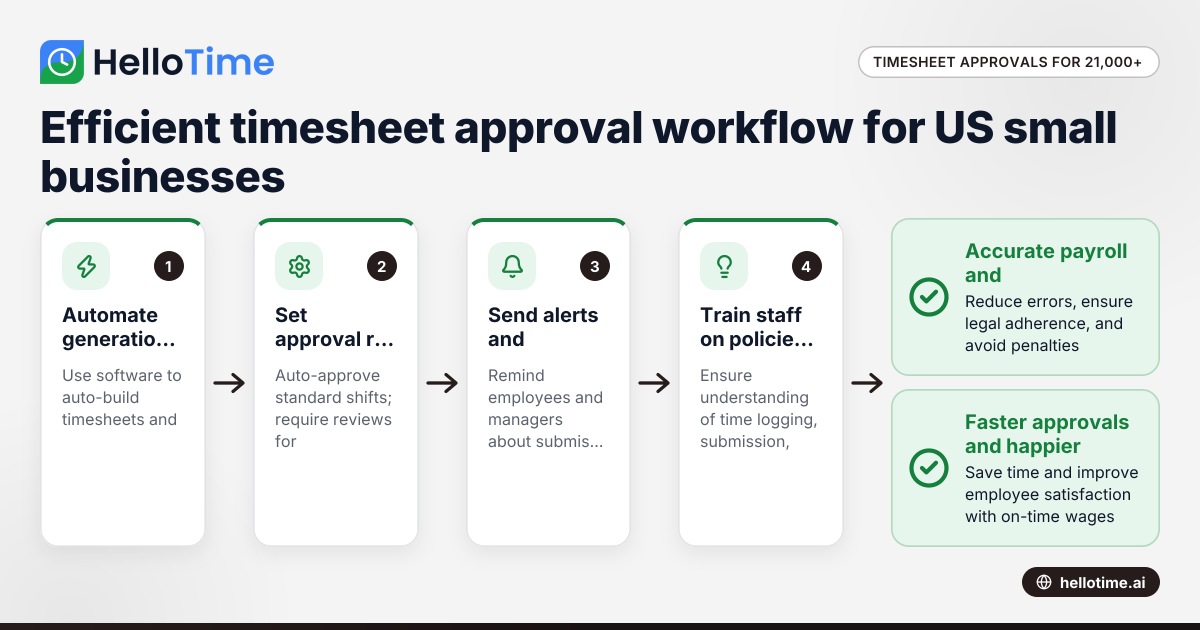
How United States Small Businesses Can Handle Timesheet Approval Workflows with Over 21,000 Minutes Logged
Managing timesheet approvals efficiently becomes critical for US small businesses logging large volumes of employee hours, such as over 21,000 minutes
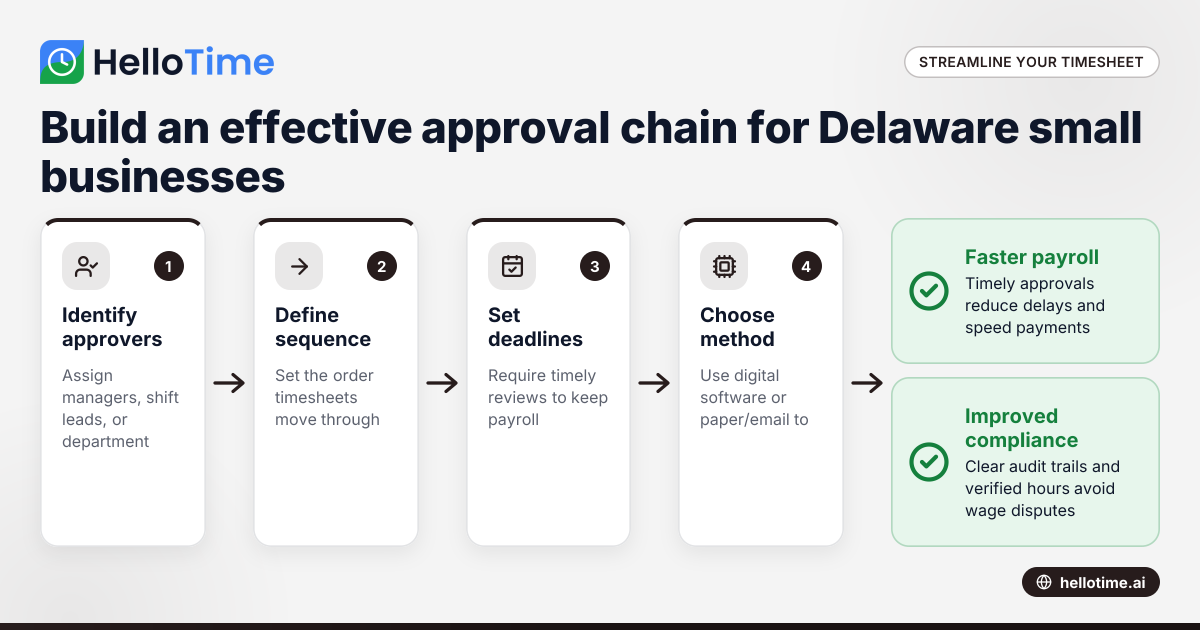
How Delaware Small Businesses Can Streamline Timesheet Approval with Effective Approval Chains in the United States
How Delaware Small Businesses Can Streamline Timesheet Approval with Effective Approval Chains in the United States Delaware small businesses can.
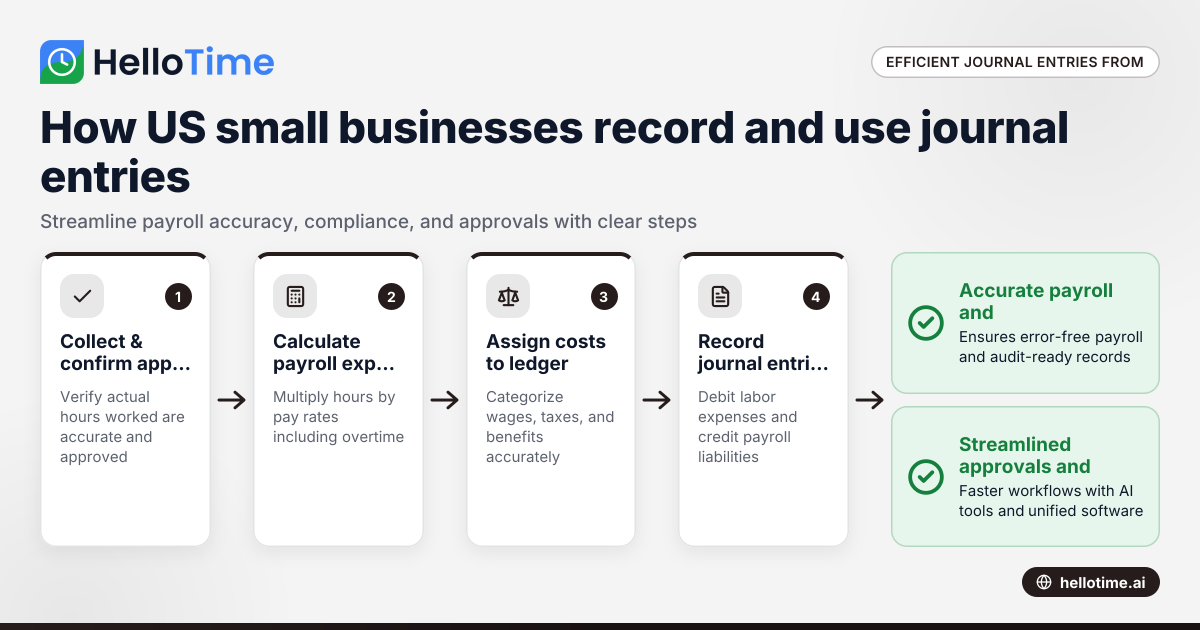
How United States Small Businesses Can Record and Use Journal Entries for Accurate Timesheet Approvals
Accurate timesheet approvals and linked journal entries are vital for US small businesses to ensure payroll accuracy, compliance with labor laws, and.