How to Calculate and Improve Employee Utilization Rate for Agencies in the UAE
Calculating and improving employee utilization rate helps agencies in the UAE optimise billable work, manage resources better and boost profitability.
The HelloTime team
7 min read
On this page
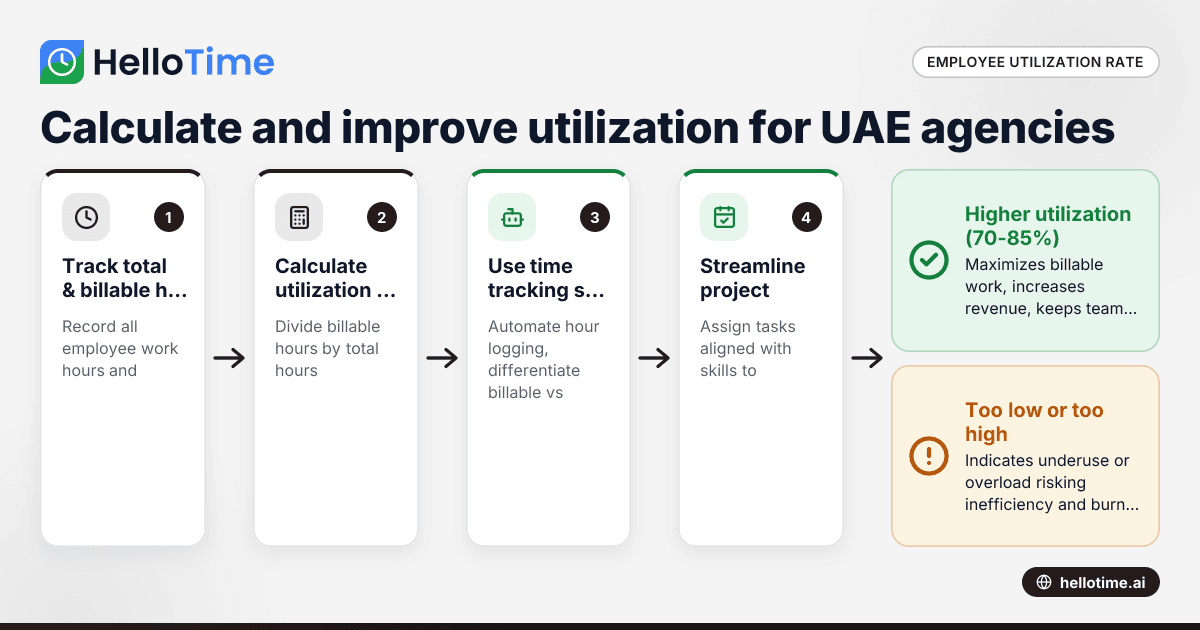
Calculating and improving employee utilization rate helps agencies in the UAE optimise billable work, manage resources better and boost profitability. Utilization rate shows what percentage of working time employees spend on productive client work as opposed to non-billable tasks or downtime.
Key takeaways
- Utilization rate measures billable hours vs total available working hours of agency employees.
- It is essential for UAE agencies charging by the hour to track utilization accurately for profitability insights.
- Calculate utilization rate by dividing billable hours by total hours worked, then multiply by 100 to get a percentage.
- Increasing utilization involves better project allocation, reducing unproductive time and easing administrative burdens.
- Time tracking software with auto timesheets and approvals simplifies utilization rate calculation and optimisation.
- AI utilization rate tools can identify patterns to forecast workload and suggest efficiency improvements.
What is utilization rate and why does it matter for UAE agencies?
Utilization rate is the percentage of an employee’s total working time spent on billable client work. For agencies in Dubai, Abu Dhabi, or Sharjah, utilization directly impacts revenue and profitability because billing depends on hours worked.
If employees spend significant hours on internal meetings, training or administrative tasks, that non-billable time lowers utilization. Tracking utilization reveals where hours are going, highlights capacity underuse, and helps optimise staff assignments.
For example, a digital marketing agency in Dubai serving clients across sectors needs to maintain high utilization to remain competitive and efficiently manage expensive resources like creative teams or analysts. Without utilization data, businesses risk overstaffing or billing below cost.
How to calculate employee utilization rate?
The basic calculation for utilization rate is:
Utilization Rate (%) = (Billable Hours ÷ Total Hours Worked) × 100
Steps to calculate:
- Track all hours worked per employee during a period (week, month).
- Identify how many of those hours were billable client work.
- Divide billable hours by total worked hours.
- Multiply the result by 100 to convert to a percentage.
For instance, if a graphic designer in a Dubai agency worked 160 hours in a month and logged 120 billable hours, the utilization rate is (120 ÷ 160) × 100 = 75%.
Accuracy in tracking is vital. Manual spreadsheets can cause errors, so agencies in the UAE benefit from time tracking software that automates hour logging, differentiates billable vs non-billable time, and generates timesheets ready for invoicing.
What is a good utilization rate for agencies in the UAE?
A healthy utilization rate varies but agencies typically aim for 70-85%. Lower than 70% may indicate underused staff or inefficiency. Over 85% can risk burnout or poor work quality due to excessive workloads.
In the UAE context, client expectations and competition push agencies towards higher utilization while balancing compliance with labour laws on working hours and breaks. For instance, the UAE Labour Law sets the standard working week at 48 hours maximum, plus overtime rules.
Agency owners should regularly review utilization to detect trends: decreasing utilization could signal project lulls or client loss, while consistently high rates demand hiring or process improvements.
How can agencies improve employee utilization rates?
Raising utilization rate is about maximising billable productivity without overworking teams. Here are practical strategies:
1. Use time tracking software with automatic timesheets
Automating timesheets ensures precise capture of work hours and easy separation of billable from non-billable time, reducing administrative delays and errors common in paper or spreadsheets.
2. Streamline project scheduling and resource allocation
Use roster or shift planning tools to assign projects aligned to employee skills and availability, avoiding idle time. This is especially useful for UAE agencies juggling multiple client deadlines.
3. Cut down on unnecessary meetings and admin tasks
Encourage efficient communication, for example relying on WhatsApp over emails to reduce interruptions. Delegate or automate routine admin work to minimise distractions from core billable tasks.
4. Train employees on better time management
Workshops on prioritising billable work, avoiding multitasking and taking breaks improve focus. This supports compliance with UAE labour laws on working hours and employee welfare.
5. Monitor utilization regularly and act on insights
Use visual dashboards in time tracking software for quick status checks. Identify which employees or teams have capacity to take on additional projects.
6. Adopt AI utilization rate tools for forecasting and optimisation
AI-based analytics can uncover hidden patterns in how employees spend time and predict upcoming workload peaks. This enables proactive resource adjustments before inefficiencies emerge.
How does AI utilization rate analysis help agencies?
AI utilization rate analysis uses machine learning algorithms to process timesheet and project data, generating actionable insights to improve workforce productivity.
It helps UAE agencies by:
- Predicting periods of under or over-utilization based on historical trends.
- Recommending ideal staffing levels for different project types or client demands.
- Identifying recurring non-billable activities draining capacity.
- Suggesting process changes to enhance billable output.
This technology integrates seamlessly with time tracking systems that collect detailed employee hour data, reducing guesswork in workforce management.
How can I implement utilization rate tracking in my UAE agency?
Implementing utilization tracking involves:
- Selecting software tailored to agency needs with features like auto timesheets and project tagging.
- Training staff to log time accurately and categorise work correctly.
- Setting utilization benchmarks based on agency size, client types, and business goals.
- Reviewing reports weekly or monthly to identify gaps and opportunities.
- Adjusting scheduling and workflows to target target improved utilization without violating UAE labour regulations.
Using a platform like HelloTime designed for shift scheduling and leave management can streamline this process for UAE agencies handling diverse projects and teams in places like Dubai or Abu Dhabi.
What are the challenges in calculating utilization rate accurately?
Challenges include:
- Employees forgetting to log time or misclassifying hours as billable vs non-billable.
- Differences in how agencies define “billable” work, especially when internal tasks support projects.
- Part-time or flexible work arrangements common in UAE agencies complicate total hours calculation.
- Manual processes prone to errors and delays.
Modern time tracking software eliminates many of these issues with automated reminders, mobile apps, and GPS clock-in for field teams.
How does utilization rate affect project profitability and billing?
Higher utilization means more client-billable hours, directly increasing revenue and helping cover fixed costs like office rent or salaries.
If utilization rate is low, even high hourly billing rates may not achieve target profits. Monitoring utilization helps set more accurate client quotes based on realistic employee availability.
For billing, integrated invoicing from timesheets saves UAE agencies time and ensures transparent client charges, supporting trust and compliance with local business practices.
Where does utilization rate fit in overall workforce management?
Utilization is one key metric alongside attendance, leave, shift adherence and employee satisfaction. Together they guide HR and operations managers to optimise team performance.
Tracking utilization alongside leave management helps plan projects without overburdening staff or violating UAE labour limits. Combined with payroll and statutory deductions management, agencies maintain a compliant and efficient workforce.
Explore time tracking features to boost employee utilization in your UAE agency
Improving utilization rate is within reach for agencies in Dubai, Abu Dhabi, and Sharjah through precise time tracking, smart scheduling, and AI-guided insights. Discover how HelloTime in the UAE can simplify your team’s attendance, timesheets, and leave management. Compare plans and start optimising today at pricing.
Frequently asked questions
What counts as billable hours when calculating utilization rate?
Billable hours include all time employees spend directly working on client projects that can be invoiced. This excludes internal meetings, training, breaks and administrative tasks that do not generate client revenue.
How often should I calculate utilization rate for my agency?
Monthly calculation is common and balances accuracy with manageability. However, weekly monitoring can help spot sudden shifts and enable faster adjustments in project allocation or hiring.
Can utilization rate help with employee workload balance?
Yes. Utilization data identifies overworked or underutilised staff, allowing managers to redistribute assignments and improve job satisfaction while maximising productivity.
Does utilization rate calculation comply with UAE labour laws?
Utilization calculation itself has no legal restrictions, but agencies must ensure tracked working hours respect the UAE Labour Law limits and overtime rules to maintain compliance.
Can AI tools replace managers in utilization tracking?
AI aids analysis and forecasting but does not replace human judgement. Managers still decide on resource allocation using AI-driven insights as a decision support tool.
How does leave and holiday time affect utilization rate?
Leave is excluded from total worked hours since employees are not available to perform billable work. Proper leave management ensures utilization reflects true active workforce capacity.
Read next
This article covers one part of a bigger topic. For the complete picture, read our guide to utilization rate.
Keep reading
Related articles
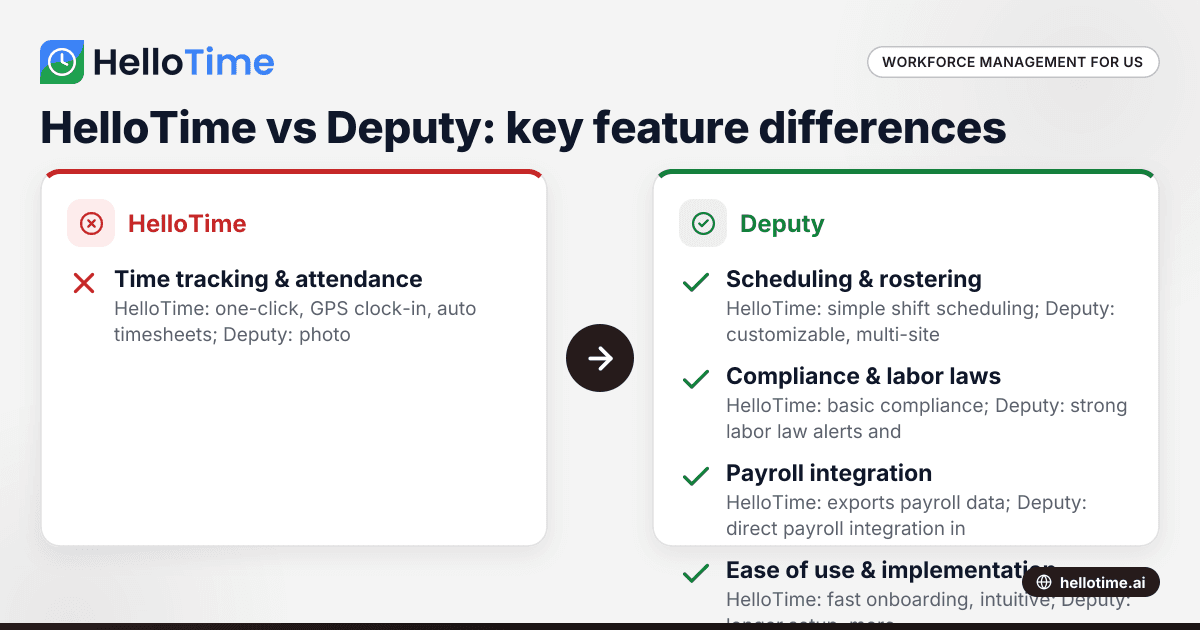
HelloTime vs Deputy: Which Workforce Management Software is Best for United States Small Businesses?
HelloTime and Deputy are popular workforce management tools offering employee scheduling, time tracking, and attendance solutions for US small.
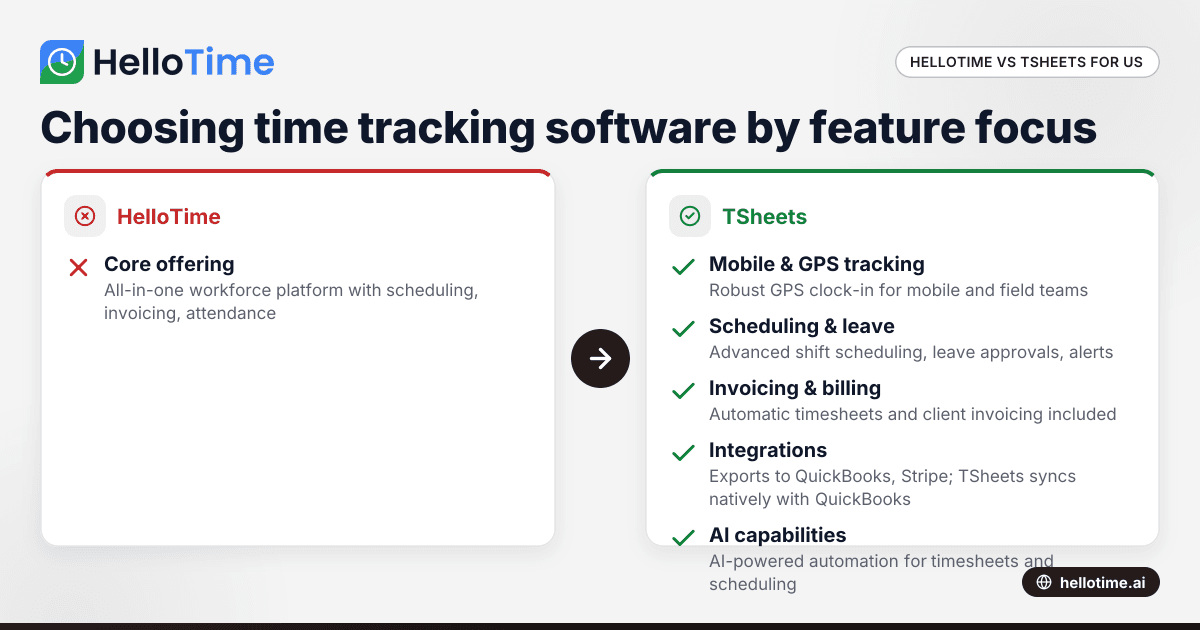
HelloTime vs TSheets: Choosing the Best Time Tracking Software for United States Agencies
HelloTime and TSheets are popular time tracking solutions for agencies and professional services in the United States. Comparing HelloTime vs TSheets.
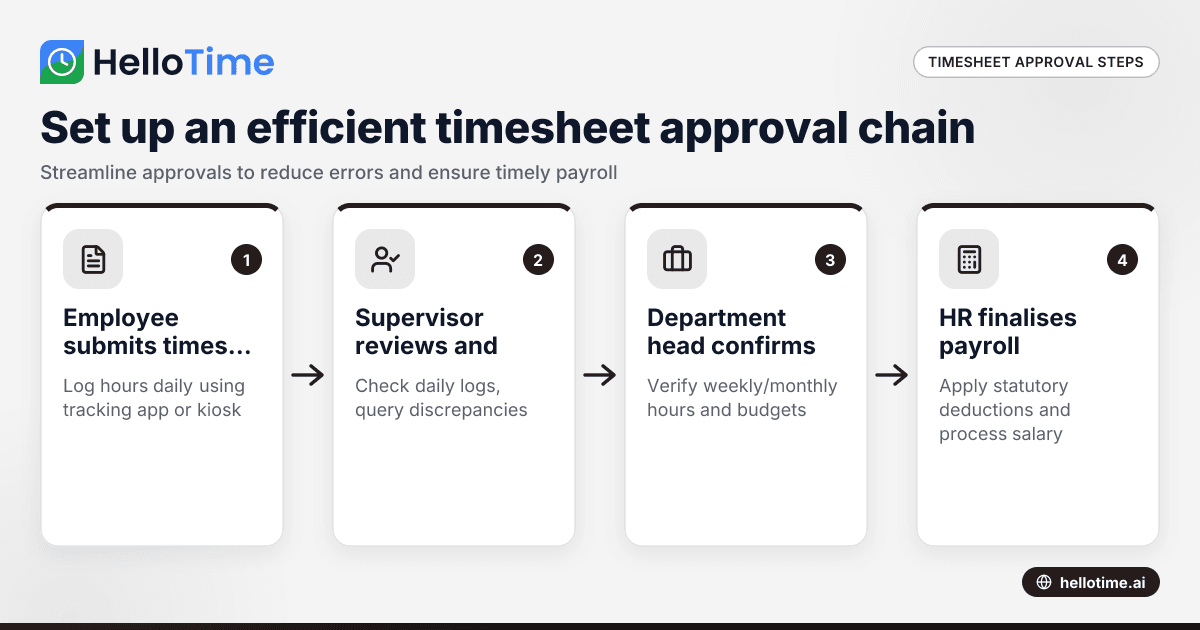
How to Set Up an Efficient Timesheet Approval Chain for Indian SMEs
How to Set Up an Efficient Timesheet Approval Chain for Indian SMEs This guide is for owners, HR, and operations managers at Indian small and.