How to Use Time Tracking Software for Agencies in Australia to Improve Client Billing and Project Profitability
Time tracking software for agencies in Australia lets you capture billable hours accurately, automate timesheets, and streamline invoicing. It.
The HelloTime team
6 min read
On this page
Time tracking software for agencies in Australia lets you capture billable hours accurately, automate timesheets, and streamline invoicing. It provides valuable insights into project costs and profitability, helping agencies manage client billing efficiently. AI time tracking enhances accuracy and saves admin time by automatically detecting work patterns.
Key takeaways
- Time tracking software accurately records billable hours for client invoicing.
- Auto-built timesheets and approvals reduce administrative errors and delays.
- AI time tracking enhances accuracy by smartly capturing work activity.
- Integration with Xero or MYOB supports GST and BAS compliance.
- Compliance with the Privacy Act 1988 ensures ethical employee monitoring.
- Project profitability reports help optimise agency resource allocation.
Why do agencies in Australia need time tracking software?
Time tracking software solves common agency issues such as missed billable hours and invoicing mistakes. Agencies billing clients by the hour risk undercharging without accurate time capture. For businesses in Sydney, Melbourne or Brisbane, this software streamlines workflows, reduces admin overheads, and expedites billing cycles.
By providing detailed data on how time is spent per project, agencies can analyse profitability and identify inefficiencies. This insight is crucial to improving resource use and ensuring clients are billed fairly for the work delivered.
What are the first steps to implementing time tracking for agencies?
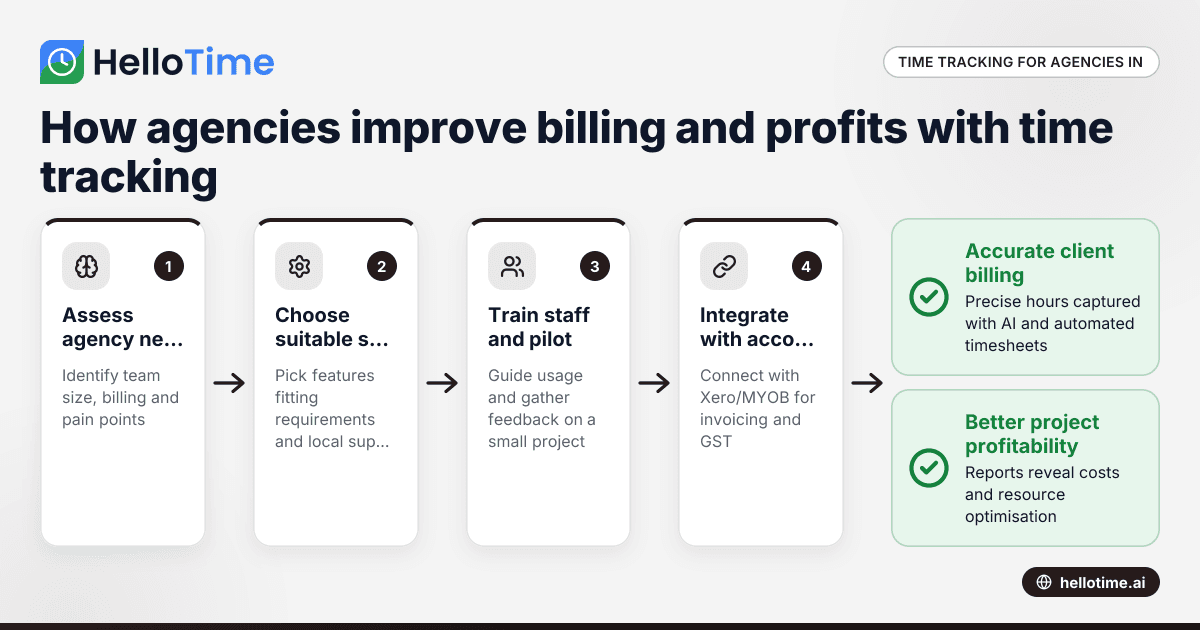
Start by assessing your agency’s needs, such as team size, billing complexity and pain points. Choose software with features that fit your requirements and offer local support. Begin with a pilot rollout on a small project to gather feedback and adjust processes.
Next, train your staff on how to use the system and explain the benefits. Integrate time tracking with your accounting tools, like Xero or MYOB, to automate billing and GST reporting. Finally, review time data regularly to improve workflows and project management.
How does AI time tracking improve agency workflows?
AI time tracking automatically detects work activities and suggests time entries, reducing manual input. This makes timesheets more accurate by capturing billable hours in real time and avoiding forgotten entries.
For agencies managing multiple projects, AI features help alert teams about budget limits, fill timesheets automatically, and provide productivity insights. This reduces admin effort and lets teams focus on delivering client projects efficiently.
Ai time tracking improves workflows by saving time, increasing billing accuracy and offering detailed visibility into how staff spend their hours.
What features should agencies look for in time tracking software?
Agencies need features like:
- Automatic or one-click tracking to minimise disruption
- Project and task coding for detailed reports and billing
- Auto-built timesheets with simple approval workflows
- Integration with Australian accounting software (Xero, MYOB)
- Mobile and desktop apps enabling work-from-anywhere tracking
- Attendance management for shift-based or flexible teams
- Compliance with Australian privacy laws to protect employee data
These ensure accurate billing, payroll preparation and financial oversight.
How can Australian agencies ensure compliance when using time tracking software?
Compliance with Australia’s Privacy Act 1988 and Australian Privacy Principles is essential. Agencies should clearly communicate what employee data is collected and why. Data capture should be limited to work-related activities, securely stored and access controlled.
Obtaining employee consent and choosing privacy-compliant time tracking tools helps minimise legal risks. Good compliance fosters trust between staff and management while meeting regulatory expectations.
How do time tracking tools support client billing and GST compliance in Australia?
Linking time entries to client and project codes ensures billable hours are recorded correctly. Software integration with Xero or MYOB automates transferring hours to invoices with GST calculated accurately. This streamlines BAS lodgement with the ATO and reduces manual errors.
Automatic timesheet approval workflows help agencies speed up invoicing and get paid faster, improving cash flow.
How can agencies measure project profitability using time tracking data?
Project profitability requires linking tracked hours with costs and budgets. Agencies should:
- Set project budgets with estimated hours and fees.
- Track actual hours worked per task or client project.
- Calculate labour costs by multiplying hours by employee rates.
- Compare actual costs and time against budgeted revenue.
- Use profitability reports to spot unprofitable projects or inefficiencies.
This data helps optimise pricing, resource allocation and client focus.
How can agencies handle flexible or remote teams with time tracking?
Agencies with hybrid or remote workers benefit from time tracking tools offering:
- Mobile and web apps for time capture anywhere
- Geofenced clock-in to verify location if required
- Reminders to encourage timely time entry
- Shared devices or kiosks with face recognition for onsite teams
These ensure accurate hours are recorded while supporting flexible work arrangements typical in Sydney or Brisbane agencies.
Can time tracking software integrate with project management tools?
Yes. Integration with platforms like Trello, Asana or Jira lets staff log time directly against tasks, removing duplicate work. This connection improves visibility of project progress and resource use while linking billing to actual deliverables.
Seamless integration creates an efficient workflow from planning through to invoicing and financial reporting.
Explore how HelloTime supports agency client billing and profitability
HelloTime offers easy, one-click time tracking and auto-built timesheets tailored for Australian agencies. Its AI time tracking reduces manual entry by detecting work activity patterns. Integrations with Xero and MYOB simplify GST and BAS compliance. Features like geofenced clock-in and mobile apps support on-site or remote teams. Detailed project profitability reporting empowers better agency decisions. Explore features or compare pricing to find the right solution.
Frequently asked questions
What is the best way to start time tracking for a small agency?
Begin with simple tools like one-click timers or mobile apps to minimise disruption. Educate your team about the benefits and gain buy-in. Start tracking key clients first, then expand to all projects gradually.
How does AI time tracking improve accuracy?
AI time tracking spots digital activity patterns and suggests time entries automatically, reducing errors from manual logging and forgotten tasks.
Can time tracking software handle GST and BAS reporting?
Yes. When linked to accounting software like Xero or MYOB, time tracked is exported to invoices with GST calculated correctly to ease BAS submissions.
Is employee privacy protected when using time tracking?
Australian privacy laws demand transparency and limits on data collection. Choose software that complies with the Privacy Act 1988 and communicate policies clearly to staff.
How do I track time for remote or flexible teams?
Use software with mobile apps, geofenced clock-in and notifications. This ensures accurate time capture regardless of where employees work.
What reporting features help improve project profitability?
Look for detailed reports pairing hours, costs and budgets per project. Visual dashboards help spot profitable clients and areas needing process improvement.
Read next
This article covers one part of a bigger topic. For the complete picture, read our guide to time tracking.
Keep reading
Related articles
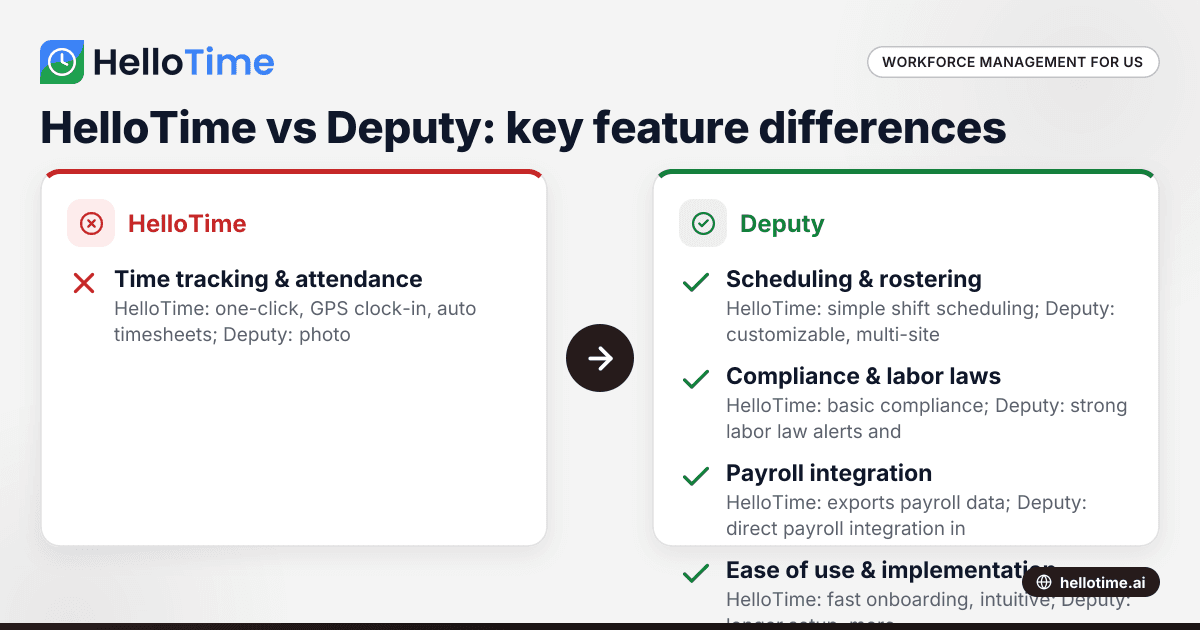
HelloTime vs Deputy: Which Workforce Management Software is Best for United States Small Businesses?
HelloTime and Deputy are popular workforce management tools offering employee scheduling, time tracking, and attendance solutions for US small.
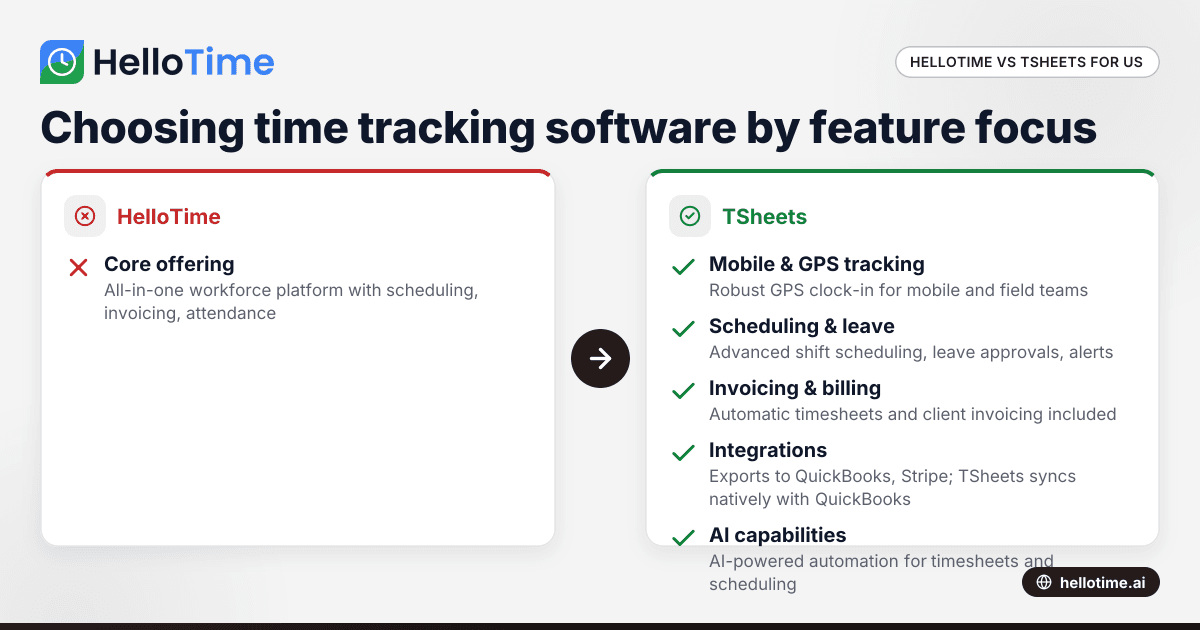
HelloTime vs TSheets: Choosing the Best Time Tracking Software for United States Agencies
HelloTime and TSheets are popular time tracking solutions for agencies and professional services in the United States. Comparing HelloTime vs TSheets.
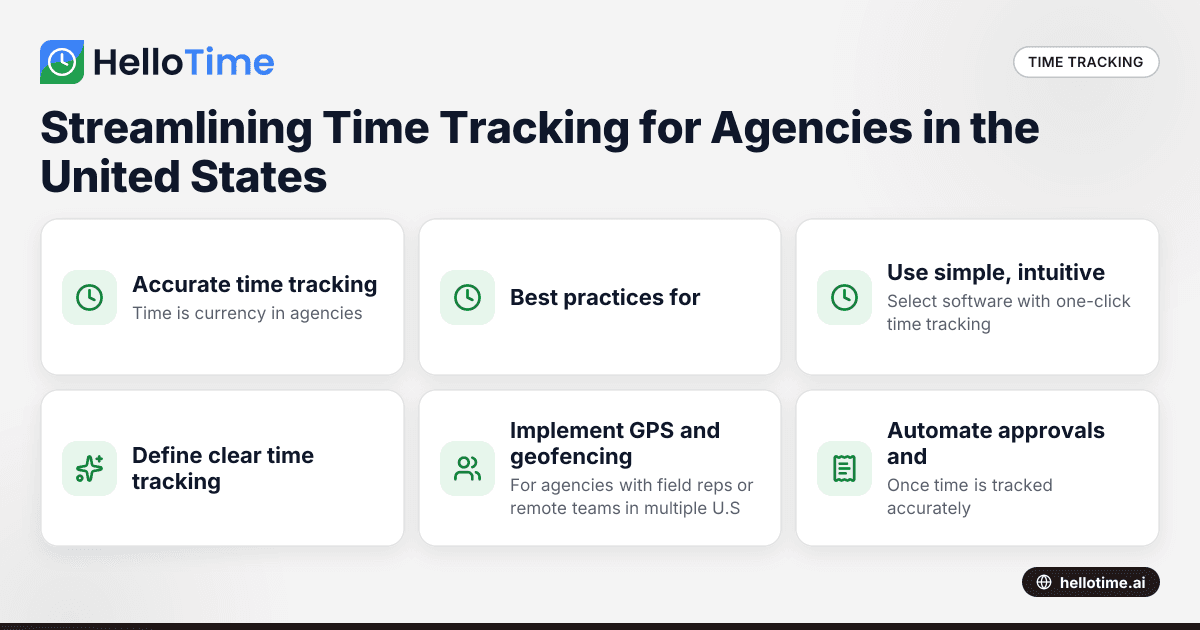
Streamlining Time Tracking for Agencies in the United States: Best Practices to Boost Client Billing Accuracy
Streamlining time tracking for agencies in the United States is essential for ensuring accurate client billing and maximizing profitability. By.