How United States Agencies Can Use Time Tracking to Maximize Billable Hours and Client Invoicing
Time tracking is a powerful tool for agencies in the United States to accurately record hours worked, optimize billable time, and streamline client.
The HelloTime team
7 min read
On this page
Time tracking is a powerful tool for agencies in the United States to accurately record hours worked, optimize billable time, and streamline client invoicing. By adopting effective time tracking methods, agencies can improve profitability, reduce disputes, and grow client trust.
Key takeaways
- Time tracking helps agencies capture all billable hours accurately to maximize revenue.
- Automated and AI time tracking solutions reduce manual errors and save time.
- Integrating time tracking with invoicing simplifies billing and speeds up payment cycles.
- Detailed reports on project time and profitability enable better business decisions.
- Agencies in the US must consider legal requirements for employee time records under labor laws.
- Scheduling, leave management, and attendance features complement time tracking for workforce efficiency.
Why is time tracking essential for US agencies?
Time tracking allows agencies to record the exact hours spent on client projects or internal tasks. For US agencies billing by the hour, it ensures no billable time is lost or forgotten in spreadsheets or paper notes. Proper tracking also supports compliance with the Fair Labor Standards Act (FLSA), which requires accurate recording of employee work hours.
Many agencies use traditional methods like timesheets, but these can be error-prone and time-consuming. Modern time tracking software offers one-click tracking with automatic data capture, making the process seamless. When combined with invoicing tools, agencies can automatically generate client bills from logged hours, improving accuracy and speeding payments.
How can US agencies use AI time tracking to improve billing?
AI time tracking refers to using artificial intelligence to automatically detect work activity and categorize time entries without manual input. This technology monitors desktops, apps, or documents used during work hours to generate precise time logs.
By using AI time tracking, agencies in cities like Chicago and Houston can reduce the administrative burden on employees and managers. It minimizes forgotten hours and manual entry mistakes. This leads to higher billing accuracy and faster invoicing. Agencies can also gain insights into productivity patterns and adjust staffing or project plans accordingly.
AI time tracking supports seamless integration with invoicing systems like QuickBooks or Stripe, common in US agencies, enabling automated client billing with minimal effort.
What are the best practices for maximizing billable hours?
Maximizing billable hours requires discipline and smart tracking processes. US agencies can follow these best practices:
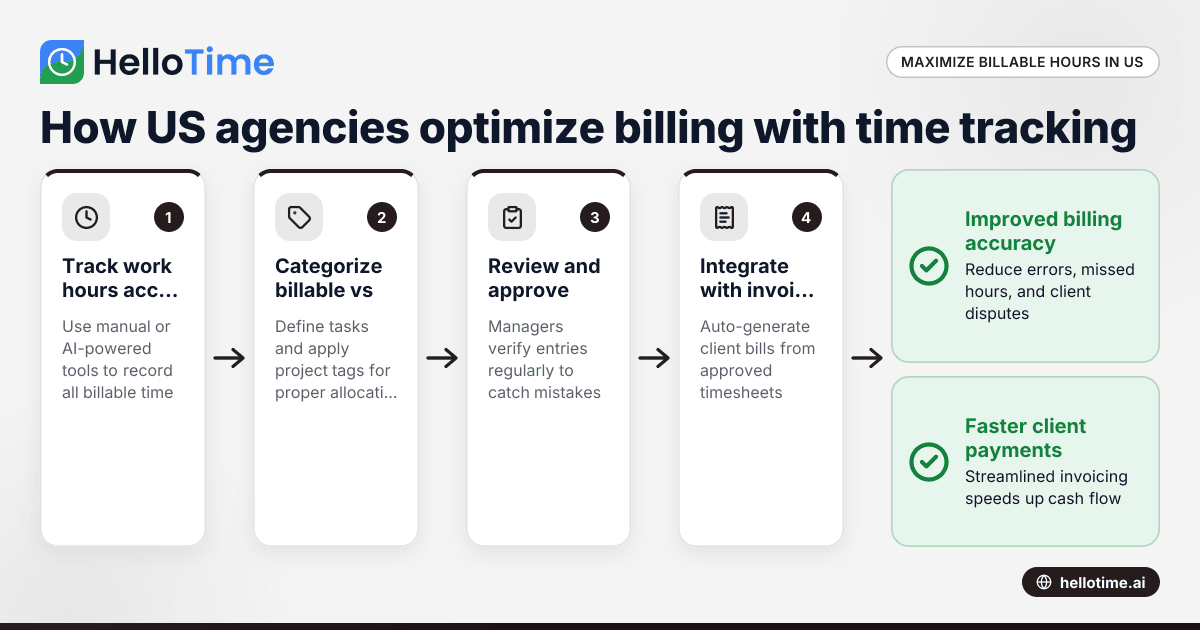
- Implement easy-to-use time tracking tools: Choose software with one-click timers or automatic tracking to encourage consistent use. HelloTime offers auto-built timesheets that reduce manual work.
- Train employees on the importance of timely and accurate tracking: Educate staff on how their recorded time translates into client revenue.
- Define billable vs. non-billable activities clearly: Ensure employees understand which tasks to track as billable and which are overhead.
- Use project tags and categories: This helps allocate hours properly and measure project profitability.
- Review recorded hours regularly: Managers should approve timesheets promptly to catch missing or incorrect entries.
- Utilize reporting tools: Analyze billable utilization rates and time spent on each client or project for informed decision-making.
How does legal compliance affect time tracking in US agencies?
Compliance with labor laws requires precise time records. The FLSA mandates that covered employers keep accurate records of hours worked by employees, including start and end times and breaks.
Agencies must track non-exempt employees’ hours to ensure overtime laws are followed. Misclassification or poor records can lead to costly wage claims. While exempt employees typically are salaried, careful documentation is advisable for client auditing and transparency.
Time tracking software that offers GPS clock-in or tablet kiosk attendance can help record employee presence reliably, which is especially important for remote or field teams.
How can agencies streamline client invoicing with time tracking?
Client invoicing becomes faster and more accurate when integrated with time tracking data. Instead of manually transferring hours into invoices, software can auto-generate bills based on approved timesheets.
Automation reduces errors and disputes about billed hours. Agencies can customize invoices with detailed time breakdowns, hourly rates, and project summaries. They can also use electronic payment gateways like Stripe for convenient client payments.
This efficiency improves cash flow, as agencies in Detroit or elsewhere spend less time on back-office admin and get paid sooner.
How does shift scheduling complement time tracking for agencies?
Shift scheduling and rosters help agencies allocate workforce hours effectively. When combined with time tracking, scheduling ensures employees work the planned shifts and client coverage is maintained.
HelloTime offers shift management features alongside attendance and leave tracking, allowing managers to organize rosters, monitor adherence, and adjust staffing according to workload changes.
This integration reduces unpaid overtime and helps balance billable client projects with internal resource availability.
How do leave management systems work with time tracking?
Leave management tracks employees’ vacation, sick, and other time off. When integrated with time tracking, it provides a full picture of employee availability and hours worked.
Accurate leave records prevent errors in payroll and billing. For US agencies, compliant leave policies are critical to maintain employee satisfaction and avoid labor disputes.
Using software with combined leave and time tracking features reduces manual reconciliation and supports smooth HR operations.
How do US agencies handle project profitability with time tracking?
Tracking hours against projects reveals how much time and cost each engagement consumes. Agencies can compare billable versus actual time spent and calculate project margins.
This visibility helps identify underperforming projects or clients and optimize resource allocation. Profitability reports enable business leaders to make informed strategic decisions.
Automated time tracking data feeds directly into these reports, reducing the need for spreadsheets and manual calculations.
What time tracking features should US agencies look for?
When evaluating time tracking software, US agencies should consider:
- One-click timers or AI-powered automatic tracking for accuracy
- Robust mobile and desktop apps for remote team access
- Integration options with QuickBooks, Stripe, and invoicing tools
- GPS and geofenced clock-in for remote or field staff attendance
- Tablet kiosk attendance with face recognition for on-site security
- Project and client time categorization for billing clarity
- Auto-built timesheets with easy approval workflows
- Reporting capabilities on utilization, time, and project profitability
- Leave and shift scheduling modules for workforce management
HelloTime offers many of these features tailored to the needs of US agencies seeking efficient time tracking and billing solutions.
How do agencies get started with time tracking?
Getting started involves a few practical steps:
- Assess current time tracking and billing challenges.
- Choose software that fits your agency size, workflow, and client billing needs.
- Train your team and communicate clear policies on time logging and approvals.
- Set up project codes, billable categories, and client profiles.
- Enable integrations with invoicing and accounting software.
- Monitor usage and adjust processes for continuous improvement.
Consistent use and management support are key to realizing the benefits of time tracking.
Explore features like auto-built timesheets, AI time tracking, and shift scheduling at HelloTime's features to find solutions that fit your agency. Compare plans at HelloTime pricing to get started.
Frequently asked questions
How accurate is AI time tracking for billing clients?
AI time tracking can be very accurate because it automatically records work activity like app usage and document editing without relying on manual input. However, agencies should review and adjust entries as needed to ensure client-appropriate billing.
Can time tracking software handle multiple clients and projects?
Yes, most modern time tracking tools allow tagging hours by client, project, and task, enabling agencies to organize and report billable time precisely for multiple engagements.
Is time tracking legally required for agencies in the US?
While there is no universal requirement for all agencies, the Fair Labor Standards Act (FLSA) mandates accurate time records for non-exempt employees regarding hours worked and overtime. Many agencies adopt time tracking for compliance and billing transparency.
How can time tracking improve employee productivity?
By monitoring how time is spent, agencies can identify inefficiencies or distractions and optimize workflows. When employees know their time is tracked, they often become more focused on billable and productive tasks.
What if employees forget to track their time promptly?
Time tracking software with reminders, mobile access, and AI features can reduce missed entries. Managers should review timesheets regularly and encourage prompt updates to maintain accurate records.
Can time tracking integrate with accounting software?
Yes, many solutions integrate with popular accounting packages like QuickBooks and payment processors such as Stripe, streamlining invoicing and financial reporting for US agencies.
Read next
This article covers one part of a bigger topic. For the complete picture, read our guide to time tracking.
Keep reading
Related articles
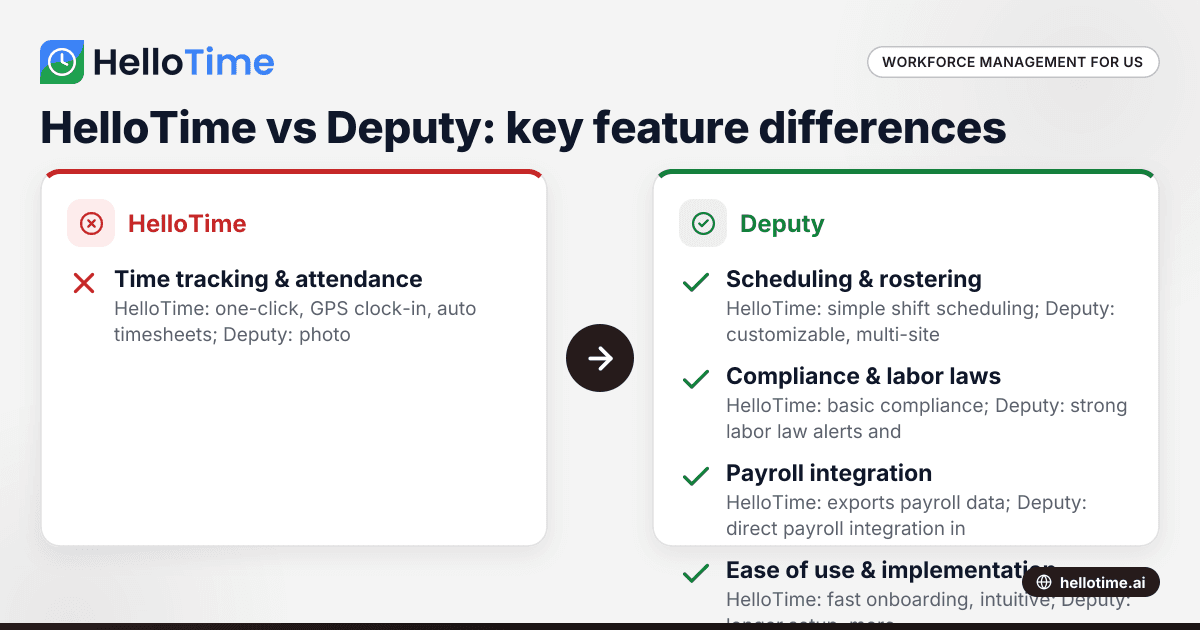
HelloTime vs Deputy: Which Workforce Management Software is Best for United States Small Businesses?
HelloTime and Deputy are popular workforce management tools offering employee scheduling, time tracking, and attendance solutions for US small.
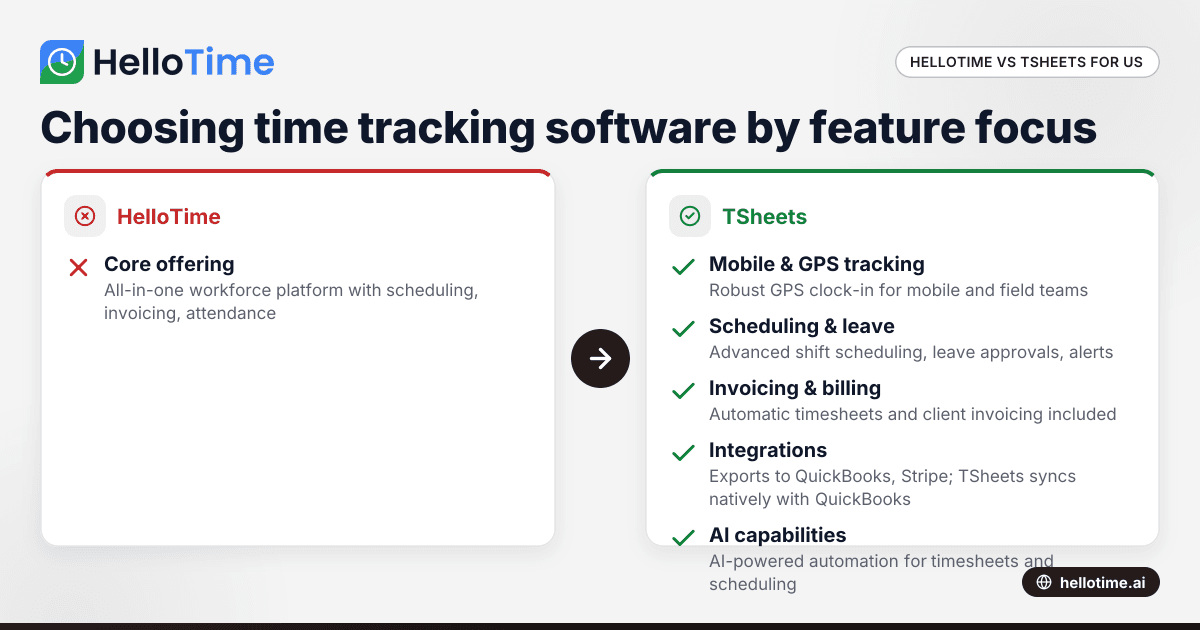
HelloTime vs TSheets: Choosing the Best Time Tracking Software for United States Agencies
HelloTime and TSheets are popular time tracking solutions for agencies and professional services in the United States. Comparing HelloTime vs TSheets.
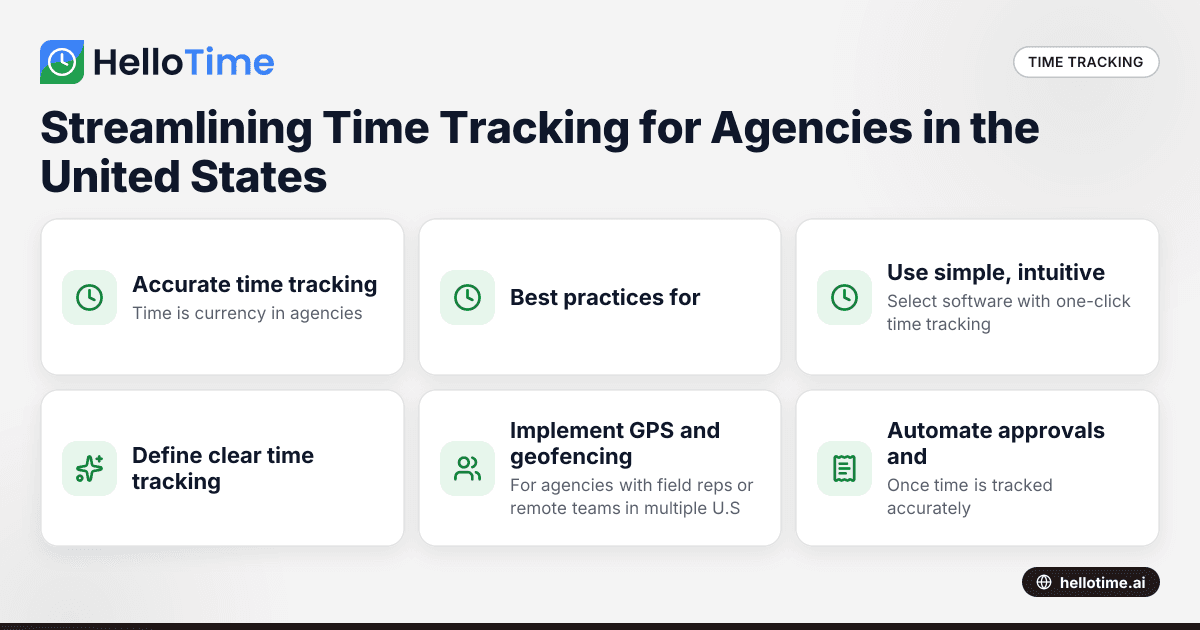
Streamlining Time Tracking for Agencies in the United States: Best Practices to Boost Client Billing Accuracy
Streamlining time tracking for agencies in the United States is essential for ensuring accurate client billing and maximizing profitability. By.