How United States Businesses Can Use GPS Geofence Attendance to Improve Field Staff Management
GPS geofence attendance uses location-based technology to track when field employees enter or leave a designated work zone. This method automates.
The HelloTime team
9 min read
On this page
GPS geofence attendance uses location-based technology to track when field employees enter or leave a designated work zone. This method automates attendance logging, improves accuracy, and helps United States businesses manage workforce time, location, and productivity more efficiently. It is particularly useful for companies with field teams working in retail, hospitality, construction, and other on-site roles.
Key takeaways
- GPS geofence attendance creates virtual boundaries to track employee presence on-site automatically.
- It boosts attendance accuracy, reducing buddy punching and manual errors in time tracking.
- Real-time location insights improve field workforce management and operational efficiency.
- AI-enhanced geofence solutions provide smarter automation and alerts for workforce monitoring.
- Businesses comply with labor laws by capturing precise work hours tied to physical places.
- Integration with scheduling and payroll software helps streamline administrative tasks.
What is GPS Geofence Attendance and How Does It Work?
GPS geofence attendance technology creates a virtual perimeter or “geofence” around a specific worksite. This boundary is defined using GPS coordinates, which can be drawn as a radius or polygon on a map within an attendance software platform. Employees' smartphones or dedicated devices with GPS capability detect when they cross into or out of this virtual zone.
When an employee enters the geofenced area, the system automatically logs a clock-in event with a precise timestamp. Similarly, when they leave, it records a clock-out. This automated process replaces manual attendance methods such as punch cards or paper timesheets and eliminates the need for physical clock-in hardware, which can be costly or inconvenient across multiple locations.
How does the technology detect entry and exit?
- Location check intervals: The attendance app periodically checks GPS coordinates against the set geofence.
- Event triggers: Crossing the geofence boundary triggers clock-in or clock-out actions.
- Accuracy adjustments: Businesses can set buffer zones to account for GPS signal variation—usually between 10-30 feet outdoors—to avoid false triggers.
Worked example
Imagine a construction company in Houston overseeing three different job sites. Each site has a geofence radius of 100 feet around the work area. When a crew member arrives at Site A, their phone app automatically detects entry and logs the start of their shift. If they briefly leave for a lunch break outside the geofence, a clock-out event records their absence. Back on-site, their clock-in is again automatically registered without any manual action.
How Does AI GPS Geofence Enhance Workforce Management?
AI GPS geofence combines traditional geofencing with artificial intelligence to provide more than just location-triggered clock-ins and clock-outs. It leverages machine learning and predictive analytics to:
- Analyze attendance trends: Spot patterns of frequent tardiness, early departures, or missed clock-ins.
- Detect anomalies: Identify unusual activities like employees clocking in without entering the geofence or remaining on-site beyond scheduled hours.
- Send proactive alerts: Remind employees to clock in when near a site or notify managers of potential compliance issues in real time.
AI also helps optimize operational scheduling by forecasting workforce needs based on historical attendance data and site workloads. This minimizes inefficiencies, reduces overtime costs, and increases productivity.
Pitfalls avoided with AI GPS geofence
Without AI, managers might overlook subtle attendance irregularities until payroll audits or customer complaints arise. AI tools surface these issues promptly, enabling managers to address them before they escalate.
Why Should US Businesses Adopt GPS Geofence Attendance?
GPS geofence attendance suits US companies with mobile or multi-location teams by providing:
- Accurate, location-verified time records: Essential for compliance with the Fair Labor Standards Act (FLSA) governing wage and hour tracking.
- Reduced time fraud: Buddy punching and falsified hours are common issues manually tracked. Geofence systems drastically reduce these practices.
- Flexibility: No need for fixed hardware terminals; employees use personal smartphones or company-provided devices.
- Improved safety and accountability: Knowing employees are on-site helps managers in emergencies or for directing work effectively.
Industry-specific examples
- Retail in Chicago: Store employees across multiple branches clock in when entering the sales floor, improving reporting consistency and shift coverage accuracy.
- Hospitality in Detroit: Hotel housekeeping teams check in on specific floors or buildings, ensuring tasks correspond to locations.
- Construction in Houston: Tradespeople record attendance at three active sites without juggling paper timecards or punch clocks.
How Secure is GPS Geofence Data for Employee Attendance?
Data privacy and security are critical for acceptance of GPS geofence attendance in the workplace. Systems used by US businesses adhere to best practices and applicable laws:
- Data encryption: Location and time data are encrypted during transmission and storage to protect against breaches.
- Access control: Only authorized personnel such as HR or operations managers can view attendance logs.
- Transparency: Businesses should communicate clearly with employees about what data is collected, why, and how it will be used. This helps foster trust and meet legal requirements related to employee monitoring.
- Minimal data retention: Retain data only as long as necessary for payroll, compliance, and internal management purposes.
Businesses need to balance operational benefits with respect for employee privacy. Following existing state and federal privacy laws avoids legal risks and promotes positive workplace culture.
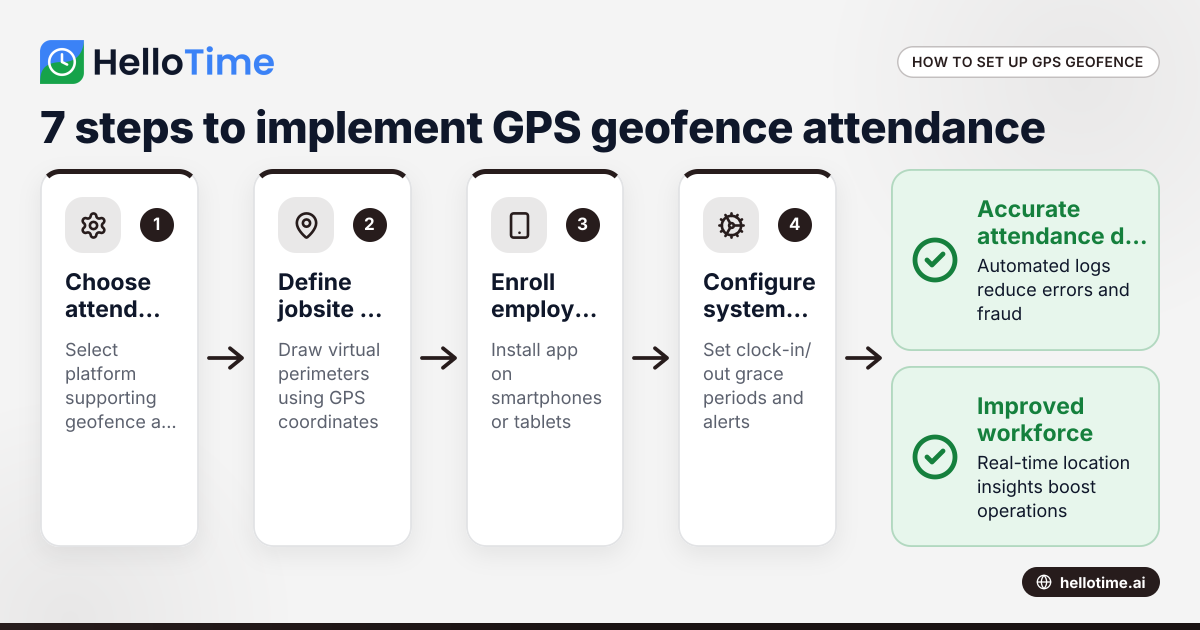
How Do I Set Up a GPS Geofence Attendance System?
Implementing GPS geofence attendance involves several practical steps:
- Choose compatible attendance software: Select a platform that supports geofence attendance and meets US business needs for security and compliance.
- Define physical jobsite boundaries: Using a digital map, draw geofence perimeters around each work location. Polygon shapes help accurately represent irregular site layouts.
- Enroll employee devices: Have workers download and install the attendance app on company or personal smartphones or tablets. Verify device GPS capability.
- Configure system rules: Decide on clock-in/out grace periods, notification preferences, and automatic alerts for missed punches or unauthorized location entries.
- Train staff extensively: Explain how to use the app, clock in/out properly, and get consent for location tracking. Address any privacy concerns directly.
- Test the system: Run pilot shifts to identify glitches or GPS accuracy issues and adjust geofence radius and settings as needed.
- Monitor and analyze data: Review attendance reports and use insights to optimize scheduling, payroll, and operational decisions.
Tips for smooth implementation
- Use maps or photos during training to help employees understand geofence boundaries.
- Provide a clear policy document on GPS monitoring accessible via the app or internal portal.
- Encourage feedback to resolve any misunderstandings or user difficulties early on.
What Are the Business Benefits of GPS Geofence Attendance?
By implementing GPS geofence attendance, US companies realize a broad range of advantages:
- Improved accuracy: Automated logging reduces errors from manual entries or misplaced timecards.
- Fraud reduction: Limits buddy punching and time theft, saving significant payroll costs.
- Operational visibility: Managers have real-time insights into employee locations and attendance adherence.
- Compliance support: Location-verified time data supports wage audits and reduces legal risks under the FLSA.
- Administrative efficiencies: Automated timesheets cut down HR processing time, enabling focus on strategic activities.
- Productivity gains: Identifying late arrivals or unscheduled absences prompts corrective actions to maintain workforce performance.
Such benefits are critical for cities like Chicago, Detroit, or Houston, where employees cover multiple sites and time-sensitive operations.
How Does GPS Geofence Attendance Integrate With Scheduling and Payroll?
Integration between geofence attendance and other workforce systems transforms manual, error-prone workflows into seamless automation:
- Scheduling: Geofence attendance confirms employees arrived on-site as per roster, enabling exceptions to be flagged immediately.
- Payroll: Attendance records feed directly into payroll software for accurate wage calculations, factoring in overtime or shift differentials.
- Accounting stack compatibility: Businesses using QuickBooks or Stripe benefit from reduced manual data entry and faster reconciliations.
- Project and job costing: Tracking hours against specific locations or job sites supports profitability analysis and client billing accuracy.
While payroll features for US businesses are upcoming for HelloTime, attendance and scheduling automation already deliver significant operational efficiencies.
What Legal and Privacy Considerations Should US Businesses Keep in Mind?
Adopting GPS geofence attendance requires attention to these key legal factors:
- Employee consent: Federal and state laws generally require informing employees about location tracking and obtaining consent beforehand.
- Purpose limitation: Use geofence data strictly for labor management and attendance verification, not unrelated surveillance.
- Data security: Implement technical safeguards to prevent unauthorized access or data breaches.
- Compliance with FLSA: Maintain accurate records of hours worked with geographic context to defend against wage claims.
- State-specific regulations: Some states like California and Illinois have stricter privacy laws; always verify compliance with local counsel.
Remember, this article provides general information and not legal advice. Consult legal professionals to tailor policies to your business and jurisdiction.
How Can HelloTime's GPS Geofence Feature Help Your Business?
HelloTime offers a powerful and user-friendly attendance platform designed for US field teams. Its GPS geofence attendance feature provides:
- Reliable location verification for clock-ins and clock-outs
- Automatic timesheets and comprehensive attendance reports
- Integrated scheduling tools for shift management across sites
- Secure data handling with clear privacy controls
- Scalable solutions adaptable to small businesses or growing multi-site operations
Explore HelloTime features or compare plans on our pricing page to see how GPS geofence attendance can improve the accuracy, accountability, and efficiency of your workforce management.
Frequently asked questions
What devices support GPS geofence attendance tracking?
Most modern smartphones and tablets with GPS functionality support geofence attendance when using compatible software apps. HelloTime’s system works on iOS and Android devices commonly used by US field employees. No additional hardware is usually necessary.
Can GPS geofence attendance replace traditional punch clocks?
Yes. It is an effective alternative to physical punch terminals, especially for mobile teams or businesses operating multiple sites. It removes the need for onsite hardware while providing detailed, location-verified attendance data.
How accurate is GPS geofence technology?
GPS accuracy outdoors typically ranges between 10 and 30 feet depending on environmental factors. Businesses can set geofence boundaries and buffer zones to accommodate this variance. For indoor environments, hybrid solutions using WiFi or Bluetooth can improve location precision.
Does GPS geofence attendance respect employee privacy?
When implemented transparently—with employee consent, limited scope of tracking, and strict data security—GPS geofence attendance complies with US privacy laws. Clear communication and policy documentation are key to balancing operational needs and privacy.
How does GPS geofence assist with regulatory compliance?
GPS geofence attendance ensures verifiable and time-stamped records linked to physical work locations. This documentation supports compliance with the Fair Labor Standards Act by accurately tracking hours worked and minimizing wage-hour disputes.
Is AI GPS geofence different from standard geofence attendance?
Yes. AI GPS geofence leverages artificial intelligence to analyze attendance data for patterns and anomalies. It sends automated alerts and predictive notifications, enhancing workforce monitoring beyond simple location tracking.
Discover the power of GPS geofence attendance and other smart workforce management tools designed for US businesses at HelloTime. Check out our advanced features or review plan options at pricing to start enhancing your field staff management today.
Read next
This article covers one part of a bigger topic. For the complete picture, read our guide to gps geofence.
Keep reading
Related articles
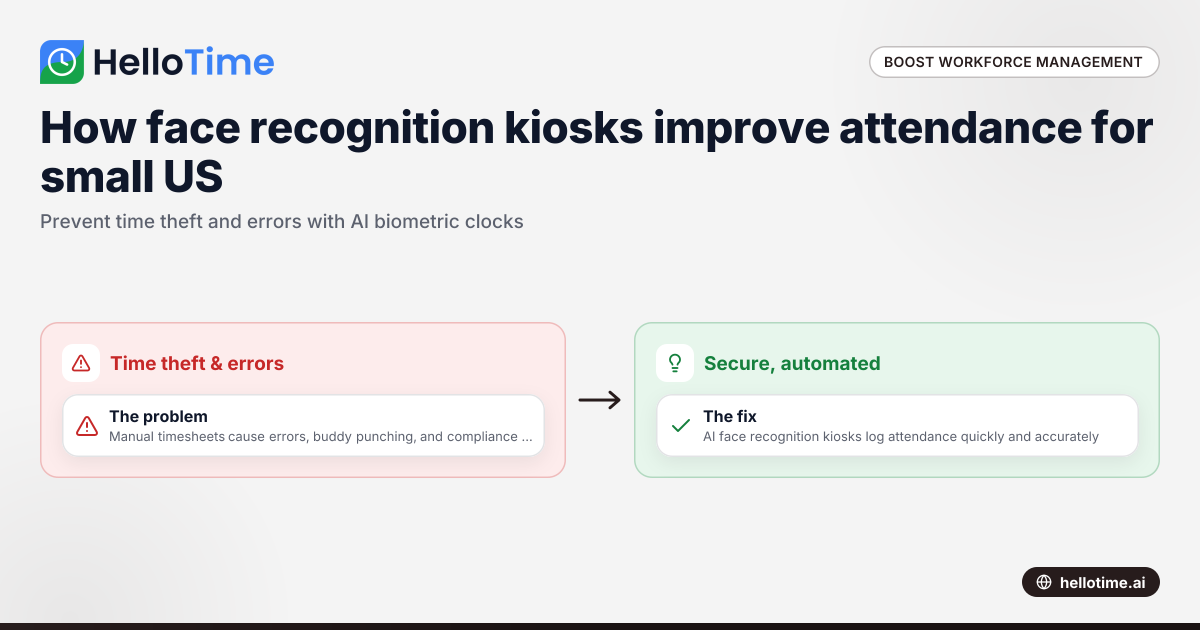
How Biometric Attendance Kiosks with Face Recognition Improve Workforce Management for United States Small Businesses
Biometric attendance kiosks with face recognition use AI technology to capture employee attendance quickly and accurately without physical contact.
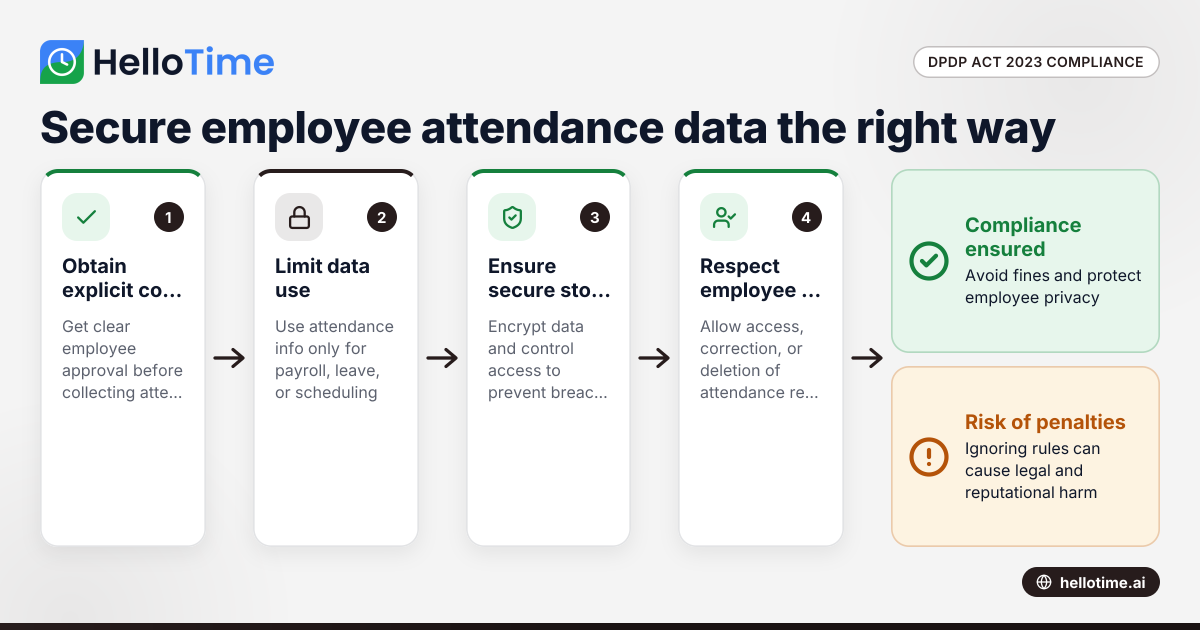
How the DPDP Act 2023 Impacts Employee Attendance and Timesheet Data Management in Indian SMEs
The Digital Personal Data Protection (DPDP) Act 2023 is India’s law regulating how personal data, including employee attendance information, must be.
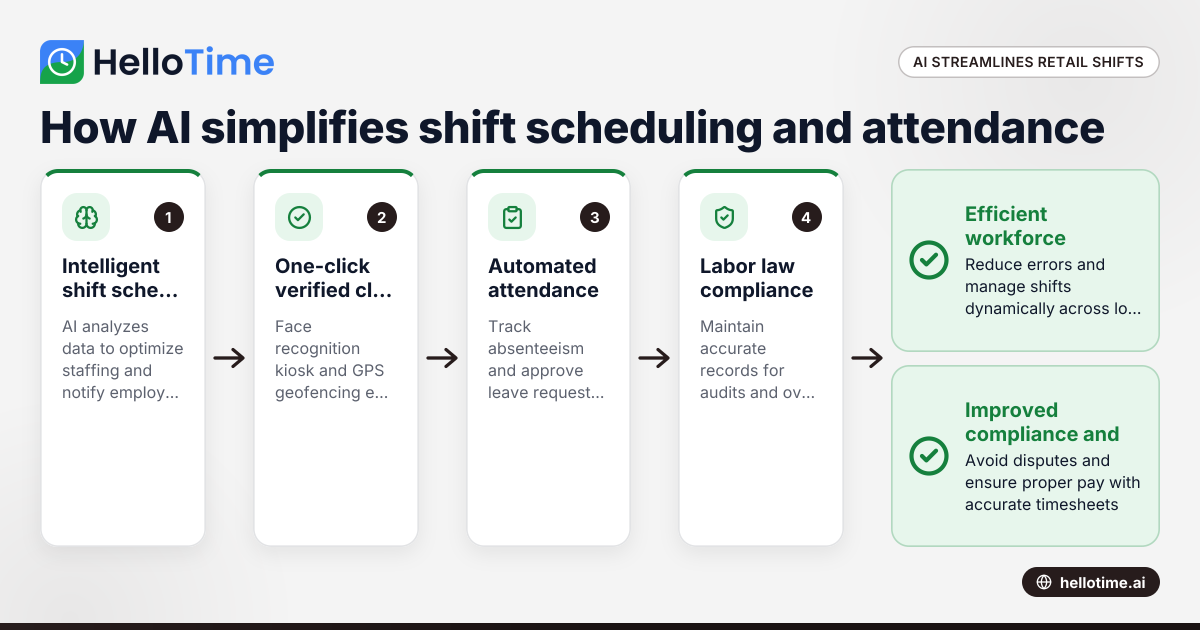
How HelloTime’s AI-Powered Time Tracking Simplifies Shift Scheduling and Attendance in United States Retail
HelloTime’s AI-powered time tracking streamlines shift scheduling and attendance management for U.S. retail businesses by automating key tasks and.