PF and ESI Compliance Checklist for Small Businesses in India: Monthly Payroll Inputs, Deductions and Records
PF and ESI compliance for small businesses in India comes down to three things: collect the right payroll inputs every month, calculate deductions.
The HelloTime team
11 min read
On this page
PF and ESI compliance for small businesses in India comes down to three things: collect the right payroll inputs every month, calculate deductions correctly, and keep clean employee and payment records. A simple checklist helps you avoid missed deductions, late filings, payroll disputes, and messy year-end corrections.
Key takeaways
- PF and ESI compliance starts with accurate employee master data, attendance, wages, and joining or exit records.
- Monthly payroll inputs must be checked before salary processing, not after payslips go out.
- Small businesses should keep deduction workings, attendance proofs, wage registers, and payment challan records in one place.
- Errors usually happen because of spreadsheets, late attendance updates, and unclear salary structures.
- A repeatable payroll workflow, supported by an ai-powered process or software checks, reduces manual mistakes.
- This article is general information, not legal or tax advice. Rules and thresholds can change, so verify current requirements before acting.
What is the PF and ESI compliance checklist for small business India?
It is a month-end checklist that helps an Indian business confirm employee coverage, payroll inputs, deductions, remittances, and records for Provident Fund and Employees’ State Insurance. For a small business, the goal is simple: pay the right amount, file on time, and keep documents ready if an employee, auditor, or authority asks for them.
For many SMEs in Mumbai, Pune, Bengaluru, Indore, Coimbatore, or Jaipur, PF and ESI work starts in one place and ends in another. Attendance may sit in a register. Leave may come on WhatsApp. Salary revisions may be shared by email. Final payroll may still be done in spreadsheets. That is where errors start.
A practical checklist reduces this risk. It also helps HR, accounts, and operations stay aligned each month.
Why do small businesses struggle with PF and ESI compliance?
Small businesses usually do not struggle because the process is impossible. They struggle because the data is scattered and gets updated too late.
Common reasons include:
- New joiners added after payroll cut-off
- Exits not updated in time
- Attendance corrections received late
- Overtime or unpaid leave not approved properly
- Salary structure changes made mid-month
- Different teams maintaining different versions of employee data
- Missing wage records for field staff or shift teams
- Manual deduction calculations in spreadsheets
This gets harder in businesses with shift work, site attendance, or multiple branches. A restaurant group in Pune, a retail chain in Bengaluru, or a facility services company across tier-2 cities may have frequent staff movement. If attendance and payroll are not linked, PF and ESI deductions can easily go wrong.
That is why many teams now use payroll workflows that are partly automated with ai checks for missing inputs, attendance anomalies, and approval gaps before payroll is finalised. The point is not complexity. The point is fewer avoidable errors.
What payroll inputs should you collect every month?
Collect employee status, attendance, payable days, earnings, deductions, and changes that affect coverage or wages. If any one of these is incomplete, PF and ESI working may be wrong.
Start with a fixed monthly input list. Do not rely on memory.
1. Employee master updates
Review these before payroll is processed:
- New joiners
- Resignations and last working dates
- Transfers between branches or units
- Changes in designation
- Salary revisions
- Bank detail changes
- UAN or insurance-related identifiers already on record
- Date of birth and other core identity details
A small error here can affect eligibility, deduction amounts, and records.
2. Attendance and payable days
Attendance is the base for payroll. Confirm:
- Present days
- Weekly offs
- Paid holidays
- Paid leave
- Unpaid leave or loss of pay
- Half days
- Overtime, if part of wage processing
- Late marks, if linked to salary policy
- Shift-based attendance for factories, stores, or hospitality units
- Site attendance for field teams
If attendance is managed manually, ask supervisors to freeze data by a clear cut-off date every month.
3. Leave data
Leave affects payable wages. Check:
- Approved leave only
- Carry-forward treatment as per company policy
- Leave without pay entries
- Maternity or long leave records, if applicable
- Leave corrections from earlier periods
For many SMEs, leave is where payroll errors begin. Leave requests are often approved informally over WhatsApp and never updated in the spreadsheet.
4. Earnings components
Collect all approved earnings:
- Basic salary
- Dearness allowance, if part of your structure
- HRA
- Conveyance or other allowances
- Incentives
- Performance pay
- Attendance bonus
- Overtime wages
- Arrears
- Full and final settlement inputs for exits
Each component may not affect PF and ESI in the same way, so your payroll sheet must map them correctly.
5. Deduction-related changes
Check these every month:
- Employee contribution amounts
- Recovery items, if any
- Salary advances
- Loans or other authorised deductions
- Any correction from the previous month
This helps ensure the net salary matches the payslip and ledger entries.
Monthly PF compliance checklist for small businesses
PF compliance is not just about one deduction figure. It depends on clean employee data, wage mapping, correct contribution working, and record retention.
Use this monthly checklist.
1. Confirm covered employees
Review which employees are covered under your PF process based on your existing setup and current records. If there are new hires, check whether they have been added correctly and whether their employee data is complete.
2. Verify PF wage components
Make sure the salary components that form part of PF working are clearly identified in your payroll structure. Do not leave this to last-minute judgement in Excel.
3. Check attendance-linked wages
For employees with unpaid leave, mid-month joining, or exit, verify that PF-related wage calculations reflect actual payable wages for the period where applicable in your payroll logic.
4. Calculate employee and employer contributions
Run the payroll calculation and review exceptions. Look closely at:
- New joiners
- Exits
- Low net pay cases
- Arrear months
- Manual overrides
5. Review ECR and challan support data
Before filing or payment, match payroll totals with contribution summaries. Differences usually point to a missing employee, duplicate record, or wrong wage base.
6. Save proof of payment and working papers
Keep:
- Monthly payroll summary
- Employee-wise contribution sheet
- Filing support report
- Payment proof
- Any correction note or approval email
7. Reconcile with books of account
Accounts and payroll should agree on salary expense, employee deductions, employer contribution, and payment entries. This matters at audit time and when using Tally.
Monthly ESI compliance checklist for small businesses
ESI mistakes often happen when attendance, gross wages, and employee status are not updated together. Businesses with shift workers, shop-floor staff, delivery teams, housekeeping staff, or site workers should be especially careful.
1. Confirm who is in scope this month
Review covered employees based on your payroll records and current wage details. New joiners, exits, wage changes, and branch movement should all be checked.
2. Validate gross wage inputs
ESI working depends heavily on correct gross wage data for the month. Recheck incentives, overtime treatment in payroll, unpaid leave impact, and any arrears.
3. Match attendance with wages
If an employee has low payable days, half days, or unpaid leave, make sure the payroll figures reflect that correctly. Manual attendance errors can create deduction mismatches.
4. Review employee and employer contribution calculations
Look at unusual values, especially where:
- Gross wages changed sharply
- Incentives were paid
- The employee joined or exited mid-month
- Attendance was corrected after draft payroll
5. Keep wage and attendance evidence
Store:
- Attendance reports
- Shift rosters, if relevant
- Leave approvals
- Payroll register
- Employee-wise deduction summary
- Payment proof
6. Reconcile branch and head-office records
If attendance comes from branches and payroll runs centrally, make sure branch-wise employee counts and totals agree before month-end is closed.
Which records should you keep for PF and ESI?
Keep employee master records, attendance, wage registers, deduction workings, payment proofs, and payroll approvals for each month. If records are easy to retrieve, most compliance and employee queries become much easier to handle.
Go beyond just the final challan or payroll sheet. A proper record file should include:
Employee records
- Appointment letter
- Salary revision letters
- Identity and address records collected by the company
- Joining date and exit date
- Bank details
- Department or location mapping
Attendance and leave records
- Daily attendance
- Biometric or GPS clock-in reports, if used
- Shift rosters
- Leave applications and approvals
- Unpaid leave records
- Overtime approvals
Payroll records
- Salary structure breakup
- Monthly payroll register
- Employee-wise earning and deduction sheet
- Payslips
- Arrear or correction calculations
- Full and final settlement sheets
Contribution and payment records
- Contribution summary
- Filing support documents
- Challan payment proof
- Month-wise reconciliation notes
- Ledger entries in accounting records
Approval trail
- HR approval
- Department head inputs
- Accounts confirmation
- Management sign-off where needed
Under the DPDP Act 2023, businesses should also think carefully about how employee personal data is stored, accessed, and shared internally. Payroll files often contain sensitive personal information. Keep access limited and organised.
How can a small business reduce PF and ESI errors?
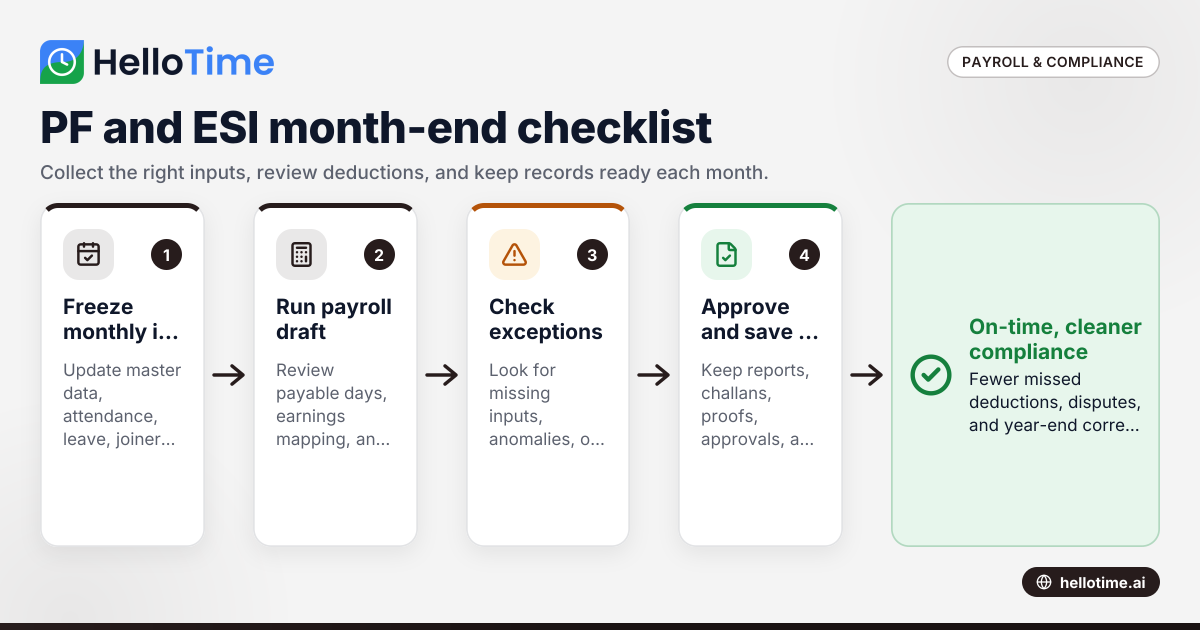
Use one source of employee and attendance data, freeze monthly inputs by a cut-off date, and review exception reports before payroll is final. Most errors come from late updates and duplicate data entry, not from the deduction formula itself.
In practice, this means tightening the workflow.
Build a simple monthly process
- Freeze attendance and leave by a set date.
- Lock employee master changes for that cycle.
- Review new joiners, exits, and salary revisions.
- Run draft payroll.
- Check PF and ESI exceptions.
- Approve payroll.
- Save reports and payment proofs.
- Reconcile payroll totals with accounts.
Create an exception list every month
Do not review every employee manually if your team is growing. Instead, review exception cases such as:
- Zero deductions where deductions usually apply
- Sudden rise or drop in gross wages
- Negative net pay
- Mid-month joiners or exits
- Duplicate employee names
- Missing attendance
- Manual overrides
An ai tool can help flag these anomalies faster than a spreadsheet review. Even a simple ai automation layer in payroll review can reduce month-end back-and-forth between HR and accounts.
Avoid scattered data
If attendance is on paper, leave is on WhatsApp, and payroll is in Excel, someone will miss something. Small businesses usually benefit from bringing time, attendance, leave, and payroll inputs together in one system.
If you are evaluating options, this guide on time tracking software in India may help you shortlist what to look for.
A practical month-end PF and ESI checklist you can use
Here is a working checklist you can adapt for your business.
Before payroll run
- Update new joiners and exits
- Confirm salary revisions
- Freeze attendance
- Freeze leave data
- Approve overtime and incentives
- Check unpaid leave entries
- Verify employee bank details
- Confirm branch-wise headcount
During payroll run
- Review payable days
- Check earnings mapping
- Calculate deductions
- Review PF exceptions
- Review ESI exceptions
- Verify arrears or adjustments
- Check net salary outliers
Before payment and filing
- Match employee-wise totals
- Match payroll summary with deduction summary
- Save payroll register
- Save employee-wise workings
- Save payment support reports
- Take final approval
After payment
- Save challan proofs
- Reconcile payroll with accounts
- Post entries in Tally
- Archive month-wise records
- Note corrections needed next month
Should you use software for PF and ESI compliance?
Yes, if you process payroll for even a modest team and still depend on spreadsheets. Software helps when you need one place for attendance, leave, payroll inputs, approvals, records, and audit trails.
For small businesses, the real gain is not only speed. It is control. You can reduce duplicate entry, freeze data on time, and keep records easier to retrieve. This matters when an employee disputes a deduction or when your accountant needs support papers at year-end.
A practical setup is one where time tracking, attendance, leave, and payroll inputs flow together. HelloTime is designed for that kind of workflow, with features such as time tracking, attendance, leave management, approvals, and payroll support for India.
If you want a cleaner month-end process, explore the features at /features or compare plans at /pricing.
Frequently asked questions
Is PF and ESI compliance only about monthly deduction calculation?
No. It also includes correct employee setup, wage inputs, attendance records, payment support, and document retention. A wrong employee record can create the same problem as a wrong calculation.
Can a small business manage PF and ESI in spreadsheets?
Yes, but the risk rises as headcount, branches, shifts, or employee movement increase. Spreadsheets can work for a very small team, but they often break when attendance, leave, and payroll updates come from many people.
What is the most common PF and ESI mistake in small businesses?
The most common mistake is using incomplete payroll inputs. Late attendance changes, missed exits, and unrecorded unpaid leave often lead to wrong deductions and rework in the next month.
How long should payroll and deduction records be kept?
Keep records in an organised, retrievable format for as long as your business, accountant, auditor, or applicable compliance needs require. Since record needs vary by context, it is best to maintain complete month-wise files rather than only final summaries.
Can attendance software help with PF and ESI compliance?
Yes. Better attendance data improves payroll accuracy. If shifts, leave, overtime, and payable days are captured properly, PF and ESI deductions are less likely to need manual correction later.
Keep reading
Related articles
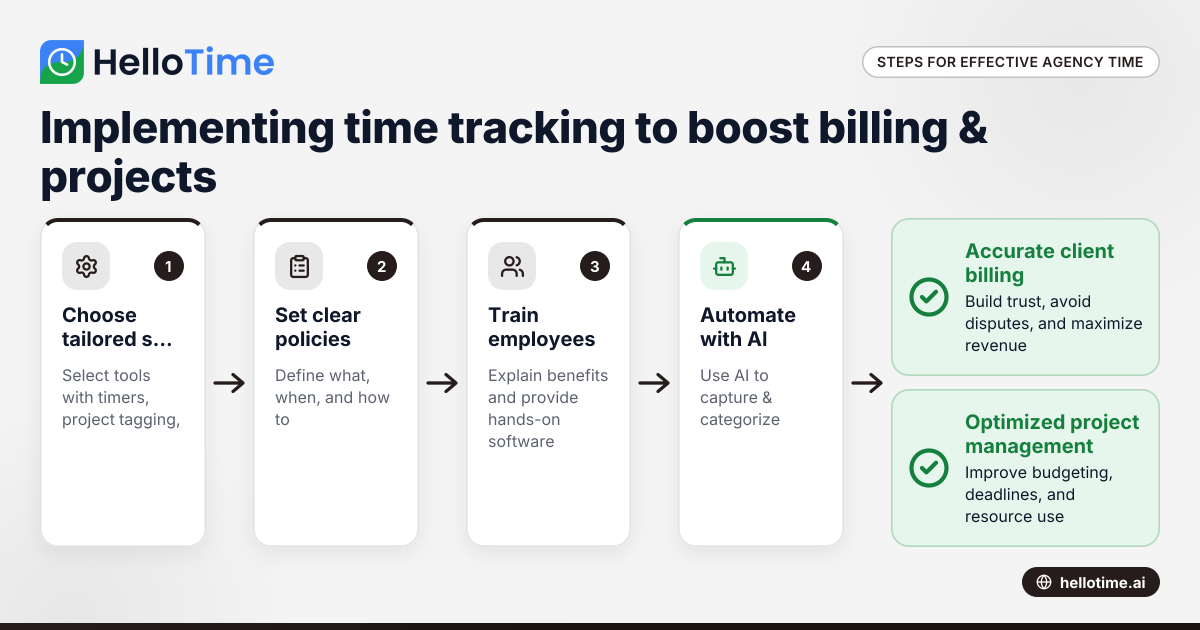
Effective Time Tracking Strategies for United States Agencies to Enhance Client Billing and Project Management
Effective time tracking is essential for agencies in the United States to improve client billing accuracy and optimize project management. With.
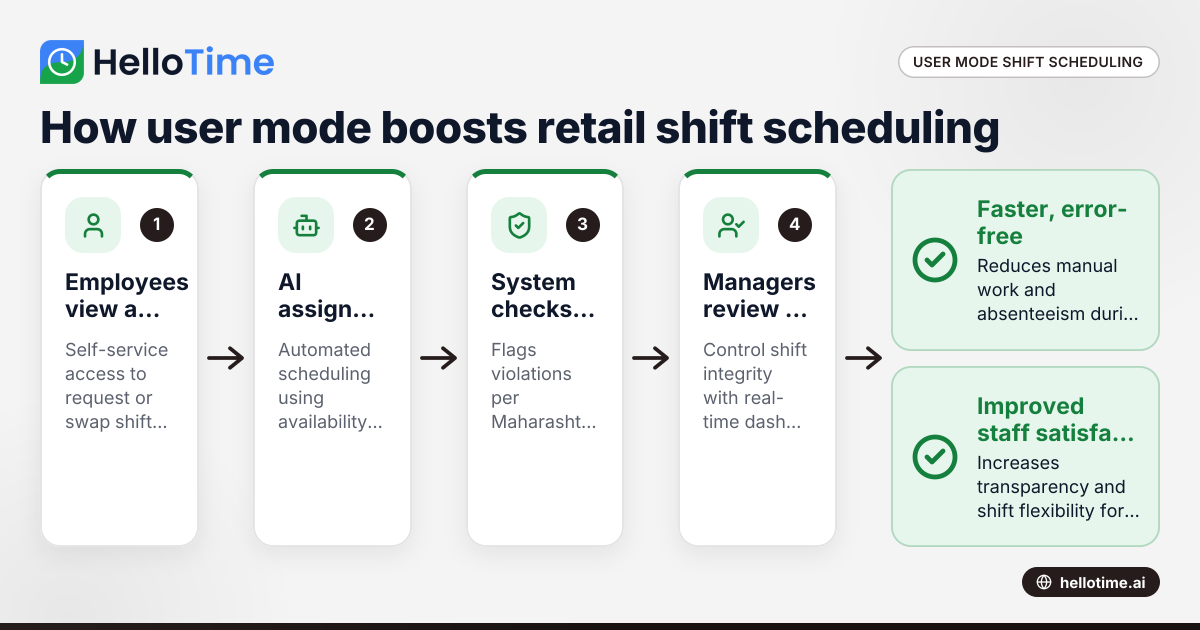
How User Mode Enhances Shift Scheduling Efficiency for Retail Stores in Mumbai, India
User mode shift scheduling in Mumbai retail stores means giving employees controlled access to view, request, or swap shifts themselves, while.
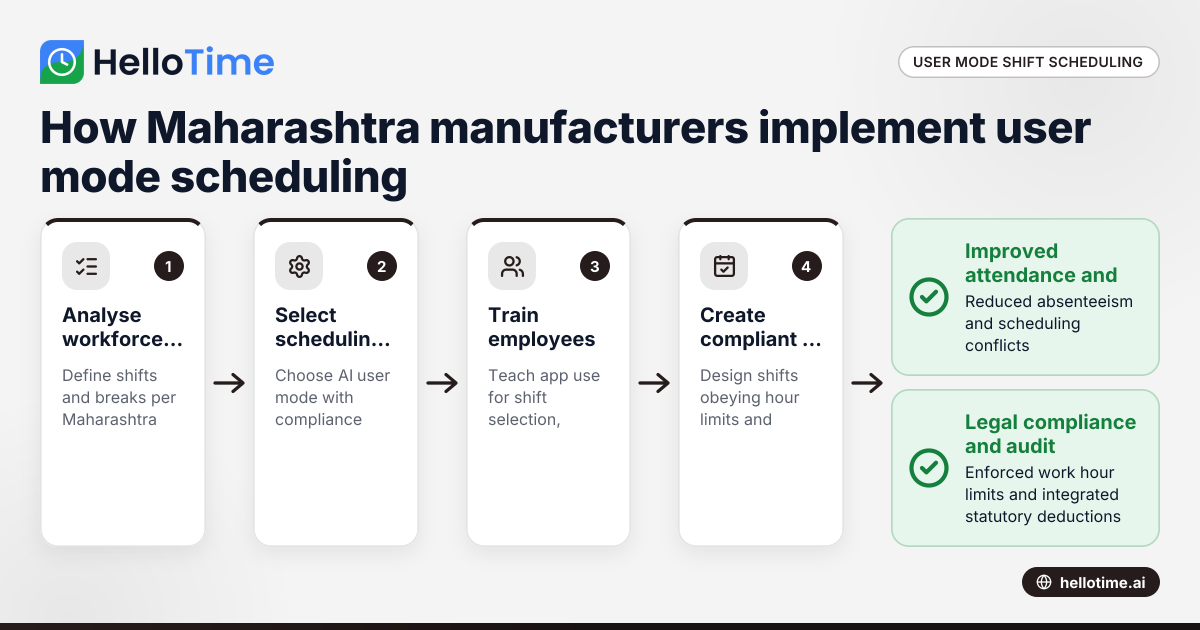
How User Mode Simplifies Shift Scheduling for Manufacturers in Maharashtra, India
User mode shift scheduling lets manufacturers in Maharashtra give workers control to pick or swap shifts via an app. This improves attendance.