Retail Staff Rota Planning in the United Kingdom: How Store Managers Can Build Fair Shifts and Cut Last-Minute Gaps
Retail staff rota planning in the United Kingdom means putting the right people in the right shifts, with enough notice, while staying fair and.
The HelloTime team
12 min read
On this page
Retail staff rota planning in the United Kingdom means putting the right people in the right shifts, with enough notice, while staying fair and keeping labour costs under control. A good rota reduces understaffed hours, overtime surprises and rushed phone calls when someone is off sick, and it gives your team more confidence in their working week.
Key takeaways
- Strong retail rotas balance customer demand, employee availability, skills and fairness.
- Last-minute gaps usually come from weak planning habits, not just unexpected absences.
- A simple rota process can cut overtime, reduce manager stress and improve attendance.
- Clear rules for notice, shift swaps and time-off requests help stores run more smoothly.
- Digital scheduling and attendance tools make it easier to spot gaps before they become expensive.
Why retail staff rota planning in the United Kingdom matters
In retail, the rota is where customer service, payroll cost and employee experience meet. If the rota is weak, the shop floor feels it first. Queues get longer. Break cover slips. Managers jump on tills instead of leading the team. Closing tasks run late. Staff become frustrated because the same people get the unpopular shifts.
This is why retail staff rota planning United Kingdom is more than an admin task. It is an operating system for the store.
For a shop in London, Manchester or Birmingham, demand can change quickly. Weekends are busier. School holidays affect footfall. Deliveries land on fixed days. Promotional events create peaks. Some stores need more early-shift staff for stock handling. Others need stronger evening cover for customer service and closing routines.
A rota should reflect how your store actually works. It should not be copied from last week and patched together with messages.
For many small and mid-sized retailers, the problem starts with spreadsheets or paper rotas. They seem easy at first. Then reality gets in the way. A holiday request is missed. A part-time worker’s availability changes. A supervisor books too many hours for one department and not enough for another. By the time the issue is noticed, it becomes a last-minute gap.
Good rota planning creates three outcomes:
- Enough staff for busy periods.
- Fair distribution of shifts.
- Better control over hours worked.
Where rota planning touches on working time, pay and leave, this article is general information only, not legal or tax advice.
What causes last-minute gaps in retail rotas?
Last-minute gaps usually come from avoidable weaknesses in planning. Sudden illness does happen, but most rota problems build up earlier.
Common causes include:
No clear availability records
If availability sits in text messages, notebooks and memory, mistakes are likely. Managers may roster someone who cannot work that time, especially in teams with students, parents or part-time staff.
Too little skills mapping
Not every team member can do every task. You may need someone who can open the store, cash up, receive deliveries, handle returns or supervise younger staff. If those skills are not mapped into the rota, a shift can look covered on paper but fail in practice.
Unfair shift allocation
When the same people always get weekends, late closes or split shifts, morale drops. Then requests for swaps, refusals and absences rise. Fairness is not just a people issue. It directly affects reliability.
Weak leave planning
Leave requests need to be seen alongside the rota, not in a separate file. If approved leave is not built into planning early, you are forced into expensive cover later.
No buffer for peak trading periods
A rota built to the exact minimum headcount may look efficient. It often breaks the moment reality changes. Deliveries run late. One person is off sick. Footfall spikes. The result is panic.
How can store managers build a fair rota?
Start with demand, then match people, skills and availability, and apply the same fairness rules each week. A fair rota is clear, consistent and visible, so staff understand how shifts are assigned.
Fairness does not mean everyone gets identical hours or identical shifts. It means your process is consistent and reasonable.
1. Forecast demand by time block
Break the trading week into practical blocks. For example:
- opening
- mid-morning
- lunch period
- afternoon peak
- evening
- close
Use recent sales patterns, footfall, delivery schedules and known events to estimate demand. A city-centre store in Birmingham may need stronger lunch cover. A retail park store may need more weekend staff. A fashion store during a promotion may need more fitting room and till support.
Keep forecasts simple. You do not need complex modelling to improve. You need a repeatable method.
2. Define minimum cover by role
List the minimum number of people needed for each period and each key task. For example:
- till cover
- floor assistance
- stock room
- supervisor cover
- opening or closing duties
This stops a rota from being “full” but still operationally weak.
3. Keep one source of truth for availability
Ask staff to submit availability in one place and update it when it changes. If someone can only work after school hours or cannot work Sundays, that must be visible during scheduling.
4. Rotate unpopular shifts
Set a simple rule for evenings, weekends and closes. Track who worked them recently. Then spread them fairly over time. Staff are more likely to accept difficult shifts when they can see the pattern is balanced.
5. Check hours before publishing
Review total scheduled hours for each person. Look for extremes. One employee may be overloaded, while another wants more work. This final check often solves fairness issues before the rota is released.
What should be included in a retail rota?
A retail rota should show each shift, employee, location, role and start and finish time, plus breaks and any key duties. It should also make leave, availability and supervisor coverage easy to see so managers can spot problems before the week begins.
That short answer matters because many rota issues come from missing detail, not bad intent.
A strong retail rota usually includes:
- employee name
- store or site
- role or department
- shift start and finish time
- unpaid break details where relevant
- opening or closing duty markers
- key skills or responsibilities
- approved leave
- training time if needed
- notes on known delivery or promotion days
It also helps to show who is on standby for extra hours, if your store uses that approach, and who can cover specialist tasks.
If your rota is just names and times, managers often miss operational detail. That creates avoidable same-day changes.
A practical 7-step rota planning process for retail stores
The easiest way to cut last-minute gaps is to use the same planning rhythm every week.
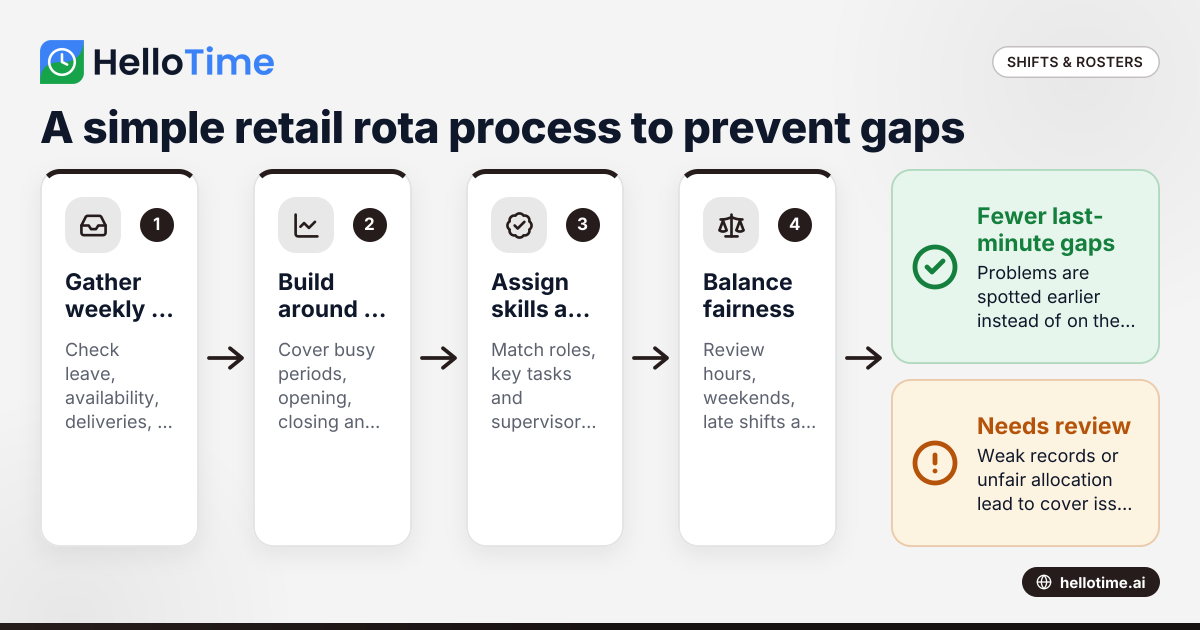
1. Gather inputs on the same day each week
Pick one planning day. For example, every Wednesday afternoon. Before building the rota, check:
- approved leave
- pending leave requests
- updated availability
- expected deliveries
- promotions or events
- training sessions
- known absence risks
Consistency matters more than perfection.
2. Build around demand first
Schedule your busiest periods first. Protect opening, closing and high-traffic windows. Do not start with individual preferences and try to fill the gaps later.
3. Assign critical skills next
Make sure each shift has the right skills mix. A shift with four people can still fail if no one can supervise, process returns or handle keyholder tasks.
4. Balance fairness before finalising
Review who has had:
- late shifts
- weekend shifts
- closes
- short gaps between shifts
- fewer or more hours than usual
If one employee is carrying the least popular work every week, fix it now.
5. Publish with enough notice
The more notice staff have, the fewer surprises you will get. Earlier publication gives employees time to raise real conflicts before the shift day arrives.
6. Set a clear swap process
If staff need to swap shifts, define the rule. For example, swaps may need manager approval and must preserve skills coverage. This keeps the rota stable.
7. Review the week after it ends
Compare the planned rota against what really happened:
- where did gaps appear?
- where did overtime happen?
- which periods were overstaffed?
- which shifts needed cover calls?
- who clocked in late or left early?
This step is where improvement happens.
How do you reduce last-minute rota gaps?
Reduce last-minute gaps by planning earlier, keeping live availability records, building in skills cover and reviewing patterns of absence and overtime. Stores that treat rota planning as a weekly process, not a last-minute task, usually see fewer same-day problems.
Once that discipline is in place, you can go deeper.
Create a small cover pool
Many retailers have a few team members who are open to extra hours. Keep that list current. Note when they are usually available and what roles they can cover. This saves time when a gap appears.
Spot repeated problem shifts
Some shifts are always harder to fill. It may be Sunday evening. It may be delivery morning. It may be a late close in a quieter location. If the same gap repeats, the rota pattern needs redesign, not just another reminder to staff.
Connect attendance to scheduling
A rota only works if planned hours match actual attendance. If someone often arrives late for an early start, that should influence future scheduling. The goal is not punishment. It is realistic planning.
Reduce dependency on one person
If only one keyholder can open, or only one supervisor can run a close, you have a fragility problem. Cross-training can reduce rota risk over time.
Keep communication simple
Do not scatter shift updates across several channels. Staff need one clear place to see the latest rota. Confusion creates no-shows and disputes.
Using software to make retail rota planning easier
Software helps because it brings scheduling, attendance, leave and approvals into one view. That means fewer missed requests, faster changes and clearer records when managers need to understand where gaps come from.
For store managers, the biggest value is not just speed. It is visibility.
With modern scheduling tools, you can:
- create repeating shift patterns
- see approved leave while building the rota
- track actual hours against planned hours
- assign shifts by location or role
- approve changes in one place
- reduce spreadsheet errors
- identify overtime and understaffing earlier
For shift-based retail teams, this also supports better communication. Staff know where to check their rota. Managers know what changed and when.
HelloTime is designed for this kind of workforce management. Teams can manage shift scheduling, attendance and leave in one system, instead of juggling separate files. If you want to see what that looks like for UK teams, you can explore HelloTime in the UK.
Where ai retail staff tools can help
Some ai retail staff tools can help managers spot patterns that are easy to miss manually, such as repeated understaffing at certain hours or uneven shift allocation across the team. The real value is not replacing manager judgement. It is giving managers better signals before problems become gaps.
That matters most in multi-site retail or stores with high staff turnover. If you are building rotas quickly, patterns can hide in plain sight. A digital system can show trends in absences, overtime, late arrivals and shift changes that affect rota quality.
Building fair rotas without upsetting the team
Fairness should be visible, not just claimed. Staff are more likely to trust the rota when the rules are simple and applied consistently.
Explain the rota rules
Tell staff what the manager considers when assigning shifts:
- availability
- contracted hours
- trading demand
- skills needed
- fairness across evenings and weekends
This reduces the feeling that shifts are handed out randomly.
Use the same process every week
If one week is built around availability and the next is built around favouritism, trust disappears. Consistency matters.
Keep records of requests and approvals
If an employee says, “I asked for that day off,” you need a clear record. This is another reason spreadsheets and verbal requests often fail.
Review fairness over a month, not one week
One week may look uneven because of leave or illness. Over four weeks, patterns become clearer. Look at who worked weekends, closes and extra hours across the full period.
Common mistakes in retail staff rota planning United Kingdom
Many stores do not fail because managers do not care. They fail because the process is too reactive.
Here are common mistakes:
Copying last week’s rota
This ignores changing demand, leave and availability. It saves ten minutes now and creates two hours of problems later.
Planning only by total hours
A store can have the “right” total labour hours and still be short at the busiest times. Coverage matters by hour and by role.
Forgetting breaks and handover time
Back-to-back scheduling can leave tills uncovered and key tasks unfinished.
Ignoring employee preferences completely
Business needs come first, but preferences still matter. If they are never considered, turnover risk rises and shift acceptance falls.
Treating attendance as separate from the rota
The planned schedule and actual clock-in data should inform each other. That is how you improve future rotas.
A simple weekly checklist for store managers
Use this checklist before you publish each rota:
- Have all leave requests been reviewed?
- Have all availability changes been updated?
- Are peak trading periods fully covered?
- Does every shift have the right skills mix?
- Are opening and closing duties assigned?
- Are unpopular shifts spread fairly?
- Are any employees overloaded or underused?
- Is there a backup plan for high-risk shifts?
- Has the rota been shared with enough notice?
- Is there one clear process for swaps and changes?
If you can answer yes to most of these, your rota is likely in much better shape than a typical spreadsheet-led process.
When is it time to move on from spreadsheets?
If rotas are taking too long, errors are common or managers keep firefighting shift gaps, it is probably time to move on from spreadsheets. The trigger is not store size alone. It is the amount of complexity your current method can no longer handle.
That usually shows up in a few ways:
- repeated missed leave requests
- confusion over the latest rota version
- too many manual messages about swaps
- no clear view of planned versus actual hours
- frequent overtime surprises
- poor visibility across multiple stores
A better system gives managers time back. It also gives owners and operations leaders a clearer picture of labour usage and staffing pressure.
If you are reviewing options, the features page shows how HelloTime handles time tracking, attendance, leave and shift scheduling in one place.
Keep reading
Related articles
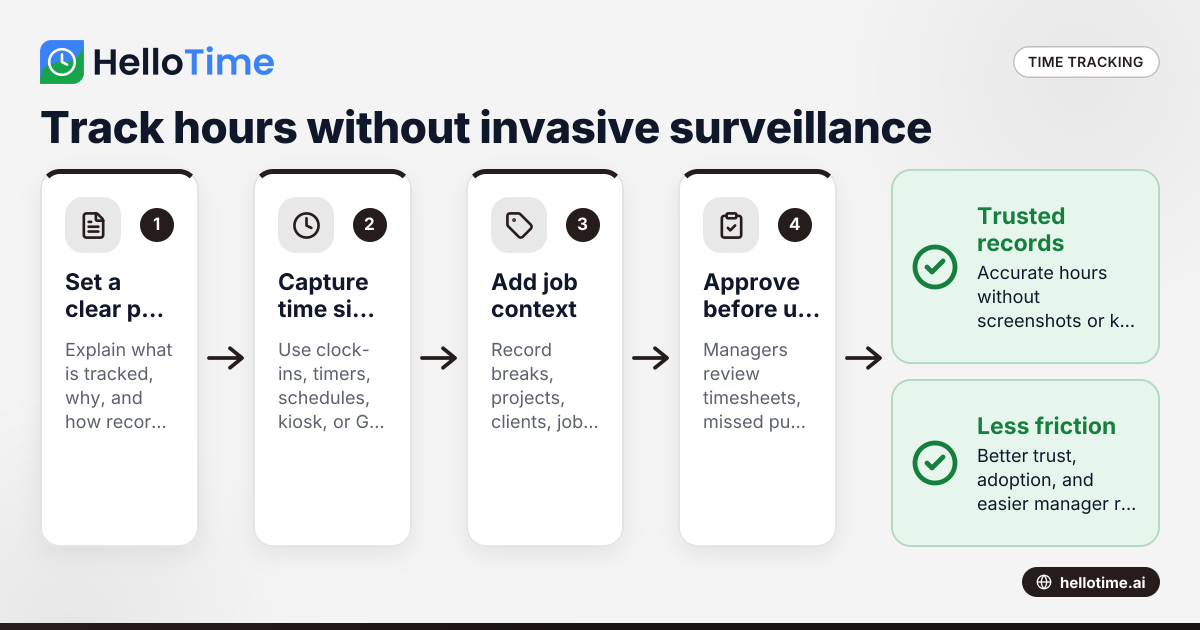
User Monitoring Alternatives in Time Tracking Software in the United States: How Small Businesses Can Track Hours Without Invasive Surveillance
If you are looking for user monitoring time tracking software in the United States , there is a better option than screenshots, keystroke logs, and.
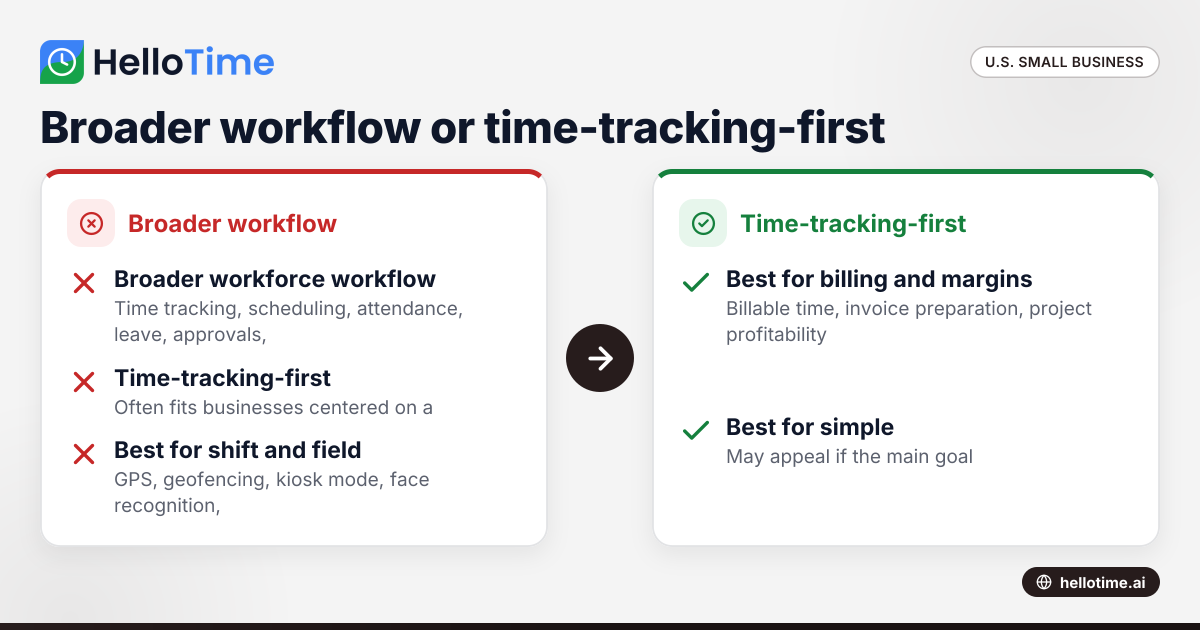
HelloTime vs QuickBooks Time in the United States: Which Is Better for Small Business Time Tracking, Scheduling, and Attendance?
If you are comparing HelloTime vs QuickBooks Time in the United States, the better fit depends on how your team works day to day. HelloTime is.
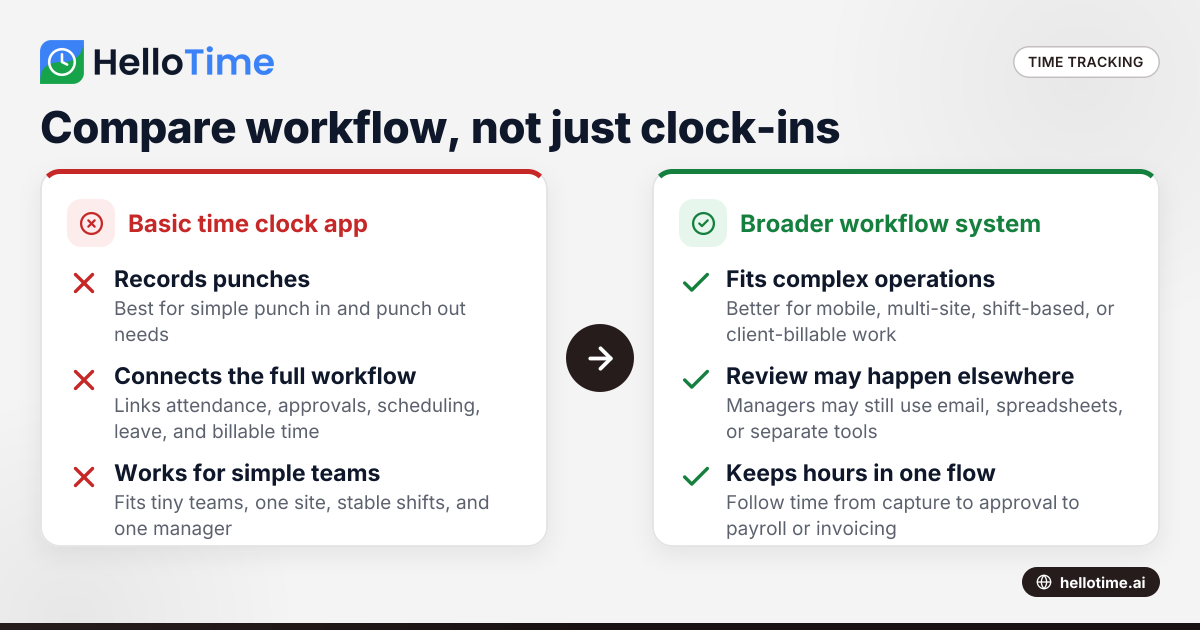
HelloTime vs Time Clock Apps in the United States: What Small Businesses Should Compare for Attendance, Approvals, and Scheduling
If you are comparing HelloTime vs time clock apps in the United States, the biggest difference is scope. Basic time clock apps record punches, while.