Small Business Leave Policy in United States: How to Set PTO, Sick Leave, Holiday Rules, and Approval Workflows
A small business leave policy in United States is a written set of rules for paid time off, sick leave, holidays, and how employees request and.
The HelloTime team
12 min read
On this page
A small business leave policy in United States is a written set of rules for paid time off, sick leave, holidays, and how employees request and approve time away from work. The best policy is simple, consistent, and easy to follow, while still leaving room for state and local legal requirements that may apply to your business.
Key takeaways
- A clear leave policy helps employees plan time off and helps managers staff shifts and projects.
- Small businesses in the United States often combine PTO, separate sick leave, and holiday rules into one policy document.
- Federal law does not require paid vacation, but state and local paid sick leave rules may apply.
- Your policy should define accruals, carryover, black-out dates, notice rules, and approval steps.
- The approval workflow matters as much as the policy itself because delays and confusion create payroll and scheduling problems.
- Software can help track balances, avoid spreadsheet errors, and keep leave decisions consistent.
What is a small business leave policy in United States?
A small business leave policy in United States explains when employees can take time off, whether that time is paid or unpaid, how balances are earned, and who approves requests. It should cover the most common situations your business deals with every year.
For most small businesses, that means four core areas:
- Paid time off, often called PTO
- Sick leave
- Company holidays
- Approval and documentation rules
A leave policy protects both the business and the employee. Employees know what they can expect. Managers know how to approve time fairly. Payroll and attendance records stay cleaner. This matters whether you run a marketing agency in Chicago, a restaurant group in Houston, or a field service team in Detroit.
If your business already tracks time on paper or in spreadsheets, leave problems often show up in the same places. Balances are wrong. Managers approve requests by text message. Two people in the same role get different answers. A written policy fixes much of that.
Why does a small business need a written leave policy?
Yes. A written policy sets expectations, reduces disputes, and gives managers one consistent standard to follow.
Without a written policy, small issues become expensive issues. An employee may assume unused PTO carries over forever. A manager may approve a holiday exception for one person but deny it for another. Operations may end up short-staffed during a busy week because nobody saw overlapping requests in time.
A good policy also helps when your business grows from 10 employees to 25 or 50. Informal rules break down fast. New supervisors need written guidance. Employees need one place to check balances, request leave, and see what happens next.
For an ai small business, this is even more important. Teams often move fast, managers wear multiple hats, and processes change quickly. Clear leave rules keep growth from creating confusion.
What types of leave should your policy cover?
Most small businesses do not need a long handbook section full of legal language. They need a practical policy that covers the time-off types employees actually use.
PTO or vacation leave
PTO usually covers planned personal time, vacations, and short personal appointments. Some businesses keep vacation separate. Others combine vacation and personal days into one PTO bank.
If you use PTO, define:
- Who is eligible
- When accrual starts
- How PTO is earned
- Whether new hires have a waiting period before use
- How much notice is required
- Whether unused time carries over
- Whether there is a cap on accrual
- Whether PTO can be taken in partial-day increments
A simple rule is easier to manage than a complex one. For example, decide whether PTO is tracked in hours or days. Hour-based tracking usually works better for hourly and shift-based teams.
Sick leave
Sick leave deserves its own section, even if your business offers a PTO bank. State and local rules may require paid sick leave in some places. Those rules differ by location and can change. This is general information, not legal advice, so review the laws that apply where your employees work.
Your sick leave section should answer these questions:
- Who can use sick leave
- What reasons qualify
- How sick time accrues, if required
- Whether there are carryover rules
- How employees notify the company
- When documentation may be requested
- Who records the absence
If you have employees in more than one state or city, avoid assuming one rule fits everyone. A Houston office and a Chicago office may need different compliance checks because local requirements can differ.
Holidays
Your holiday policy should list which company holidays are observed and who is eligible for paid holiday time. Keep the list current each year.
You should also define:
- What happens when a holiday falls on a weekend
- Whether employees must work the day before or after to receive holiday pay
- Which roles may need to work on holidays
- Whether holiday swaps are allowed
- Whether part-time employees receive holiday pay
Shift-based businesses should be extra clear here. A manufacturing plant or retail store may stay open on some holidays. If that is your setup, explain how staffing, requests, and pay treatment work.
Other leave types
You may also want short sections for:
- Jury duty
- Bereavement leave
- Voting time, where applicable
- Unpaid personal leave
- Family and medical leave, if applicable to your size and situation
Do not overload the policy. Include the leave types your team needs most often, then add longer guidance in your handbook if needed.
How should you structure PTO for a small business?
Start with a structure your managers can explain in one minute. If they cannot explain it clearly, employees will not follow it consistently.
Here are the most common approaches.
Option 1: Accrued PTO
Employees earn PTO over time, often each pay period or by hours worked. This is common for businesses with hourly staff because it matches actual work time.
Pros:
- Easy to control cost
- Fair for employees who join mid-year
- Works well with turnover and seasonal staffing
Cons:
- Requires regular balance tracking
- Employees may find it harder to estimate future time off
Option 2: Front-loaded PTO
Employees receive their PTO bank at the start of the year or on their anniversary date.
Pros:
- Easy for employees to understand
- Easier for managers to plan around larger requests
Cons:
- More risk if someone uses time early and leaves
- Can create payout and balance questions
Option 3: Tiered PTO by tenure
Employees earn more PTO after certain years of service.
Pros:
- Rewards retention
- Common and easy to communicate
Cons:
- Adds complexity
- Needs accurate service-date tracking
Whichever option you choose, define your carryover rules. If unused PTO expires, state that clearly and make sure it complies with applicable law. If accrual caps apply, spell them out in plain English.
What should your sick leave rules say?
Your sick leave rules should tell employees when they can use sick time, how to report an absence, and whether they need documents for longer absences. Keep the language practical. Employees often read this section when they are sick, stressed, or trying to cover a shift.
A strong sick leave section includes five basics.
1. Reasons for use
State the allowed reasons as clearly as you can. Use broad categories if you operate in several jurisdictions. That gives you room to apply stricter local requirements where needed.
2. Notice expectations
Tell employees how to report an illness. For example, require notice to a manager by phone, text, or your attendance system before the shift starts when possible. For office teams, you may require a request through your leave system plus a message to the direct supervisor.
3. Documentation rules
If your business may request a doctor’s note after a certain number of days, say so. Be careful not to set rules that conflict with applicable state or local requirements.
4. Tracking and privacy
Managers should record only what they need for attendance and payroll. They should not collect extra medical detail. Keep the process respectful and consistent.
5. Interaction with PTO
If employees can use PTO after sick leave runs out, explain the order clearly. If they cannot, say that too.
How many holidays should a small business offer?
That depends on your industry, staffing model, and budget. Many small businesses choose a practical list of major holidays and then add one or two floating holidays for flexibility.
For example, a professional services firm may close on a standard holiday schedule because client work slows down. A restaurant or retail store may stay open on several holidays and offer a different approach, such as premium staffing rules or floating time off.
When you choose holidays, think about three things:
- Customer demand
- Staffing reality
- Payroll cost
A small business does not need to match every large employer. It does need a policy employees can trust. If some locations close and others stay open, explain the difference in writing.
Floating holidays
Floating holidays can reduce friction because they give employees some choice. They work well for teams with mixed personal schedules or where not everyone values the same holiday dates equally.
If you offer floating holidays, define:
- How many employees get
- When they become available
- Whether they expire
- How much notice is required
- Whether black-out dates apply
How do you build a fair leave approval workflow?
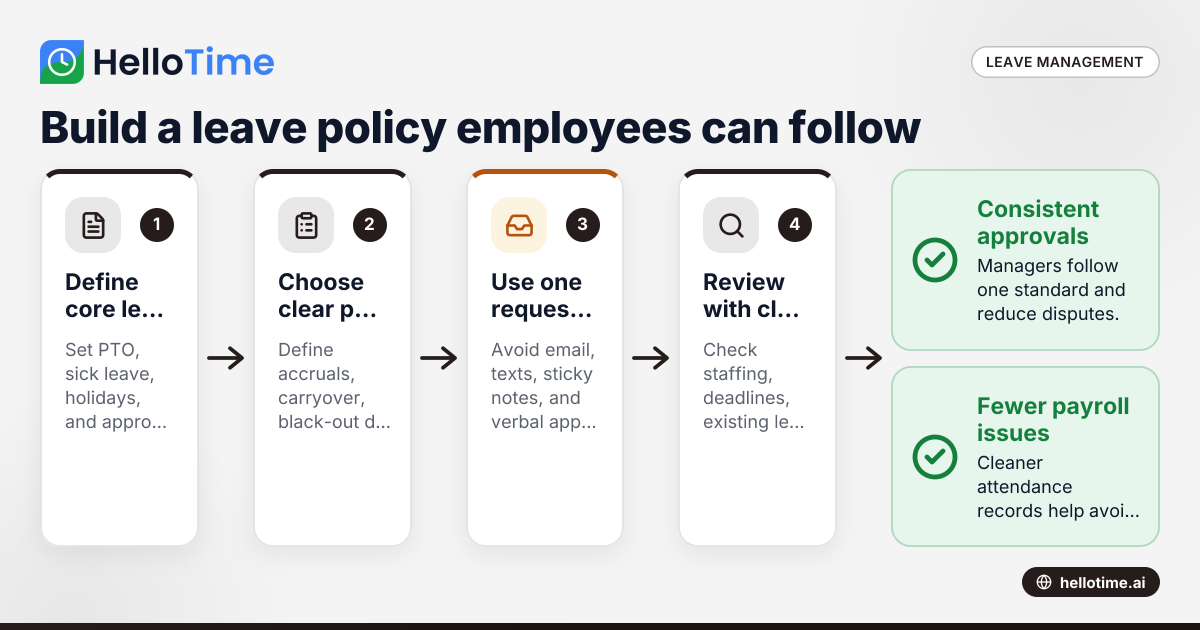
Use a simple, visible process: request, review, approve or deny, record the decision, and update balances. The best workflow is fast, documented, and consistent across every manager.
Here is a practical workflow for a small business.
1. Set request channels
Decide where requests must be submitted. Avoid mixed systems like email, sticky notes, text messages, and verbal approvals. One channel creates one record.
For many businesses, this means using leave software or a standard form. If you still use email, require a consistent subject line and manager response process.
2. Set notice periods
Different leave types need different notice rules.
Examples:
- PTO: 1 to 2 weeks when possible
- Sick leave: as soon as practical
- Holiday requests in open operations: earlier than normal PTO requests
The policy should also explain what happens in emergencies.
3. Define approval roles
State who can approve leave. In a small business, this is often the direct supervisor, department head, or owner. If approvals need a second review, say when that happens.
4. Use clear approval criteria
Managers should not guess. Give them a short list of factors to consider:
- Staffing levels
- Project deadlines
- Existing approved leave
- Seniority rules, if used
- Business black-out periods
If first-come, first-served applies, say so. If business needs can override timing, explain that too.
5. Record every decision
Every request should end with a documented yes or no. Include the dates, type of leave, approver, and final balance update. This prevents disputes later.
6. Show employees their balances
Balance visibility reduces back-and-forth. Employees should be able to see what they have available before they request time off.
This is where software helps. Tools that combine attendance, leave balances, and approval logs reduce errors and speed up decisions. If you want one place for leave, attendance, rosters, and time records, you can review HelloTime’s features.
What common mistakes should small businesses avoid?
Most leave policy problems are not caused by bad intent. They come from vague rules and inconsistent execution.
Mixing policy and exceptions
If managers make too many one-off exceptions, employees stop trusting the written policy. If an exception is truly needed, document it and explain who can approve it.
Using vague language
Phrases like “reasonable notice” or “manager discretion” can create conflict. Replace them with specific steps and time frames when you can.
Forgetting part-time and hourly staff
A leave policy should clearly state whether part-time employees are eligible for PTO, holidays, or sick leave. Do not make employees guess.
Ignoring location-specific rules
If you have remote employees or multiple locations, check state and local leave requirements. One office policy may not cover everyone.
Keeping balances in spreadsheets too long
Spreadsheets can work for a very small team. But once requests increase, errors spread quickly. Duplicate files, manual carryovers, and missing approvals are common problems.
How do you roll out a new leave policy without confusion?
Write the policy in plain English, train managers first, then announce it to employees with examples and effective dates.
A clean rollout matters because even a good policy fails if nobody understands it. Use this process.
1. Finalize the rules
Before sharing the policy, lock down the basics:
- Effective date
- Eligibility
- Accrual or front-load method
- Carryover rules
- Approval steps
- Holiday list
2. Train managers
Managers need scripts for common questions. They should know how to handle overlap, emergencies, waitlists, and denials.
3. Communicate in one source
Send the policy by email and store it in one easy place. If your team is deskless, post it where employees clock in or check schedules.
4. Give examples
Show sample scenarios:
- “You need one day off next month.”
- “You wake up sick before a 7:00 a.m. shift.”
- “Two employees request the same holiday week.”
Examples reduce misreadings.
5. Use a system for requests
A leave policy works best when the process matches the document. If approvals happen in one place and balances update automatically, employees trust the system more.
For businesses moving away from paper and spreadsheets, HelloTime offers HelloTime in the US with leave tracking, approvals, scheduling, and attendance tools in one workflow.
A simple leave policy template outline
You do not need to write a 20-page policy. Start with a strong outline and fill in the details.
Policy purpose
Explain that the policy covers time off, paid and unpaid leave, holidays, and approval rules.
Scope and eligibility
State which employees are covered, including full-time, part-time, temporary, and probationary staff if relevant.
PTO rules
List how PTO is earned, used, approved, carried over, and tracked.
Sick leave rules
State reasons for use, notice process, documentation rules, and any location-specific additions.
Holiday rules
List observed holidays and any special rules for open operations.
Approval workflow
Explain request steps, required notice, approval authority, and how conflicts are resolved.
Attendance and no-call/no-show rules
Make sure unapproved leave and attendance violations are covered separately from approved leave.
Policy changes
Reserve the right to revise the policy as business needs or legal requirements change.
Frequently asked questions
Does federal law require small businesses to offer paid vacation?
No. Federal law does not require paid vacation for private employers. But if you offer PTO or vacation, your written policy should clearly explain how it is earned and used.
Keep reading
Related articles
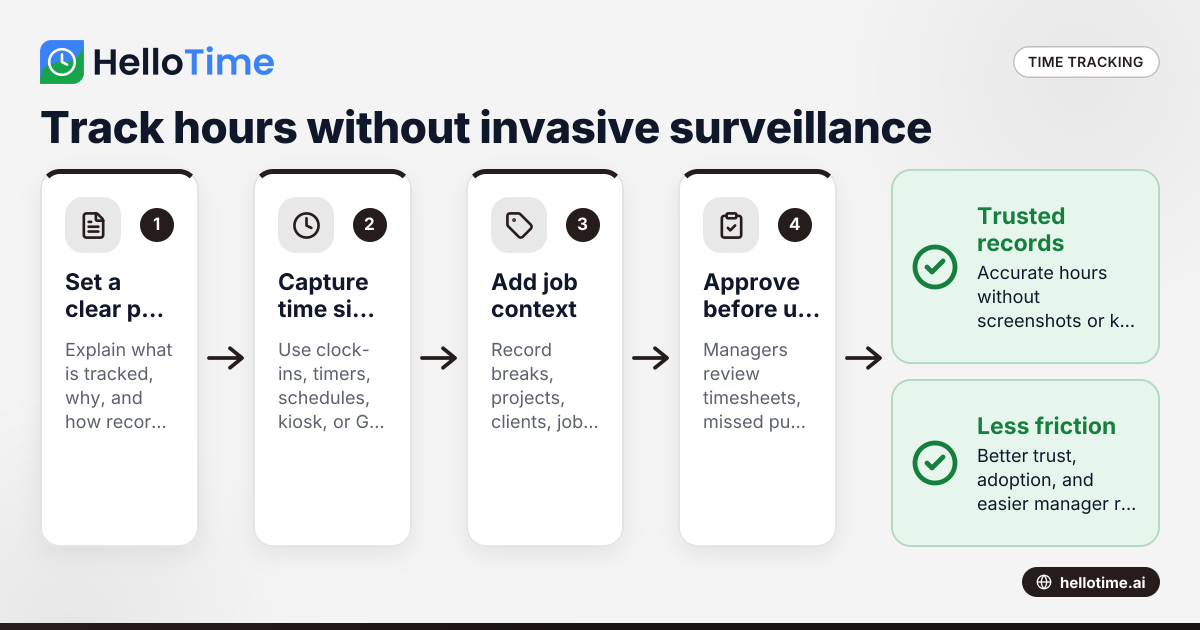
User Monitoring Alternatives in Time Tracking Software in the United States: How Small Businesses Can Track Hours Without Invasive Surveillance
If you are looking for user monitoring time tracking software in the United States , there is a better option than screenshots, keystroke logs, and.
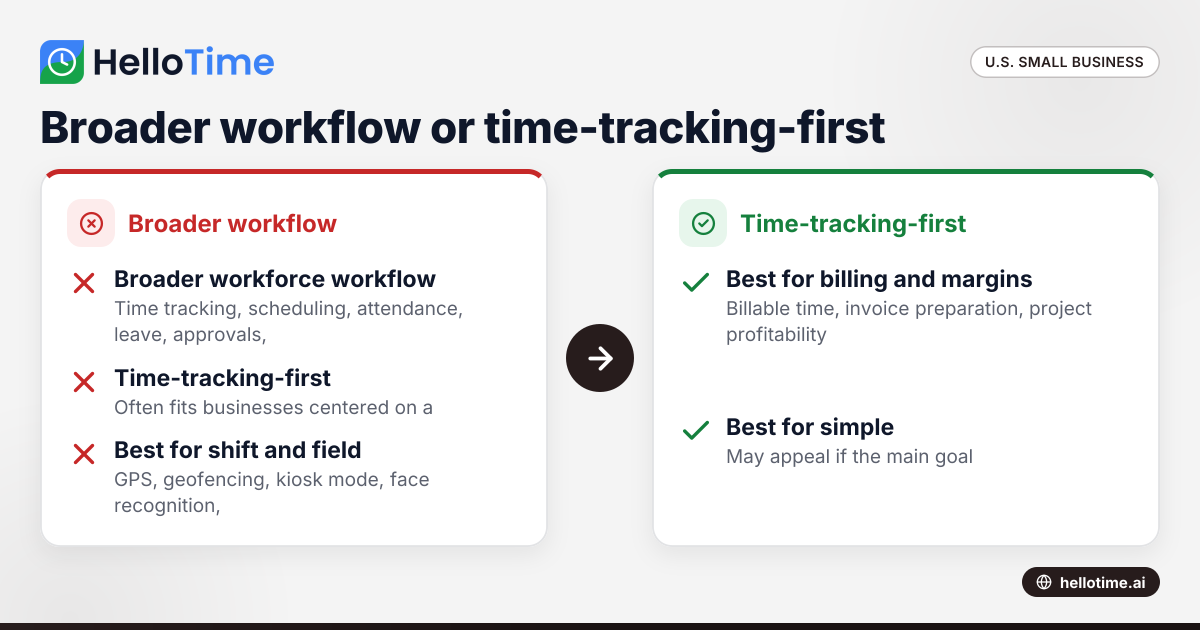
HelloTime vs QuickBooks Time in the United States: Which Is Better for Small Business Time Tracking, Scheduling, and Attendance?
If you are comparing HelloTime vs QuickBooks Time in the United States, the better fit depends on how your team works day to day. HelloTime is.
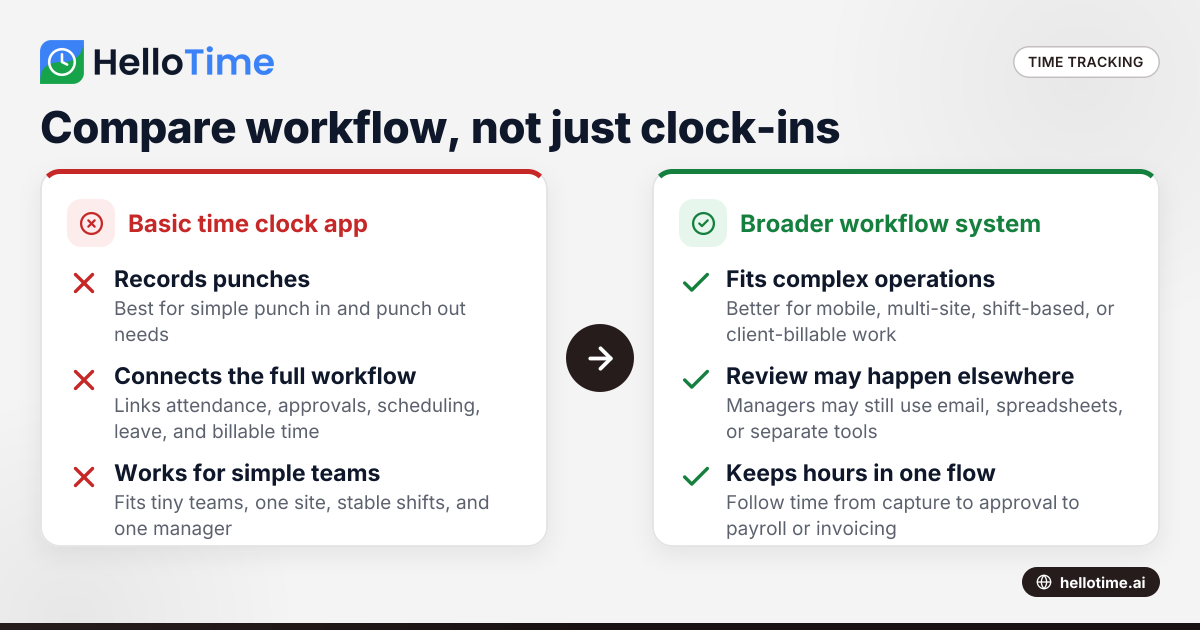
HelloTime vs Time Clock Apps in the United States: What Small Businesses Should Compare for Attendance, Approvals, and Scheduling
If you are comparing HelloTime vs time clock apps in the United States, the biggest difference is scope. Basic time clock apps record punches, while.