Time Tracking Best Practices for Delaware Small Businesses to Improve Employee Productivity and Billing Accuracy
Time tracking helps Delaware small businesses monitor hours worked, improve employee productivity, and ensure accurate billing for clients. By.
The HelloTime team
8 min read
On this page
Time tracking helps Delaware small businesses monitor hours worked, improve employee productivity, and ensure accurate billing for clients. By adopting best practices in time tracking, owners can streamline payroll, avoid compliance issues, and increase operational efficiency.
Key takeaways
- Time tracking provides accurate records for employee hours, billing, and labor law compliance in Delaware.
- Automating time tracking with AI tools reduces manual errors and saves management time.
- Clear policies, employee training, and user-friendly systems boost adoption and productivity.
- Integrating time tracking with scheduling, leave, and invoicing software enhances business workflows.
- Delaware businesses must understand local labor laws to maintain compliant timesheets and payroll.
- Regular audits of time tracking data protect against time theft and billing disputes.
Why is time tracking important for Delaware small businesses?
Time tracking lets Delaware businesses capture when and how long employees work. This data is crucial for paying hourly workers correctly, billing clients accurately, and managing workloads fairly. Small business owners often juggle many tasks, so having reliable time records reduces guesswork and prevents disputes.
In Delaware, the Department of Labor requires accurate tracking of work hours under state wage and hour laws. Failure to comply can result in fines and legal troubles. Time tracking also supports compliance with federal laws like the Fair Labor Standards Act (FLSA), which regulates overtime pay.
Additionally, time tracking helps owners analyze productivity trends by project, client, or team member. This enables better scheduling decisions, resource allocation, and forecasting, which improves overall profitability.
What are the best practices to implement time tracking in my Delaware small business?
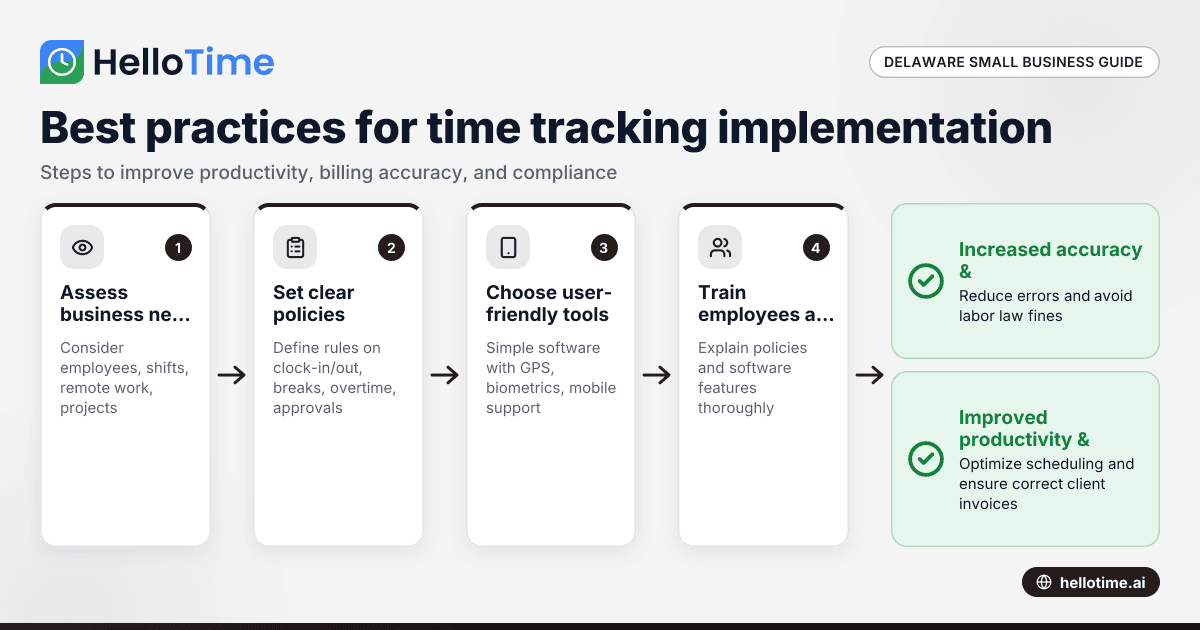
The best practices to implement time tracking in your Delaware small business begin with clear policies, choosing simple tools, thorough training, automation, and integration. These steps ensure accuracy, compliance, and ease of use while using modern technology such as AI time tracking to boost efficiency.
Start with clear policies and communication
Create transparent time tracking policies covering clock-in/out times, breaks, overtime, and approval workflows. Make sure employees know why tracking matters and how the process works. Communicate these rules through employee handbooks, meetings, or training sessions, building trust and compliance.
Choose simple, easy-to-use time tracking tools
Select software or apps employees can use with minimal training. Many businesses in Delaware opt for online and mobile-friendly systems that support GPS clock-ins, tablet kiosks, and facial recognition for accountability. User-friendly interfaces reduce errors and frustrations.
Train employees and managers thoroughly
Train both staff and supervisors on time tracking procedures and software features. Address common questions and reinforce the importance of accurate entries to avoid payroll or billing mistakes. This step encourages consistent use and timely approvals.
Automate auditing and approvals
Employ systems that build timesheets automatically from clock-ins and flag anomalies like overlapping shifts or missed punches. Automating approvals speeds up payroll while helping managers catch mistakes before payments are processed.
Integrate time tracking with other business processes
Link time data with scheduling, leave management, invoicing, and payroll workflows. Integration reduces duplicate data entry, improves accuracy, and provides visibility into labor costs by project or client, aiding pricing decisions.
Using AI time tracking features further streamlines this process by analyzing patterns, predicting scheduling needs, and detecting unusual data points.
How can AI time tracking improve my small business operations in Delaware?
AI time tracking automates capturing and analyzing employee hours to reduce errors and labor-intensive processes. It helps identify inefficiencies, optimize scheduling, and ensure data accuracy, saving time and money while improving workforce management in Delaware small businesses.
AI time tracking uses algorithms and data analytics to optimize how time is recorded and managed.
It reduces errors and manual work by automatically capturing accurate clock-ins and generating detailed reports. AI can identify inefficient workflows, excessive overtime, or late arrivals, giving managers actionable insights to improve productivity.
Beyond traditional tracking, AI features may include facial recognition attendance, GPS geofencing for field staff, and predictive scheduling to align workforce supply with demand.
Small businesses in Delaware can leverage AI to save administrative time, ensure honest clock-ins, and improve workforce planning — helping control labor costs and boost profitability.
How do I ensure compliance with Delaware labor laws when tracking time?
Tracking time accurately is essential to comply with Delaware labor laws, which incorporate the federal Fair Labor Standards Act. Employers must maintain precise records of hours worked, including all breaks and overtime, paying hourly employees accordingly and retaining records for at least three years.
Ensure your time tracking system captures clock-in/out times without rounding improperly. Avoid tracking practices that could lead to wage disputes. Stay current with updates from the Delaware Department of Labor or consult labor compliance experts to avoid fines and legal risks.
What are common challenges Delaware small businesses face with time tracking?
Many small businesses still track hours using spreadsheets or paper timesheets. These methods lead to:
- Data entry errors and lost records
- Time theft such as “buddy punching”
- Delays in payroll processing
- Difficulty proving hours during audits
- Billing inaccuracies leading to lost revenue
In Delaware, where many small businesses operate in service, retail, hospitality, and construction, these problems hurt competitiveness.
Adopting digital time tracking solutions with automated workflows minimizes these risks. Systems that support mobile clock-ins and geofencing help remote and field workers log time transparently.
How do I choose the right time tracking software for my Delaware business?
Look for software that fits your industry and team size. Key features include:
- One-click or biometric clock-in options suitable for retail, hospitality, or field service teams.
- Automatic timesheets and approval workflows reduce manual admin.
- GPS and geofencing for teams working off-site.
- Integration with your existing tools like QuickBooks or Stripe for invoicing.
- Mobile support for remote employees or on-the-go managers.
- Data security compliant with best practices to protect employee info.
Many software providers offer free trials or demos. Test usability and support responsiveness before committing.
Step-by-step guide to implementing time tracking in your Delaware business
- Assess your business needs: number of employees, shifts, remote work, and billable projects.
- Define clear time tracking policies aligned with Delaware labor regulations.
- Choose a digital time tracking solution with features matching your operations.
- Conduct employee training sessions to explain policies and software use.
- Launch the system and monitor adoption closely in the first weeks.
- Automate timesheet approvals and integrate with billing and payroll workflows.
- Review time tracking reports regularly to identify gaps or opportunities for improvement.
- Update policies and technology as your business evolves.
Improve billing accuracy with time tracking
Accurate billing is essential, especially for service businesses in Delaware like agencies, consulting, or law firms charging hourly rates. Time tracking ensures every minute worked is recorded and invoiced correctly.
Linking time logs directly to invoices reduces billing disputes and speeds up cash flow. For project-based billing, detailed timesheets show clients exactly what was done and when.
Conclusion
Delaware small business owners benefit from adopting modern time tracking best practices that increase productivity, ensure compliance, and improve billing accuracy. Automating time capture, enforcing clear policies, and using AI tools help streamline operations and control labor costs. To explore modern workforce management tools, visit HelloTime's features or check pricing to find plans that fit your business needs.
Frequently asked questions
What is the best way to track employee time accurately?
Using digital time tracking systems with one-click clock-ins, GPS verification, and automatic timesheet generation offers the best accuracy. This helps prevent errors and abuse common with manual tracking like spreadsheets or paper.
Can AI time tracking really save time in small businesses?
Yes, AI streamlines time capture, detects anomalies, and helps optimize schedules. This reduces administrative workload and improves productivity, freeing owners to focus on growth tasks.
How does time tracking support compliance with Delaware labor laws?
Accurate, detailed records of hours worked including breaks and overtime help small businesses comply with wage and hour laws. Reliable systems reduce risk of fines due to incorrect payroll or missing documentation.
Is it difficult to get employee buy-in for time tracking?
Not if policies are clear, and systems are easy to use. Educating staff on why tracking matters and involving them in choosing tools improves acceptance and consistent use.
Can time tracking integrate with other small business tools?
Many time tracking solutions integrate with accounting software like QuickBooks and invoicing platforms such as Stripe. This streamlines workflows and reduces manual expenses on billing and payroll.
How often should I review my time tracking data?
Review at least monthly to catch errors early, analyze productivity trends, and adjust scheduling. Frequent audits ensure compliance and maintain billing accuracy.
Read next
This article covers one part of a bigger topic. For the complete picture, read our guide to time tracking.
Keep reading
Related articles
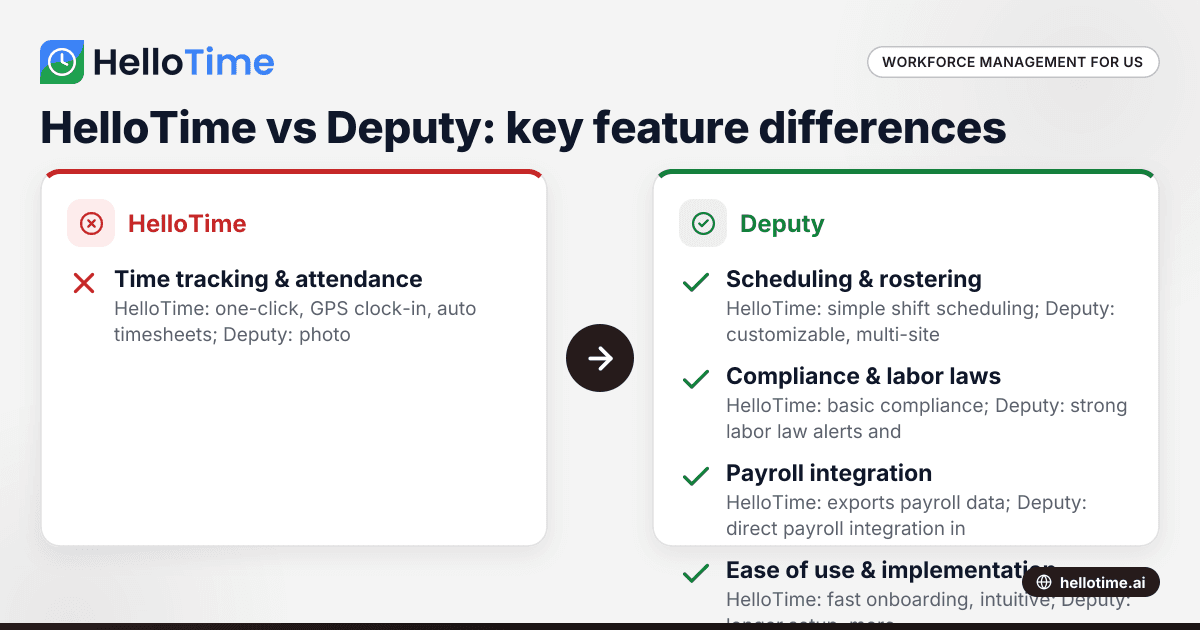
HelloTime vs Deputy: Which Workforce Management Software is Best for United States Small Businesses?
HelloTime and Deputy are popular workforce management tools offering employee scheduling, time tracking, and attendance solutions for US small.
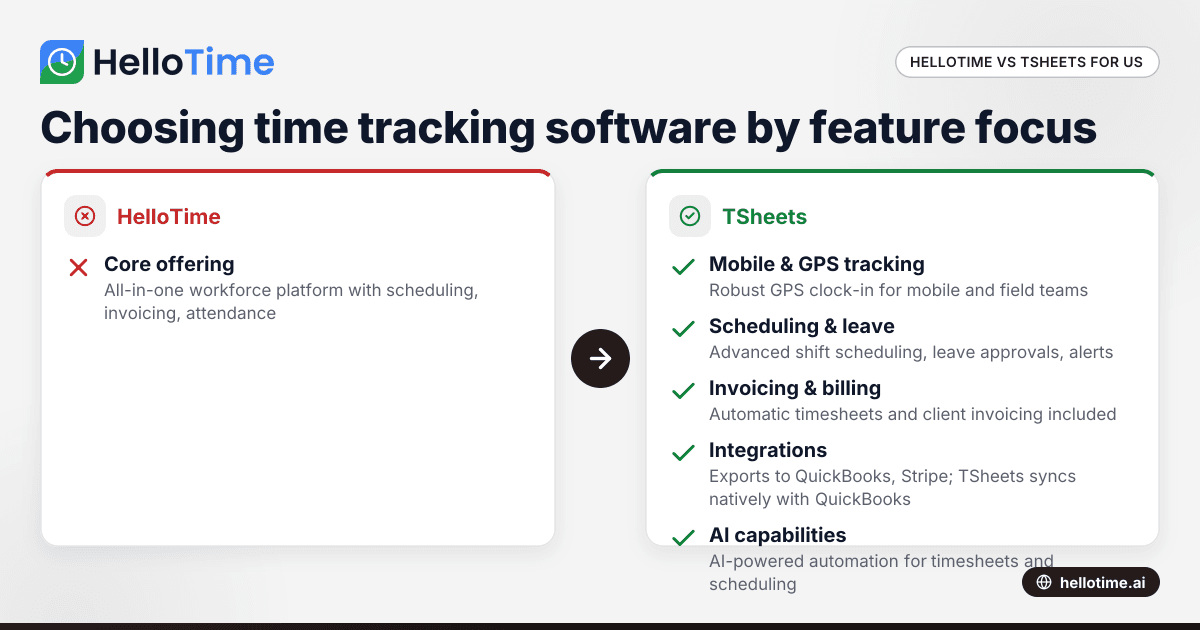
HelloTime vs TSheets: Choosing the Best Time Tracking Software for United States Agencies
HelloTime and TSheets are popular time tracking solutions for agencies and professional services in the United States. Comparing HelloTime vs TSheets.
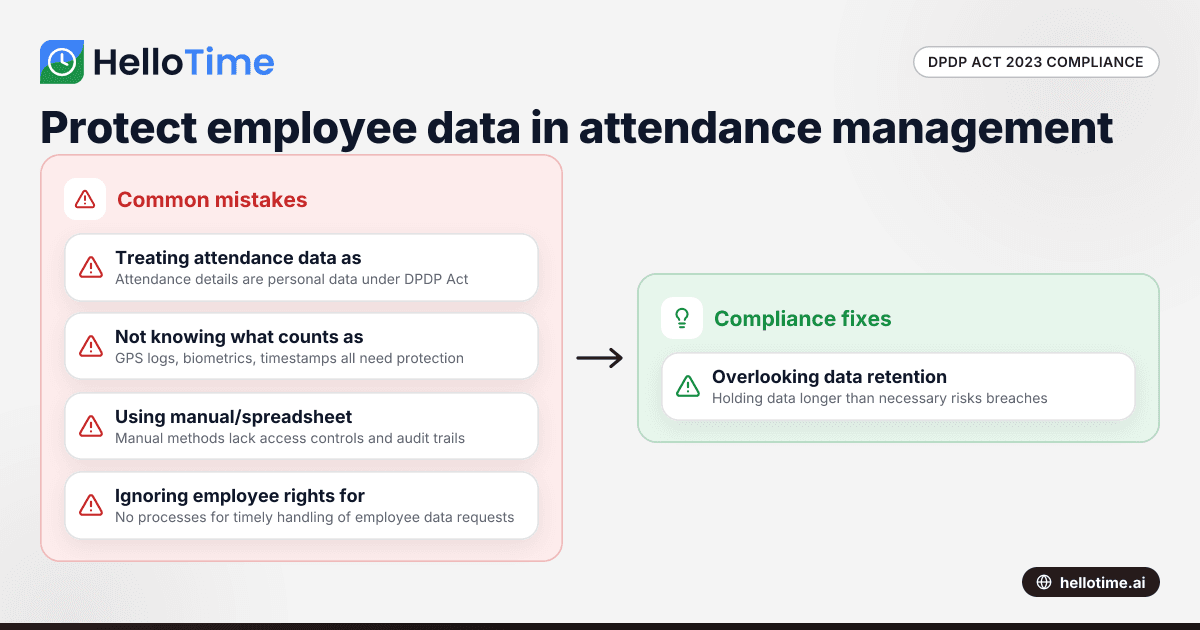
What Indian Businesses Need to Know About Data Protection Under the DPDP Act 2023 When Managing Attendance and Timesheets
Businesses tracking employee attendance and timesheets in India face growing risks if they overlook the DPDP Act 2023’s mandate for protecting.