Why Delaware Small Businesses Should Consider Time Doctor Alternatives for Accurate Time Tracking
Small businesses in Delaware often seek reliable and efficient time tracking solutions. While Time Doctor is a popular choice, many growing companies.
The HelloTime team
8 min read
On this page
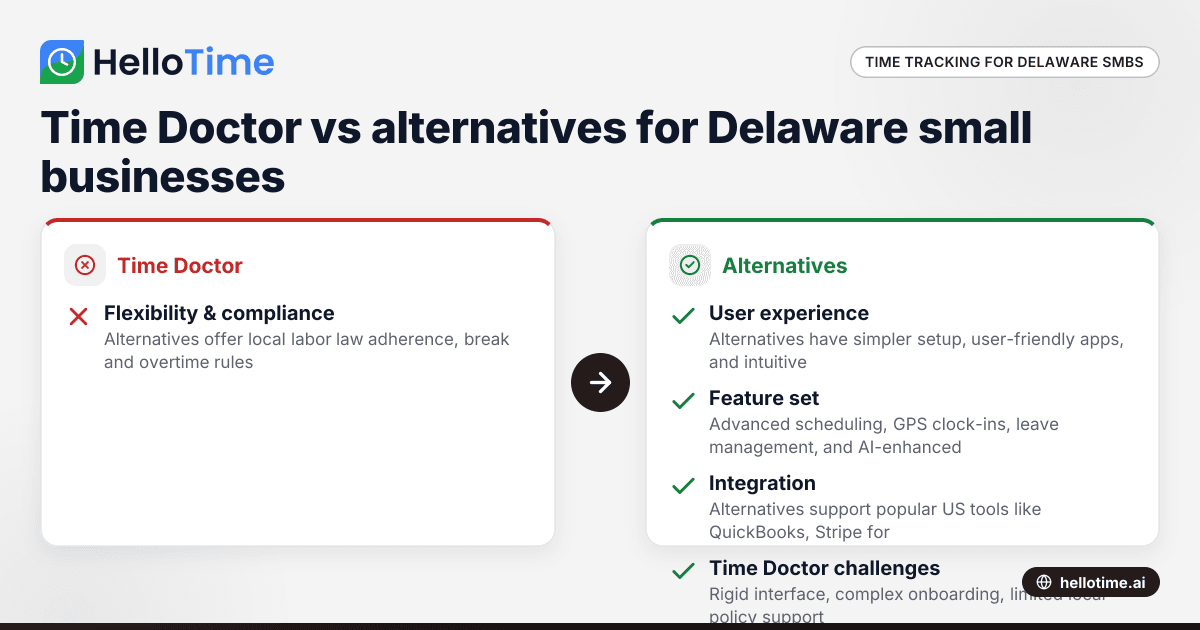
Small businesses in Delaware often seek reliable and efficient time tracking solutions. While Time Doctor is a popular choice, many growing companies find that Time Doctor alternatives offer features better suited to their unique workforce management needs, such as local compliance, user-friendly interfaces, and integrated scheduling.
Key takeaways
- Time Doctor is popular but may lack some flexibility and features desired by Delaware small businesses.
- Alternatives often provide better local labor law compliance, including state-specific breaks and overtime rules.
- AI-enhanced time tracking, like ai time doctor, can automate and improve accuracy for remote and hybrid teams.
- Scheduling, leave management, and GPS clock-ins are valuable additions beyond basic tracking.
- Efficient time tracking links directly to more accurate invoicing and payroll processes.
- Small businesses in Delaware benefit from simpler integrations with common US finance tools like QuickBooks and Stripe.
Why might Delaware small businesses look beyond Time Doctor?
Time Doctor offers solid time tracking but sometimes feels rigid and complex for small Delaware firms managing hourly or shift-based staff. The interface can overwhelm users, and reporting features may not support specific state labor policies easily. Many owners and HR managers struggle with setting up tasks and handling employee approvals.
Delaware has no statewide mandate for meal breaks, but companies still must comply with federal FLSA overtime rules and local ordinances, especially in cities like Wilmington, where retail and hospitality HR practices vary. Some Time Doctor setups don’t clearly define how to handle these nuances, which could lead to tracking inaccuracies or compliance risks.
In contrast, Time Doctor alternatives often include:
- Customizable break enforcement
- Employee-friendly mobile apps with GPS-based clock-ins to verify location accuracy
- Shift scheduling and roster management tailored to hourly workers
- Automatic overtime calculations based on both state and federal rules
These added features help Delaware small businesses save managerial time and reduce payroll errors.
How does ai time doctor transform time tracking?
AI time doctor solutions use artificial intelligence to monitor, categorize, and verify employee work automatically. These tools analyze patterns like app usage, idle time, and task focus, offering more precise tracking without manual input.
This technology benefits Delaware businesses by reducing human error and increasing transparency with remote or field teams. Instead of relying purely on manual clock-ins, AI can detect when employees are actively working versus away, improving payroll accuracy. It also signals managers about unusual activity, such as extended breaks or low productivity, enabling timely intervention.
Integrating AI-driven time tracking with scheduling and leave management, common in Time Doctor alternatives, further simplifies workforce administration for small business owners.
What are the main features small businesses should prioritize over Time Doctor?
Time Doctor covers core time tracking basics but small businesses in Delaware often need a broader workforce management toolkit. Here are the primary features to look for:
1. One-click time tracking with auto-built timesheets and approvals
A system that simplifies clocking in and out reduces friction for employees and managers. Automated timesheets with built-in approval workflows streamline payroll preparation. This is especially helpful for businesses managing dozens of hourly workers, such as staffing agencies or restaurants in Dover.
2. Shift scheduling and roster management
Scheduling tools help organize shifts, manage swapping, and notify staff automatically. This decreases no-shows and understaffing risks, common issues in retail and hospitality. Integration of schedules with time tracking ensures hours worked align seamlessly with planned shifts.
3. Leave management with request and approval
Tracking vacation, sick days, and other leave types digitally prevents scheduling conflicts. Small businesses can maintain compliance with leave laws and maintain accurate labor cost reports. Transparent leave records ease employee relations.
4. GPS and geofenced clock-in options
For mobile field staff or remote workers, GPS clock-ins ensure employees are at the right job site when logging hours. Geofencing can prevent clock-ins outside designated zones, reducing time theft and payroll waste.
5. Tablet kiosk attendance with face recognition
Businesses in Delaware with physical premises can benefit from tablet check-in kiosks. They speed up attendance logging, improve accuracy, and enhance security by verifying identities digitally.
6. Invoicing from billable hours with integration support
Especially relevant to agencies or professional services billing by the hour, being able to generate invoices directly from tracked time saves admin effort. Integrations with invoicing and accounting tools like QuickBooks and Stripe are essential.
7. Project profitability and labor cost reports
Deeper insights into how time translates into revenue and costs support smarter business decisions. Reports can spotlight unprofitable projects or reveal overtime expenses needing attention.
How do Time Doctor alternatives handle Delaware labor and tax compliance?
Time tracking compliance goes beyond recording hours. Delaware small businesses must ensure their software supports local wage, break, and overtime laws accurately.
Although Delaware law is relatively flexible on breaks, it enforces the federal overtime standard: workers covered by the Fair Labor Standards Act (FLSA) earn time and a half for hours over 40 in a workweek. Additionally, Delaware has no state income tax, but local businesses must comply with federal tax reporting requirements, including W-2 forms for employees and 1099 forms for contractors.
Leading alternatives often embed overtime calculations and export reports aligned with US IRS and Department of Labor requirements. While HelloTime’s payroll module is not yet live for US payroll, its powerful time tracking features support integration with US payroll systems you might already be using, simplifying statutory deductions and record-keeping.
What Are the usual challenges small businesses face using Time Doctor?
Many small business owners or HR managers in Delaware report the following issues with Time Doctor:
- Complexity in setup and user onboarding leading to employee resistance
- Limited customization for break policies or local labor rules
- Overwhelming data reports without actionable insights
- Higher costs for complete modules including project and payroll features
- Lack of local US-based customer support for quick issue resolution
Shifting to alternatives that emphasize user experience and local compliance can help business owners regain control over time management workflows and cut administrative overhead.
How do alternative platforms improve scheduling and leave management?
While Time Doctor focuses heavily on time tracking, many alternatives tailor for full workforce management from one dashboard, which is critical for Delaware SMEs managing hourly or shift workers. Integrated leave management tracks accrued days, approvals, and blackouts efficiently.
Scheduling modules ease building weekly and monthly rosters while allowing staff to request swaps or availability changes via app notifications. Automatic alerts minimize errors and absenteeism. These features reduce the need for cross-referencing multiple spreadsheets—common pain points for small business owners juggling many responsibilities.
How can small Delaware businesses evaluate which time tracking software fits best?
To choose the right tool, consider these steps:
- Identify core needs: Are you primarily a professional service billing by time, or a retail/field service shift-based employer?
- Assess compliance features: Does the software enforce overtime and breaks relevant to Delaware and federal laws?
- Check ease of use: Is it intuitive for employees and managers without lengthy onboarding?
- Integration: Confirm compatibility with your current payroll, accounting, or invoicing tools like QuickBooks and Stripe.
- Mobile and geolocation support: Essential if you have remote or field teams requiring GPS clock-ins.
- Trial and support: Use free trials to test workflows and evaluate US-based customer support responsiveness.
- Budget properly: Compare pricing at /pricing to ensure total costs justify productivity gains.
Conclusion
Delaware small businesses stand to benefit from exploring Time Doctor alternatives that balance accurate time tracking with broader workforce management features tailored to local labor laws and practical needs. Tools combining AI-powered tracking, seamless scheduling, leave management, and GPS clock-in provide flexibility and accuracy beyond traditional solutions. Taking the time to evaluate these options can streamline operations and improve employee satisfaction.
Explore the full range of features available and compare plans on the pricing page to find the best fit for your Delaware business.
Frequently asked questions
Is Time Doctor compliant with Delaware labor laws?
Time Doctor complies with federal FLSA requirements but may lack nuanced support for break policies or specific local rules. Delaware’s labor laws are less restrictive on breaks but still require accurate overtime calculations, which some alternatives handle more seamlessly.
What does ai time doctor mean for small businesses?
AI time doctor solutions use artificial intelligence to enhance tracking accuracy by monitoring activity patterns and reducing manual input. For small businesses, this means fewer errors and better oversight of remote or mobile employees.
Can I integrate time tracking software with QuickBooks?
Yes, many Time Doctor alternatives and other workforce management platforms offer integrations with QuickBooks, making payroll and invoicing simpler for Delaware small businesses.
How important is GPS clock-in for Delaware businesses?
GPS clock-in is crucial if you have field service or remote employees working across locations. It prevents time theft and ensures employees log hours only at authorized job sites, protecting your labor costs.
Are there affordable alternatives to Time Doctor for small businesses?
Several alternatives provide scalable pricing tailored to small businesses, often with clearer feature sets for workforce management. Review and compare options at /pricing to find cost-effective solutions that fit your business needs.
Does HelloTime support payroll in the US?
Currently, HelloTime’s payroll support is not yet available for the United States. However, its time tracking and workforce management features integrate well with US payroll systems, making it easier to manage attendance and timesheets.
Read next
This article covers one part of a bigger topic. For the complete picture, read our guide to time doctor.
Keep reading
Related articles
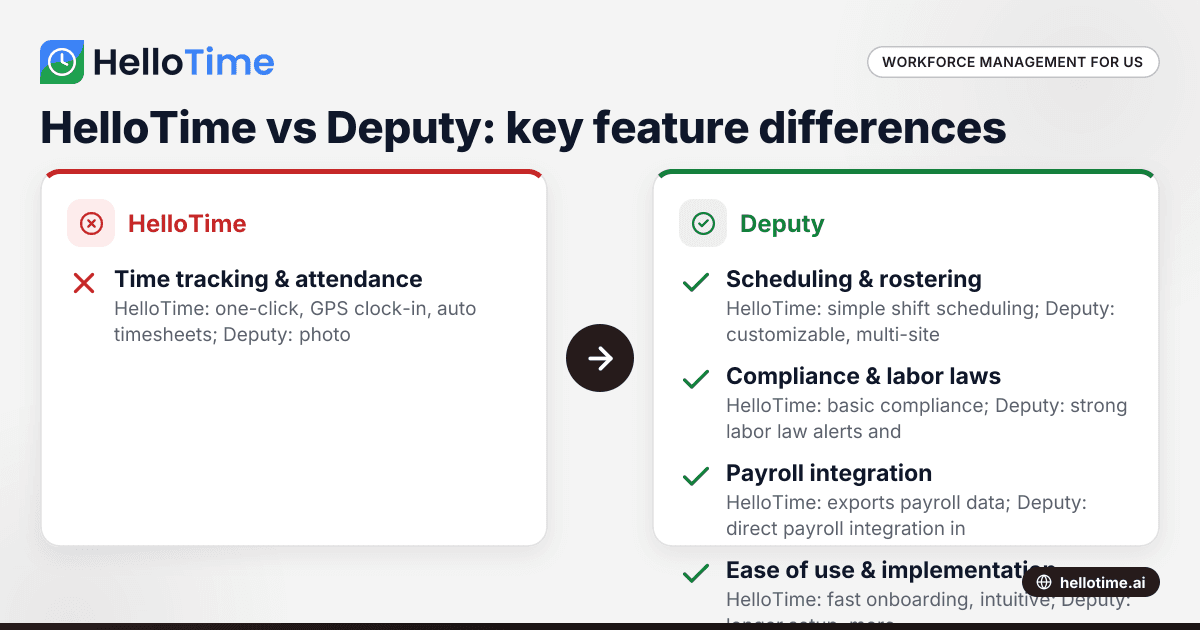
HelloTime vs Deputy: Which Workforce Management Software is Best for United States Small Businesses?
HelloTime and Deputy are popular workforce management tools offering employee scheduling, time tracking, and attendance solutions for US small.
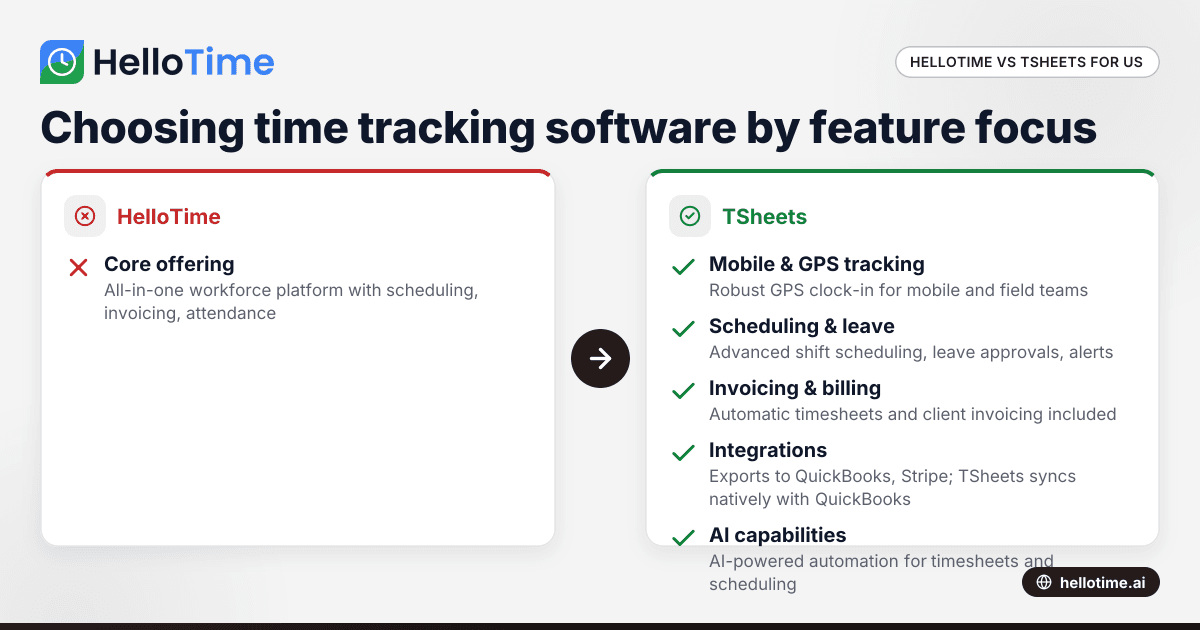
HelloTime vs TSheets: Choosing the Best Time Tracking Software for United States Agencies
HelloTime and TSheets are popular time tracking solutions for agencies and professional services in the United States. Comparing HelloTime vs TSheets.
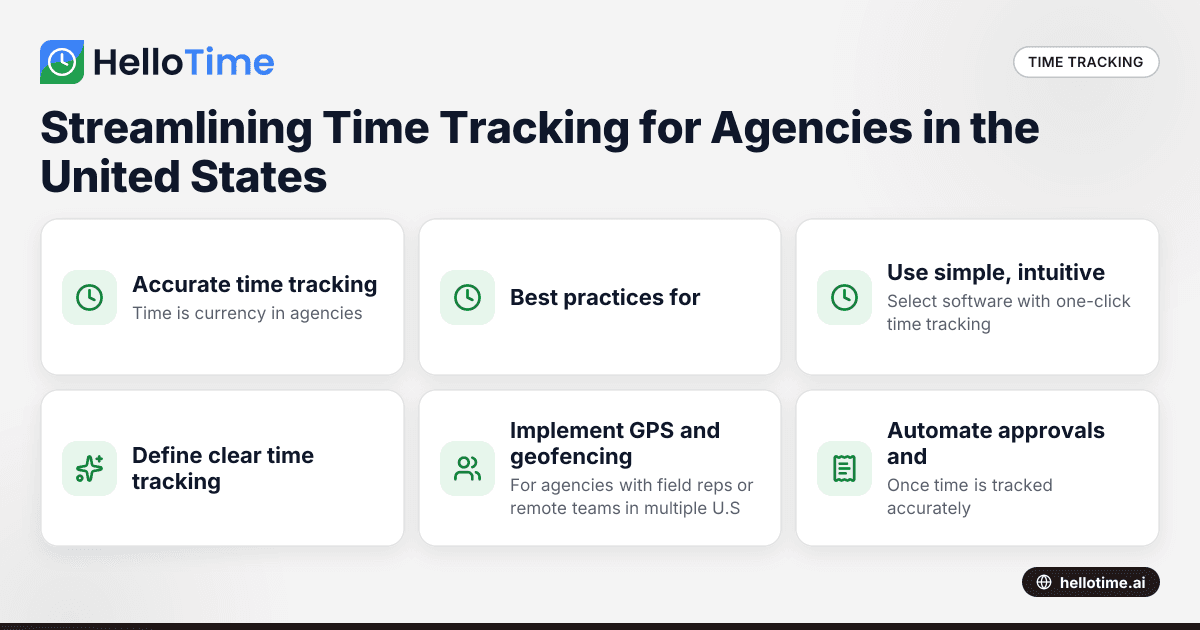
Streamlining Time Tracking for Agencies in the United States: Best Practices to Boost Client Billing Accuracy
Streamlining time tracking for agencies in the United States is essential for ensuring accurate client billing and maximizing profitability. By.