Daily and Weekly Shift Scheduling Best Practices for Retail Stores in the United States
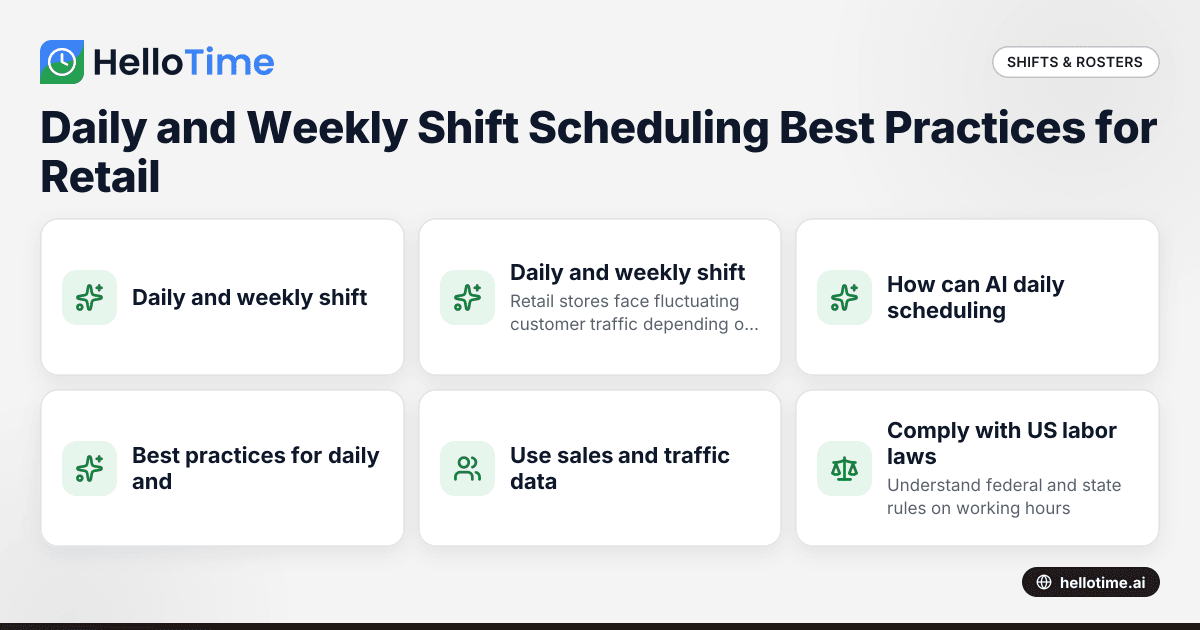
Daily and weekly shift scheduling in retail stores ensures the right staff are in the right place at the right time to meet customer demand and keep.
The HelloTime team
7 min read
On this page
Daily and weekly shift scheduling in retail stores ensures the right staff are in the right place at the right time to meet customer demand and keep operations running smoothly. Effective scheduling balances employee availability, labor laws, and business needs for optimal productivity and employee satisfaction.
Key takeaways
- Daily and weekly shift scheduling helps retail managers optimize staffing and control labor costs.
- Using data like sales forecasts and foot traffic patterns improves schedule accuracy.
- Effective scheduling should comply with US labor laws on breaks, overtime, and hours.
- Employee preferences and availability must be considered to boost morale and reduce turnover.
- AI daily scheduling tools can automate shift creation, reduce errors, and allow quick adjustments.
- Clear communication of schedules prevents confusion and absenteeism.
What is daily and weekly shift scheduling in retail?
Daily and weekly shift scheduling is the process of planning and assigning work shifts to employees for each day or week in retail stores. This involves deciding who works when, for how long, and in which role (e.g., cashier, floor staff, stock). The goal is to ensure adequate coverage during peak hours without overstaffing during slow periods.
A weekly schedule provides a high-level plan so employees know their hours ahead of time. Daily scheduling makes adjustments to meet last-minute demands like absenteeism, special promotions, or weather-related changes. Both schedules work together to maintain smooth retail operations.
Why is daily and weekly shift scheduling important for retail stores?
Retail stores face fluctuating customer traffic depending on the day, season, and sales events. Proper scheduling helps:
- Match staff supply with customer demand
- Avoid excessive labor costs from overstaffing
- Prevent understaffing that frustrates customers and employees
- Comply with labor laws on hours, breaks, and overtime
- Accommodate employee preferences and availability
- Improve employee engagement and retention
In cities like Chicago or Houston with diverse retail environments, strategic scheduling can give businesses a competitive edge by optimizing service quality and labor efficiency.
How can AI daily scheduling improve your retail staffing?
AI daily scheduling uses artificial intelligence to analyze historical sales data, foot traffic, employee availability, and other variables to automatically create efficient shift schedules.
It reduces manager workload, speeds up schedule creation, and adapts quickly to changes like sick calls or unexpected demand spikes. AI can also factor in employee skill levels, preferences, and labor law compliance to build fair and balanced schedules.
For example, an AI daily tool might predict higher customer volume on Friday evenings in a Detroit store and recommend additional cashiers for that shift. This leads to better customer experiences and fewer lost sales.
What are the best practices for daily and weekly shift scheduling in US retail?
Best practices for daily and weekly shift scheduling in US retail involve balancing forecast data, legal compliance, and employee needs to create efficient rosters that meet business goals.
1. Use sales and traffic data to forecast staffing needs
Analyze previous weeks’ or years’ sales trends and foot traffic patterns for each day and hour. Pair this with upcoming promotions or holidays to predict busy times and adjust shifts accordingly.
2. Comply with US labor laws
Understand federal and state rules on working hours, overtime, breaks, and scheduling notice periods. For instance, California requires meal and rest breaks and may mandate predictable scheduling practices. Avoid violations that can lead to fines or lawsuits.
3. Involve employees in schedule planning
Gather employee availability and shift preferences regularly. Use surveys or scheduling apps that allow staff to request preferred shifts. This increases satisfaction and reduces absenteeism.
4. Maintain a fair rotation of shifts
Avoid always giving unfavorable shifts to the same employees. Rotate weekend and closing shifts fairly to maintain morale.
5. Use shift templates for routine scheduling
Create standard shift blocks (e.g., morning, afternoon, closing) aligned with typical store hours and peak times. This simplifies scheduling while allowing flexibility.
6. Prepare for last-minute changes
Have procedures for sick calls, no-shows, or unexpected busy periods. Designate floaters or part-time staff to fill gaps. AI daily scheduling tools can automatically suggest replacements and update the roster instantly.
7. Communicate schedules clearly and early
Publish weekly schedules at least one week in advance. Use digital tools or apps with push notifications so employees receive updates promptly.
8. Track labor costs and scheduling efficiency
Monitor actual hours worked vs scheduled, overtime incidence, and labor as a percentage of sales. Use insights to refine future schedules.
How should retail managers balance full-time and part-time hourly shifts?
Balancing full-time and part-time shifts depends on store size, customer volume, and budget. Full-time employees provide reliability and skill consistency but cost more in benefits. Part-time staff add flexibility for peak hours.
Strategies include:
- Scheduling core coverage with full-time staff
- Using part-time employees for weekends and busy periods
- Cross-training to allow flexible role assignments
- Monitoring costs to control overtime for full-timers
A balanced mix helps manage labor costs efficiently while maintaining service quality.
What tools do US retail managers use for shift scheduling?
Retail managers use a range of tools from spreadsheets to advanced workforce management software. Spreadsheets often lead to errors and take time to update. Dedicated software improves accuracy, streamlines scheduling, and offers employee self-service options.
AI-enabled platforms, like HelloTime in the US, provide features such as:
- One-click time tracking and auto-built timesheets
- Shift scheduling templates and drag & drop roster building
- Mobile apps for employee availability and shift swapping
- Labor law compliance alerts and overtime warnings
- Attendance tracking via tablet kiosk or GPS clock-in
These tools make shift scheduling efficient and transparent.
How can retail stores implement the best scheduling practices?
Implementing best scheduling practices starts with a structured approach supported by technology to ensure efficiency and flexibility.
Begin by collecting relevant data on sales trends and employee availability. Use this to build a baseline weekly schedule based on forecasted needs. Communicate this schedule clearly to employees at least a week in advance to reduce confusion and allow planning.
Leverage AI daily scheduling tools to handle last-minute changes like absenteeism and fluctuating demand, providing agile shift adjustments. Continuously monitor labor costs and employee satisfaction to improve scheduling accuracy and fairness over time.
Final thoughts on daily and weekly shift scheduling for retail
Proper daily and weekly shift scheduling is crucial for US retail stores to meet fluctuating customer demand, control labor costs, comply with regulations, and boost employee satisfaction. Using data-driven forecasting combined with AI daily scheduling tools can streamline your workforce management and increase profitability.
Explore the features available or compare plans at pricing to find the right solution tailored to your retail store’s needs.
Frequently asked questions
How far in advance should I publish weekly retail schedules?
It’s best to publish weekly schedules at least 7 days in advance. This gives employees time to plan and request shift swaps, improving satisfaction and reducing last-minute absenteeism.
Can I use AI daily scheduling tools without expertise in data science?
Yes, AI scheduling software designed for retail offers user-friendly interfaces. These tools automate analysis and suggest optimal shifts without requiring managers to understand complex algorithms.
How do I handle employee shift swap requests fairly?
Use a transparent policy where swaps require manager approval and must maintain adequate coverage. Scheduling software can facilitate swaps while preventing conflicts.
What are key US labor laws affecting retail scheduling?
Federal laws like the Fair Labor Standards Act govern overtime pay and child labor. Some states, like California or New York, have additional rules on meal breaks and predictable scheduling. Consult local regulations regularly.
How can I reduce labor costs without understaffing?
Use sales and traffic data to forecast demand accurately. Optimize shift lengths, limit overtime, and balance full-time with part-time staff to match workload efficiently.
Is shift scheduling software compatible with payroll systems?
Many scheduling platforms integrate with common US payroll software like QuickBooks or ADP, simplifying wage calculations and reducing errors. Check features carefully before selecting a tool.
Read next
This article covers one part of a bigger topic. For the complete picture, read our guide to daily and weekly.
Keep reading
Related articles
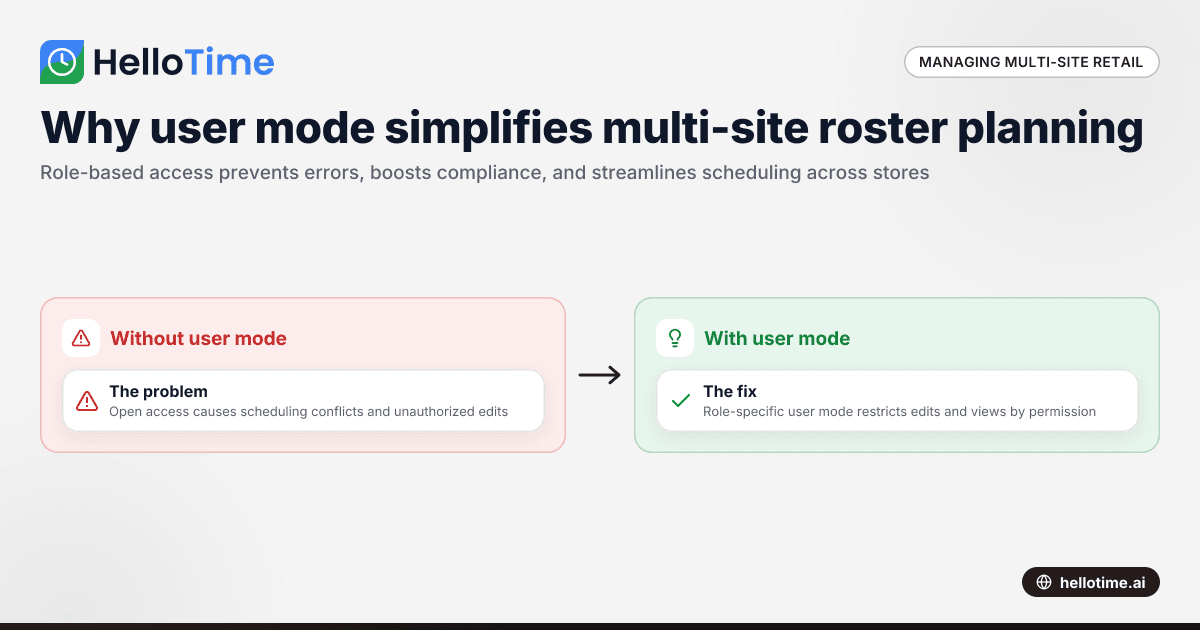
How User Mode Simplifies Managing Multi-Site Retail Roster Planning in the United States
User mode in multi-site retail roster planning customizes access and control for each user, matching their role. It prevents unauthorized schedule.
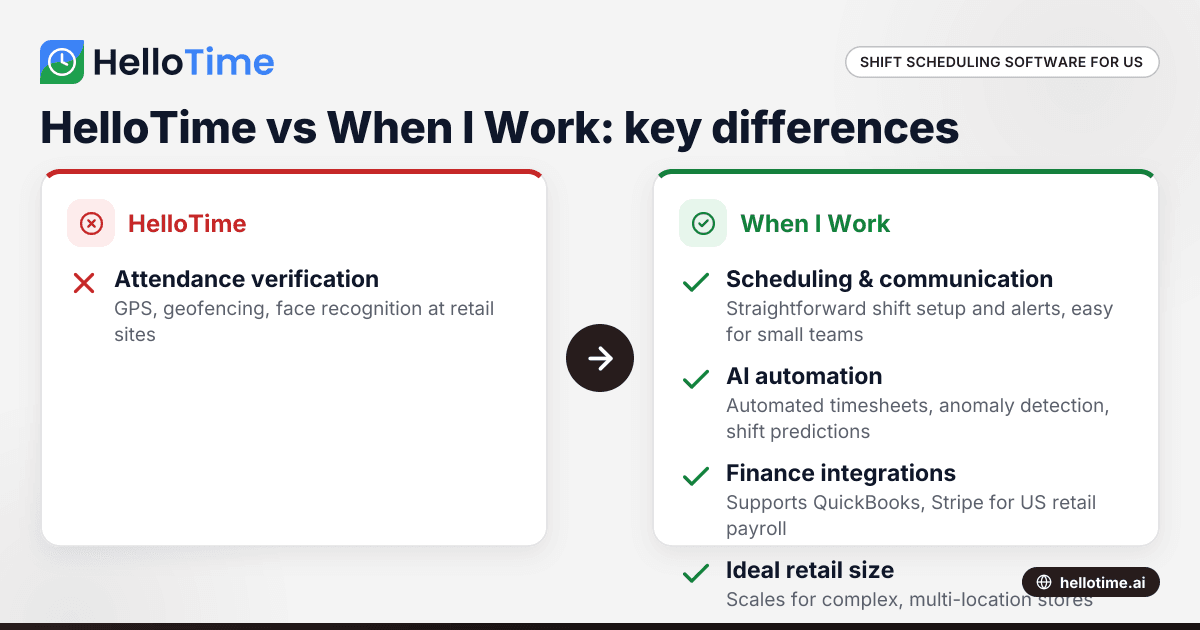
HelloTime vs When I Work: Choosing the Best Shift Scheduling Software for Retail Stores in the United States
HelloTime vs When I Work: Choosing the Best Shift Scheduling Software for Retail Stores in the United States Shift scheduling is crucial for retail.
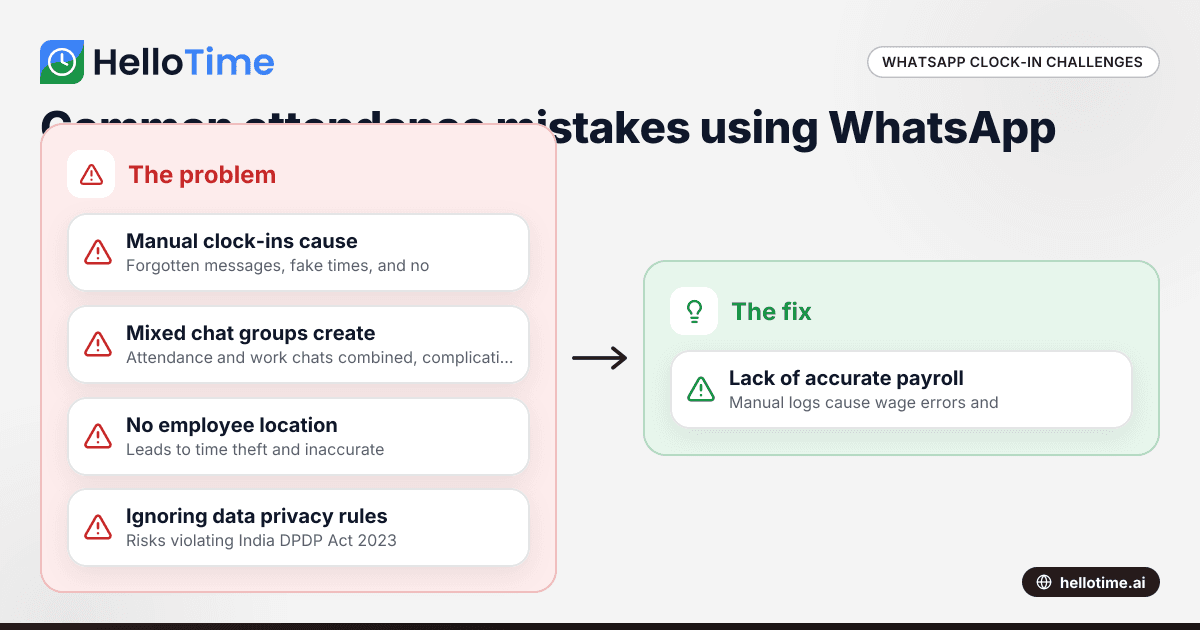
Using WhatsApp for Clock-In and Attendance Tracking in Indian Small Businesses
Using WhatsApp for Clock-In and Attendance Tracking in Indian Small Businesses The cost of managing attendance poorly can be high for small.