How to Manage Break Minutes and Rest Periods for Shift Workers in Retail Stores in India
Managing break minutes and rest periods for shift workers in retail stores in India is essential to ensure compliance with labour laws and maintain.
The HelloTime team
7 min read
On this page
Managing break minutes and rest periods for shift workers in retail stores in India is essential to ensure compliance with labour laws and maintain worker productivity and satisfaction. Proper scheduling and tracking of breaks not only helps avoid legal issues but also improves employee wellbeing and operational efficiency.
Key takeaways
- Break minutes and rest periods in Indian retail must comply with the Shops and Establishments Act of respective states.
- Breaks typically include lunch and short rest intervals, depending on shift length.
- Tracking break minutes accurately helps businesses avoid labour disputes and promotes worker health.
- AI-powered time tracking tools can automate break monitoring and streamline shift management.
- Clear policies and communication about breaks improve employee morale and reduce absenteeism.
Understanding Break Minutes and Rest Periods in Indian Retail
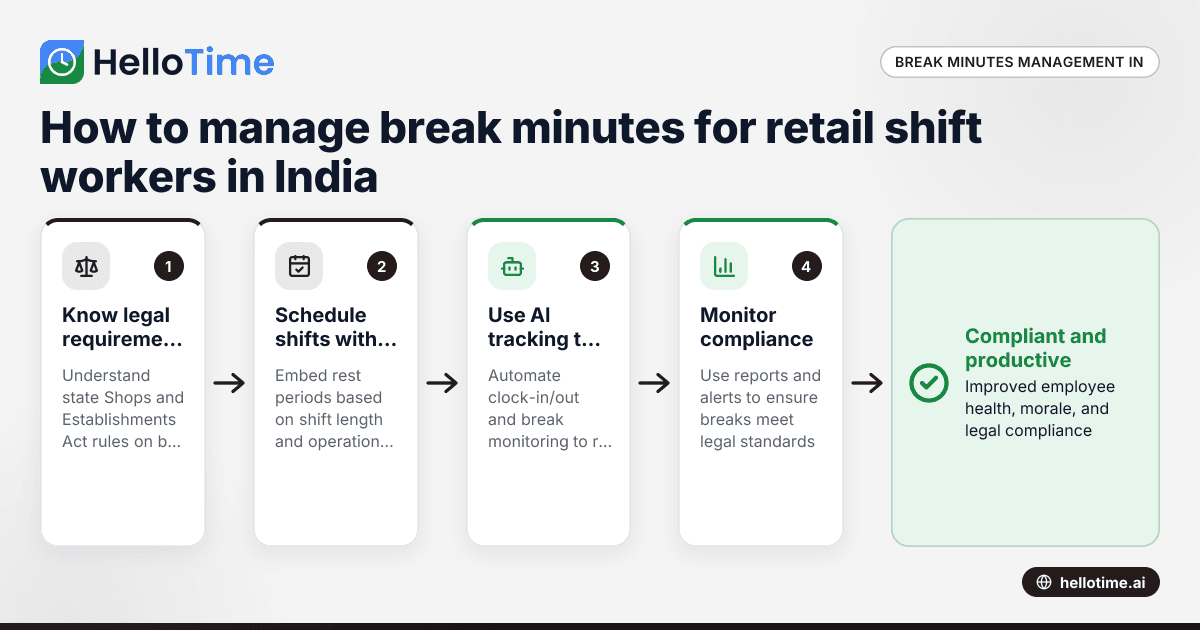
In Indian retail stores, shift workers usually work long hours with defined breaks. The labour regulations for breaks are governed primarily by the Shops and Establishments Act applicable in each state, such as Maharashtra or Karnataka. These laws require employers to provide rest intervals during the workday. The exact break times can vary depending on store policies, shift timings, and local rules.
For example, Maharashtra’s Shop and Establishment Act mandates a minimum continuous rest of 30 minutes after 5 hours of work. Many retail stores also include shorter tea breaks—typically 10–15 minutes twice a shift—to help workers stay refreshed. Properly managing these break minutes ensures employees do not feel overworked or fatigued.
Why Are Proper Break Minutes and Rest Management Important?
Break minutes are more than just a legal requirement. They directly impact employee health and job satisfaction. Without adequate rest, productivity drops, errors increase, and workplace accidents become more likely—especially in fast-paced retail settings like Mumbai or Bengaluru. Proper scheduling and respect for breaks reduce stress and burnout.
From a compliance standpoint, failure to provide mandated rest periods risks legal penalties and labour disputes. Many stores still rely on manual timesheets or paper-based logs prone to errors, making adherence difficult to prove. Automating break tracking is a proven way to maintain compliance while saving managerial time.
How Can AI Improve Break Minutes Tracking for Shift Workers?
AI break minutes tracking uses smart software to automatically detect and record when employees clock out and in for their breaks. This technology integrates with digital attendance systems, using rules configured based on labour laws and company policies.
AI can generate real-time reports on break adherence, flag violations, and send notifications to managers. This reduces manual errors and makes shift scheduling more flexible. For example, if a retailer in Pune needs to shift staff around due to sudden demand, AI tools can ensure rest periods remain compliant despite changing rosters.
Integrating AI break minutes tracking with GPS geofencing at store locations further prevents fraudulent clock-ins during breaks. This technology supports transparent workforce management and helps HR teams focus on other strategic tasks.
What Are the Legal Requirements for Breaks in Retail Shifts in India?
Retail shift workers are protected under state-specific Shops and Establishments Acts. While specific provisions vary, these common rules apply:
- Mandatory rest interval: A continuous rest break of at least 30 minutes if the workday exceeds 5 hours.
- Maximum working hours: Generally, 8-9 hours per day, including breaks.
- Weekly off: At least one rest day every week.
- Overtime compensation: Extra pay for hours worked beyond the standard.
For example, the Karnataka Shops and Commercial Establishments Act requires one hour rest if the work duration exceeds 5 hours and a half-hour meal break after 4 hours of work. These rest periods are usually unpaid but count toward attendance.
Employers must maintain accurate attendance records, including break minutes, as proof of compliance during inspections or audits by labour authorities.
How Do Retail Stores in India Efficiently Manage Break Minutes for Shifts?
Retail stores face unique challenges: fluctuating customer footfalls, multiple shift patterns, and varied employee skill sets. Efficient management of break minutes involves:
- Shift scheduling: Design shifts so rest periods are embedded without disrupting service quality.
- Centralised attendance tracking: Use digital software to automatically log clock-ins, clock-outs, and breaks.
- Clear break policies: Communicate required break lengths and timing expectations to all staff.
- Supervisor oversight: Managers regularly monitor break compliance using reporting dashboards.
- Flexible breaks: Allow minor adjustments in break timing if workload demands, ensuring total break minutes are maintained.
Shift workers may work early mornings, late nights, or weekends in cities like Hyderabad or Ahmedabad. Flexible yet compliant break management helps maintain operational continuity and employee satisfaction.
What Technology Solutions Can Help Track Break Minutes in Indian Retail Stores?
Several technology solutions adapt well to Indian retail conditions:
- Mobile GPS clock-in and geo-fencing: Confirms employees are on-site during clock-in/out and breaks.
- Tablet kiosk attendance: Facial recognition attendance systems installed on-site enforce real-time break monitoring.
- Automated time tracking software: Generates timesheets with break minutes automatically deducted or approved by supervisors.
- AI analytics: Predicts peak times and suggests shift and break schedules for maximum efficiency.
Using such solutions, HR managers in Delhi or Chennai can reduce reliance on spreadsheets or manual attendance records that are prone to errors and data loss.
How Does HelloTime Help Retail Businesses Manage Break Minutes and Rest Periods?
HelloTime offers easy-to-use, comprehensive workforce management designed for Indian businesses. Its features include:
- One-click time tracking with automatic break minute detection.
- Customisable break rules and auto-built timesheets that deduct unpaid breaks.
- A tablet kiosk with face recognition for secure on-site attendance and breaks.
- GPS clock-in/out with geofencing to validate location during shifts and breaks.
- AI-backed reports on break minute compliance and shift adherence.
- Seamless integration with payroll that calculates wages considering break durations and Indian statutory deductions.
By adopting HelloTime, retail stores in India can ensure labour law compliance, reduce administrative overhead, and maintain happy, productive shift workers.
Frequently asked questions
What are break minutes in retail shift work?
Break minutes are the allocated time during a shift when employees rest or take breaks away from work duties. These can include meal breaks and short rest intervals needed for health and legal compliance.
Are break minutes paid or unpaid in Indian retail?
Typically, meal or rest breaks of 30 minutes or more are unpaid, while very short tea breaks may sometimes be paid depending on company policy. Labour laws focus more on mandatory rest than payment for breaks.
Can AI accurately track break minutes?
Yes, AI-powered time tracking tools can accurately monitor clock-out and clock-in times during breaks. They help automate calculations and keep records compliant with labour laws and company policies.
How many breaks are retail shift workers entitled to in India?
Usually, at least one 30-minute rest break is mandatory if the work lasts longer than 5 hours. Many employers also provide two 10-15 minute short breaks to improve worker comfort and productivity.
What happens if break minutes are not provided?
Failing to provide statutory rest breaks can result in labour law penalties, employee dissatisfaction, and increased absenteeism. It could also complicate payroll and attendance audits.
Can break minutes be adjusted in shifts?
Break minutes can be scheduled flexibly according to operational needs, provided the total mandatory rest periods are maintained and documented for compliance.
Managing break minutes and rest periods correctly is vital for Indian retail stores to meet legal obligations and support their shift workers’ wellbeing. Explore HelloTime’s features to see how smart time tracking and AI-assisted attendance can simplify your workforce management. Compare plans to find the best fit for your business at pricing.
Read next
This article covers one part of a bigger topic. For the complete picture, read our guide to break minutes.
Keep reading
Related articles
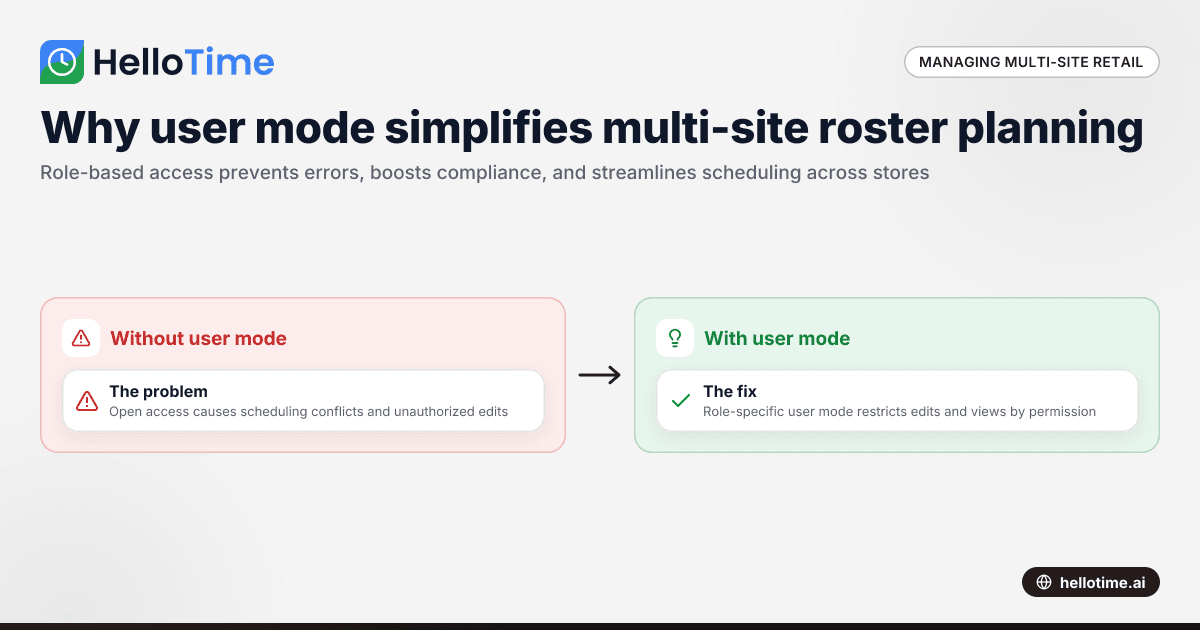
How User Mode Simplifies Managing Multi-Site Retail Roster Planning in the United States
User mode in multi-site retail roster planning customizes access and control for each user, matching their role. It prevents unauthorized schedule.
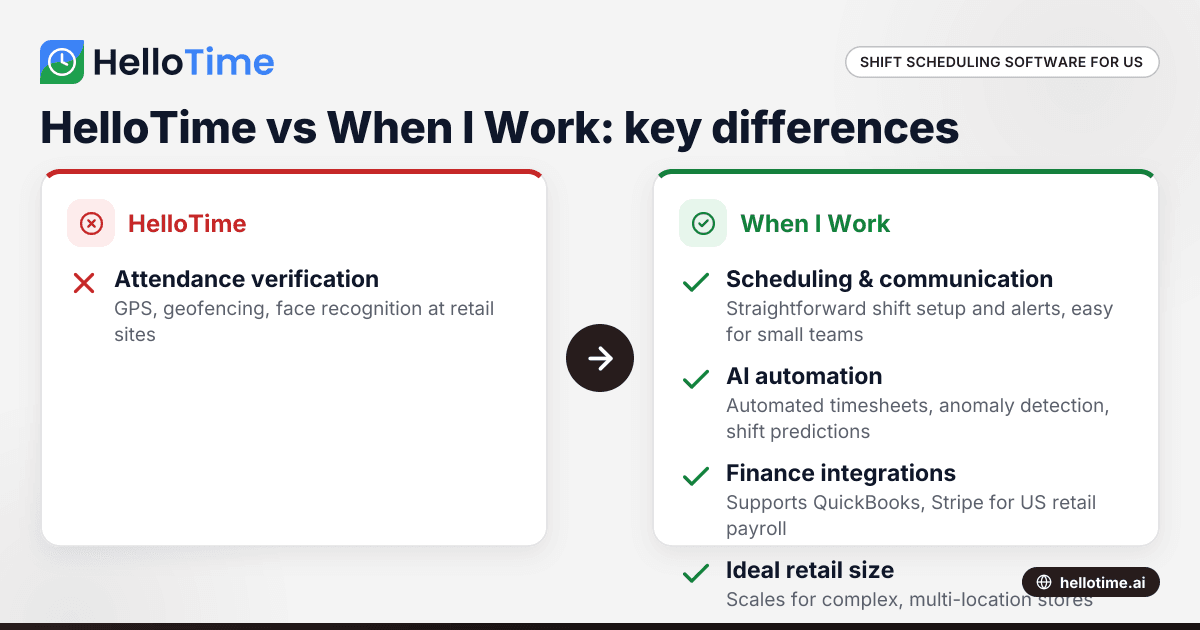
HelloTime vs When I Work: Choosing the Best Shift Scheduling Software for Retail Stores in the United States
HelloTime vs When I Work: Choosing the Best Shift Scheduling Software for Retail Stores in the United States Shift scheduling is crucial for retail.
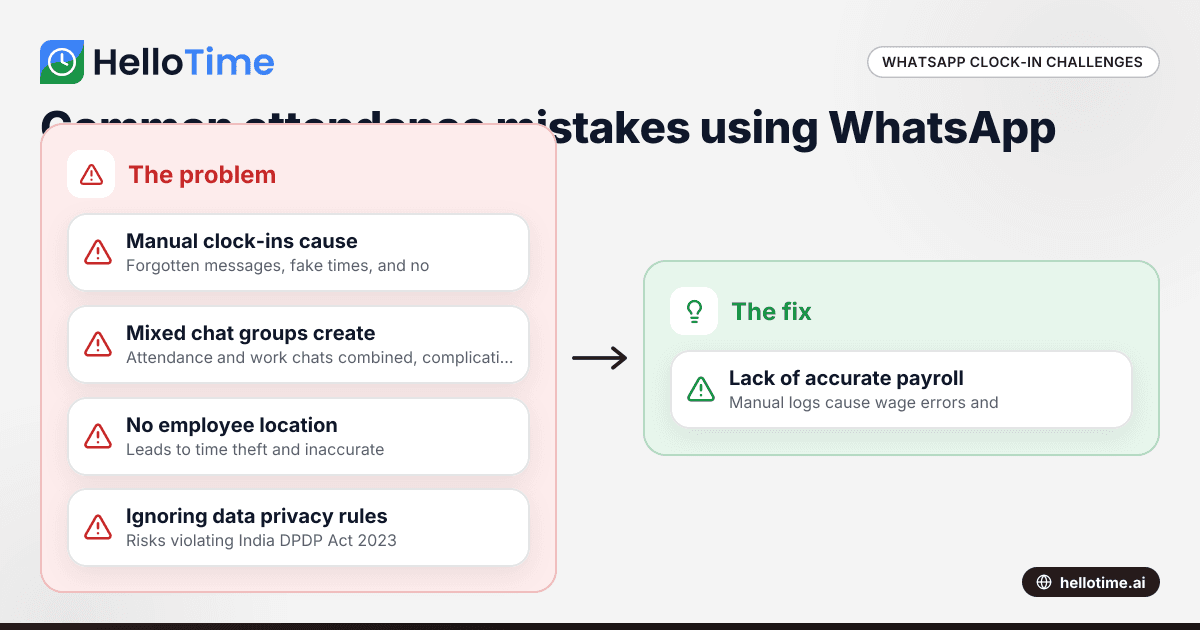
Using WhatsApp for Clock-In and Attendance Tracking in Indian Small Businesses
Using WhatsApp for Clock-In and Attendance Tracking in Indian Small Businesses The cost of managing attendance poorly can be high for small.