How United States Businesses Can Prevent Buddy Punching to Ensure Accurate Time Tracking
Buddy punching occurs when one employee clocks in or out for a coworker, undermining accurate time tracking and payroll. United States businesses can.
The HelloTime team
10 min read
On this page
Buddy punching occurs when one employee clocks in or out for a coworker, undermining accurate time tracking and payroll. United States businesses can prevent buddy punch by implementing digital attendance solutions that combine biometric clock-ins, mobile GPS tracking, and AI-powered face recognition to ensure every clock-in record is authentic and verifiable.
Key takeaways
- Buddy punch leads to inaccurate payroll, compliance risks, and potential wage theft issues.
- Biometric systems like fingerprint or face recognition substantially reduce buddy punch risk.
- GPS and geofencing ensure employees clock in only from approved job sites.
- AI buddy punch detection analyzes attendance patterns and flags suspicious activity.
- Clear policies, consistent enforcement, and employee training are essential alongside technology.
- HelloTime offers tools such as face recognition and geofenced clock-in tailored for US businesses.
What is buddy punching and why does it matter?
Buddy punching is the practice where one employee clocks in or out on behalf of another. This distorts attendance data as it gives a false picture of actual hours worked. In industries where payroll is calculated by the hour, such as retail, hospitality, and construction, buddy punching results in inflated labor costs and inaccurate payroll processing.
For example, a retail manager in Chicago might discover discrepancies in wage expenses due to employees clocking in buddies who are late or absent. This can lead to overpayment, reduce profitability, and open businesses to risks from wage and hour audits by the Department of Labor.
Buddy punching also undermines trust within the workforce. Honest employees may feel demoralized when others “game the system” and still receive full pay. Over time, this can harm morale and increase staff turnover.
U.S. labor regulators require employers to keep accurate records of hours worked under the Fair Labor Standards Act (FLSA). While the law doesn’t specifically mention buddy punching, it mandates truthful recordkeeping and wage payment. Inaccurate timesheets or payroll errors caused by buddy punching risk violations of these federal requirements.
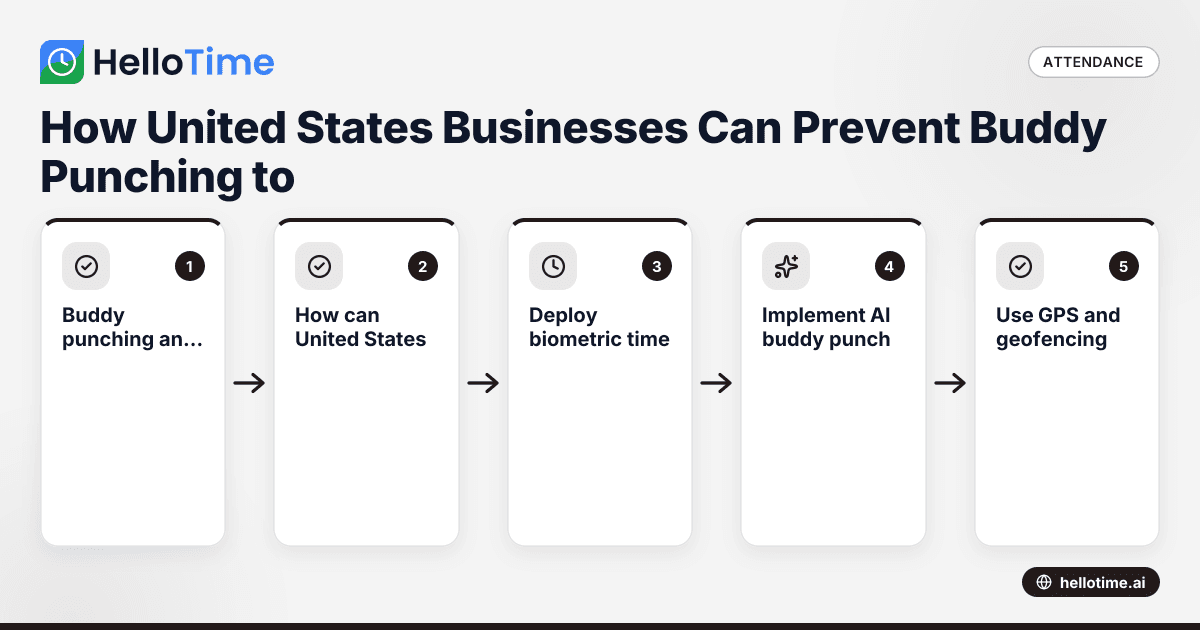
How can United States businesses detect and prevent buddy punching?
Preventing buddy punch requires a combination of technology and good management practice. Here are practical steps United States businesses should take to minimize this risk:
1. Deploy biometric time tracking
Fingerprint scanners and facial recognition devices verify that the person clocking in is the registered employee. This makes it difficult to clock in for someone else. For instance, using facial recognition tablets at the employee entrance of a hospitality venue in Houston ensures only authorized staff can punch in.
2. Implement AI buddy punch detection
Machine learning tools analyze attendance records to detect anomalies often associated with buddy punch. For example, if the system spots employee A frequently clocking in right before or after employee B with highly similar timestamps or from unusual devices, it will flag this behavior for supervisor review.
3. Use GPS and geofencing
Mobile apps integrated with GPS only allow employees to clock in or out when they are physically present at an authorized location. A construction company in Detroit may set a geofence around a job site, preventing clock-ins from employees’ homes or other locations. The system either denies the punch or marks it for investigation.
4. Train employees and set clear policies
Technology alone is insufficient without a strong organizational stance. Employees must understand the consequences of buddy punching and why honest attendance matters. Document policies clearly, communicate the disciplinary measures for buddy punching, and include attendance integrity in onboarding and regular training.
5. Regularly monitor timesheets and attendance reports
Supervisors need to review timesheets frequently to catch irregularities early. Suspicious patterns such as repeated same-time clock-ins by different employees, unusual clock-in times, or missing data can indicate buddy punch or other problems in time tracking.
What does AI buddy punch detection involve?
AI buddy punch detection uses machine learning algorithms applied to time and attendance data to automate the identification of suspicious activity. By examining large volumes of punch data, the system learns normal check-in patterns for each employee and flags deviations such as:
- Multiple clock-ins from the same IP address or device by different employees in short succession.
- Employees clocking in or out within seconds of one another at unusual times, like outside scheduled shifts.
- Unusual patterns where certain employees always punch in pairs.
- Inconsistent or impossible patterns, for example, employees clocking in from geographically distant locations nearly simultaneously.
This technology reduces manual review workload for HR or operations managers. Instead of combing through spreadsheets or paper sheets, managers receive alerts or reports highlighting likely instances of buddy punch. The AI “learns” over time from feedback which flags were valid or false positives, improving its accuracy.
For example, a Chicago retail chain using AI detection may discover a group of employees regularly punching in for one another on weekend shifts. Early detection stops payroll fraud and allows appropriate disciplinary actions.
Which biometric systems are best to block buddy punching?
Biometric systems add a strong layer of security to time tracking. The most common U.S. biometric systems include:
Fingerprint scanners
These are popular due to relatively low hardware costs and straightforward deployment on kiosk devices. Employees place a finger on the scanner which matches the print to a previously registered template. While cost-effective, fingerprint scanners require physical contact, which may be less desirable post-pandemic.
Facial recognition
Facial recognition gained momentum as a contactless method. It uses cameras to map facial features and compare with registered profiles. Modern AI improves accuracy, making it possible to prevent spoofing attempts like using photographs. Businesses in the hospitality sector in cities like Houston increasingly adopt this technology for employee clock-ins.
Iris scanning
Iris recognition offers very high accuracy, but devices tend to be more expensive and less commonly used outside specialized environments.
Best practices in biometric system deployment
- Choose technology balancing cost, ease of use, and hygiene concerns.
- Maintain strict data privacy policies compliant with state laws such as Illinois’ Biometric Information Privacy Act (BIPA).
- Inform employees transparently about biometric data collection, storage, and usage.
For example, a mid-sized retail business in Detroit implementing facial recognition kiosks ensures workers understand data privacy policies upfront, building trust alongside technology.
Can mobile GPS tracking really prevent buddy punch for field teams?
Mobile GPS tracking combined with geofencing is an effective tool for mobile or remote workforces where traditional kiosk clocks aren’t practical. Here’s how it works:
- The mobile app requests employee location data when clocking in or out.
- The system checks if the location intersects with predefined geofenced areas such as construction sites or client locations.
- Clock-in is approved only if inside or very close to the authorized site perimeter.
- Punches outside the boundary are rejected or flagged for review.
For instance, a field service business in Houston uses geofencing configured around customer premises. That way, technicians cannot clock in early from their vehicles miles away or get colleagues to punch in remotely, protecting payroll accuracy and contract compliance.
Pitfalls and limitations to consider:
- GPS accuracy can fluctuate in dense urban environments or indoors, sometimes causing false negatives when employees are actually at the site.
- Employees must keep phone location services enabled, which requires cultural and policy buy-in.
- Geofencing radius should balance precision and practicality; too small a radius may inconvenience employees while too large reduces effectiveness.
Despite these challenges, GPS and geofencing remain a key technology for preventing buddy punch in field teams.
Why is it important to have clear policies alongside technology?
Although biometric devices and AI tools are powerful, they cannot fully eliminate buddy punching without employee buy-in and policy enforcement. Here are reasons why clear policies matter:
- Employees need to understand rules, consequences, and reasons for anti-buddy punch measures. This transparency reduces suspicion or resistance.
- Policies set the framework for disciplinary action. Without formal consequences, deterrence is weak.
- Regular training reminds employees of ethical responsibilities and addresses any concerns.
- Policies encourage a culture of trust and accountability, which technology alone cannot create.
For example, a Houston-based retail chain holds quarterly town halls discussing time theft including buddy punch. They emphasize the impact on coworkers and business viability and share stories of enforcement to reinforce messages.
Companies should ensure policies cover:
- Definition of buddy punching and why it is unacceptable.
- Potential disciplinary actions (warnings, suspension, termination).
- Privacy and data handling relating to biometric and GPS tracking.
- Process for reporting suspected buddy punch anonymously.
When fairly applied, policies combined with technology create an effective system deterring time theft.
How does HelloTime help prevent buddy punching?
HelloTime offers a suite of digital attendance and workforce management features tailored for US businesses aiming to combat buddy punch fraud effectively:
- Face recognition-enabled tablet kiosks allow employees to clock in using AI-powered facial scans. This biometric check ensures the person punching in is actually the registered employee.
- GPS and geofenced clock-in restrict clock in/out actions to authorized locations using mobile app tracking. This is ideal for field teams or multi-site businesses in construction, retail, or hospitality.
- One-click time tracking with automated timesheets and approval workflows simplify oversight and reduce manual errors.
- Real-time attendance reports highlight anomalies such as unusual punch-in times or locations, enabling supervisors to investigate quickly.
Managers can quickly detect suspicious attendance patterns flagged by AI without pouring over spreadsheets or paper logs. This saves time and reduces payroll errors caused by buddy punching.
By integrating biometric verification and geofencing with user-friendly interfaces, HelloTime empowers US companies from Chicago agencies to Houston construction firms to maintain accurate and compliant attendance records.
Explore HelloTime’s full range of features or compare plans on our pricing page to find the right solution for your business.
Frequently asked questions
What consequences can employees face for buddy punching?
Disciplinary actions depend on company policies but usually range from warnings to termination for repeated offenses. Buddy punching may also be considered wage fraud, which could lead to legal consequences. Clear communication and consistent enforcement increase deterrence.
Does federal law address buddy punching?
Federal labor laws focus on accurate timekeeping and wage payment (e.g., FLSA) but do not specifically mention buddy punching. However, inaccurate or fraudulent records can cause violations, so compliance requires honest attendance practices.
Is face recognition technology legally accepted in the US workplace?
Yes, it is widely used but employers must comply with biometric data privacy laws like Illinois’ BIPA. Employers should inform employees how biometric data is collected, stored, and used and secure consent where required.
How expensive is it to implement biometric time tracking?
Costs vary by the technology type, hardware scale, and software licensing. Fingerprint scanners typically cost less upfront than facial recognition kiosks. While implementation involves investment, savings from reduced time theft and payroll errors often justify expenses.
Can HelloTime integrate with my existing payroll or accounting software?
HelloTime supports data exports and integrations with common US platforms such as QuickBooks and Stripe. This streamlines payroll and invoicing using verified time tracking data for greater accuracy.
How can AI improve employee time tracking besides buddy punch detection?
AI automates approvals, forecasts labor needs, detects other types of time theft, and generates reports on project profitability. This reduces administrative burden and improves operational insight for managers.
Explore all of HelloTime’s powerful time tracking and workforce management features or find the right plan for your business on the pricing page today. Reduce payroll errors and buddy punch risk with smart technology designed for US businesses.
Read next
This article covers one part of a bigger topic. For the complete picture, read our guide to buddy punch.
Keep reading
Related articles
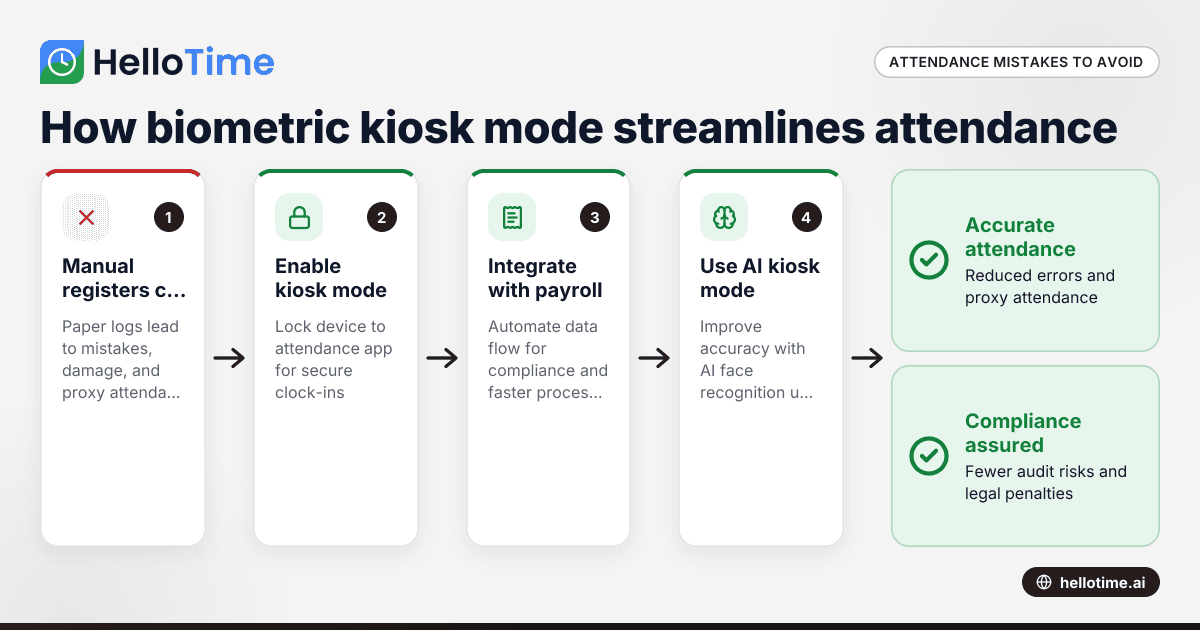
How Biometric Attendance Kiosk Mode Can Streamline Workforce Management for Indian Manufacturing Units
Manufacturing units in India often struggle with managing workforce attendance accurately and efficiently. Errors in attendance tracking lead to.
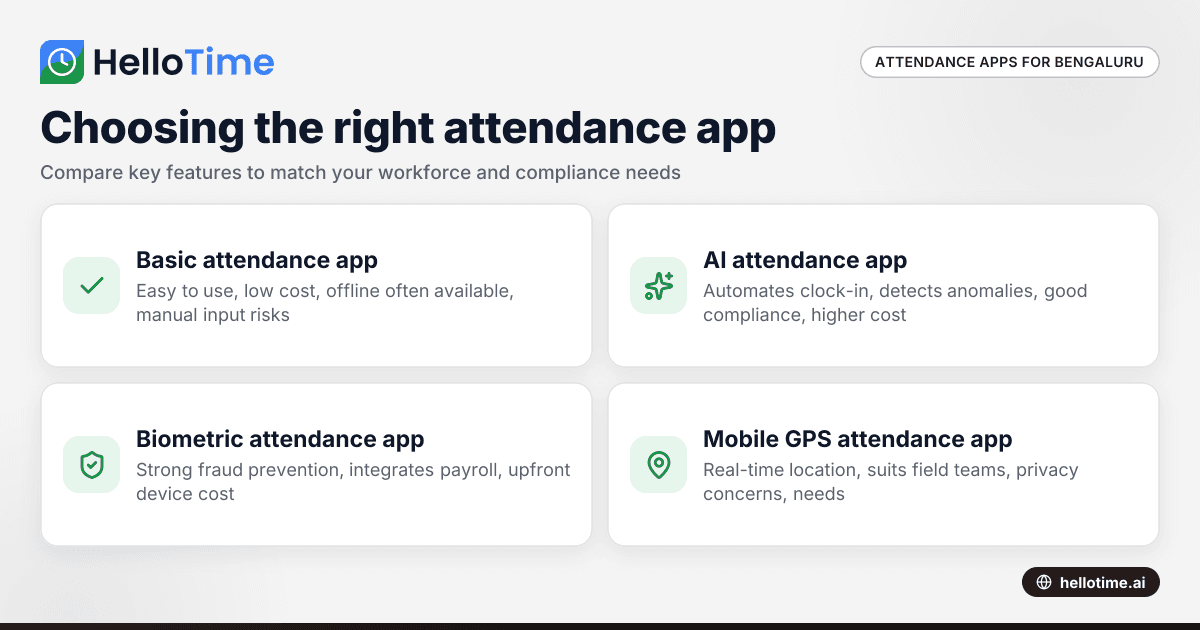
Choosing the Right Attendance App for Small Businesses in Bengaluru
Choosing the Right Attendance App for Small Businesses in Bengaluru ===================================================================== If you run.
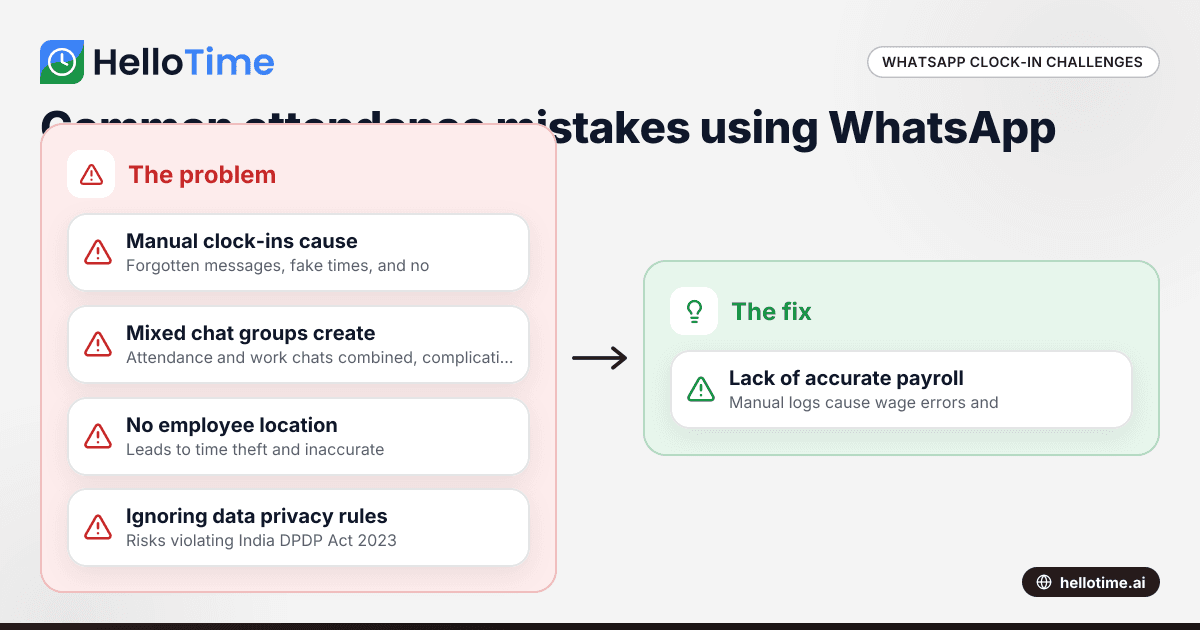
Using WhatsApp for Clock-In and Attendance Tracking in Indian Small Businesses
Using WhatsApp for Clock-In and Attendance Tracking in Indian Small Businesses The cost of managing attendance poorly can be high for small.