How Biometric Attendance Kiosk Mode Can Streamline Workforce Management for Indian Manufacturing Units
Manufacturing units in India often struggle with managing workforce attendance accurately and efficiently. Errors in attendance tracking lead to.
The HelloTime team
5 min read
On this page
Manufacturing units in India often struggle with managing workforce attendance accurately and efficiently. Errors in attendance tracking lead to payroll mistakes, compliance risks, and lost productivity — all of which can cost lakhs of rupees annually. Manual registers, biometric machines without proper software integration, and proxy attendance are common challenges that escalate operational headaches and compliance risks under Indian labour laws.
What is kiosk mode and why should Indian manufacturing units care?
Kiosk mode is a locked interface on devices like tablets or biometric terminals that lets employees clock in and out securely using just one app. It prevents misuse and simplifies attendance capture, helping manufacturing units reduce errors and time theft.
Using a biometric attendance kiosk in kiosk mode means employees clock in with face recognition or fingerprint scans, instantly recorded in an integrated system. This replaces paper registers and prevents proxy attendance, easing compliance with PF, ESI, and overtime rules. For units in Mumbai, Pune, or Bengaluru, this ensures reliable, tamper-proof attendance data.
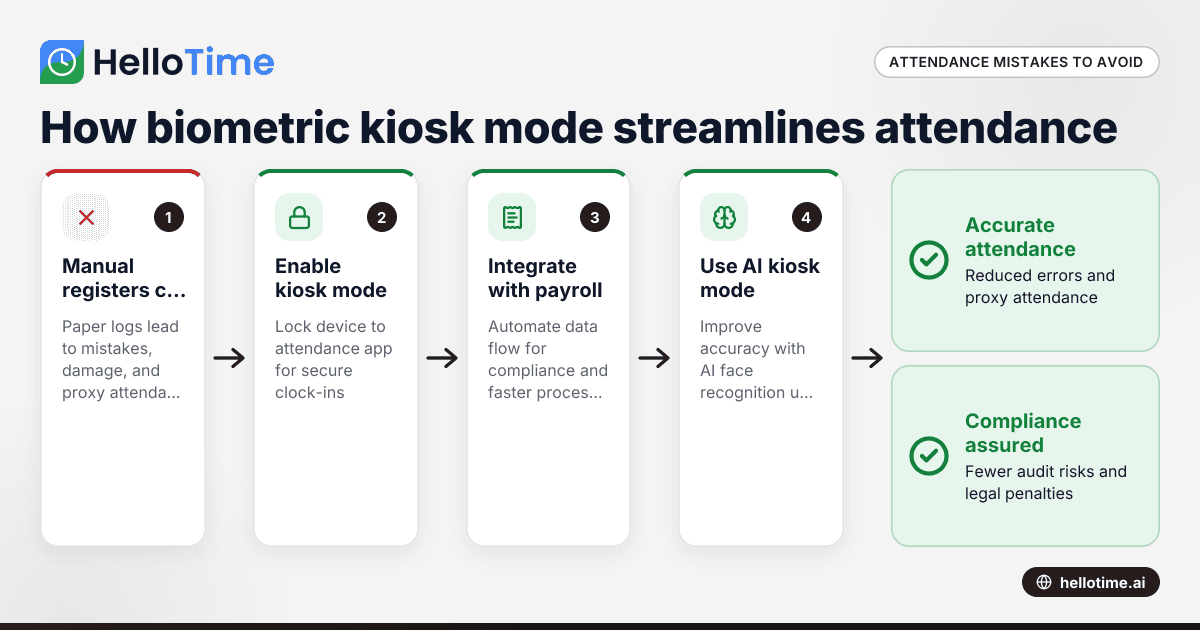
Mistake 1: Relying on manual attendance registers or biometric devices without kiosk mode
Many units still use paper registers or biometric machines that employees can bypass by clocking in for each other. Manual registers are prone to errors, damage, or loss, while biometric machines without kiosk mode allow users to exit the attendance app, risking data tampering or misuse.
The fix is to implement biometric attendance kiosks with kiosk mode enabled. This locks the device to the attendance app, ensuring employees can only use it for clocking in and out. It also streamlines attendance data collection, reducing errors and saving admin time.
Mistake 2: Not integrating attendance with payroll and compliance systems
Collecting attendance data is only half the job. Many manufacturing units face delays and mistakes in processing payroll because attendance data is stored separately or manually transferred. This can cause errors in PF, ESI, TDS, and overtime calculations, leading to penalties or employee dissatisfaction.
The solution is to use attendance software that integrates biometric kiosk mode data directly with payroll and statutory compliance modules. This reduces manual intervention, speeds up payroll processing, and ensures compliance with Indian labour laws and tax regulations.
Mistake 3: What is AI kiosk mode and why should my unit consider it?
AI kiosk mode uses artificial intelligence for face recognition to improve attendance accuracy and speed. It reduces false rejections and handles challenges like dust, low light, or masks common in factories.
Adopting AI kiosk mode biometric systems means faster clock-ins, fewer errors, and higher security. For Indian manufacturing units with large, shift-based workforces, this technology enhances attendance reliability and employee experience.
Mistake 4: Ignoring the importance of shift scheduling and real-time attendance monitoring
Manufacturing units often have complex shift patterns. Without real-time attendance monitoring tied to shift schedules, it’s difficult to track late arrivals, early departures, or unauthorized overtime. This leads to inaccurate wage calculations and productivity loss.
The fix is to combine kiosk mode attendance with shift scheduling software that automatically flags attendance anomalies. Managers can get instant alerts on absences or deviations, enabling timely action and better workforce control.
Mistake 5: How can I implement kiosk mode attendance without disrupting factory workflows?
Implementing kiosk mode attendance can be smooth by choosing devices and software tailored for factory use. Select biometric kiosks with rugged hardware suitable for dusty or humid environments common in Indian manufacturing units. Train shift supervisors and employees on the clock-in process to minimise resistance.
Start with pilot testing in one production line before scaling across the plant. Use software that supports multiple kiosks, so employees clock in at their nearest station, reducing queues. Integration with existing payroll and shift scheduling systems avoids duplicate work.
Mistake 6: Failing to secure employee data under the DPDP Act 2023
Biometric data is sensitive personal information governed under India’s Data Protection laws (DPDP Act 2023). Many units overlook the need for secure data storage, controlled access, and compliance documentation, risking legal penalties.
Using biometric attendance kiosks with built-in encryption, audit trails, and role-based access ensures compliance with data privacy regulations. Choose software providers who clearly state their DPDP compliance to safeguard employee privacy and your business.
What ongoing benefits can manufacturing units expect from using biometric kiosk mode?
Manufacturing units adopting biometric kiosk mode attendance can expect improved accuracy and reduced payroll errors, saving lakhs annually. Real-time attendance data enhances shift management and productivity tracking. Compliance with PF, ESI, and TDS rules becomes simpler, reducing audit risks.
Additionally, automating attendance frees HR and admin teams from manual data entry, allowing focus on strategic tasks. Over time, this builds a culture of accountability and trust, boosting employee morale and operational efficiency.
If you want to explore how kiosk mode and related features can fit your operation, take a look at our features or compare plans at pricing to find the best option for your business.
A simple routine to avoid attendance mistakes in manufacturing units
- Weekly: Review attendance reports for anomalies such as missing clock-ins or overtime spikes.
- Monthly: Cross-verify attendance data with payroll input to catch any discrepancies early.
- Quarterly: Audit biometric device logs and software compliance with DPDP Act standards.
- Ongoing: Provide refresher training for employees on kiosk mode usage and data privacy.
- Annually: Evaluate attendance and payroll software features to upgrade for AI kiosk mode if not already in use.
Biometric attendance kiosk mode is a practical, cost-effective way to streamline workforce management for Indian manufacturing units. It reduces errors, enhances compliance, and saves time and money.
Related reading
- How Biometric Attendance Kiosks with Face Recognition Improve Workforce Management for United States Small Businesses
- How United States Small Businesses Can Use Attendance Apps to Streamline Workforce Management
Read next
This article covers one part of a bigger topic. For the complete picture, read our guide to kiosk mode.
Keep reading
Related articles
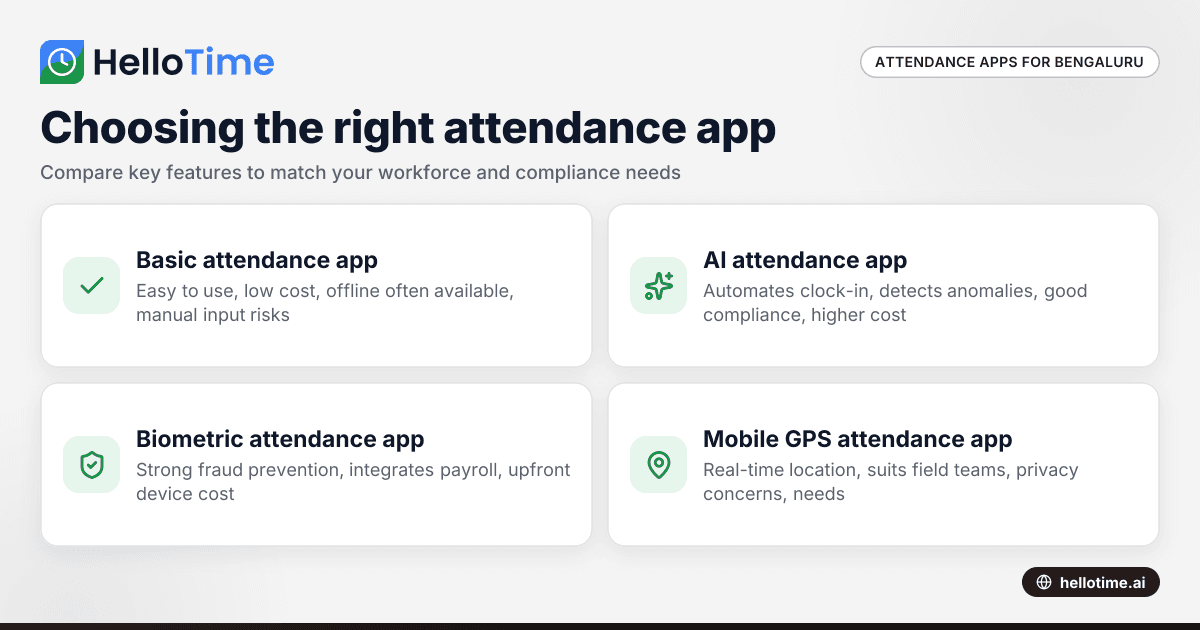
Choosing the Right Attendance App for Small Businesses in Bengaluru
Choosing the Right Attendance App for Small Businesses in Bengaluru ===================================================================== If you run.
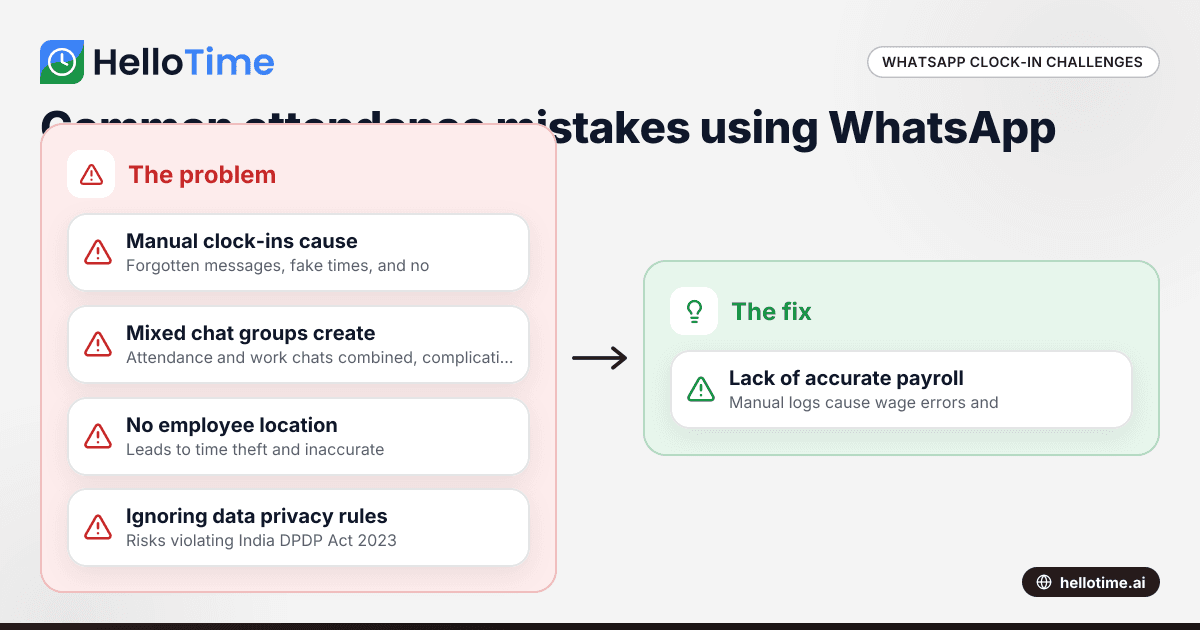
Using WhatsApp for Clock-In and Attendance Tracking in Indian Small Businesses
Using WhatsApp for Clock-In and Attendance Tracking in Indian Small Businesses The cost of managing attendance poorly can be high for small.
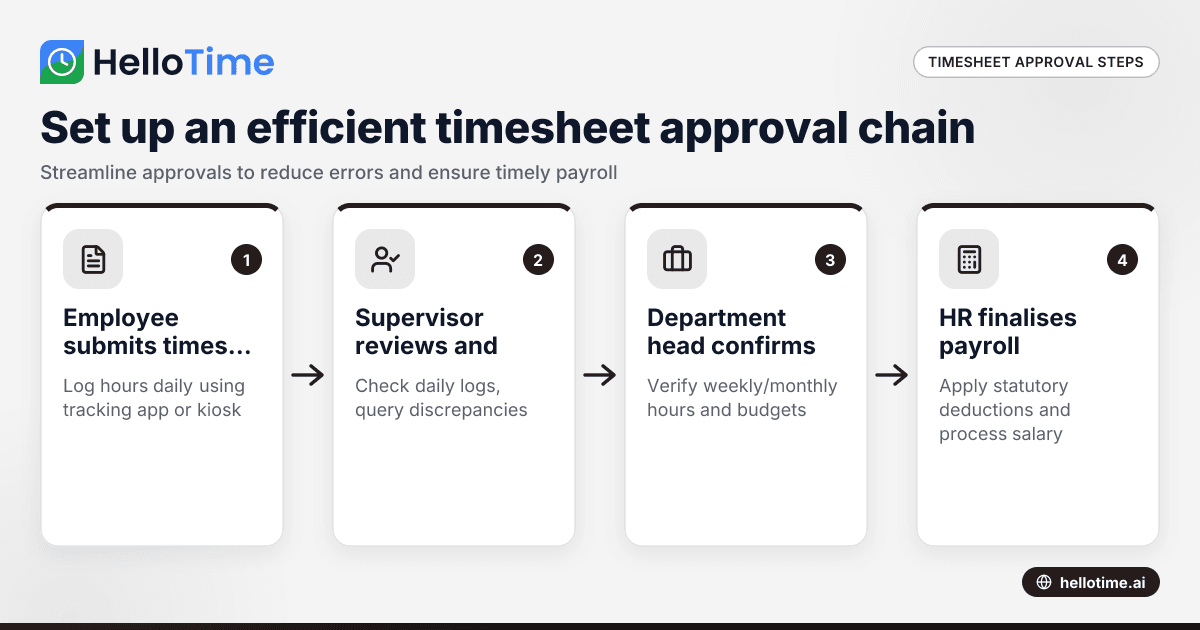
How to Set Up an Efficient Timesheet Approval Chain for Indian SMEs
How to Set Up an Efficient Timesheet Approval Chain for Indian SMEs This guide is for owners, HR, and operations managers at Indian small and.