How United States Small Businesses Can Create a Leave Policy That Balances Compliance and Employee Flexibility
Creating a leave policy for a small business in the United States requires balancing legal compliance with flexibility that meets your employees’.
The HelloTime team
7 min read
On this page
Creating a leave policy for a small business in the United States requires balancing legal compliance with flexibility that meets your employees’ needs. A well-crafted leave policy protects your business, supports your workforce, and enhances productivity by clarifying expectations around paid time off and other absence rules. Thoughtful planning and clear communication help prevent disputes and ensure smooth operations even when employees are away.
Key takeaways
- A leave policy for small business must comply with federal laws like the Family and Medical Leave Act (FMLA) and state-specific rules.
- Flexibility in leave options improves employee satisfaction and retention.
- Documentation and clear communication of the leave policy prevent misunderstandings.
- Automating leave requests and approvals with tools like AI leave policy systems can save time and reduce errors.
- Leave policies should address various leave types: vacation, sick, parental, unpaid, and protected leaves.
- Regular review and updating of policies ensure ongoing legal compliance and relevance.
What federal laws impact small business leave policies?
Federal laws set baseline requirements primarily through the Family and Medical Leave Act (FMLA), which mandates unpaid, job-protected leave for eligible employees in covered businesses. Additional protections may arise under the Americans with Disabilities Act (ADA), but no federal mandate requires paid leave.
The FMLA requires covered employers—those with 50 or more employees within a 75-mile radius—to provide eligible employees up to 12 weeks of unpaid, job-protected leave in a 12-month period for qualifying reasons like childbirth, serious health conditions, or military-related events. Employees must have worked 1,250 hours in the previous year. Employers must maintain group health benefits and reinstate employees to the same or an equivalent position.
For example, a marketing firm with 55 employees in Chicago must comply with FMLA. An employee there who has worked 1,300 hours in the past year qualifies for up to 12 weeks unpaid leave for family care or serious illness. Employers with fewer than 50 employees generally are exempt but should review if other laws or ADA accommodations apply.
Common federal leave laws to watch:
- Family and Medical Leave Act (FMLA)
- Americans with Disabilities Act (ADA) reasonable accommodations
Beware pitfalls such as misapplying the 75-mile employee radius rule or overlooking ADA unpaid leave needs beyond FMLA.
What are the common mistakes to avoid when setting a leave policy?
Common issues arise from unclear or incomplete policies. The biggest mistakes include overlooking applicable laws, writing confusing language, failing to communicate updates, neglecting documentation, and not reviewing policies regularly.
Clear, simple language helps prevent misunderstandings. Ensuring your leave policy aligns with both federal and state mandates avoids costly penalties. Also, establish formalized request and approval processes with documented records. Frequent policy reviews ensure compliance and relevance as laws change.
Avoid vague or overly complex accrual rules and ensure all employee types, including part-timers and temporary workers, are properly addressed. Weak communication creates frustration and inconsistent application of rules.
Which state laws should small businesses consider for leave?
State and local leave laws often add paid leave requirements or expand coverage. California, New York, and Washington, for example, require paid sick leave accruals and have family leave benefits beyond federal FMLA. Local ordinances in cities like Chicago and Seattle impose paid sick leave rules for even very small employers.
A small retail store in Seattle with 12 employees must provide paid sick leave accruing at 1 hour per 40 hours worked for their employees’ illness or family care. These state and local laws impact how you craft your leave policy.
Stay current on accrual rates, allowed use, carryover rules, required notices, and recordkeeping obligations specific to your jurisdiction.
How can a small business create a leave policy that balances compliance and flexibility?
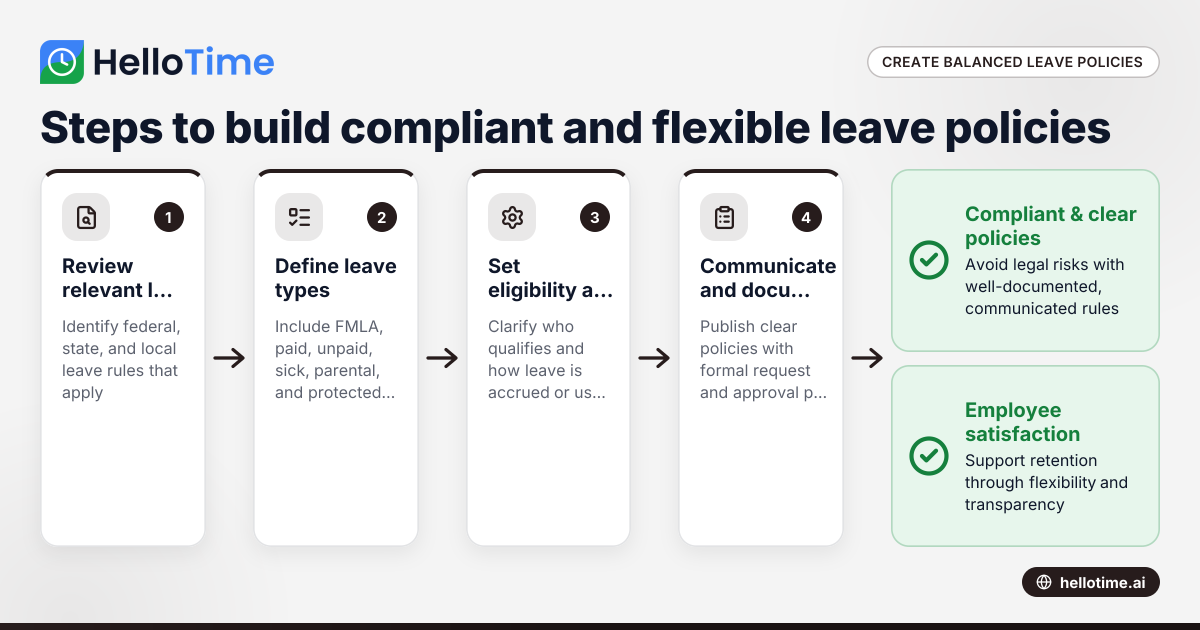
Creating an effective leave policy involves these steps:
- Review laws and obligations: Identify relevant federal, state, and local leave laws. Consult government sites and labor experts.
- Define leave types: Include statutory leaves (FMLA, state leave), paid time off (vacation, personal days), and other leaves (jury duty, military, bereavement).
- Set eligibility: Specify who qualifies, such as full-time vs. part-time employees and any tenure requirements.
- Establish accrual and usage: Clarify accrual methods, caps, carryover, request notice periods, and approval procedures.
- Document proof requirements: State when medical or other certifications are needed.
- Communicate behavioral expectations: Rules around contact during leave, consequences for unapproved absences, and returning to work.
- Maintain flexibility: Allow PTO use for emergencies, remote work, or unpaid leave in slow seasons.
- Incorporate into employee handbook: Train managers and staff on consistent implementation.
- Review regularly: Schedule annual reviews to update based on laws and business needs.
Example: A Detroit marketing agency offers 10 vacation days yearly for full-timers accruing monthly, with a 5-day carryover limit and a two-week request notice.
What role does automation and AI play in managing leave policies?
AI leave policy systems automate accruals, handle leave requests and approvals, and track compliance with legal requirements. These tools reduce manual errors, save time, and provide audit trails.
Benefits include:
- Accurate real-time leave balances.
- Easy employee request submissions and quick manager approvals.
- Automatic identification of FMLA eligibility and state-specific entitlements.
- Notifications for expiring leave and pending approvals.
For instance, a Detroit construction company uses AI software to spot staffing gaps caused by leave requests and manage accruals seamlessly across multiple sites.
Choose solutions suited to small businesses that integrate with payroll or project management software and ensure proper training to trust automation.
How to communicate your leave policy effectively to employees?
Communicate clearly using plain language and accessible materials to ensure understanding.
- Introduce the policy during new-hire onboarding.
- Publish it in the employee handbook and on digital portals.
- Use real examples for common leave scenarios.
- Hold Q&A sessions periodically.
- Provide reminders during peak leave periods like holidays.
Example snippet: “Employees earn one hour of paid sick leave for every 40 hours worked. Please submit leave requests via our portal at least three days before planned time off.”
Poor communication causes misuse and confusion, undermining your policy’s success.
How do you handle leave requests practically?
A structured process keeps operations smooth:
- Employees submit leave requests with dates and reasons, preferably via an online system.
- Managers verify leave balances and business impact.
- Requests are approved or denied with clear communication.
- HR logs approved leaves immediately to update balances.
- Employees receive written confirmation.
For emergency leave, ask for prompt employee notification, interim approvals, and documentation afterward. Document all actions.
Example: A Houston retail manager approves vacation after checking coverage; HR immediately updates the system and notifies the employee.
How to make a leave policy that supports your business culture?
Design your policy to reflect your company’s values and operations.
- Promote work-life balance with generous PTO and flexible use.
- Add blackout periods for customer-facing roles, explained in advance.
- Train managers to lead by example respecting leave.
- Consider mental health or wellness leave.
- Recognize leave as an investment in retention and productivity.
A Detroit digital agency offers 15 PTO days per year, encourages remote recovery work, and discourages emailing during vacations to support balance.
Frequently asked questions
What types of leave should a small business include in its policy?
Include federal leaves such as FMLA, state-mandated paid sick leave, company PTO, and other leaves like jury duty, bereavement, and military leave. Tailor categories based on your business specifics.
How can small businesses ensure compliance with changing leave laws?
Regularly check the U.S. Department of Labor and your state labor office websites. Subscribe to HR newsletters and consider software that updates rules automatically. Annual expert reviews help avoid gaps.
Can leave policies include flexible work arrangements?
Yes, policies can allow remote work or flexible schedules related to medical recovery or family care. Clearly outline such options to align with operational needs.
How does HelloTime support leave management?
HelloTime’s AI-powered tools automate leave tracking and approvals with mobile and desktop access. They monitor compliance with federal and state rules and provide real-time visibility for employees and managers.
What documentation is typically required for leave requests?
Typical documentation includes medical certifications, jury duty summons, or military orders. Your policy should specify acceptable types and submission deadlines.
How often should a leave policy be reviewed?
At least annually or after relevant legal changes to keep policies current and aligned with your business.
Explore how HelloTime’s features simplify leave management through automation and compliance tracking. See which plan fits your business on our pricing page.
Read next
This article covers one part of a bigger topic. For the complete picture, read our guide to leave and shift.
Keep reading
Related articles
How United States Small Businesses Can Integrate Holiday Calendars into Leave Management and Shift Scheduling
Integrating holiday calendars into leave management and shift scheduling helps United States small businesses streamline workforce planning, reduce.
How United States Small Businesses Can Handle Timesheet Approval Workflows with Over 21,000 Minutes Logged
Managing timesheet approvals efficiently becomes critical for US small businesses logging large volumes of employee hours, such as over 21,000 minutes
Open Source Time Tracking Tools for Indian Agencies: Benefits and Considerations
Open source time tracking tools are software with publicly accessible code, letting Indian agencies use and customise them without licence fees. They.