Roster Planning for Multi-Site Retail Chains in the United States: Best Practices to Optimize Staff Scheduling
Roster planning for multi-site retail chains in the United States involves creating efficient staff schedules across multiple locations. The goal is.
The HelloTime team
7 min read
On this page
Roster planning for multi-site retail chains in the United States involves creating efficient staff schedules across multiple locations. The goal is to balance labor costs, meet customer demand, ensure compliance with labor laws, and optimize employee satisfaction. Using best practices and technology can help retailers manage this complex task effectively.
Key takeaways
- Efficient roster planning maximizes productivity and controls labor costs in multi-location retail chains.
- Demand forecasting and employee availability are crucial for accurate scheduling.
- Compliance with U.S. labor laws and regulations must be integrated into roster management.
- AI retail chains benefit from automation to handle complex scheduling across sites.
- Clear communication and centralized scheduling tools reduce errors and enhance team coordination.
- Using time tracking and shift management software simplifies roster planning and reporting.
Understanding the complexity of roster planning for retail chains multi-site
Retail chains with multiple stores face unique challenges in staff scheduling. Each location may have different peak hours, customer volumes, and employee availability. Complexities increase with the number of locations, diversity of roles, and fluctuating demand. Multi-site roster planning must accommodate variations without overstaffing or understaffing any branch.
Key challenges include:
- Aligning staffing levels with unpredictable customer traffic.
- Managing employee hours and shift preferences across locations.
- Ensuring compliance with federal and state labor laws, such as minimum wage, overtime, and break requirements.
- Coordinating shift swaps, leave requests, and last-minute changes.
- Tracking attendance and hours worked for payroll accuracy.
Without a systematic approach, businesses risk poor customer service, high labor costs, and employee dissatisfaction.
What are the best practices for roster planning in multi-site retail chains?
Effective roster planning follows several best practices that streamline scheduling and improve outcomes:
Accurate Demand Forecasting Use historical sales data, seasonal trends, and local events to predict customer demand per store. This enables precise staffing levels aligned with expected foot traffic.
Centralized Scheduling System Deploy a cloud-based scheduling tool that consolidates shift planning for all locations. This makes it easier to allocate staff, track hours, and communicate schedules.
Employee Preference and Availability Tracking Collect employees’ preferred shift timings and availability upfront. A scheduling system can then assign shifts respecting these preferences to boost morale and reduce turnover.
Compliance Automation Integrate labor law rules, including overtime limits and required break times, into the scheduling process to avoid legal issues.
Flexible Shift Management Enable shift swapping and last-minute adjustments through mobile tools, reducing scheduling conflicts and absenteeism.
Regular Review and Feedback Continuously analyze schedule effectiveness by tracking key metrics like labor cost percentage, employee attendance, and customer satisfaction. Solicit employee feedback for improvements.
How does AI improve roster planning for retail chains multi-site?
AI retail chains can leverage automation to optimize complex scheduling tasks. AI algorithms analyze sales data, employee availability, and labor regulations to create optimal rosters that balance cost and coverage. AI tools adapt schedules dynamically based on real-time conditions, reducing manual work.
Artificial intelligence can forecast demand more accurately by incorporating multiple data points such as weather, local events, and promotions. It also helps identify patterns of absenteeism and employee preferences to improve shift assignments. AI-powered scheduling platforms support multi-site operations by coordinating resources seamlessly across locations.
What labor law considerations do U.S. retail chains face when scheduling staff?
Roster planning must comply with all relevant federal and state labor laws. These include the Fair Labor Standards Act (FLSA) governing minimum wage, overtime pay, and recordkeeping. Retailers must also observe state-specific rules such as California’s meal/rest break regulations.
Retailers in the U.S. should ensure:
- Employees are paid at least the federal or state minimum wage.
- Overtime (usually time-and-a-half) is paid for hours worked beyond 40 per week, unless exempt.
- Rest breaks and meal breaks comply with state laws; some states require paid breaks for retail workers.
- Scheduling practices do not unlawfully discriminate or violate workers' rights.
- Employment contracts and union agreements, if any, are honored.
Ignoring these rules can result in penalties, back pay claims, and reputational damage. Automated scheduling software helps by embedding compliance checks into the roster creation process.
How can centralized time tracking assist multi-site retail roster planning?
Centralized time tracking allows managers to monitor when and where employees clock in and out across different locations. It ensures accurate recording of worked hours, essential for payroll, labor law compliance, and performance analysis.
Using technology such as GPS clock-ins or tablet kiosks with face recognition minimizes buddy punching and attendance fraud. Real-time visibility into attendance helps managers adjust rosters swiftly when absences or lateness occur.
Moreover, automated timesheets generated from time tracking data reduce administrative overhead and errors. Management gains insights into labor costs, idle time, and productivity by location, optimizing workforce deployment.
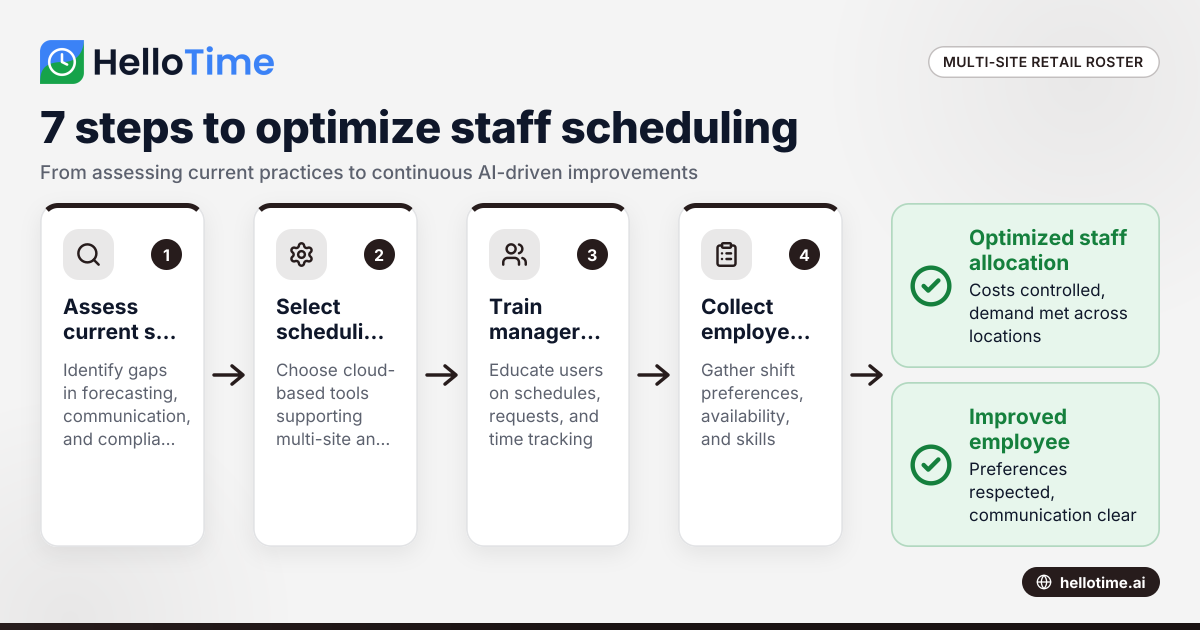
Steps to implement efficient roster planning in multi-site retail chains
Assess Current Scheduling Practices Review your existing roster processes, pain points, and labor costs. Identify gaps in demand forecasting, employee communication, and compliance.
Select Appropriate Scheduling Software Invest in a cloud-based system that supports multiple locations, integrates time tracking, and provides automated compliance alerts.
Train Managers and Staff Educate all users on how to view schedules, request changes, and track hours using the new system.
Collect Employee Data Gather shift preferences, availability, and skills to enable intelligent scheduling.
Develop Forecasting Models Utilize historical sales data and trends to predict staffing needs per store and time period.
Create and Publish Schedules in Advance Provide rosters early to minimize absenteeism and allow employees to plan their time.
Monitor and Adjust Continuously analyze labor metrics and make data-driven adjustments. Use AI-driven suggestions where available to refine schedules automatically.
Why is communication key in managing rosters across multiple retail sites?
Clear and timely communication prevents scheduling conflicts and informs staff about shift changes or special events. Centralized scheduling platforms offer built-in messaging features, shift reminders, and notifications accessible via mobile apps.
When employees can easily swap shifts or report availability changes, absenteeism declines. Managers spend less time chasing employees for confirmations. Transparent communication fosters trust and engagement, leading to a more stable workforce across all retail locations.
How can retail chains manage seasonal or event-driven workforce fluctuations?
Retailers often face staffing surges during holidays, sales, or local events affecting multiple stores differently. To manage this effectively:
- Use historical demand data to anticipate peak periods.
- Employ part-time or temporary staff flexibly assigned via the scheduling system.
- Communicate schedules well in advance, allowing sufficient recruitment and training.
- Leverage AI retail chains scheduling tools to quickly reallocate staff where needed.
- Monitor real-time sales and foot traffic data to adjust shifts dynamically.
This agility helps maintain service quality without inflating labor costs unnecessarily.
Conclusion
Roster planning for multi-site retail chains in the United States is a complex but critical activity. By adopting best practices like demand forecasting, centralized scheduling, and leveraging AI tools, retailers can optimize staff allocation, enhance compliance, and boost employee satisfaction. Centralized time tracking and clear communication further simplify managing multiple locations.
Explore HelloTime’s features and compare plans at pricing to see how modern scheduling software can transform your retail workforce management.
Frequently asked questions
What is the main challenge of roster planning in multi-site retail chains?
The main challenge is balancing labor costs with varying customer demand across multiple locations, each having unique operating hours and staffing needs. Coordinating schedules while ensuring compliance and respecting employee availability adds complexity.
How does AI help in retail workforce scheduling?
AI analyzes sales trends, employee preferences, and legal rules to create optimized rosters. It adapts to changing conditions in real-time, reducing manual effort and improving scheduling accuracy for multi-site retail operations.
Are there specific labor laws retailers must consider when scheduling?
Yes. Retailers must comply with the Fair Labor Standards Act for wages and overtime, and state-specific laws regarding meal and rest breaks. Scheduling must also comply with anti-discrimination laws and contractual obligations.
Can scheduling software reduce labor costs?
Absolutely. By accurately matching staff levels to demand and avoiding overstaffing, scheduling software minimizes unnecessary labor expenses. Automated compliance features also reduce risks of costly fines from labor law violations.
How can employees manage shift changes efficiently?
Modern roster systems often include mobile apps where employees can request swaps, submit availability updates, and receive notifications. This streamlined communication reduces scheduling conflicts and absenteeism.
Why is demand forecasting important in retail scheduling?
Demand forecasting predicts customer traffic and sales to ensure the right number of staff are scheduled. Accurate forecasting avoids understaffing during busy periods and prevents excessive labor costs during slow times.
Read next
This article covers one part of a bigger topic. For the complete picture, read our guide to retail chains multi-site.
Keep reading
Related articles
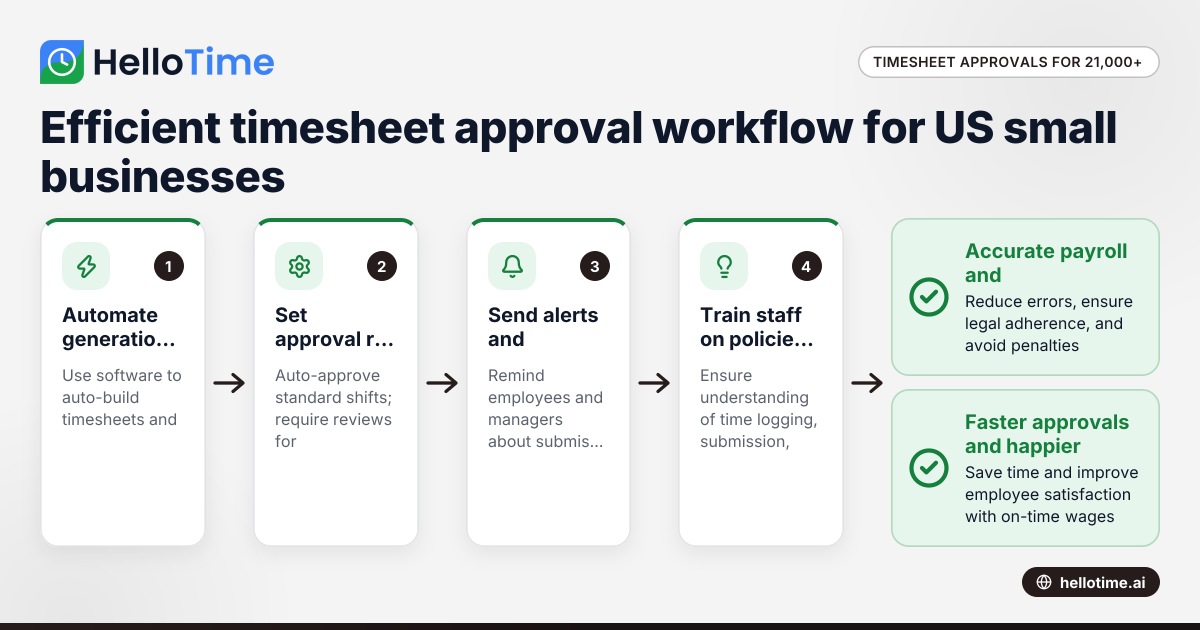
How United States Small Businesses Can Handle Timesheet Approval Workflows with Over 21,000 Minutes Logged
Managing timesheet approvals efficiently becomes critical for US small businesses logging large volumes of employee hours, such as over 21,000 minutes
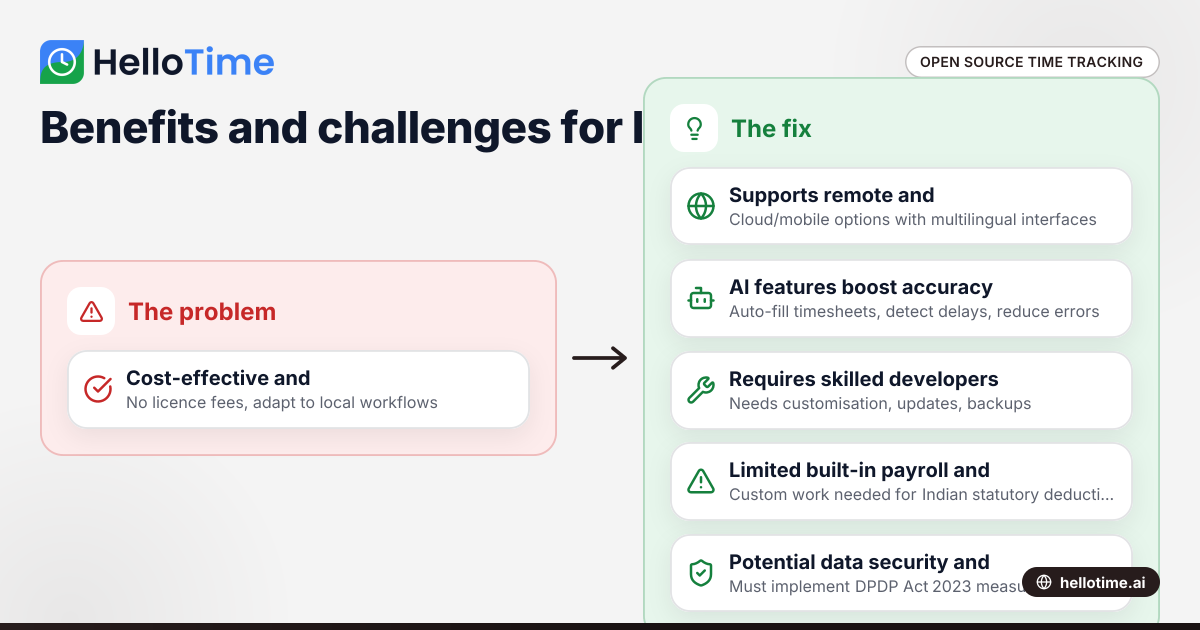
Open Source Time Tracking Tools for Indian Agencies: Benefits and Considerations
Open source time tracking tools are software with publicly accessible code, letting Indian agencies use and customise them without licence fees. They.
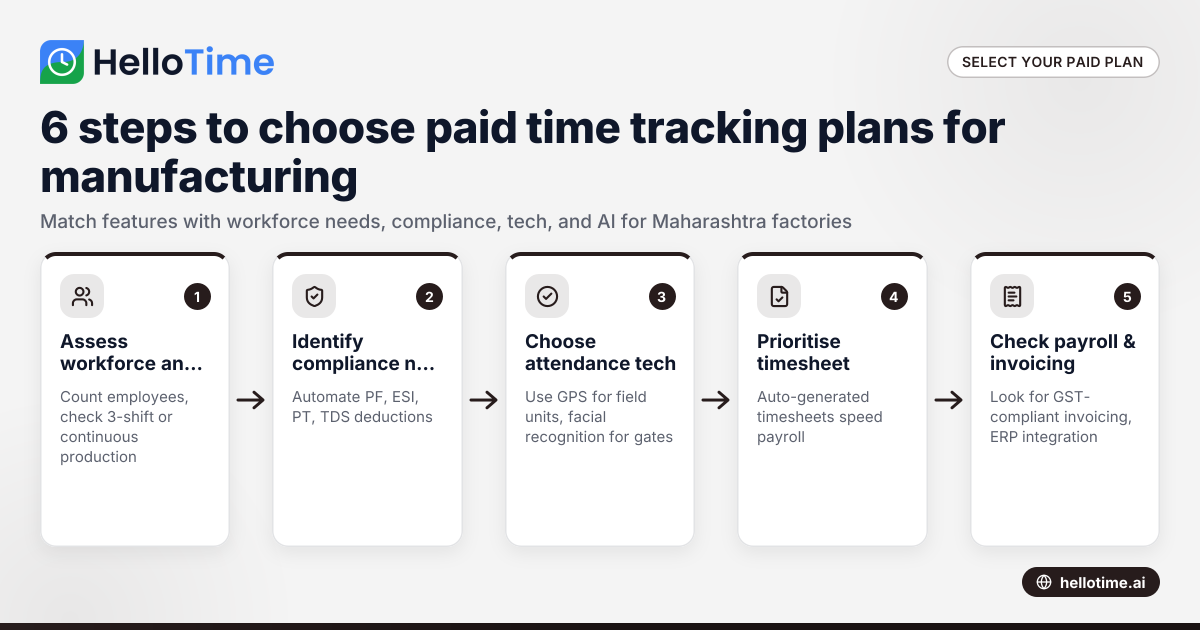
Choosing the Best Paid Plans for Manufacturing Time Tracking Software in Maharashtra, India
Choosing the right paid plan for manufacturing time tracking software in Maharashtra helps your factory optimise labour costs, streamline shift.