Understanding Data Rights and GDPR Compliance for Time Tracking in United Kingdom Businesses
Understanding Data Rights and GDPR Compliance for Time Tracking in United Kingdom Businesses Data rights are legal protections that give individuals.
The HelloTime team
6 min read
On this page
Understanding Data Rights and GDPR Compliance for Time Tracking in United Kingdom Businesses
Data rights are legal protections that give individuals control over how their personal information is collected and used. For UK businesses using time tracking, complying with these rights under the UK GDPR is essential to safeguard employee privacy and avoid penalties.
Key takeaways
- Data rights protect personal information under UK GDPR and the Data Protection Act 2018.
- Time tracking must follow GDPR principles like lawfulness, transparency, and data minimisation.
- Employees have rights to access, correct, and sometimes object to their personal time data.
- Maintain records and conduct assessments to demonstrate compliance.
- Using secure, GDPR-compliant time tracking software helps manage data rights efficiently.
- Understanding the "ai data right" is important as AI tools increasingly process workforce data.
What does "data right" mean for UK businesses using time tracking?
Data rights give employees control over their personal data collected by employers, such as attendance and location information. Under the UK GDPR, businesses must process time tracking data lawfully, transparently, and only as necessary.
This means your time tracking software must:
- Have a lawful basis like legitimate interests or employment contract
- Collect data for clear, specific purposes
- Limit data to what is necessary and keep it accurate
- Store data securely and for no longer than needed
For example, if your Manchester-based team uses GPS clock-ins, you must explain why location data is collected and how long it is kept.
How do employees’ data rights affect time tracking?
Employees have important rights regarding their time tracking data. They can request access to their records, ask for corrections if timesheets are wrong, and object to certain data processing. However, rights like erasure are limited when records must be kept for legal reasons.
Respecting these rights means setting up clear processes to handle data access or correction requests quickly and accurately. This promotes trust and helps avoid breaches of UK GDPR.
What is the "ai data right" and why does it matter?
The "ai data right" relates to how UK laws and ethics address AI systems processing personal data, including employee time records. When AI analyses attendance or shifts, businesses must ensure transparency, fairness, and protect workers’ rights.
This means informing staff if AI assists in decisions affecting pay or hours and allowing human review of automated outcomes. Compliance with ai data right principles reduces risks of bias and protects employee privacy.
How can UK employers ensure GDPR compliance in time tracking?
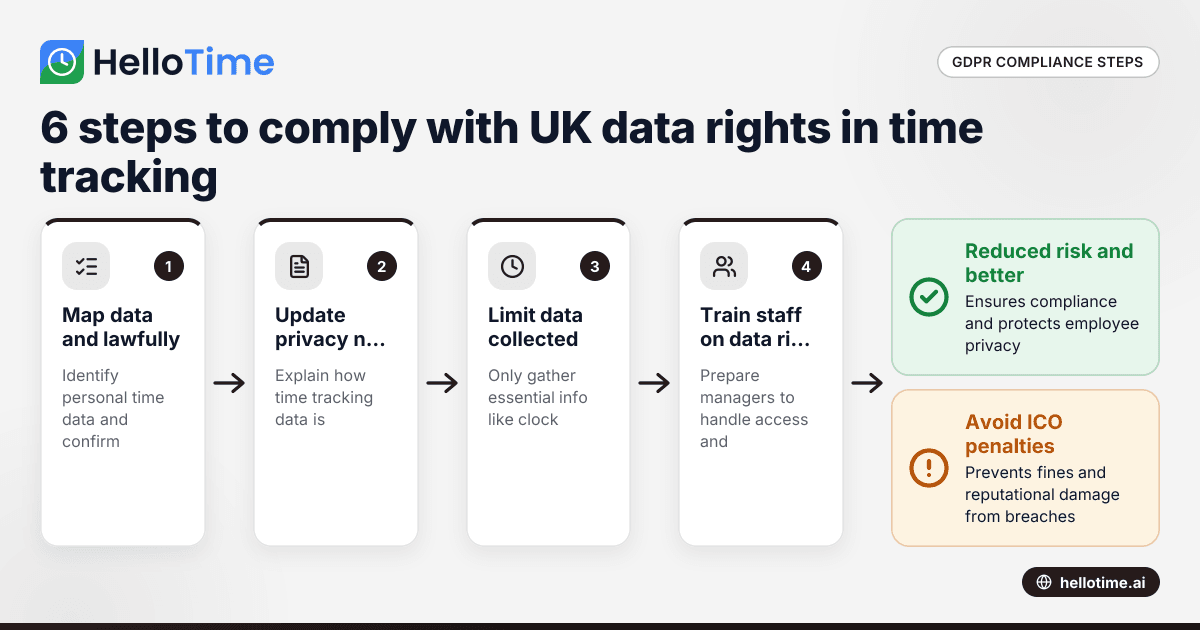
How can UK employers ensure GDPR compliance in time tracking? UK businesses should review data collection, provide clear privacy information, limit data to what’s necessary, and train staff on rights. Using GDPR-compliant software helps enforce these steps effectively.
To implement this:
- Map what personal data you collect and confirm lawful basis.
- Update privacy notices to explain time tracking uses.
- Collect only essential data like clock times, not extra details.
- Train managers to respect and process employee data requests.
- Use software with encryption, access controls, and audit logs.
- Keep records of processing and data protection assessments.
Following this reduces risk and supports compliance with UK data laws.
What happens if a UK company does not follow data rights regulations?
What happens if a UK company does not follow data rights regulations? Non-compliance with GDPR can lead to investigations by the ICO, fines up to £17.5 million or 4% of turnover, and damage to reputation.
The ICO enforces data protection rules and can audit companies failing to respect employee data rights. If time tracking data is mishandled or rights denied, enforcement actions and corrective requirements follow. For UK firms, this highlights the importance of thorough data rights management.
What types of time tracking data are considered personal data?
Time tracking data is personal data when it identifies an individual. This includes employee names, ID numbers, clock-in/out times, GPS locations, leave requests, job codes, and biometric data like facial recognition.
Because this data reveals individual work patterns, businesses must handle it with care, applying data minimisation and strict access controls under UK GDPR.
How should businesses manage data retention and deletion?
Businesses must retain time tracking data only as long as legally necessary, often up to six years for tax compliance. When data is no longer needed, it should be securely deleted or anonymised.
Best practice includes defining retention periods in policies, automating deletion where possible through software, and securing backups. Regular reviews of retained time data help avoid over-retention and data protection risks.
How does using HelloTime help with data rights and GDPR compliance?
Using HelloTime supports GDPR compliance by securing employee time data with encryption and controlled access. It automates timesheet creation with audit trails and offers tools for handling data access or correction requests promptly. HelloTime includes GDPR-friendly GPS and tablet kiosk clock-ins, with options to customise and minimise data collected.
Together, these features uphold transparency and accountability, making compliance with ai data right and UK data protection laws easier to manage.
Discover HelloTime’s benefits for your business on the features and pricing pages.
Frequently asked questions
What is the lawful basis for processing employee time tracking data?
Most UK employers rely on ‘performing a contract’ or ‘legitimate interests’ as their basis. Time data is necessary for payroll and scheduling. Consent is rarely used since it may not be freely given in employment contexts, but transparency is essential.
Can employees request deletion of their time tracking data?
Employees can request deletion, but employers must retain data where required by law, such as for payroll or tax records. Valid erasure requests unrelated to legal obligations should be honoured promptly.
How often should time tracking privacy notices be updated?
Privacy notices should be reviewed at least annually or when data processing changes. This ensures employees stay informed how their time and attendance data is used, supporting compliance.
Does AI use in time tracking affect employee data rights?
Yes. AI processing increases requirements for transparency and fairness. Employees must be told if AI impacts scheduling or pay, and have rights to challenge automated decisions to protect their data rights.
What security measures protect time tracking data?
Good protections include encrypted storage, secure logins, role-based access, and regular software updates. Staff training on data protection also helps prevent data breaches and ensures proper handling of employee data.
Read next
This article covers one part of a bigger topic. For the complete picture, read our guide to data right.
Keep reading
Related articles
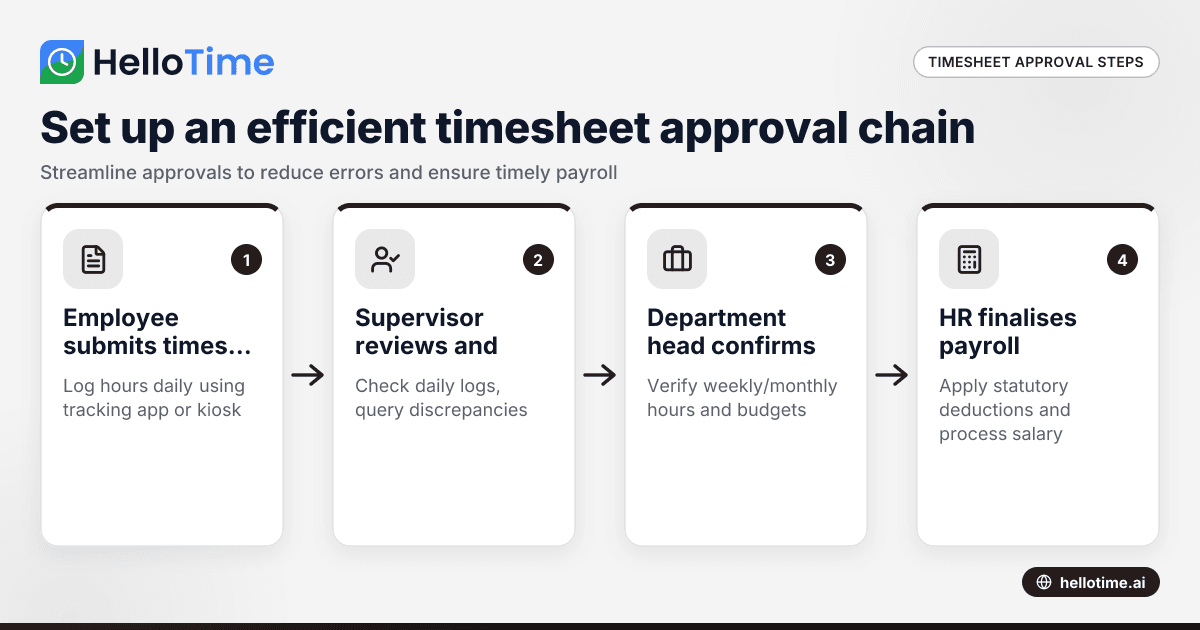
How to Set Up an Efficient Timesheet Approval Chain for Indian SMEs
How to Set Up an Efficient Timesheet Approval Chain for Indian SMEs This guide is for owners, HR, and operations managers at Indian small and.
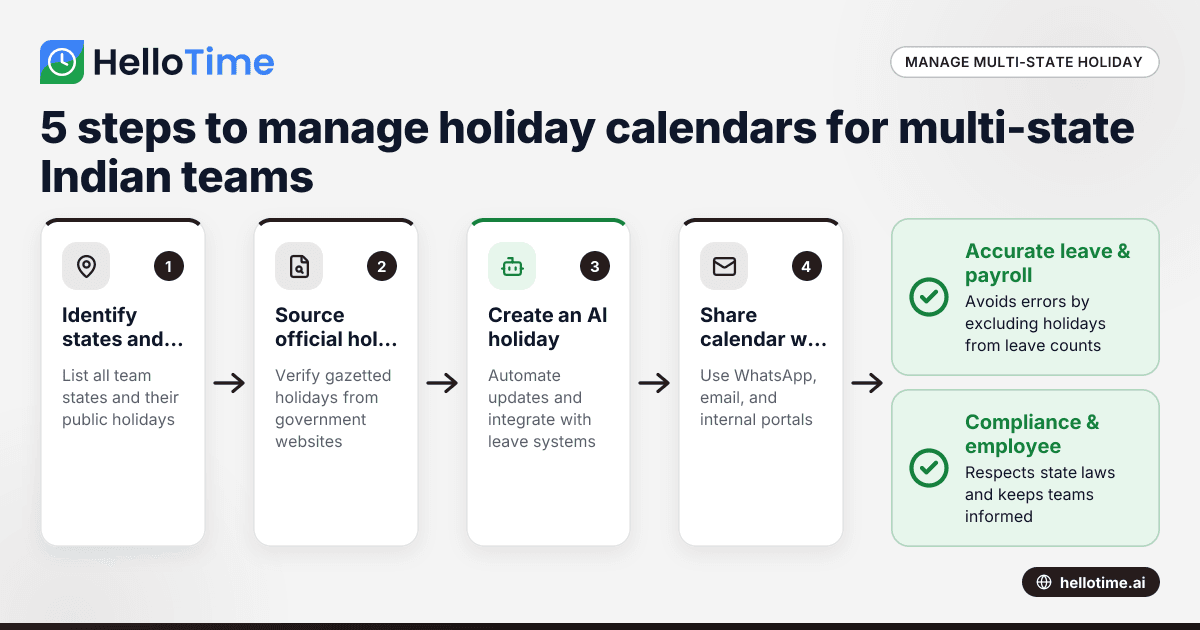
How to Manage Holiday Calendars for Multi-State Teams in India
Managing holiday calendars for multi-state teams in India can be complex due to different state-specific holidays and observances. By the end of this.
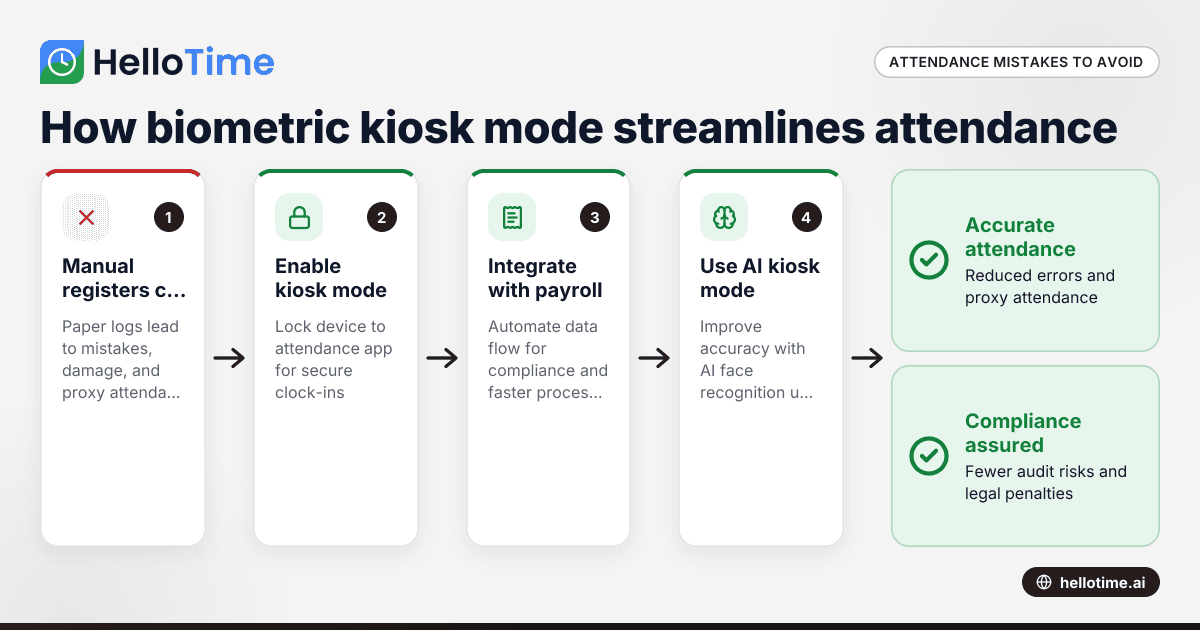
How Biometric Attendance Kiosk Mode Can Streamline Workforce Management for Indian Manufacturing Units
Manufacturing units in India often struggle with managing workforce attendance accurately and efficiently. Errors in attendance tracking lead to.