Understanding Last Drawn Pay Calculation for United States Small Businesses
Understanding Last Drawn Pay Calculation for United States Small Businesses Last drawn pay is the final regular wage an employee receives before.
The HelloTime team
7 min read
On this page
Understanding Last Drawn Pay Calculation for United States Small Businesses
Last drawn pay is the final regular wage an employee receives before leaving a job. For small businesses in the United States, accurately calculating last drawn pay ensures compliance with wage laws and smooth transition for departing employees.
Key takeaways
- Last drawn pay includes wages and agreed-upon benefits up to the employee’s last working day.
- Federal and state laws regulate timeliness and methods of last pay delivery.
- Final wages often cover accrued but unused paid leave and may include commissions.
- Payroll errors on last pay can lead to penalties, legal disputes, and damage to employer reputation.
- AI last drawn pay calculation tools can automate accuracy and compliance.
- Clear policies and communication help reduce conflicts during employee offboarding.
What is Last Drawn Pay and Why Does It Matter?
Last drawn pay consists of all the earnings owed to an employee at the end of their employment period. This generally includes the final hourly or salaried wages, payment for any unused vacation or sick leave where applicable, bonuses or commissions earned but unpaid, and frequently prorated benefits.
For small business owners and HR professionals in the U.S., understanding last drawn pay is critical because wage and hour laws require paying all owed wages promptly. The Fair Labor Standards Act (FLSA) dictates minimum federal standards but states often impose stricter rules concerning timing and calculation. For example, California requires immediate payment on termination, while others allow a few days.
Failure to pay the correct last drawn pay promptly may expose a business to claims, fines, and reputational risk. Thus, having clear calculation methods and documentation is essential.
What Does Last Drawn Pay Include in the United States?
Last drawn pay includes all compensation an employee earned but has not yet received. This typically includes:
- Base salary or hourly wages up to the final day.
- Overtime for any qualifying hours worked.
- Accrued but unused paid time off (PTO) or vacation, depending on state law.
- Applicable bonuses, commissions, and incentive pay earned.
- Reimbursements for business expenses owed on termination day.
For example, a retail manager in Chicago leaving on June 15 may receive wages through June 15, a bonus earned for the quarter, and pay for any unused vacation hours accrued under company policy or Illinois law.
How is Last Drawn Pay Calculated Accurately?
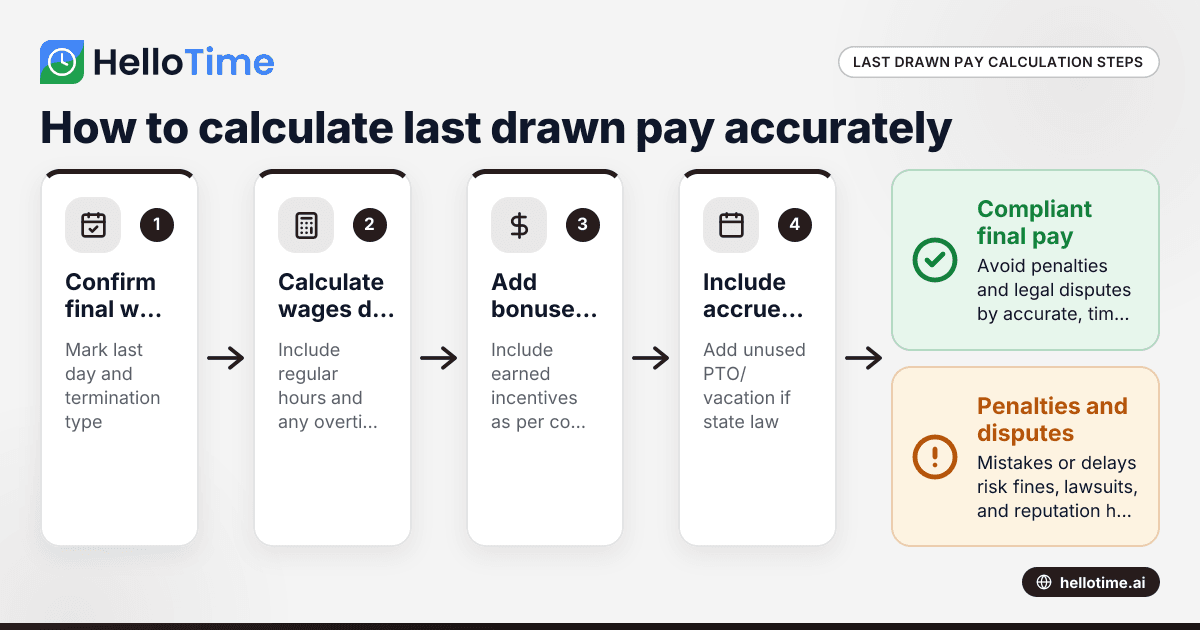
Last drawn pay calculation depends on the employee's pay structure and company policy but follows federal and state mandates. Here’s a step-by-step guide:
- Determine the final work date and confirm if the termination was voluntary or involuntary.
- Calculate wages due for hours worked to that date, including any overtime.
- Add earned commissions or bonuses if contractual or company policy requires.
- Calculate accrued leave payouts if state law or agreement mandates payment for unused leave.
- Deduct applicable taxes and benefits premiums.
- Prepare the final pay stub showing all items clearly.
- Deliver last pay within the timeframe mandated by state law.
Many businesses now use payroll software or AI last drawn pay tools to minimize human error and maintain compliance. Automated systems integrate time tracking, leave balances, and commission calculations to provide accurate last drawn pay in seconds.
Can Employers Delay Last Drawn Pay?
Employers must adhere to state-specific laws on when final wages must be paid. Generally, delaying last drawn pay beyond the legal limit can lead to penalties.
States vary considerably: For instance, Texas requires payment by the next regular payday; California mandates payment immediately upon termination; New York requires payment by the next scheduled payday. A small business owner in Houston or Detroit must verify their state’s deadline to avoid noncompliance.
Employers may have internal policies on paycheck delivery but cannot override state laws regarding timing. If employees do not receive final wages on time, they may file wage claims or lawsuits.
How Does AI Last Drawn Pay Technology Help Small Businesses?
AI last drawn pay technology combines payroll data with leave records and time tracking to calculate final wages automatically. This reduces manual errors and speeds up processing.
For example, a small consulting firm in Detroit using AI-powered payroll tools can instantly compute accrued hours, bonuses, and overtime, then generate accurate pay stubs and reports. This efficiency frees HR teams from complex manual calculations and improves employee satisfaction during transitions.
Automated compliance checks also reduce risks related to missing deadlines or miscalculations, helping businesses avoid costly penalties and grievances.
What Are the Common Challenges in Last Drawn Pay Calculations?
Small businesses often face challenges like:
- Tracking varying pay elements like commissions from different projects.
- Applying different state laws for employees who relocate or work remotely.
- Calculating payout for accrued paid leave when policies aren’t clear.
- Timing wage payments correctly within different state requirements.
- Managing deductions such as for benefits or wage garnishments while ensuring legal compliance.
Maintaining transparent policies and using reliable payroll systems help overcome these difficulties.
How Should Small Businesses Document Last Drawn Pay?
Proper documentation involves:
- Keeping detailed records of hours worked, commissions, bonuses, PTO accruals.
- Issuing final pay stubs or wage statements that itemize all components.
- Retaining proof of payment within required timeframes.
- Communicating clearly with departing employees about their final pay and entitlements.
This documentation serves as evidence in any dispute or audit.
What Does the Law Say About Paying Accrued Vacation on Termination?
Federal law does not require payment for unused vacation at termination, but most states have rules governing this. For example:
- California requires accrued vacation to be paid at separation.
- Illinois treats accrued vacation as wages, so payment is required.
- Texas does not require payout unless a written policy states it.
Small businesses must review their state laws and employee handbooks to understand obligations and include these in last drawn pay calculations.
What Happens If There Are Errors in Last Drawn Pay?
Payroll mistakes in last drawn pay can trigger:
- Employee complaints and formal wage claims.
- Interest and penalties assessed by state labor departments.
- Legal fees and settlements from lawsuits.
- Damage to trust and future recruitment efforts.
Employers should audit final pay calculations carefully, use automated tools where possible, and respond promptly to any employee queries.
How Can Small Businesses Stay Compliant With Last Drawn Pay Rules?
- Understand your state’s payment deadlines and required pay elements.
- Maintain clear policies on final wage calculation.
- Use timesheet and payroll software with automated compliance features.
- Train HR and payroll staff regularly.
- Document final pay details and delivery proof meticulously.
- Seek legal advice if unsure about complex cases.
Ready to simplify last drawn pay for your business?
Exploring advanced time tracking and payroll features can streamline your offboarding process. Check out HelloTime’s features that help small businesses calculate accurate last drawn pay effortlessly. Visit pricing to find a plan that suits your needs.
Frequently asked questions
What is included in last drawn pay in the United States?
Last drawn pay includes regular wages or salary up to the last working day, overtime, accrued unused paid leave if legally required, earned commissions or bonuses, and any reimbursable expenses due on termination.
When must last drawn pay be paid by employers?
It depends on state law. Some states require payment immediately upon termination, while others allow payment by the next scheduled payday. Employers must follow the most stringent rule in their jurisdiction.
Is accrued vacation always paid at termination?
No. Federal law does not require it, but many states do. Check your state laws and company policies. If payout is required, include accrued vacation in last drawn pay.
How can AI last drawn pay calculation tools help?
AI tools automate time tracking, leave balance calculations, commissions, and deductions to generate accurate last pay quickly, reducing errors and ensuring compliance with laws.
What penalties exist for late last drawn pay?
Penalties vary by state and can include fines, interest on unpaid wages, and lawsuits. Employers risk legal action and damage to their reputation if they fail to pay timely.
Can deductions be made from last drawn pay?
Deductions can be made if authorized by law and employee agreement. Typical deductions include taxes, benefits premiums, and lawful wage garnishments. Unauthorized deductions may violate wage laws.
Read next
This article covers one part of a bigger topic. For the complete picture, read our guide to last drawn.
Keep reading
Related articles
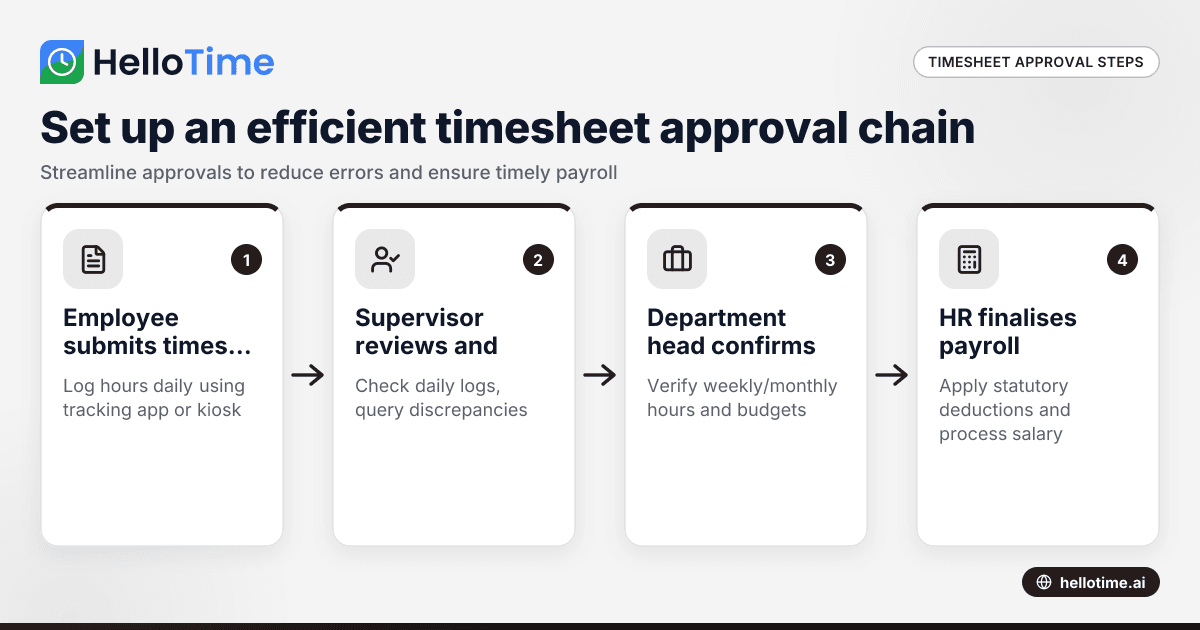
How to Set Up an Efficient Timesheet Approval Chain for Indian SMEs
How to Set Up an Efficient Timesheet Approval Chain for Indian SMEs This guide is for owners, HR, and operations managers at Indian small and.
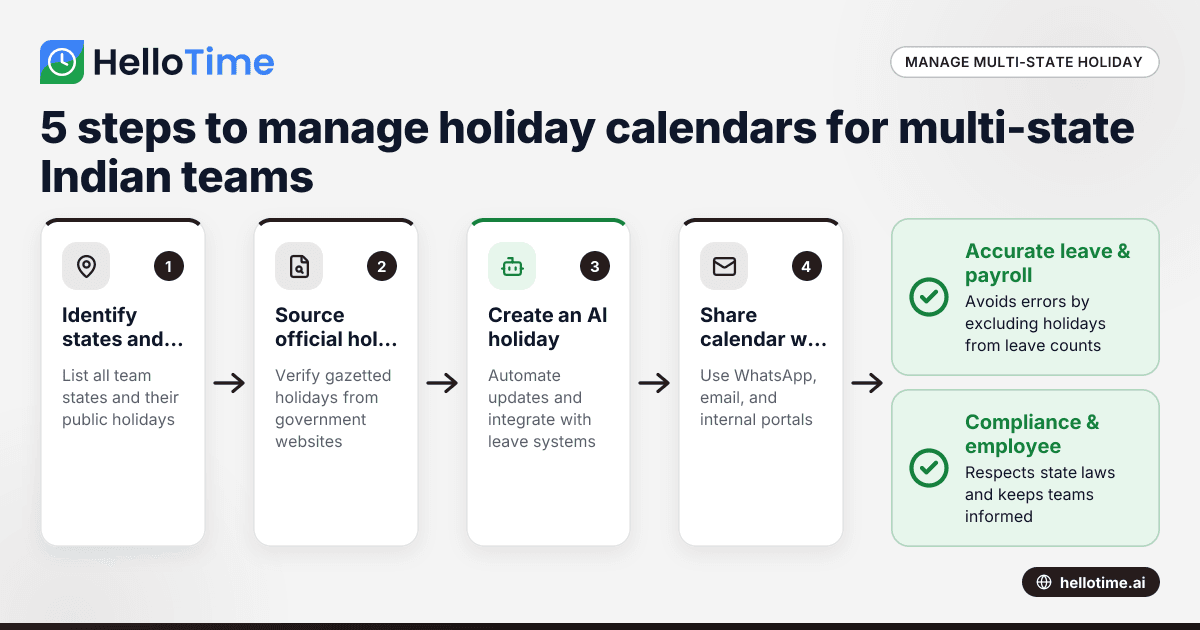
How to Manage Holiday Calendars for Multi-State Teams in India
Managing holiday calendars for multi-state teams in India can be complex due to different state-specific holidays and observances. By the end of this.
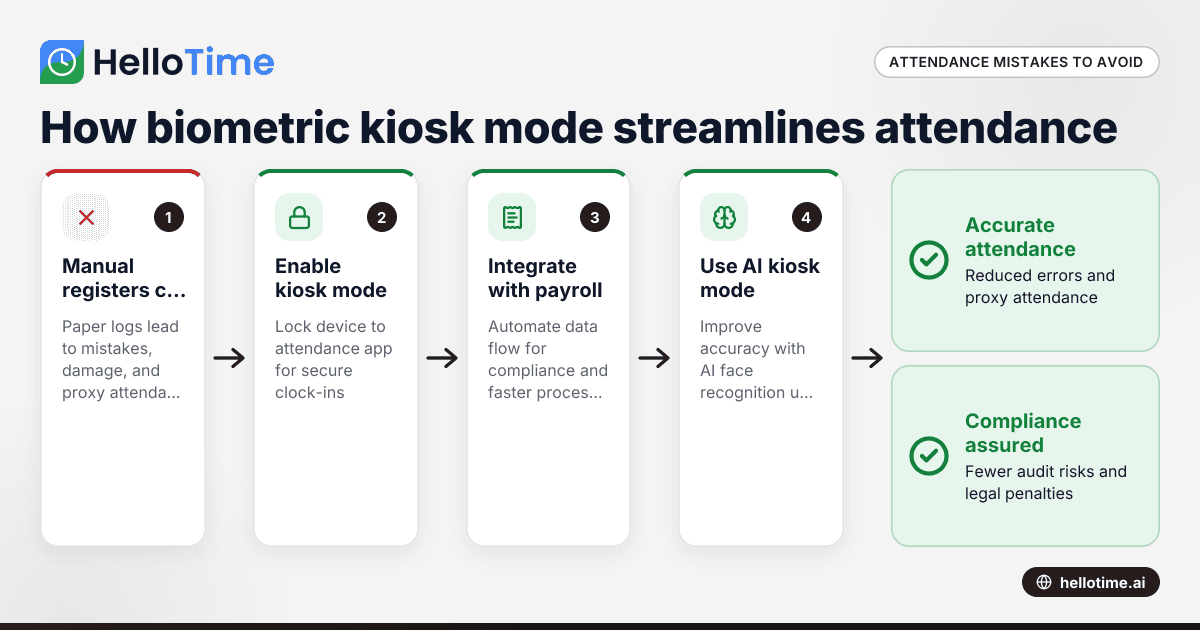
How Biometric Attendance Kiosk Mode Can Streamline Workforce Management for Indian Manufacturing Units
Manufacturing units in India often struggle with managing workforce attendance accurately and efficiently. Errors in attendance tracking lead to.