What SOC 2 Type II Compliance Means for United States Small Businesses Using Time Tracking Software
SOC 2 Type II compliance is an auditing standard that evaluates a effectiveness of a company’s controls for security, availability, processing.
The HelloTime team
6 min read
On this page
SOC 2 Type II compliance is an auditing standard that evaluates a effectiveness of a company’s controls for security, availability, processing integrity, confidentiality, and privacy over time. For small US businesses using time tracking software, it ensures that providers protect sensitive employee and business data consistently.
Key takeaways
- SOC 2 Type II audits assess operational effectiveness of security controls over a period of time.
- Compliance is essential for small businesses handling payroll and employee data with time tracking tools.
- SOC 2 compliance reassures clients and partners about the safety and integrity of your software systems.
- AI SOC Type frameworks can enhance automated monitoring of controls during audits.
- Understanding SOC 2 requirements helps US small businesses select trustworthy time tracking platforms.
- SOC 2 Type II differs from Type I by verifying ongoing control effectiveness rather than a single point in time.
What is SOC 2 Type II compliance and why does it matter for small businesses?
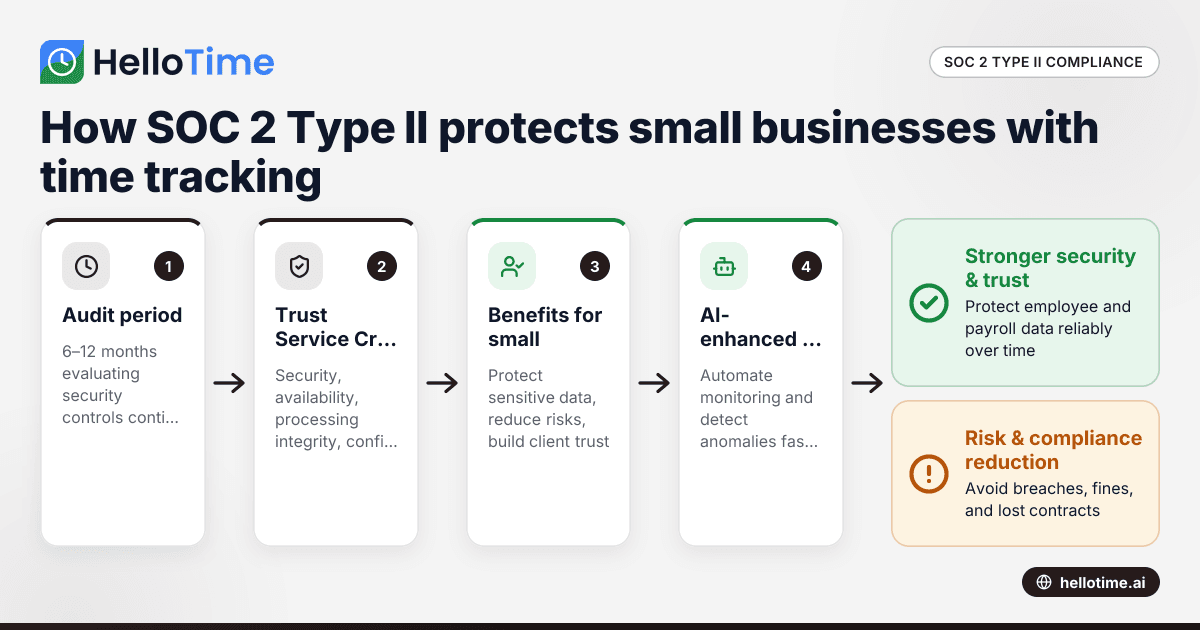
SOC 2 Type II is a detailed audit evaluating a company’s controls for security, availability, processing integrity, confidentiality, and privacy over 6 to 12 months. It shows that time tracking providers safeguard employee and payroll data continuously.
Small businesses in the US benefit because SOC 2 Type II compliance:
- Confirms that sensitive employee and financial data in software are protected.
- Reduces risk of breaches, compliance violations, and fines.
- Builds trust with clients and workforce by proving data security.
This matters for businesses in cities like Chicago, Houston, or Detroit where data privacy and operational reliability influence client relationships and contracts.
How does AI SOC Type technology improve SOC 2 Type II audits?
AI SOC Type systems automate continuous monitoring and analysis of security controls using artificial intelligence. They identify anomalies and predict risks faster than manual audits.
This technology speeds up evidence gathering and increases accuracy in SOC 2 Type II audits, helping software providers maintain strong security over time. For time tracking platforms, AI can detect irregular clock-in patterns or data access, alerting admins promptly. This proactive approach enhances security and simplifies audit readiness.
What controls do SOC 2 Type II audits evaluate in time tracking software?
SOC 2 Type II audits assess five Trust Service Criteria relevant for US time tracking platforms:
- Security: Controls like firewalls, encryption, and secure authentication prevent unauthorized access.
- Availability: Ensures uptime, backups, and disaster recovery maintain system reliability.
- Processing Integrity: Guarantees time data is accurate and processed correctly without tampering.
- Confidentiality: Protects sensitive employee and payroll data from disclosure.
- Privacy: Manages personal data according to policies and laws such as CCPA where applicable.
Auditors review policies, procedures, technology, and logs to confirm controls work effectively throughout the audit period.
How can a small business select SOC 2 Type II compliant time tracking software?
Choose time tracking software by:
- Requesting current SOC 2 Type II audit reports and reviewing their scope.
- Confirming which Trust Service Criteria were audited, focusing on security and confidentiality.
- Verifying vendor experience with US businesses in your industry.
- Checking data hosting locations, encryption methods, and backup policies.
- Ensuring software integrates with payroll/accounting tools like QuickBooks or Stripe.
- Prioritizing automation features that simplify audit and compliance processes, such as HelloTime’s auto-built timesheets and approvals.
Picking SOC 2 Type II compliant software signals your commitment to security and reduces risks.
Why does SOC 2 Type II matter to your clients and workforce?
Clients paying hourly expect reliable, secure time tracking. SOC 2 Type II compliance:
- Provides assurance their project and billing data are secure.
- Minimizes billing errors, enhancing your credibility.
- Reassures employees that attendance and payroll data are protected.
- Helps meet client security requirements in contracts, especially in government or corporate accounts.
For small businesses across US sectors like retail or hospitality, this compliance is a competitive advantage.
What are the differences between SOC 2 Type I and Type II?
SOC 2 Type I assesses controls at one point in time to verify design effectiveness. SOC 2 Type II examines controls operating successfully over 6–12 months.
Type II reports carry more weight because they prove consistent security. Businesses should prefer vendors with Type II compliance for ongoing protection.
What if you operate without SOC 2 Type II compliant software?
Without SOC 2 Type II compliance, risks include:
- Greater chance of data breaches or operational failures.
- Inability to meet client or regulatory security expectations.
- Losing contracts or damaging reputation.
- Challenges responding to audits involving labor or payroll data.
US clients increasingly require SOC 2 Type II reports before signing contracts, so compliance opens doors widely.
How does SOC 2 Type II compliance fit with other US compliance requirements?
SOC 2 Type II complements US rules like:
- State labor laws requiring accurate employee hour records.
- IRS and payroll tax obligations demanding verifiable data.
- Data privacy regulations such as the California CCPA for handling personal info.
It is not a legal substitute but adds a strong operational security framework.
Ready to simplify compliance and time tracking?
Explore the features of HelloTime’s time tracking and workforce management platform tailored to US small businesses. See which plan matches your needs on our pricing page and start improving your operational efficiency with trusted compliance in mind.
Frequently asked questions
What is the difference between SOC 2 Type I and Type II?
SOC 2 Type I checks controls at a single point, while Type II verifies they work effectively over months. Type II gives stronger assurance your data stays protected consistently.
Is SOC 2 Type II compliance required by law in the US?
SOC 2 Type II isn’t legally required but is a widely accepted standard. Many clients want it as proof of strong security, so it helps win business.
How often do time tracking software vendors undergo SOC 2 Type II audits?
Most vendors conduct annual SOC 2 Type II audits to maintain up-to-date proof of control effectiveness.
Can small businesses achieve SOC 2 Type II compliance on their own?
SOC 2 Type II applies mainly to service providers. Small businesses should select time tracking vendors that already have this certification.
How does SOC 2 Type II compliance affect payroll processing?
It secures and verifies payroll data accuracy, helping meet IRS rules and making payroll smooth and trustworthy.
Does SOC 2 Type II cover physical security controls?
Yes. Audits review controls on physical access to data centers and offices to ensure secure environments.
For US small businesses, choosing SOC 2 Type II compliant time tracking software boosts data protection, client trust, and workforce management effectiveness. Visit HelloTime in the US to learn how compliance and convenience come together.
Read next
This article covers one part of a bigger topic. For the complete picture, read our guide to soc type ii.
Keep reading
Related articles
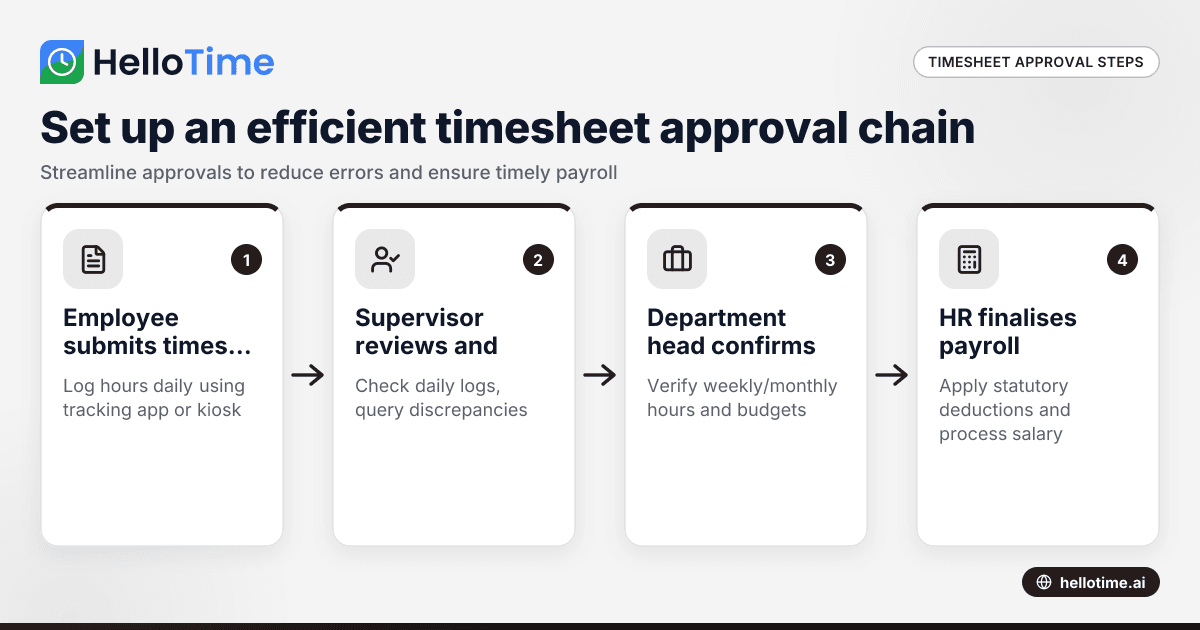
How to Set Up an Efficient Timesheet Approval Chain for Indian SMEs
How to Set Up an Efficient Timesheet Approval Chain for Indian SMEs This guide is for owners, HR, and operations managers at Indian small and.
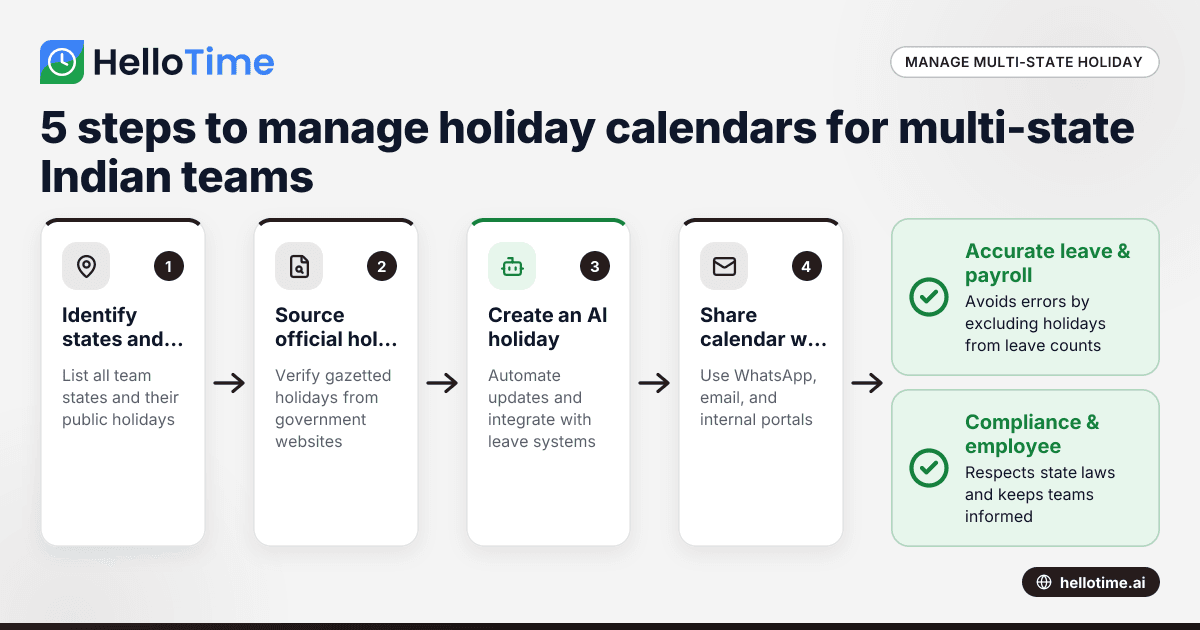
How to Manage Holiday Calendars for Multi-State Teams in India
Managing holiday calendars for multi-state teams in India can be complex due to different state-specific holidays and observances. By the end of this.
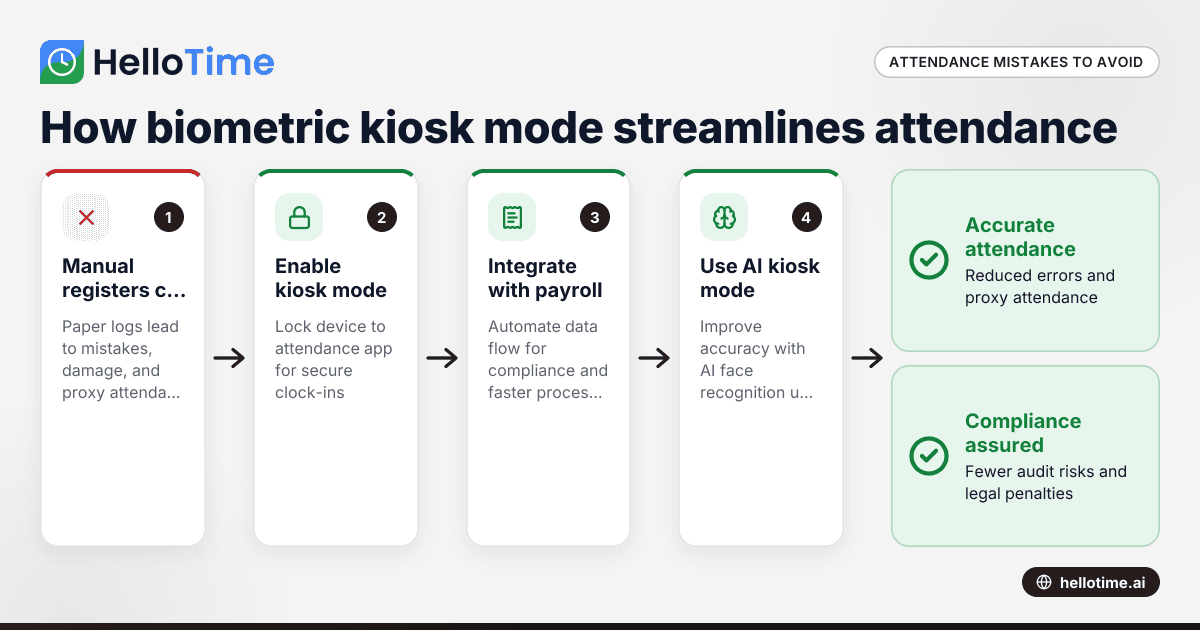
How Biometric Attendance Kiosk Mode Can Streamline Workforce Management for Indian Manufacturing Units
Manufacturing units in India often struggle with managing workforce attendance accurately and efficiently. Errors in attendance tracking lead to.