Effective Shift Scheduling and Timesheet Approvals for Cleaning Facility Services in the United States
Effective Shift Scheduling and Timesheet Approvals for Cleaning Facility Services in the United States Cleaning facility services rely on precise.
The HelloTime team
5 min read
On this page
Effective Shift Scheduling and Timesheet Approvals for Cleaning Facility Services in the United States
Cleaning facility services rely on precise shift scheduling and accurate timesheet approvals to meet client needs while controlling costs and complying with labor laws. Using technology like AI cleaning facility scheduling and digital attendance systems improves workforce efficiency and operational transparency.
Key takeaways
- Effective shift scheduling ensures proper staffing, reduces labor costs, and complies with US labor regulations.
- Timesheet approvals verify employee hours, prevent payroll errors, and boost accountability.
- AI cleaning facility scheduling automates shift creation and adapts schedules dynamically.
- Digital timesheets and geofenced clock-ins increase accuracy and reduce time theft.
- Managing leave and absences centrally helps maintain continuous service and employee satisfaction.
Why is shift scheduling important for cleaning facility services?
Shift scheduling is essential to match staffing levels with client needs, especially since cleaning often occurs outside regular business hours. Proper scheduling prevents understaffing or overstaffing, controls overtime costs, and complies with US labor laws. It also fosters fair workload distribution, supporting employee satisfaction and retention.
What are best practices for timesheet approvals in cleaning services?
Timesheet approvals confirm the accuracy of employee hours before payroll processing. Best practices include collecting hours per shift, verifying entries against schedules, resolving discrepancies, obtaining supervisor sign-off, and maintaining digital records for audits. These steps reduce errors and enhance transparency.
How can AI cleaning facility scheduling improve productivity?
AI cleaning facility scheduling automatically generates optimal work rosters by analyzing staff availability, skills, labor laws, and client demands. This saves managers time, reduces errors, quickly adjusts for absences, and ensures equitable workloads. Businesses in cities like Chicago or Houston can thus focus more on service quality.
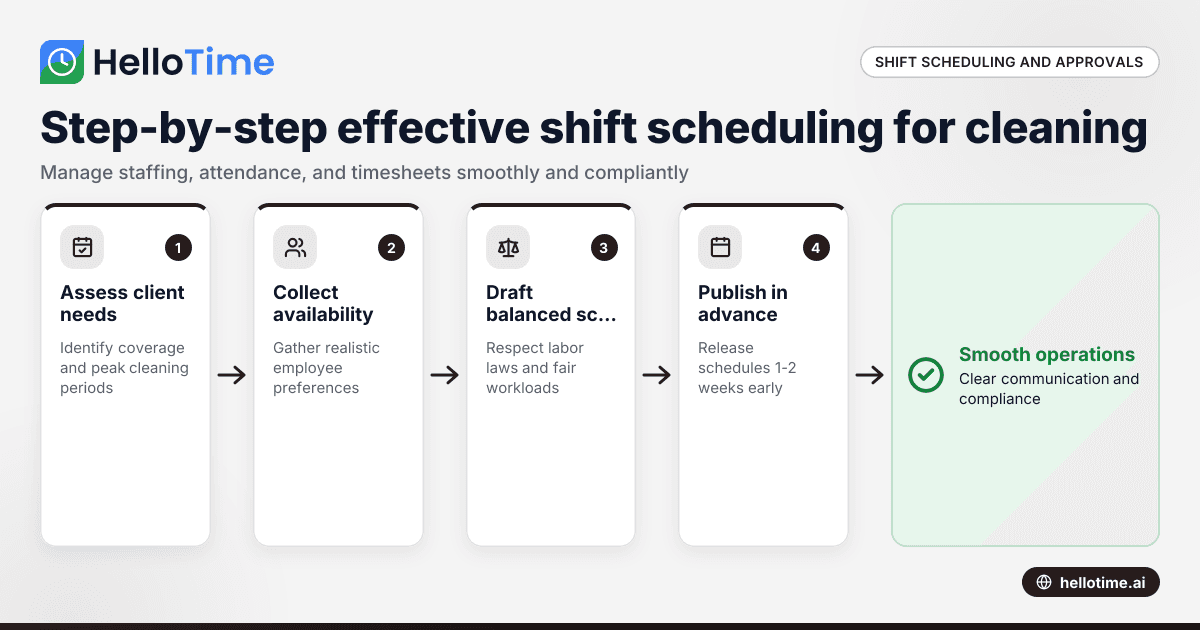
How do you implement effective shift scheduling step-by-step?
Effective shift scheduling follows these steps:
- Assess client coverage needs and peak periods.
- Collect employee availability and preferences realistically.
- Draft balanced schedules respecting labor laws like FLSA rest requirements.
- Publish schedules 1-2 weeks in advance to minimize changes.
- Allow shift swaps via a clear approval process.
- Monitor attendance using GPS and tablet kiosk with face recognition.
- Collect and approve timesheets using one-click tracking with auto-built records.
This method ensures smooth operations and clear communication between managers and staff.
What tools do cleaning facility managers use to approve timesheets efficiently?
Managers use integrated digital tools that automatically build timesheets from clock-in data, flag inconsistencies, offer mobile approvals, and keep audit trails. Integration with payroll and accounting systems like QuickBooks streamlines payroll while ensuring compliance. These tools reduce manual errors and speed processing.
How do labor laws affect shift scheduling and timesheet management in the US?
US cleaning services must follow FLSA, state wage rules, and break regulations. Overtime pay usually applies after 40 hours per week, and some states mandate meal and rest breaks. Accurate time recording for non-exempt employees is required. Noncompliance risks penalties, so using compliant software is crucial.
How to manage leave and absences in cleaning facility shift scheduling?
Managing leave digitally helps track approvals, forecast staffing gaps, and adjust schedules proactively. Clear communication around changes reduces confusion and maintains morale. Centralized leave management prevents double-booking and ensures continuous facility coverage.
Why use digital time tracking and geofenced clock-in systems?
Digital tracking eliminates error-prone paper records. Geofenced clock-ins confirm employees are onsite at client locations like Detroit or Houston before clocking in. This improves attendance accuracy, cuts down buddy punching, and simplifies payroll preparation, providing real-time visibility into workforce presence.
How do project profitability reports help cleaning facility services?
Profitability reports track billable hours versus client contracts, highlighting which jobs are most or least profitable. This data enables better resource allocation, competitive pricing, and identification of operational inefficiencies, helping cleaning businesses optimize profitability.
What are key challenges in cleaning facility shift scheduling and timesheet approvals?
Common challenges include last-minute cancellations, varying client site demands, managing mixed employment types, staying compliant across states, and error-prone manual processes. Workforce management software addresses these through automation, real-time data, and centralized control.
Conclusion
Effective shift scheduling and timesheet approvals are vital for US cleaning facility services to control costs, comply with laws, and satisfy clients. Leveraging AI cleaning facility scheduling, digital attendance, and automated approvals streamlines operations and enhances workforce morale. Explore our features to simplify scheduling and approvals, and compare plans at pricing to find your ideal solution.
Frequently asked questions
What is AI cleaning facility scheduling?
AI cleaning facility scheduling uses smart algorithms to automatically assign shifts based on employee availability, skills, legal requirements, and client needs. It saves time and reduces manual errors.
Can I use digital timesheets for compliance with US labor laws?
Yes, digital timesheets that capture exact clock-in and out times with supervisor approval meet US labor requirements when maintained securely and accurately for audits.
How early should cleaning staff receive their shift schedules?
Providing schedules at least one to two weeks in advance allows employees to plan and reduces last-minute changes, improving satisfaction and stability.
Are geofenced clock-ins reliable for cleaning teams?
Geofenced clock-ins confirm employees are at client sites when clocking in, improving attendance accuracy and reducing time theft.
How do I handle unexpected absences in my shift schedule?
Use workforce management software to quickly reassign shifts or call backup staff. Clear absence and swap procedures help maintain smooth operations.
Can shift scheduling software integrate with payroll systems?
Yes, tools like HelloTime integrate with payroll and accounting platforms such as QuickBooks, enabling streamlined payroll using approved timesheet data.
Read next
This article covers one part of a bigger topic. For the complete picture, read our guide to cleaning facility services.
Keep reading
Related articles
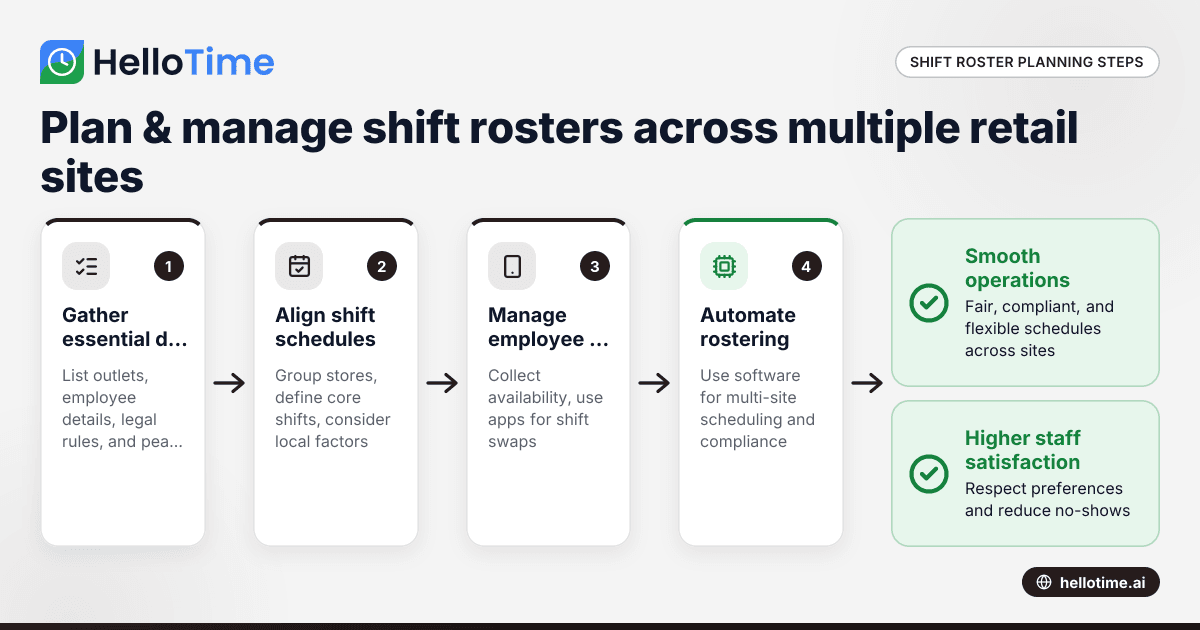
How to Plan and Manage Shift Rosters for Multi-Site Retail Chains in Mumbai and Bengaluru
How to Plan and Manage Shift Rosters for Multi-Site Retail Chains in Mumbai and Bengaluru This guide is for owners, HR and operations managers of.
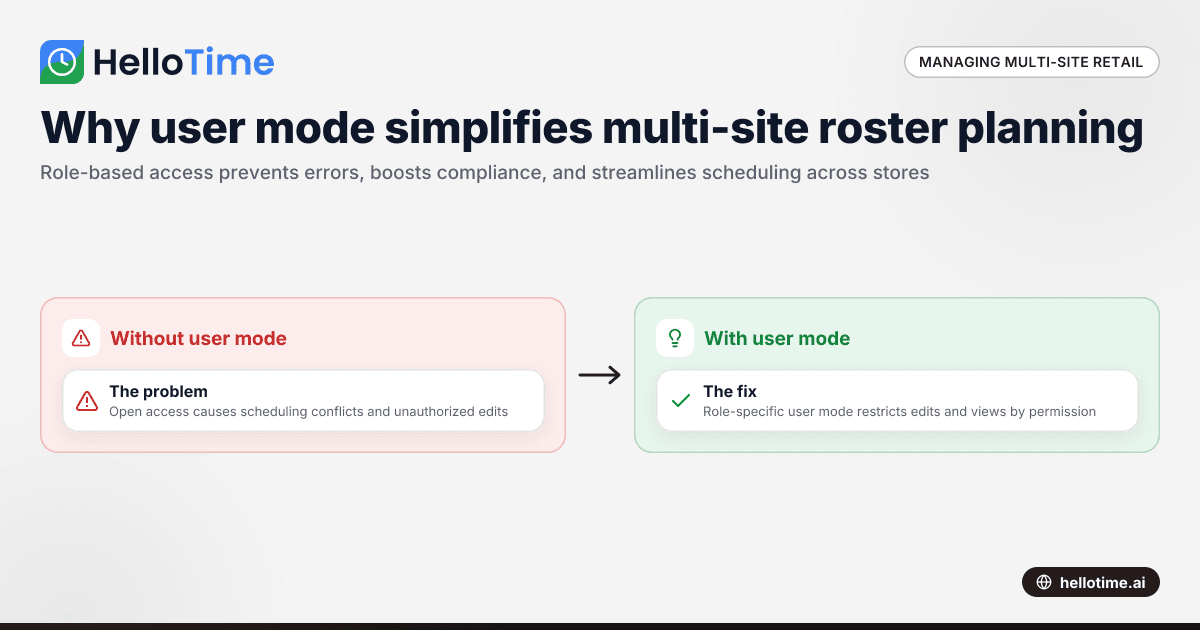
How User Mode Simplifies Managing Multi-Site Retail Roster Planning in the United States
User mode in multi-site retail roster planning customizes access and control for each user, matching their role. It prevents unauthorized schedule.
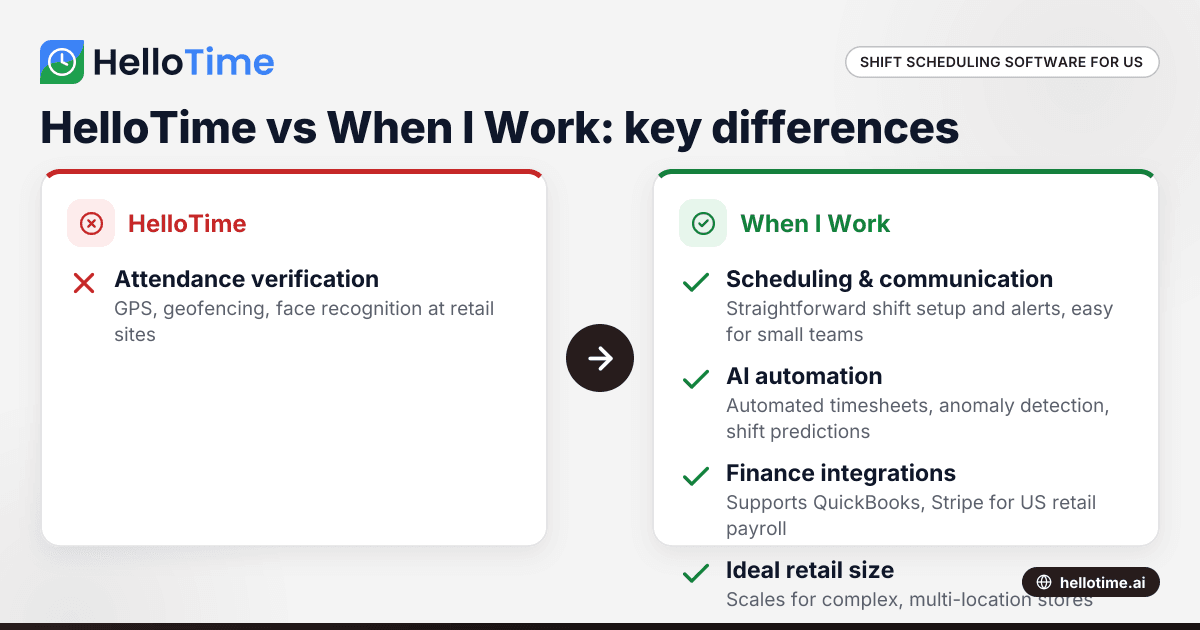
HelloTime vs When I Work: Choosing the Best Shift Scheduling Software for Retail Stores in the United States
HelloTime vs When I Work: Choosing the Best Shift Scheduling Software for Retail Stores in the United States Shift scheduling is crucial for retail.