How Manufacturing Factories in the United States Can Use Biometric Attendance Kiosks for Accurate Shift Tracking
Manufacturing factories in the United States can improve shift tracking accuracy by using biometric attendance kiosks. These kiosks use facial.
The HelloTime team
7 min read
On this page
Manufacturing factories in the United States can improve shift tracking accuracy by using biometric attendance kiosks. These kiosks use facial recognition or fingerprint scanning to record when employees clock in and out. This eliminates buddy punching and manual errors common with paper or swipe card systems.
Key takeaways
- Biometric attendance kiosks provide precise, real-time shift tracking for manufacturing factories.
- They reduce time theft and errors caused by manual or card-based attendance methods.
- Facial recognition kiosks are touchless, supporting hygiene and faster check-ins on factory floors.
- Integration with time tracking software streamlines payroll, compliance, and reporting.
- ai manufacturing factories are starting to adopt biometrics to boost productivity and data accuracy.
- Choosing the right kiosk involves considering factory layout, shift patterns, and connectivity options.
Why do manufacturing factories need biometric attendance kiosks?
Manufacturing factories usually operate multiple shifts with large numbers of hourly workers. Keeping track of exact clock-in and clock-out times by hand or through swipe cards leads to inaccuracies. These inaccuracies can inflate labor costs, create payroll headaches, and complicate compliance with labor regulations.
Biometric attendance kiosks provide a foolproof method to identify employees uniquely using features such as face recognition or fingerprints. This means no one else can clock in for them, drastically reducing buddy punching and time theft. It also speeds up the attendance process, reducing bottlenecks at shift start and end times.
How do biometric attendance kiosks improve shift tracking accuracy?
Biometric devices capture unique physical identifiers directly from the employee, providing a high-security clock-in method. When integrated with workforce management software, these kiosks automatically log timestamps that update the employee timesheets instantly.
Unlike traditional swipe cards that can be lost, shared, or damaged, biometrics rely on unalterable personal traits. This automated accuracy helps managers see who is present on the floor and precisely when. It also aids in quick approvals, improved payroll reconciliation, and better adherence to labor laws.
How does AI enhance biometric attendance kiosks in manufacturing factories?
AI manufacturing factories leverage artificial intelligence to improve the speed and accuracy of biometric recognition. AI algorithms optimize facial recognition by adapting to lighting conditions, handling masks or helmets, and distinguishing between employees in crowded entry points.
This technology reduces false rejections and speeds up throughput during shift changes. AI also allows kiosks to detect unusual attendance activity patterns in real-time, alerting supervisors to potential discrepancies or security risks promptly.
What types of biometric kiosks are best for manufacturing factories?
The most common biometric attendance kiosks used in manufacturing include:
- Facial recognition terminals: These use cameras to identify employees quickly and contactlessly. They are well-suited to environments where hygiene and speed are critical, such as food processing or automotive assembly lines.
- Fingerprint scanners: Fingerprint kiosks are reliable but require a touch surface, which may be less ideal for factories emphasizing sanitation.
- Hand geometry devices: Less common, these measure the shape and size of the hand but are not as widely adopted due to slower processing.
- Multi-biometric systems: Combining facial and fingerprint recognition improves verification accuracy and provides a backup if one method fails.
Facial recognition has become the preferred choice in many American manufacturing plants because it minimizes downtime and health concerns without compromising security.
How do manufacturing factories implement biometric attendance kiosks?
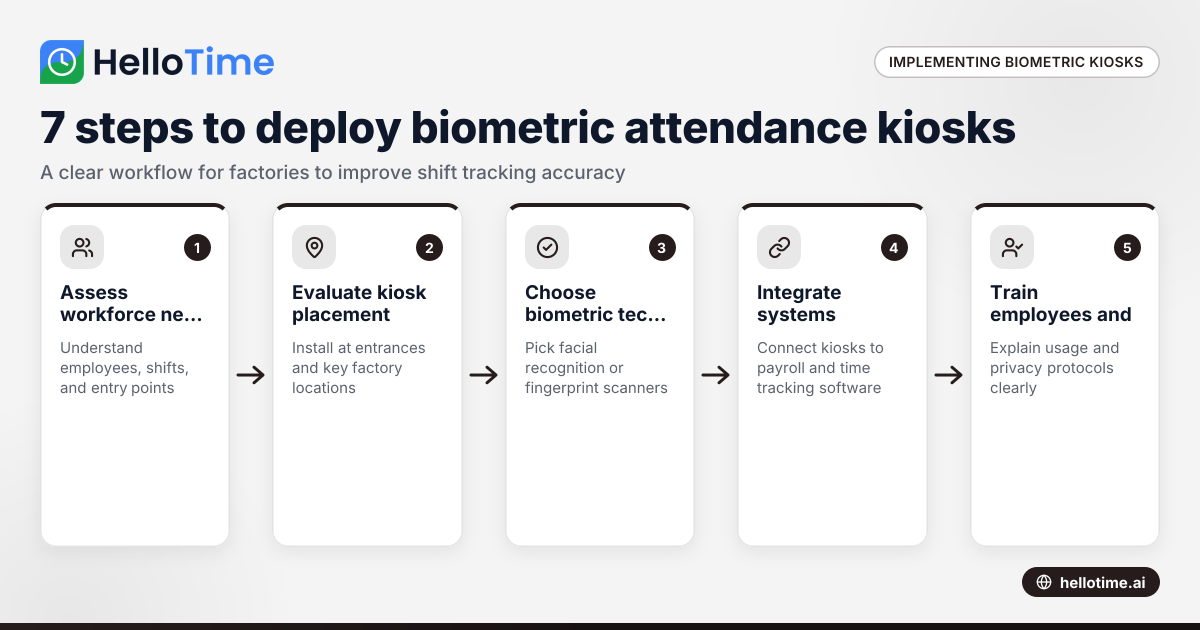
Implementing biometric attendance kiosks in your factory involves several key steps:
- Assess workforce needs: Understand the number of employees, shift schedules, and typical entry points.
- Evaluate kiosk placement: Install kiosks at main entrances, break rooms, or by workstations for efficiency.
- Choose biometric technology: Consider facial recognition for touchless entry or fingerprint scanners if preferred.
- Integrate with existing systems: Connect the kiosks with your time tracking and payroll software.
- Train employees and supervisors: Communicate usage protocols and privacy policies thoroughly.
- Pilot and adjust: Test the system during a trial period and fine-tune configurations to address any issues.
- Enforce compliance and privacy: Ensure kiosks comply with US labor laws and data privacy regulations.
Can biometric attendance kiosks reduce labor costs in manufacturing?
Yes, manufacturing factories can lower labor costs by minimizing time theft and streamlining payroll. Biometric systems eliminate buddy punching, where one employee clocks in on behalf of another. This practice artificially inflates paid hours by as much as 2-3% in manual systems.
Accurate attendance data leads to better project costing, shift allocation, and overtime control. Using kiosks reduces administrative time spent verifying attendance and correcting errors. With integration to invoicing and project profitability reports, manufacturers gain insights to optimize labor expenditure.
What privacy concerns do US manufacturing factories face with biometric data?
Collecting biometric data raises concerns about employee privacy and data security. US manufacturers must comply with federal laws and any applicable state laws regulating biometric information, such as Illinois' Biometric Information Privacy Act (BIPA), though not all states have these laws.
Factories should clearly notify employees about data collection, storage, usage, and destruction policies. Data must be securely encrypted and access limited to authorized personnel. With proper safeguards, biometric data can be handled responsibly without violating privacy rights.
How do biometric kiosks assist with shift scheduling and leave management?
When biometric kiosks integrate with time tracking software, they automate start and end times with precision. This enables automatic generation of accurate timesheets aligned to scheduled shifts. Managers can quickly identify absenteeism or late arrivals and make roster adjustments.
Leave requests can also be tied to attendance records to prevent unauthorized overlap or excessive overtime. This streamlining helps HR teams maintain compliance, improve employee satisfaction through fair scheduling, and reduce administrative overhead.
How can manufacturing factories ensure successful kiosk adoption?
Boosting adoption requires clear communication and easy user experience. Train staff in advance, explaining how kiosks benefit everyone through faster, error-free attendance. Offer hands-on demos and provide tech support during the initial rollout.
Ensure the hardware is reliable and fast to avoid bottlenecks during peak clock-in/out times. Gathering employee feedback helps address concerns and improve comfort with the system. Rewarding compliance can further encourage consistent use.
Using a solution designed for manufacturing environments enhances success. For example, HelloTime offers features tailored to factory shift management including biometric attendance kiosks that integrate seamlessly with scheduling, leave, and payroll modules.
Explore how biometric attendance kiosks can revolutionize your factory’s shift tracking by visiting our features or evaluate the plans that suit your business at pricing.
Frequently asked questions
What makes biometric attendance more accurate than traditional methods?
Biometric attendance uses unique physical traits like facial features or fingerprints, which cannot be easily lost, copied, or shared. This eliminates buddy punching and reduces errors caused by manual entry or faulty card swipes, ensuring precise and reliable attendance data.
Are biometric kiosks difficult to maintain in a manufacturing setting?
Most modern biometric kiosks are built rugged for industrial use and require minimal maintenance. Regular cleaning of sensors or cameras and software updates keep them working optimally. Face recognition devices require even less contact, reducing wear and maintenance needs.
How do biometric kiosks comply with US employee privacy laws?
Factories must inform employees about biometric data collection and usage. Data should be encrypted and access controlled to prevent misuse. Adhering to relevant state laws like Illinois’ BIPA (where applicable) and following best practices in data security helps maintain compliance.
Can biometric kiosks handle multiple shifts and large teams efficiently?
Yes, biometric systems are designed to process many users quickly, even during high-volume shift changes typical in manufacturing. AI-enhanced kiosks can manage large teams by recognizing faces rapidly and accurately, preventing queues or delays.
Is it expensive for small or mid-sized factories to implement biometric systems?
Costs vary based on the number of kiosks and integration complexity but have become more affordable. The return on investment through reduced labor costs, fewer payroll errors, and increased operational efficiency often justifies the initial expense.
What is the role of AI in biometric attendance for manufacturing?
AI enhances biometric accuracy and speed by adapting to changing environments and identifying subtle features reliably. ai manufacturing factories use AI-driven kiosks for real-time attendance verification, anomaly detection, and smoother workflow management.
This practical guide helps US manufacturing factories transition to biometric attendance kiosks for reliable, efficient shift tracking that supports productivity and compliance. For more details, try HelloTime’s tailored solutions at features or compare pricing plans at pricing.
Read next
This article covers one part of a bigger topic. For the complete picture, read our guide to manufacturing factories.
Keep reading
Related articles
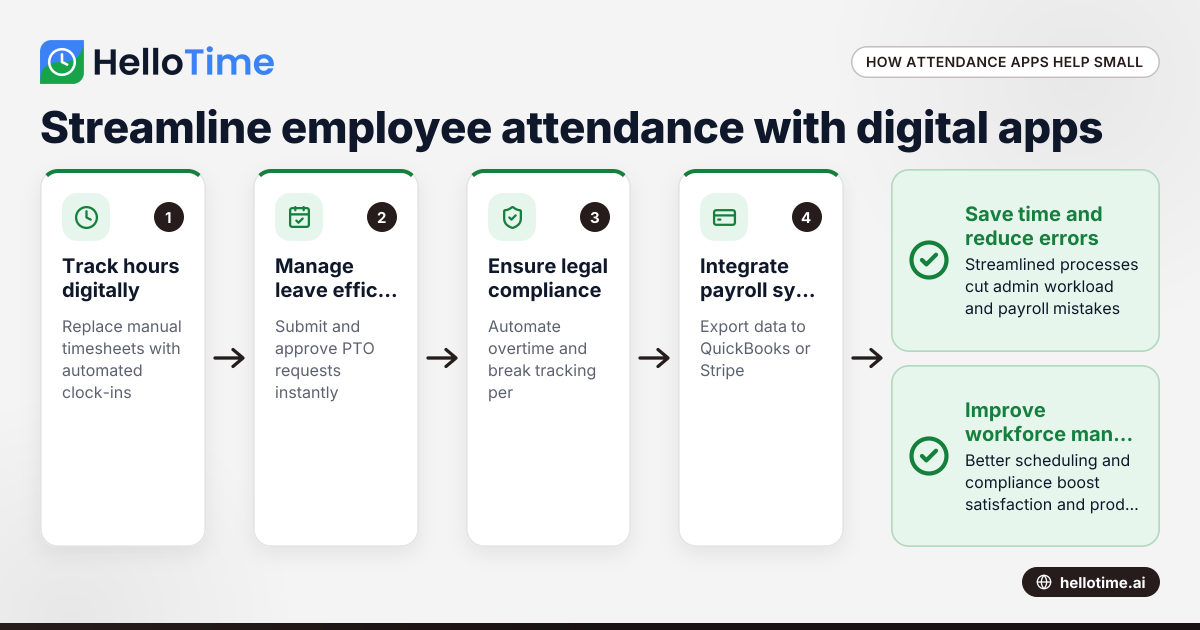
Best Attendance Apps for Small Businesses in the United States: Features, Compliance, and Ease of Use
An attendance app is a digital tool that helps small businesses track employee hours, attendance, and leave efficiently. It replaces manual.
How Small Businesses in India Can Use Face Recognition Biometric Attendance Kiosks for Efficient Shift Tracking
Face recognition biometric attendance kiosks use AI face recognition technology to automate employee attendance tracking. These devices offer.
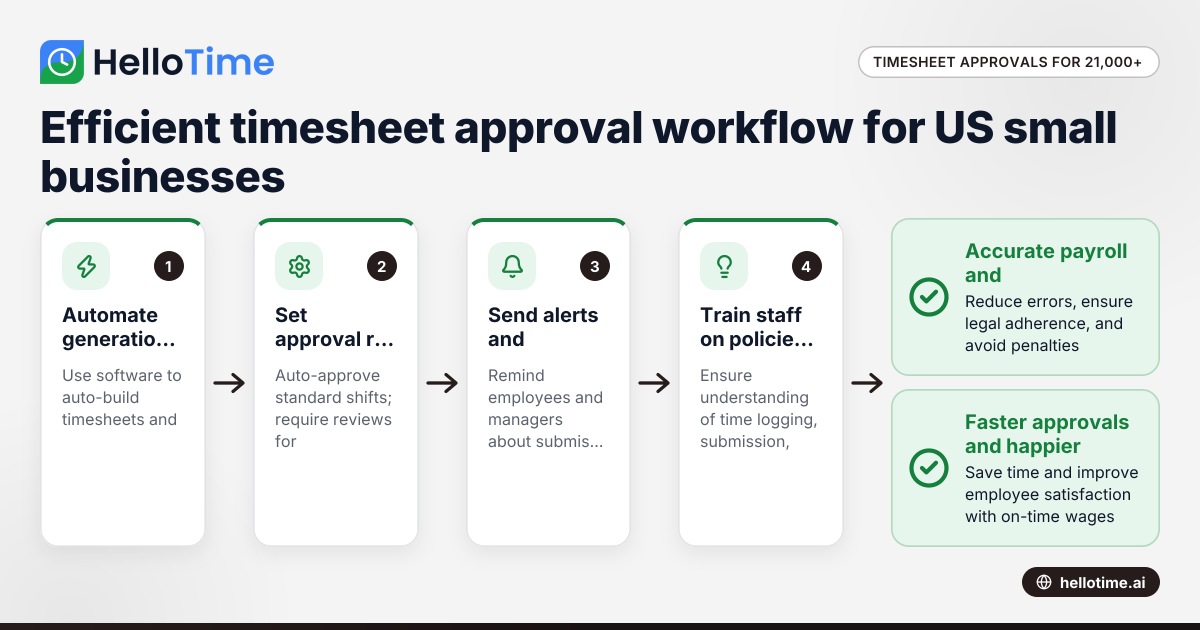
How United States Small Businesses Can Handle Timesheet Approval Workflows with Over 21,000 Minutes Logged
Managing timesheet approvals efficiently becomes critical for US small businesses logging large volumes of employee hours, such as over 21,000 minutes