How to Measure Project Profitability from Timesheets in the United Kingdom
Project profitability from timesheets means turning logged hours into a clear view of revenue, cost and margin for each job. In the United Kingdom.
The HelloTime team
13 min read
On this page
Project profitability from timesheets means turning logged hours into a clear view of revenue, cost and margin for each job. In the United Kingdom, this helps agencies, consultancies, field teams and project-based businesses see which clients, services and delivery patterns actually make money, not just keep people busy.
Key takeaways
- Project profitability from timesheets starts with accurate hours, charge-out rates and internal cost rates.
- The key numbers are revenue, labour cost, gross profit and gross margin by project, client and task.
- Timesheets are most useful when hours are approved, coded correctly and linked to billable or non-billable work.
- UK businesses should also consider VAT treatment, software subscriptions, travel and contractor costs where relevant.
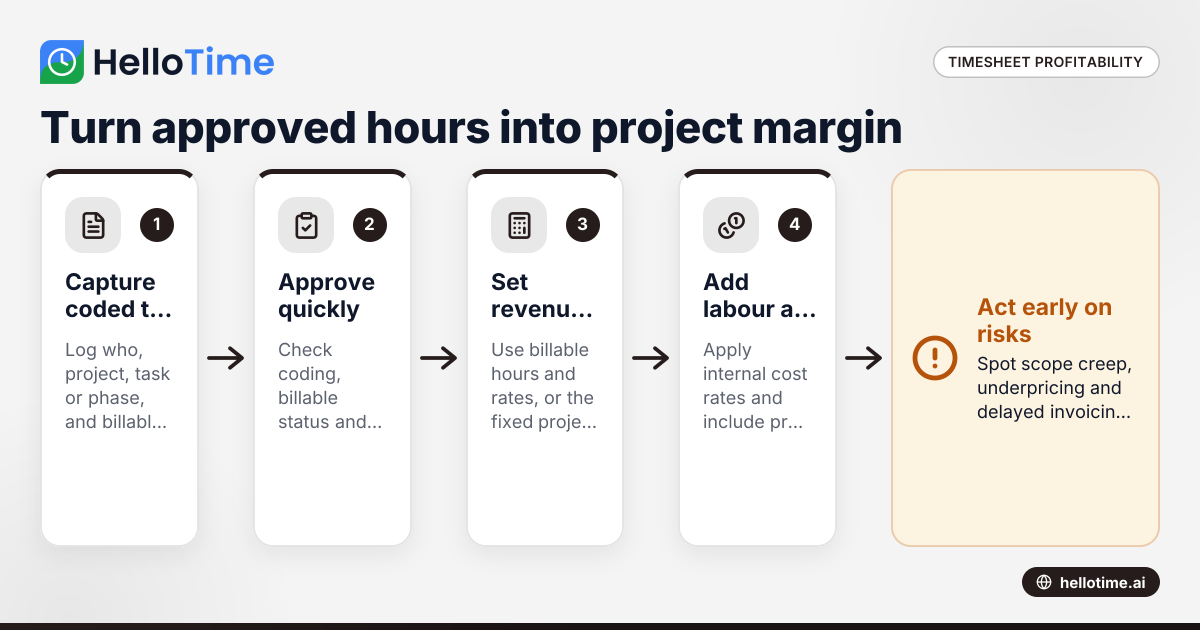
- A simple weekly review can reveal scope creep, underpricing, poor utilisation and delayed invoicing.
- Tools with time tracking, approvals, invoicing and reporting reduce spreadsheet errors and speed up decisions.
Why project profitability from timesheets matters in the United Kingdom
If your team bills by the hour, timesheets are not only for payroll or attendance. They are one of the best operational data sources you already have. They show where time went, who spent it, whether it was billable, and how much effort a project really took.
For a London design agency, a Manchester IT consultancy or a Birmingham engineering services firm, the same problem appears often. Revenue looks healthy. Work is moving. Clients are active. But profit is unclear because costs sit in one spreadsheet, invoices in Xero or Sage, and timesheets somewhere else.
That makes it hard to answer basic questions:
- Which projects make the highest margin?
- Which clients require too much non-billable work?
- Are fixed-fee projects still profitable?
- Are senior staff spending too much time on low-value tasks?
- Is delayed approval causing delayed billing?
Project profitability from timesheets solves this by connecting hours worked to money earned and money spent. Once you do that consistently, you can quote better, schedule better and protect margins earlier.
What is project profitability from timesheets?
It is the process of using approved time entries to calculate how much a project earned, what labour and other direct costs it consumed, and what profit remains.
At its simplest, the formula is:
- Project revenue
- Minus labour cost from timesheets
- Minus other direct project costs
- Equals project gross profit
Then:
- Gross margin % = Gross profit / Revenue × 100
Timesheets matter because labour is usually the biggest delivery cost in service businesses. If your timesheets are late, vague or inaccurate, your profitability figures will be weak too.
What data do you need?
You do not need a complex finance model to start. Most UK small and mid-sized businesses can begin with five data points:
- Employee or contractor hours by project
- Billable versus non-billable status
- Charge-out rate or project revenue value
- Internal cost rate for each person or role
- Direct project expenses such as travel, freelancers or software
If you already invoice from logged hours, you have much of this data. If you run fixed-fee work, timesheets still matter because they reveal whether the delivery cost matched the quote.
How do you calculate project profitability from timesheets?
Use approved billable hours to estimate or confirm project revenue, then subtract the internal labour cost for all hours worked and any direct project costs. The result is gross profit. Divide that by revenue to get gross margin.
The process sounds simple because it is. The challenge is making sure the underlying data is clean.
Step 1: Capture time against the right project and task
Every time entry should answer four questions:
- Who did the work?
- Which project was it for?
- What task or phase was it?
- Was it billable?
Without this structure, reporting becomes guesswork. “Client work” is not enough. A proper coding structure lets you compare discovery, design, implementation, revisions, support and admin separately.
For example, a digital agency in London may break a website project into:
- Discovery
- UX design
- Copy changes
- Development
- Quality assurance
- Client meetings
- Rework
- Project management
This shows where margin is being consumed. If rework hours keep rising, you have a delivery issue. If client meetings are high and unpaid, you may have a scoping issue.
Step 2: Approve timesheets quickly
Approved timesheets are far more reliable than unreviewed entries. Managers should check:
- Project coding
- Billable status
- Unusual spikes in hours
- Missing descriptions
- Duplicate entries
Weekly approval works well for most businesses. It keeps the data current enough for billing and forecasting.
A delayed approval cycle creates a chain reaction. Billing is late. Revenue recognition becomes messy. Project managers lose sight of actual effort. Teams forget what they worked on. Margin analysis becomes less useful.
Step 3: Set charge-out rates
Your revenue figure will depend on your pricing model.
For hourly billing
Multiply approved billable hours by the agreed rate.
Example:
- 42 billable hours from a consultant
- Hourly rate: £95
- Revenue: £3,990
For fixed-fee projects
Use the project fee as revenue, then compare that fee against actual hours and costs.
Example:
- Fixed project fee: £12,000
- Total delivery hours logged: 146
- Labour cost and direct costs determine whether that fee was enough
For blended or retainer work
Allocate revenue based on the agreed arrangement. Then compare actual hours against the expected effort and margin target.
This is where timesheets help most. A client may look profitable because they pay a steady monthly fee. But if the team spends far more time than planned, the margin may be shrinking quietly.
Step 4: Calculate labour cost from timesheets
To measure project profitability from timesheets, you need an internal cost rate. This is not the same as the charge-out rate.
A practical approach is to set a cost per hour for each person or role. Many firms use annual salary plus employer on-costs and divide by workable hours. This article is general information, not legal, tax or accounting advice, so confirm your approach with your accountant where needed.
A simple role-based example:
- Account Manager cost rate: £28 per hour
- Designer cost rate: £24 per hour
- Developer cost rate: £35 per hour
If your project used:
- 20 account management hours = £560
- 30 design hours = £720
- 50 development hours = £1,750
Total labour cost = £3,030
Use the same logic for contractors. If a freelancer charged £400 for work linked directly to the project, include it as a direct cost.
Step 5: Add other direct project costs
Timesheets tell you labour effort. They do not capture every cost. Depending on your business, you may also include:
- Freelancers and subcontractors
- Travel and accommodation
- Project-specific software or licences
- Equipment hire
- Printing or materials
- Site access or compliance costs
For UK businesses, VAT treatment depends on the nature of the cost and your setup, so check the correct accounting treatment with your adviser. For profitability reporting, many firms look at net cost excluding recoverable VAT, but your finance team should confirm the right method.
Step 6: Work out gross profit and margin
Now bring the numbers together.
Example for a Manchester consultancy project:
- Revenue: £18,000
- Labour cost from timesheets: £9,200
- Freelancer cost: £1,800
- Travel cost: £350
Gross profit = £18,000 - £9,200 - £1,800 - £350 = £6,650
Gross margin = £6,650 / £18,000 × 100 = 36.9%
That is the headline number. But the more useful part is the breakdown underneath. You can now see which phase overran, which role mix was expensive and where scope drift appeared.
Which timesheet metrics should you track every week?
Track billable hours, non-billable hours, labour cost, invoiced or expected revenue, gross profit and gross margin by project. Also watch utilisation, budget versus actual hours and unbilled approved time. Weekly visibility helps you fix issues before they hit month-end results.
The most useful profitability metrics
Here are the practical metrics most UK project-based teams should review:
1. Billable utilisation
This shows how much of a person’s time is revenue-generating.
- Billable utilisation % = Billable hours / Total worked hours × 100
High utilisation is not always good if quality drops. Low utilisation may point to poor scheduling or too much admin.
2. Realisation
This compares billable hours worked against billable hours invoiced, or expected revenue against standard value. It highlights write-offs, discounts and unrecovered effort.
3. Budget versus actual hours
Essential for fixed-fee work. If a phase was budgeted at 20 hours and used 34, margin is slipping before the invoice even goes out.
4. Gross margin by project
This is the clearest profitability view. Compare projects across service lines, account managers, offices or clients.
5. Non-billable time by category
Separate internal admin, training, sales support, client rework and waiting time. Not all non-billable time is bad. But you should know what it is.
6. Unbilled approved time
This tells you how much earned revenue has not yet been invoiced. It matters for cash flow.
Why weekly review beats monthly review
Month-end reporting is too late for many delivery teams. By then, the overrun has happened. Weekly checks let project managers course-correct while the work is still live.
A simple weekly rhythm works well:
- Team submits timesheets by close of business Friday.
- Managers approve by Monday morning.
- Operations reviews margin exceptions on Monday.
- Finance prepares billing from approved time.
- Project leads adjust scope, staffing or client communication.
Common mistakes that distort profitability
Even businesses with decent time data can measure profitability badly. The usual problems are operational, not mathematical.
Using one charge-out rate for everyone
A blended client rate may be fine for invoicing. But for profitability, you still need the real internal cost by person or role. Otherwise a senior consultant and junior coordinator look equally profitable when they are not.
Ignoring non-billable delivery time
Client support, internal handovers, fixes and revisions often sit outside billable categories. If they support the project, they still consume labour cost. Excluding them can make margin look better than reality.
Letting staff backfill timesheets
When people fill in a whole week from memory, coding quality falls. Short daily entries are usually more accurate.
Mixing project costs with overheads
Keep direct project costs separate from business overheads like rent, general software and central admin salaries. Start with gross profit first. Layer overhead analysis later if needed.
Treating fixed-fee jobs as safe by default
A £15,000 fixed-fee project can lose money if actual effort rises to £14,000 in delivery cost. Timesheets reveal this early.
Can AI project profitability tools replace spreadsheets?
Yes, they can reduce manual work and surface risks faster, but they still depend on clean time, rate and cost data. The best systems automate timesheet capture, approvals, billable tagging and reporting so managers can act sooner instead of rebuilding spreadsheets every week.
Spreadsheets are familiar, but they become fragile once your team grows. Formulas break. Versions drift. One person owns the logic. Reporting takes too long. By the time the file is updated, the decision window may have passed.
This is where ai project profitability tools are becoming more useful. In practice, that usually means software helps organise time data, flag anomalies, highlight margin risk and make reports easier to read. It does not remove the need for good project management. It simply makes the numbers more visible.
For example, a system can make it easier to spot:
- Projects with falling margin week by week
- Teams logging high unbillable effort
- Clients creating repeated scope creep
- Timesheets still waiting for approval
- Billable time that has not been invoiced
For small and mid-sized businesses, the biggest win is often not “AI” itself. It is having one workflow for time tracking, timesheets, approvals, billing support and reporting.
Building a practical profitability workflow
You do not need a finance transformation project to get started. You need a repeatable process.
1. Define your project structure
Set up standard project stages, task categories and billable rules. Keep it simple enough that staff can use it correctly.
2. Set internal cost rates
Choose person-based or role-based cost rates. Review them periodically, especially after major pay changes or team restructuring.
3. Make timesheet completion easy
The easier time capture is, the better the data. One-click timers, mobile logging and pre-filled project lists help reduce friction.
4. Approve on a fixed schedule
Do not let approvals drift. Weekly is usually best.
5. Link approved time to invoicing
For hourly work, approved hours should flow quickly into invoicing. For fixed-fee work, approved time should still update profitability reports.
6. Review exceptions, not every line
Managers should focus on outliers:
- Margin below target
- Hours above budget
- High non-billable delivery time
- Missing timesheets
- Delayed invoicing
7. Use reports to improve quoting
Historic timesheet data is valuable when pricing future work. If most website migrations take 70 hours, stop quoting 45.
Where software helps most
The right software does not just store time. It shortens the path from work done to insight.
For UK businesses using Xero or Sage in the wider finance stack, the operational gap often sits before accounting: getting accurate approved hours, knowing what is billable, and seeing profitability before month-end.
A system like HelloTime helps where teams need:
- One-click time tracking
- Auto-built timesheets and approvals
- Billable and non-billable hour visibility
- Invoicing from billable hours
- Project profitability reports
- Workforce visibility across office, site and field teams
That matters for both desk-based service firms and operational teams that split time across jobs, locations and supervisors. If you want to see how the product is positioned locally, you can explore HelloTime in the UK.
A simple example for a UK business
Imagine a Birmingham marketing agency running a fixed-fee campaign project for £8,500.
Hours logged:
- Account Manager: 18 hours at £30 cost per hour = £540
- Paid Media Specialist: 32 hours at £34 cost per hour = £1,088
- Designer: 14 hours at £24 cost per hour = £336
- Copywriter: 10 hours at £26 cost per hour = £260
Total labour cost = £2,224
Other direct costs:
- Freelance video edit: £600
- Train travel to client site: £90
Total direct cost = £2,914
Gross profit:
- £8,500 - £2,914 = £5,586
Gross margin:
- £5,586 / £8,500 × 100 = 65.7%
That looks strong. But now imagine the client requested two unpaid revision rounds and another 22 hours were logged the following week. Labour cost rises by, say, £660. Margin drops. The project may still be profitable, but less than expected. Without timesheets, you would not know why.
How to get started this month
If your business still uses spreadsheets or paper timesheets, start small and build consistency first.
Keep reading
Related articles
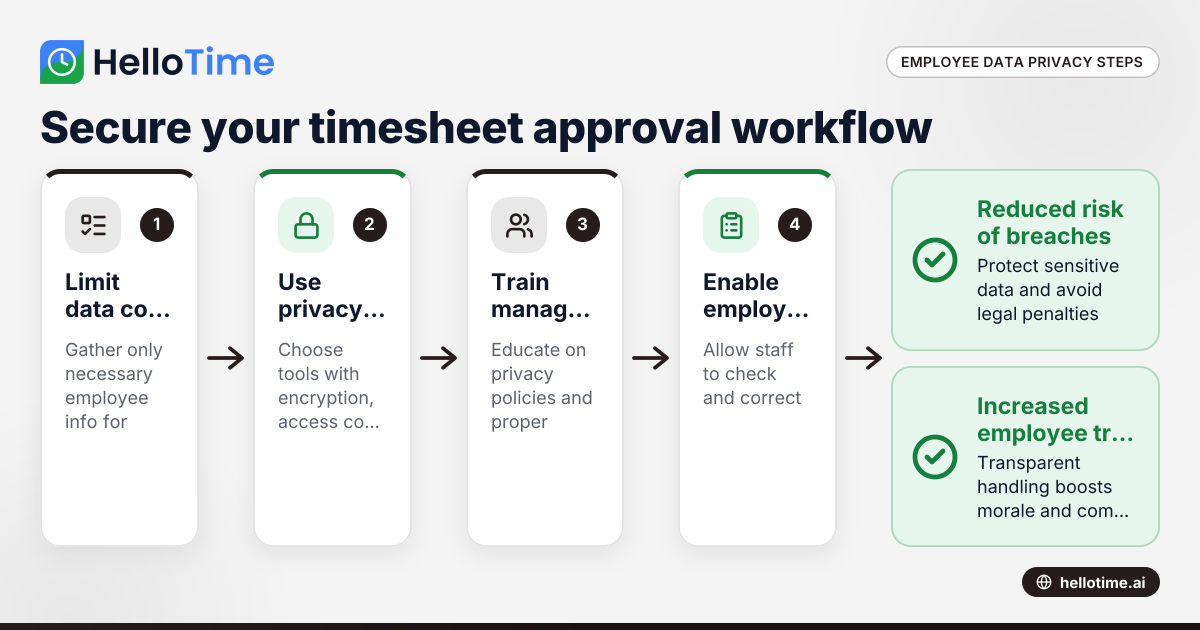
Navigating Employee Data Privacy Under United States Laws in Timesheet Approval Workflows
Navigating employee data privacy in timesheet approval workflows requires careful attention to US laws, as well as awareness of international.
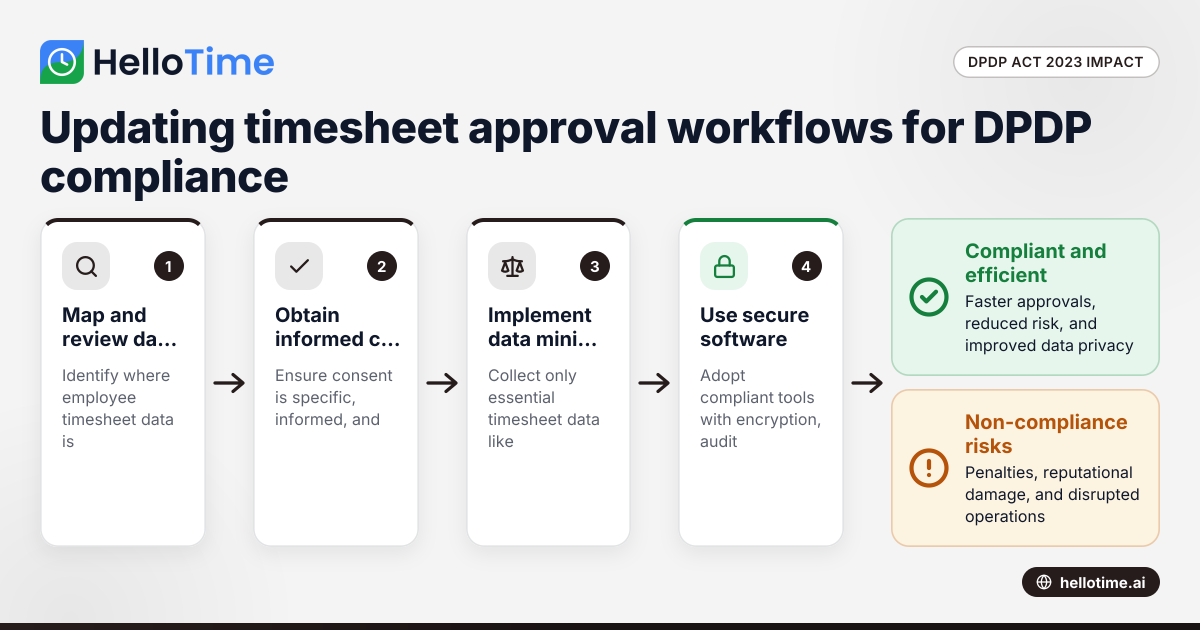
How the DPDP Act 2023 Affects Timesheet Approval Workflow for Manufacturers in Maharashtra, India
How the DPDP Act 2023 Affects Timesheet Approval Workflow for Manufacturers in Maharashtra, India The Digital Personal Data Protection (DPDP) Act 2023
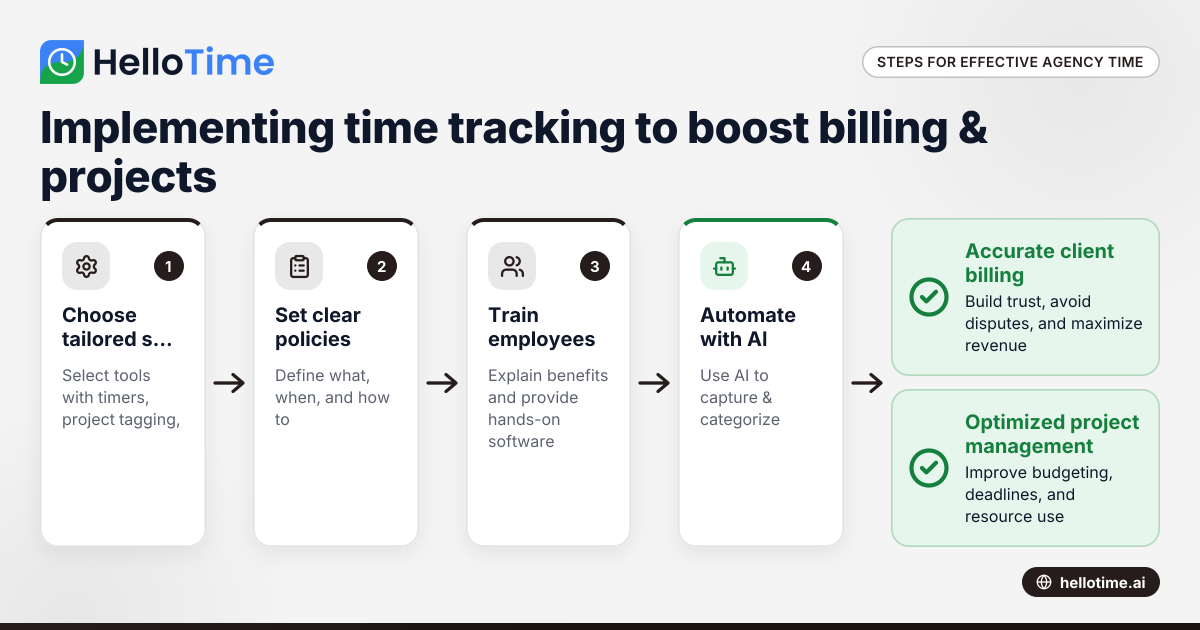
Effective Time Tracking Strategies for United States Agencies to Enhance Client Billing and Project Management
Effective time tracking is essential for agencies in the United States to improve client billing accuracy and optimize project management. With.