How US Small Businesses Can Use ACH Payments for Faster Client Billing and Employee Reimbursements
ACH payments are electronic bank-to-bank transfers widely used by U.S. small businesses for faster client billing and employee reimbursements. They.
The HelloTime team
5 min read
On this page
ACH payments are electronic bank-to-bank transfers widely used by U.S. small businesses for faster client billing and employee reimbursements. They provide a secure, cost-effective alternative to checks and credit cards, reducing processing times and administrative work through automated systems.
Key takeaways
- ACH payments enable quicker and more reliable fund transfers than traditional checks.
- They lower transaction costs and reduce fraud risks with encrypted bank-to-bank transfers.
- AI ACH payments enhance accuracy and speed by automating payment processing.
- ACH supports payroll reimbursements and client invoice payments efficiently.
- Compliance with NACHA operating rules is crucial for smooth ACH operations.
- Integrating ACH with accounting and time-tracking software improves cash flow management.
What are ACH payments and how do they work?
ACH stands for Automated Clearing House, a U.S. banking network that processes electronic financial transactions between banks. Funds move directly between accounts after authorization. ACH transfers handle payroll, bill payments, and vendor payouts, typically settling within 1-2 business days via batch processing governed by NACHA rules.
The system is more efficient and secure than traditional paper check processing, reducing manual errors and speeding cash transfers.
Why do small businesses prefer ACH over other payment methods?
ACH payments offer several advantages for small businesses in the U.S.:
- Cost efficiency: Fees are much lower than credit card processing charges.
- Speed: Transactions clear faster than mailing or awaiting checks.
- Security: Direct bank-to-bank transfers reduce fraud risk.
- Convenience: Automates recurring payments and reimbursements.
- Better cash flow: Accelerated receipt of funds improves financial planning.
These benefits suit agencies, professional services, and shift-based businesses billing clients or reimbursing employees frequently.
How do AI ACH payments improve business efficiency?
AI ACH payments use artificial intelligence to automate and optimize ACH transaction processing. This includes verifying payment data, detecting fraud or anomalies, forecasting delays, and automating mistake resolution. AI reduces manual bookkeeping and speeds approval cycles.
By leveraging AI ACH payments, businesses in U.S. cities like Chicago or Houston can automatically reconcile invoices with payments and identify exceptions early, improving cash flow forecasting and accuracy.
How can I set up ACH payments for client billing?
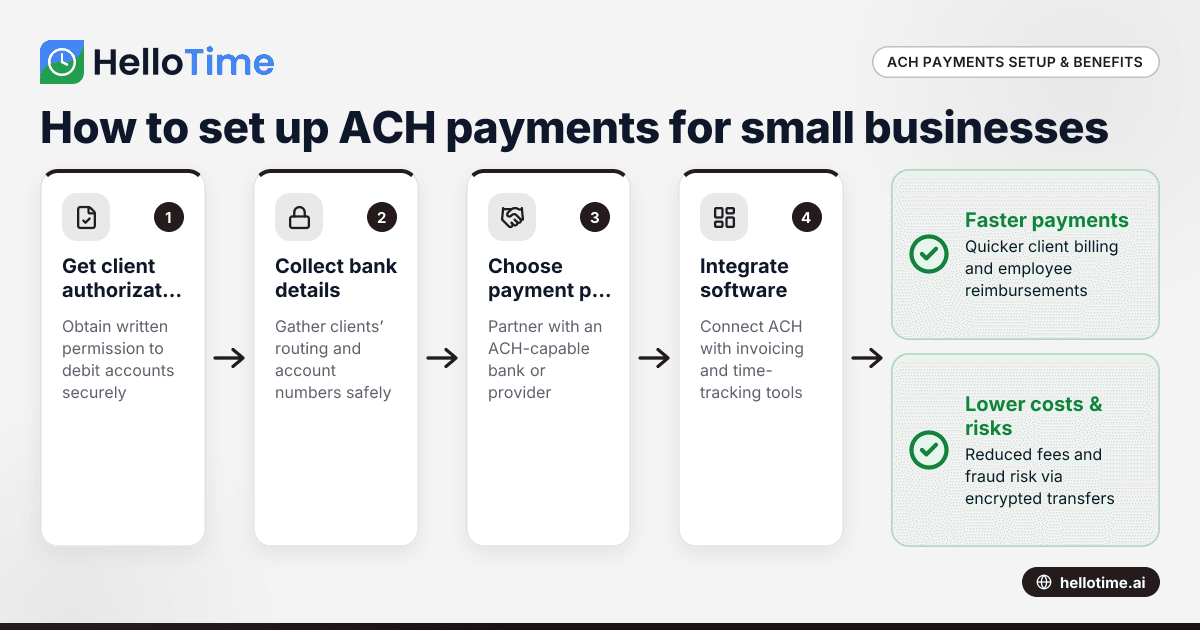
Setting up ACH payments involves:
- Obtaining written client authorization to debit bank accounts.
- Securely collecting clients' routing and account numbers.
- Partnering with a bank or payment processor supporting ACH.
- Integrating ACH with invoicing and time-tracking software.
- Submitting payment batches according to NACHA timing.
- Reconciling transactions and updating accounting records.
Using ACH accelerates receivables and enhances collection reliability compared to paper checks.
What is the role of compliance in ACH payments?
Compliance with NACHA operating rules is mandatory and includes secure data handling, valid payment authorizations, timely processing, and managing returns or corrections. Failure to comply can lead to fines, transaction reversals, and loss of ACH privileges. Small businesses should educate staff or use providers that ensure regulatory compliance.
Can ACH payments be used for employee reimbursements?
Yes, ACH is ideal for reimbursing employees. Businesses transfer funds directly to bank accounts, speeding payment and reducing errors compared to paper checks. Employee bank details are stored securely, and automated ACH transfers improve payroll and HR efficiency.
How secure are ACH payments?
ACH transactions are encrypted and governed by NACHA security requirements, ensuring data protection. Direct bank-to-bank transfers limit fraud risk. Businesses should implement multi-factor authentication and regular audits to prevent phishing and social engineering threats.
How do ACH payments affect cash flow management?
ACH payments speed up client collections and employee reimbursements, reducing outstanding invoice time. Automation cuts administrative delays, allowing finance teams to forecast cash flow more accurately and maintain steady liquidity for operations.
What costs and fees should small businesses expect with ACH?
ACH fees are typically low, ranging from $0.20 to $1.50 per transaction. Other costs may include monthly platform fees or setup charges. These are far less than credit card processing fees, making ACH a cost-effective option for routine payments.
How do ACH payments integrate with existing business systems?
Many workforce management platforms offer built-in ACH integrations. This enables linking hourly billing to invoicing, automatic payment generation from timesheets, real-time payment tracking, and synchronization with accounting software like QuickBooks. Integration reduces manual work and improves financial data accuracy.
How to get started with ACH payments today?
- Research ACH-capable payment processors adhering to NACHA rules.
- Ensure secure collection and storage of bank account data.
- Train your team on ACH workflows and compliance.
- Adopt software that automates billing and reimbursements with ACH.
- Communicate ACH options and obtain necessary authorizations from clients and employees.
These steps will help your U.S. small business speed payments and lower costs.
Explore time tracking and billing tools with ACH payment options, including features tailored for U.S. businesses, and find the best fit on our pricing page.
Frequently asked questions
What is the difference between ACH and wire transfers?
ACH transfers batch-process payments in 1-2 business days at low cost, ideal for routine transactions. Wire transfers clear same-day but cost more, suited for large or urgent payments.
Are ACH payments safe for sensitive bank data?
Yes. ACH transactions comply with NACHA encryption standards. Still, safeguard data against phishing by using secure platforms and employee training.
Can ACH payments be used for international transactions?
No. ACH operates only within the United States. Use wire transfers or other global networks for international payments.
What happens if an ACH payment is returned or rejected?
Returns happen due to insufficient funds, closed accounts, or errors. Businesses receive notifications and should promptly follow up with payers to resolve issues.
Do all banks support ACH payments?
Almost all U.S. banks participate in the ACH network. Check with your bank for specific processing options and methods.
How do AI ACH payments reduce errors?
AI ACH tools validate payment info, flag anomalies, and reconcile transactions automatically, reducing human error and accelerating payment workflows.
Read next
This article covers one part of a bigger topic. For the complete picture, read our guide to card or ach.
Keep reading
Related articles
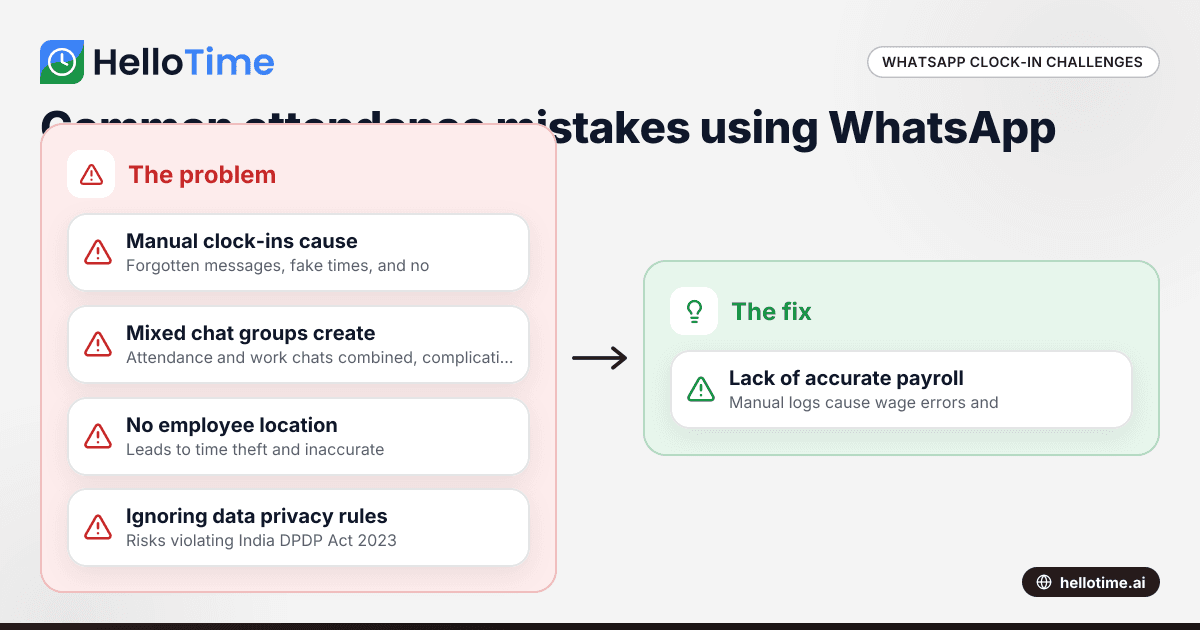
Using WhatsApp for Clock-In and Attendance Tracking in Indian Small Businesses
Using WhatsApp for Clock-In and Attendance Tracking in Indian Small Businesses The cost of managing attendance poorly can be high for small.
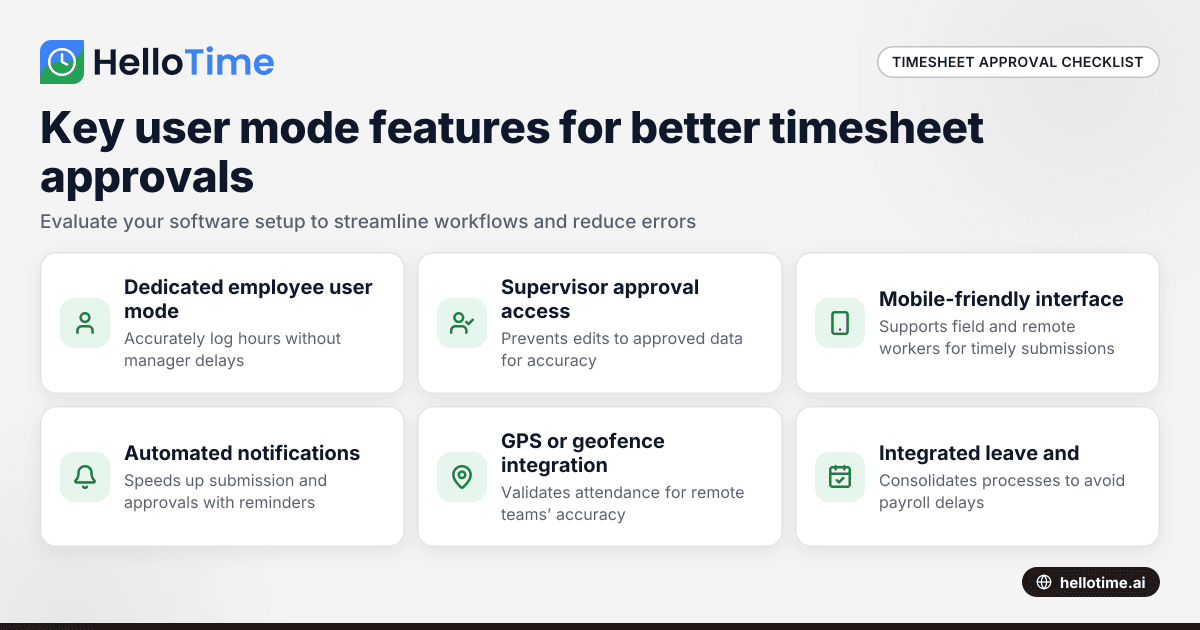
How User Mode Enhances Timesheet Approval Workflow for Indian Small Businesses
How User Mode Enhances Timesheet Approval Workflow for Indian Small Businesses.
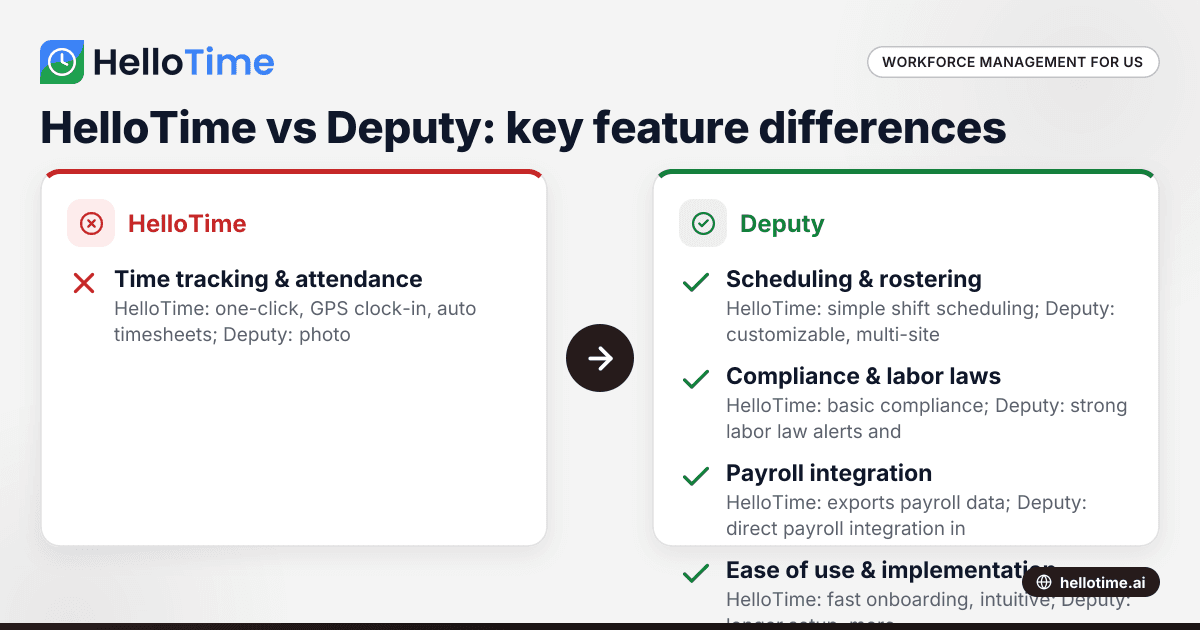
HelloTime vs Deputy: Which Workforce Management Software is Best for United States Small Businesses?
HelloTime and Deputy are popular workforce management tools offering employee scheduling, time tracking, and attendance solutions for US small.